How to make a spring refresh checklist for your home is mostly a filtering job: walk your space, write down every task that is actually loose, then cut the list down until it fits the time you really have. A good spring refresh checklist for your home holds 15 to 20 items, each tagged with a rough time and a room, so you can stop mid-list without the whole thing collapsing. Budget about an hour to build it and a few staggered evenings to work through it.
I have built and rebuilt these lists every March for about a decade, and the version I keep is always shorter than the one I want. That is not a personality flaw. It is just what works.
Table of Contents
- What You Need
- Step-by-Step: How to Make a Spring Refresh Checklist for Your Home
- Walk the house before you write a single line
- Fill five fixed categories
- Tag each item with time, room and priority
- Decide where the declutter piles go before you start
- Order the list by dependency, not by room
- Time-box it into a plan you will finish
- Common Mistakes
- Trying to refresh every room at once
- Buying decor before decluttering
- Setting goals that are too ambitious
- Ignoring maintenance entirely
- Never defining what done means
- Doing outdoor work at the wrong time
- Frequently Asked Questions
- What should I include in my spring cleaning list?
- How long does a spring refresh take?
- What can renters skip on a spring refresh checklist?
- How do I refresh my home without spending much?
- Should I open the windows during spring cleaning?
- How do I stop a spring refresh from becoming a never-ending project?
- Conclusion
What You Need
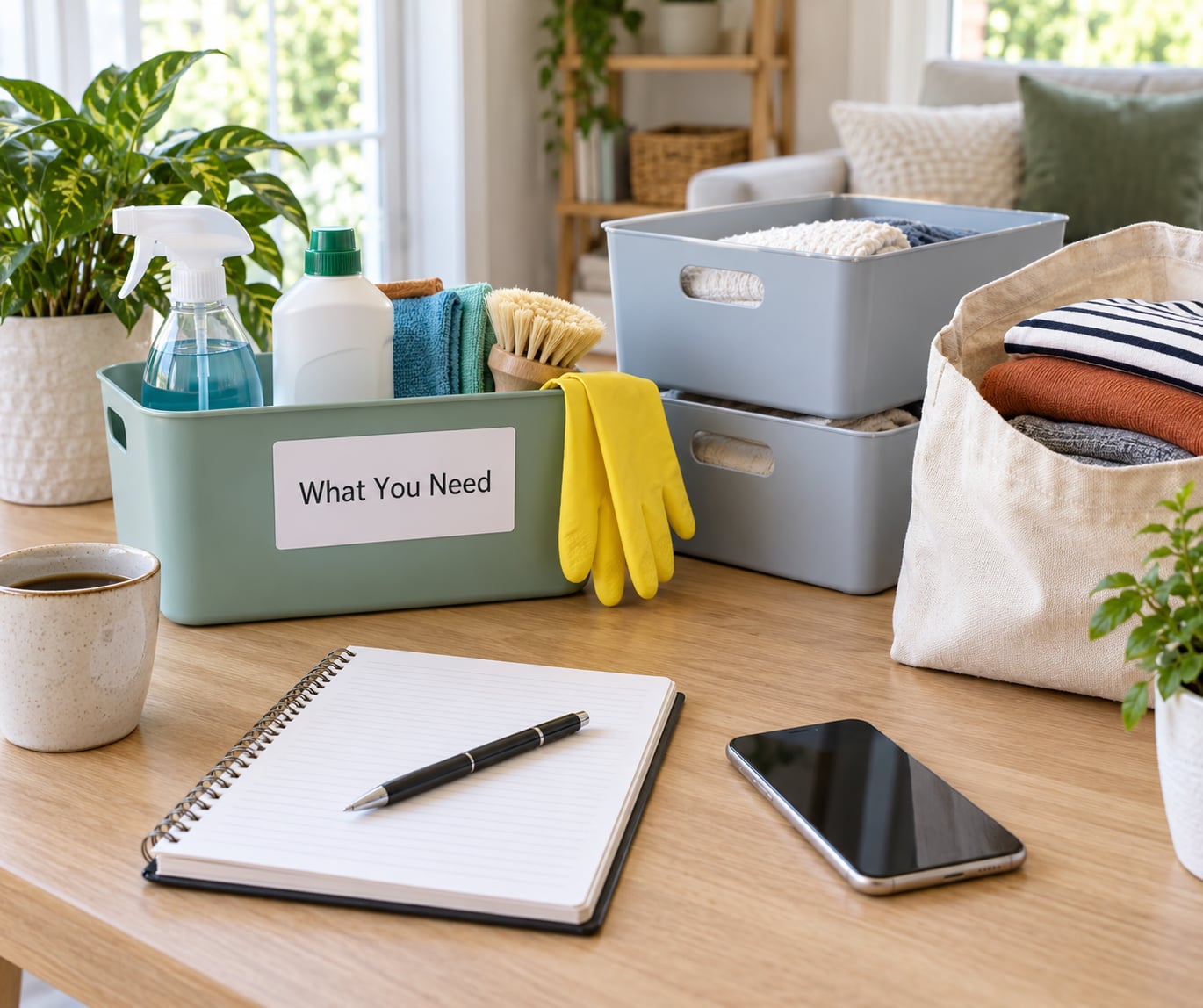
You need far less gear than a cleaning marathon implies. Gather these before you start writing, and the list-building itself takes about an hour.
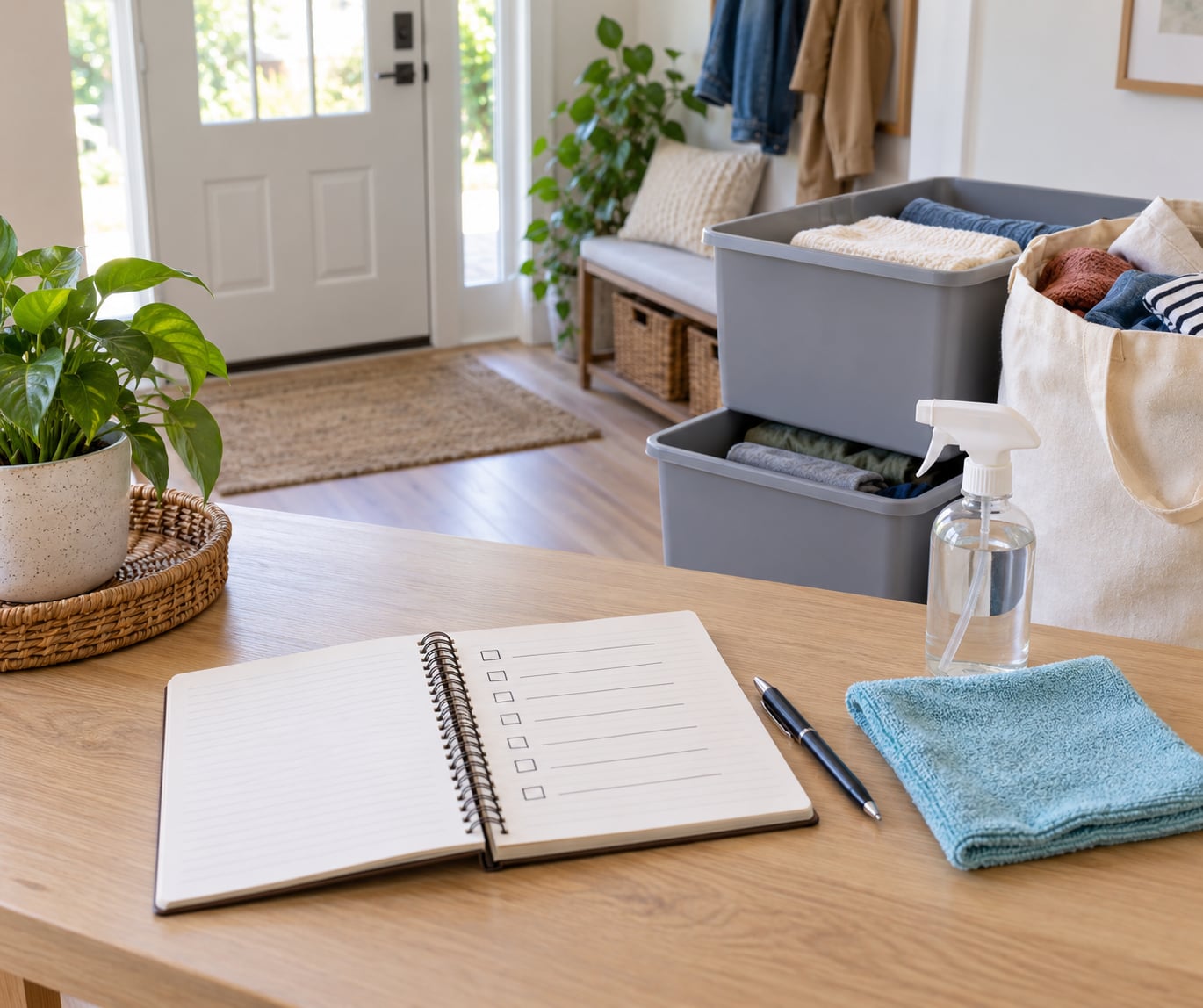
- A notebook or your phone notes. Paper suits people who like crossing things off. Notes suit people who want the list on the kitchen counter where the coffee maker is.
- A timer. The single most useful tool here. It is what turns an open-ended Saturday into three defined sessions.
- Cleaning basics: microfiber cloths, a dust mitt, a vacuum with an upholstery attachment, a mop or steam mop, and an all-purpose spray you actually like using.
- Cheap DIY substitutes. White vinegar, baking soda and a soft brush handle glass, cut through grease and scrub a tub surprisingly well. Nobody needs a shelf of specialty sprays to build a checklist.
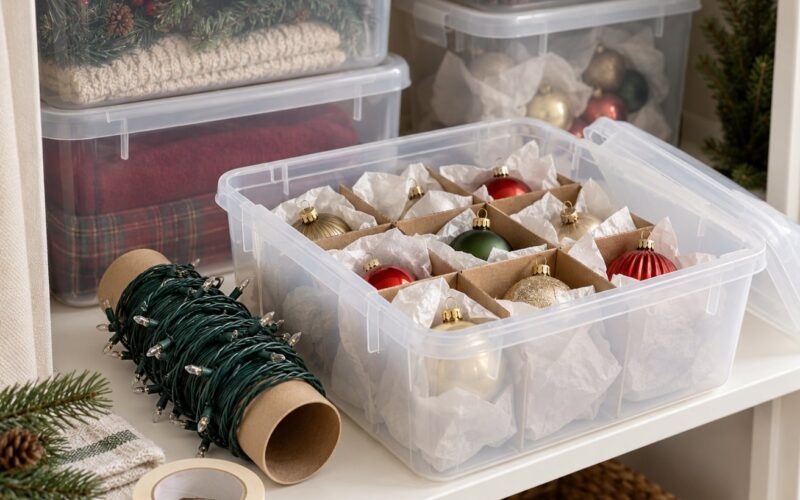
- Labeled storage bins or bags. Three sizes is plenty. Clear ones let you see what is inside, which matters more than matching colors.
- A donation bag or box. Line it up front. Deciding what to do with a declutter pile is the single biggest reason these projects stall halfway.
- Basic tools: a screwdriver, a wrench, a step ladder, a flashlight and plumber’s tape. Add a socket set only if you have never used one.
- Optional: before-and-after photos of the rooms you plan to touch, and a simple budget worksheet if your refresh involves spending anything.
Skip the pressure washer, the steam cleaner and the specialty vac unless you already have them. Renting beats buying for a task you do once a year.
Step-by-Step: How to Make a Spring Refresh Checklist for Your Home
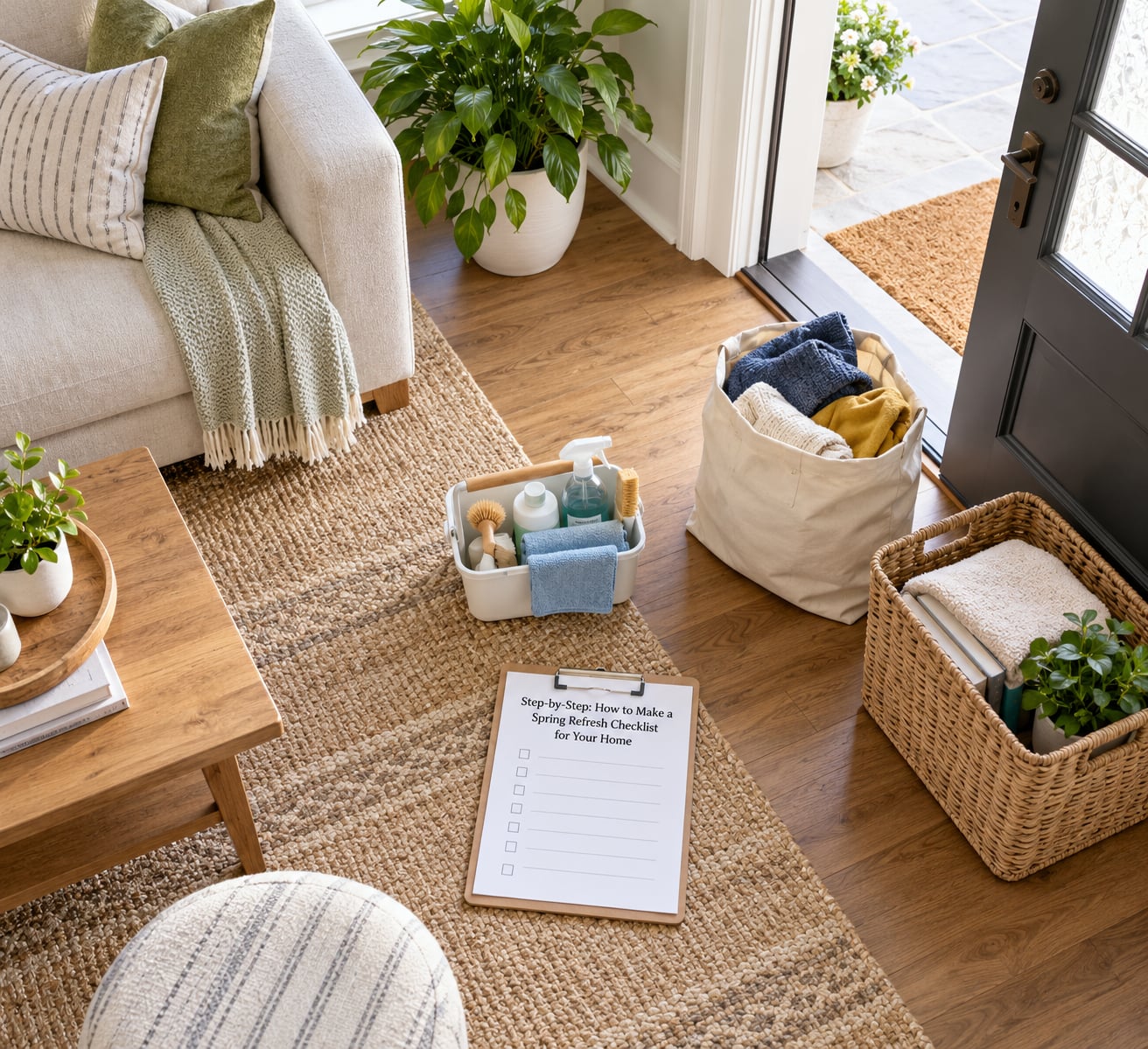
Walk the house before you write a single line
Spend twenty minutes moving through every room at a normal pace, not cleaning, just noticing. Stand in each doorway for ten seconds and ask what looks tired. This is where the honest list comes from, and it is faster than writing generic tasks you will not act on.
People who plan room by room report finishing far more often than people who plan task by task. Keep that in mind as you walk.
Fill five fixed categories
Free-form lists balloon because everything feels equally urgent. Five fixed buckets keep the whole thing inside a page.
- Declutter — the stuff that leaves the house or gets a home.
- Deep clean — the tasks you skipped all winter.
- Exterior and maintenance — gutters, downspouts, the dryer vent, the air filter, outdoor spigots, the deck.
- Interior systems — HVAC filters, washing machine hoses, the dishwasher filter, caulk and grout that has gone soft.
- Refresh — textiles, greenery, flowers, the front door, the light layers.
Anything that does not fit one of those five probably belongs on the autumn list, not this one.
Tag each item with time, room and priority
This is the step that separates a checklist you finish from a checklist you admire. Every line gets three labels: an effort tag (10 minutes, an hour, half a day), a room or zone, and a must-or-nice mark.
Example: Clear the kitchen junk drawer — 10 minutes — kitchen — must. Now look at your page. The must-do lines are almost always under twenty. That is your realistic weekend.
Decide where the declutter piles go before you start
Pick your destination for each category as you write it, not after the pile is on the floor. Donations go to a drop-off point on a schedule you can actually hit. Resalable items go to a consignment or online listing bin with a date attached. Duplicates and broken things get the trash or recycling on the spot.
Give anything you cannot place within about a week to a friend, a neighbor or a free-listing group. A holding bin with no end date is just a second closet.
Order the list by dependency, not by room
A few tasks have to happen before others or you will redo the work. Dusting follows vacuuming. Washing windows comes before moving furniture back. Filters and vent covers come off before you clean around them. Decluttering comes before any styling decision.
Write those orderings into the list itself. A note in the margin saves twenty minutes of cleanup.
Time-box it into a plan you will finish
Give the list a shape in the calendar. Three evenings of one room each beats one heroic Saturday that ends by Sunday lunch. A weekend version looks like outside tasks Saturday morning, then declutter Saturday afternoon, then one deep-clean room.
Decide in advance which items are optional if you run out of steam. Anything you drop should be a nice-to-have, never a must.
Common Mistakes
Trying to refresh every room at once
The all-house push is the reason most lists die on day two. Fix: cap it at three rooms, do them one at a time, and let the rest wait. A finished half-house beats an untouched whole one every time.
Buying decor before decluttering
New pillows and vases do not fix a crowded room, they hide the crowding until the next clean. Fix: put every purchase on a hold list for two weeks. If the space still needs it after you declutter, buy it then.
Setting goals that are too ambitious
Scrubbing every baseboard in a 2,000 square foot house is a two-week job pretending to be a weekend job. Fix: estimate double what feels right, then cut the estimate in half and keep the smaller number.
Ignoring maintenance entirely
A decor-only refresh leaves the dryer vent packed with lint and the filter clogged, which is how a clean house ends up smelling musty by July. Fix: keep a short maintenance strip at the top of the list — air filter, dryer vent, gutters, hose bibs, sump pump — and do it first.
Never defining what done means
Fix: write the finish line for each room in plain terms. Vacuumed and mopped, curtains washed and rehung, winter gear gone from the entry closet. Vague goals never end, and vague goals never get finished.
Doing outdoor work at the wrong time
Cleaning gutters during peak pollen means doing the job twice, and opening windows after pollen starts pulls allergens straight into the house. Fix: get exterior tasks and window washing done early, then open the windows for fresh air before pollen season rather than during it.
A few honest permissions: you do not have to do the garage. You do not have to repaint. And if you have small children or pets, a maintained clean beats a one-time deep clean every time.
Frequently Asked Questions
What should I include in my spring cleaning list?
A useful spring cleaning list covers five areas: decluttering, deep cleaning, exterior and seasonal maintenance, interior systems like air filters and washer hoses, and a decor refresh with new textiles or greenery. Write 15 to 20 items, not 60, and tag each one with an effort level, a room, and whether it is a must or a nice-to-have. Anything beyond that becomes a guilt list nobody finishes.
How long does a spring refresh take?
Building the checklist takes about an hour once you have walked the house. Working through a realistic 15 to 20 item list takes three or four evenings of a couple of hours each, or one focused weekend if the outside tasks are already handled. Deep-cleaning an entire house top to bottom in a single sitting is the plan that never survives contact with a Tuesday evening.
What can renters skip on a spring refresh checklist?
Renters can skip anything structural or permanent: repainting, foundation and roof work, pressure washing siding, sealing driveways, and replacing storm windows. Most of the inside list still applies, especially decluttering, washing filters, cleaning vents and grout, and swapping textiles. For decor, use removable pieces such as new pillow covers, washable slipcovers, peel-and-stick hooks, and a fresh wreath so nothing needs to be mounted or painted.
How do I refresh my home without spending much?
Rotate what you already own. Move last season’s pieces forward, swap heavy flannel bedding for lightweight cotton, wash and rehang curtains instead of buying new ones, and pull greenery and cut stems from outside rather than a florist. Cleaning and organizing produce most of the visible change for free, which is why decluttering comes before shopping in any sensible order.
Should I open the windows during spring cleaning?
Open them early, before pollen season peaks, to air out winter dust and get a genuine change in smell and light. Once trees start releasing pollen, keep windows shut on high-pollen days and run the air filter instead. A dry day with low wind and a breeze off the lawn is the ideal window for airing out, and it also helps you spot leaks and caulk gaps while the glass is open.
How do I stop a spring refresh from becoming a never-ending project?
Cap the list, cap the time and decide what gets dropped in advance. Fifteen to twenty items is the ceiling, and every item carries an effort tag so you can skip the cheapest-to-do ones when a session goes long. Write the finish line for each room in plain words, and mark the low-effort maintenance tasks as the ones you never drop.
Conclusion
Your spring refresh checklist for your home is five categories, twenty items at most, and a time tag beside each line. Walk the house, write down what is genuinely loose, cut half of it, and schedule the rest in small blocks.
Start with two things today: the twenty-minute walkthrough with a notebook, and one home-wide goal you want by the end of the month. Then begin with the room you pass through most, because that is the one where the difference will show every single day.