To deep clean a living room before guests, you clear every surface first, then work from the ceiling down — light fixtures, ceiling fans, blinds, shelves, walls, doors and skirting boards — before you touch upholstery, hard surfaces and finally the floors. A real pass takes two to three hours. A convincing one takes 30 minutes if you know what to skip.
Three rules do most of the work. Declutter before you clean, always go top to bottom so falling dust is caught once at the end, and give sprays their dwell time instead of wiping them off immediately. The sequence matters more than the products you buy.
Here is the room-by-room method, with the time each step actually takes.
Table of Contents
- What You Need
- Step-by-Step: How to Deep Clean a Living Room Before Guests
- Clear Clutter and Create a Cleaning Path
- Dust from Top to Bottom
- Clean Sofas, Chairs, and Fabric Surfaces
- Wipe Down Hard Surfaces and Touch Points
- Vacuum and Freshen the Floor
- Finish with Styling and Guest-Ready Details
- Common Mistakes
- Frequently Asked Questions
- How long does a deep clean of a living room take?
- What should I clean first before guests arrive?
- Do I need to move furniture to deep clean the living room?
- What is the 5-5-5 rule for cleaning?
- What is the 80/20 rule for cleaning?
- How do I get pet hair out of upholstery and rugs without a machine?
What You Need
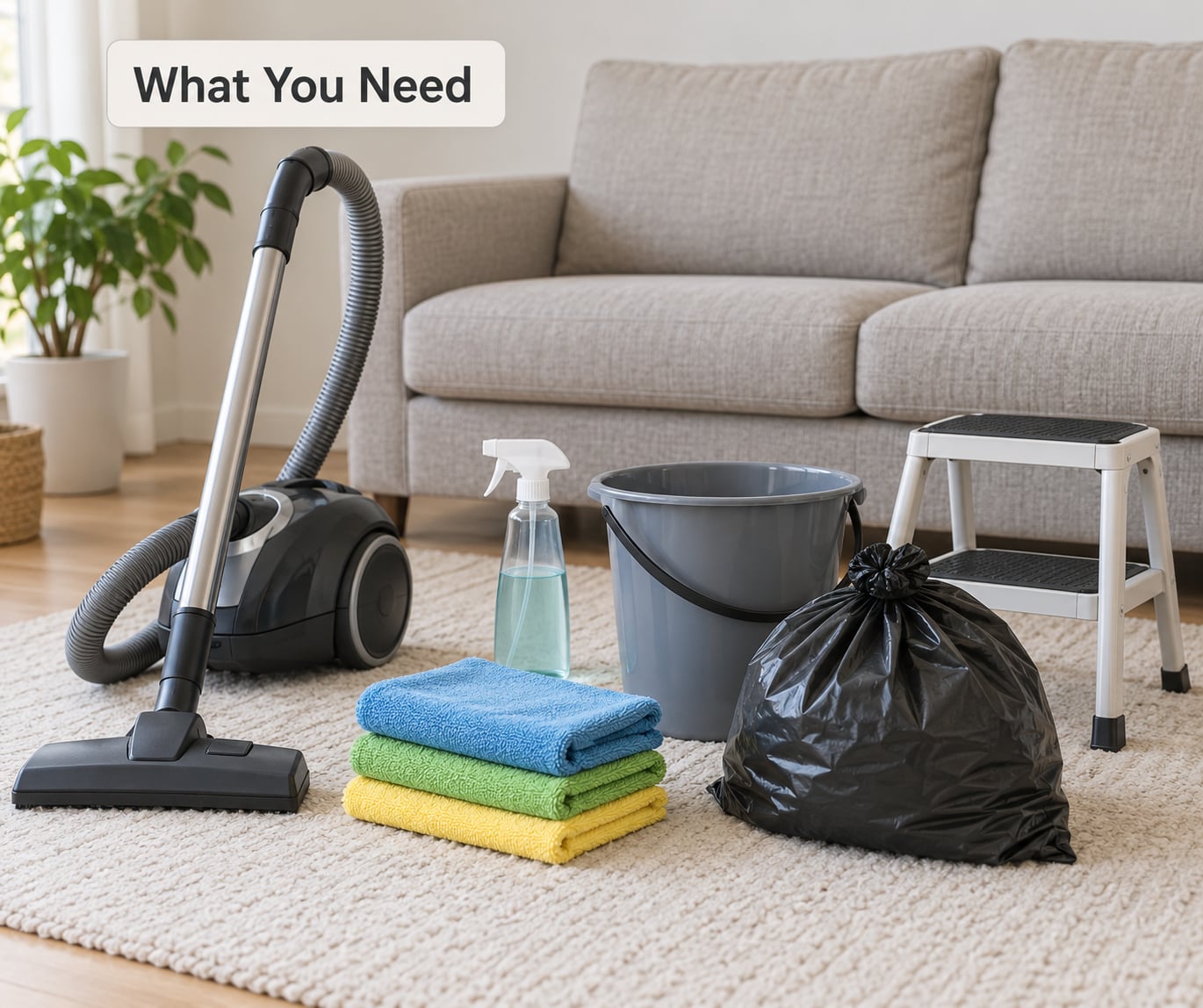
Gather everything in one place before you start. Reaching for a missing tool mid-task is how a two-hour clean turns into three.
| Tool or product | What it is for | Simple swap |
|---|---|---|
| Vacuum with crevice and upholstery attachments | Cushion seams, sofa gaps, corners, skirting lines | Handheld vacuum for the crevices |
| Extendable duster pole | Ceiling corners, fan blades, top of tall cabinets | Microfibre cloth and a stable step stool |
| Microfibre cloths, three or four | Shelves, tables, glass, electronics | Color-code them: one for glass, one for dust, one for the bathroom-adjacent surfaces |
| All-purpose cleaner | Wood, laminate, painted surfaces, skirting boards | White vinegar diluted one part to four parts water, on sealed surfaces only |
| Glass cleaner and a squeegee | Mirrors, window panes, cabinet doors | Vinegar solution and a folded newspaper |
| Fabric or upholstery cleaner | Sofa seats, chairs, headboard, rug marks | Warm water with a drop of dish soap, spot tested first |
| Degreaser or disinfecting spray | Door handles, light switches, remotes, TV vents | Citric acid solution for mineral film on fixtures |
| Baking soda | Odour in rugs, cushions and an open bowl overnight | None needed — this is the cheap one |
| Trash bags, laundry basket, small caddy | Sorting as you go instead of re-walking the room | Three bags for keep elsewhere, wash, trash |
| Old towels or a floor cloth | Mopping hard floors, catching drips, protecting wood | Washable mop head rather than paper towels |
Before the first pass, pick up anything small and valuable — keys, coins, remote batteries, sentimental objects — and put it somewhere safe. Open a window if the weather allows, because circulating air carries dust and smells out of the room faster than any spray. If you plan to move furniture at all, decide now and only slide it far enough to reach behind and beneath it. Sliding a sofa three feet is realistic. Shuffling a heavy armchair up the stairs alone is how people hurt their backs for a task nobody will notice.
Step-by-Step: How to Deep Clean a Living Room Before Guests
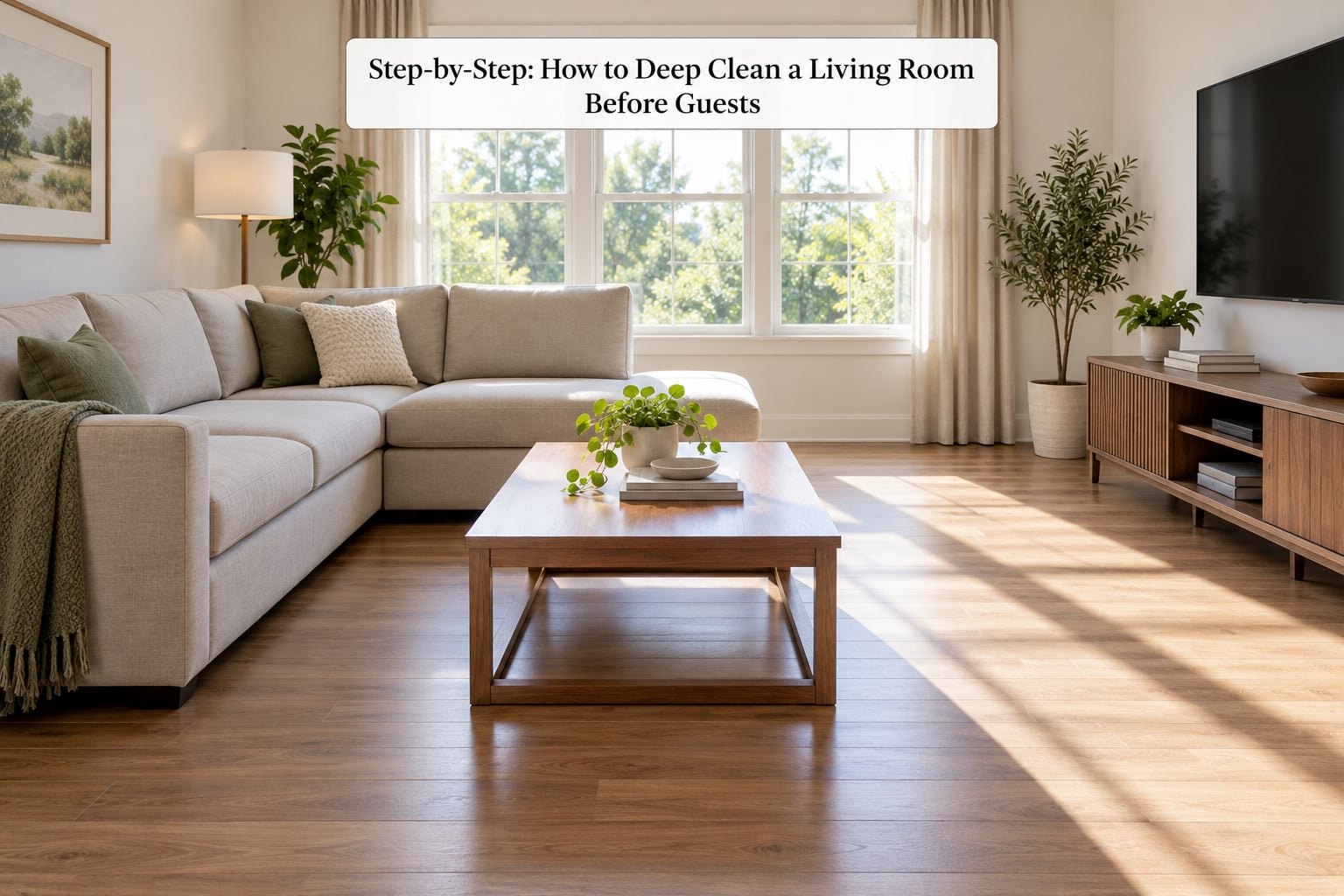
Nobody sees the whole room at once. They see the floor, then the seating, then whatever their eye lands on while they are standing and talking. That is why the floor goes last but gets the most attention.
Clear Clutter and Create a Cleaning Path
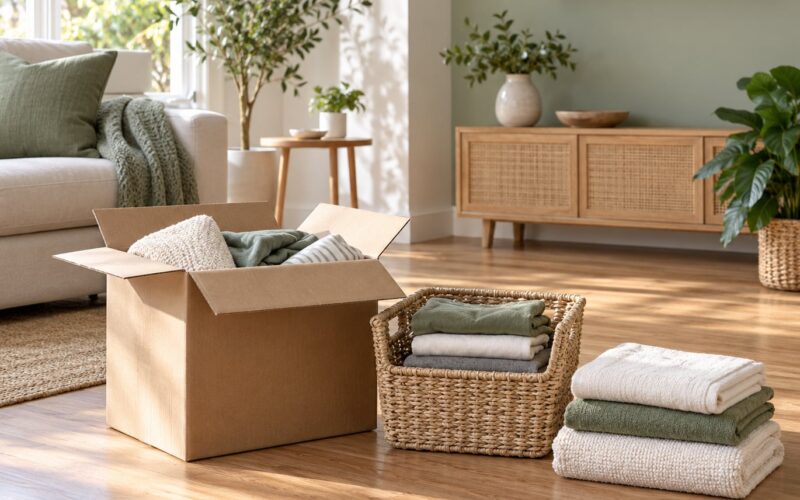
Sort into five containers: stays on the surface, moves to another room, goes in the wash, goes to the bin, and goes to be given away. Work one zone at a time — coffee table, then side table, then console — rather than the whole room, or you will walk the same floor three times.
Push delicate objects like vases and photo frames into a laundry basket lined with a towel instead of relocating them individually. Overhead decor stays put. If it survived the last six months it survives the clean.
You are done when you can walk a straight line from the door to the sofa without stepping over anything.
Dust from Top to Bottom
Start at the ceiling and work down, because everything you touch next catches the dust you just moved. Use a clean dry cloth on a slightly damp surface for painted walls, and a dry cloth on electronics and screens.
The spots people miss are the boring ones: the blades and canopy of the ceiling fan, the corners where wall meets ceiling, the top edges of door frames, the track above a curtain, the tops of cabinets, the plate behind the television. Ceiling corners need an extendable pole or a stable step stool. Never stand on a chair or a table for a fan.
Blinds get a vacuum with the crevice tool held closed, or a damp cloth run along each slat if they are wood or vinyl. Curtains shake out and go through the wash if there is time; otherwise leave them alone rather than dampening them unevenly.
Clean Sofas, Chairs, and Fabric Surfaces
Read the care label first. Code W means water cleaner, S means solvent or dry clean, and a blank or mixed code means spot clean only, no soaking.
Vacuum first with the upholstery attachment across the seat, back and arms. Then check the crevices: the gap between seat cushions and the back, under the cushion overhangs and along the base. That gap is where crumbs and hair live, and it is the first thing anyone leaning forward sees.
For a mark, blot from the outside inward with a damp cloth and a little upholstery cleaner. Rub in circles, never scrub. Let it dry with a fan pointed at the spot rather than a hairdryer, which can scorch or shrink fabric. Avoid over-wetting: water that soaks to the foam base takes days to dry and grows a smell.
Before the vacuum goes anywhere near a pet hair problem, run a stiff upholstery brush or a slightly damp rubber glove over the surface. That lifts hair out of the weave. Vacuuming first presses it deeper and just moves the problem around.
Wipe Down Hard Surfaces and Touch Points
Once surfaces are dust-free, wipe them. Use a damp cloth with a little all-purpose cleaner on wood and laminate, but never saturate the top edge of a shelf where water can run into the joint. Painted and lacquered surfaces take a standard cleaner; bare or antique wood takes a dry cloth and nothing else unless you know what finish it has.
High-touch surfaces are the ones guests handle: door handles, light switches, the edge of a cabinet where hands grip, the sofa arms, and the coffee table where plates land. These are the surfaces that benefit from a disinfecting product, applied and left for its full contact time rather than immediately wiped. Keep the spray off screens, and never mix bleach with vinegar, ammonia or any other cleaner — the combination releases toxic gas.
Electronics get special handling. A dry microfibre cloth, lightly dampened, removes fingerprints from a TV or laptop screen; a dampened cloth with a drop of mild soap handles the plastic. Vents on the television, game console and speakers collect dust inside where no cloth reaches, and a short burst of compressed air or a soft brush clears it. Hold the can upright and never spray cleaner directly onto a device.
Vacuum and Freshen the Floor
Floors go last because everything above is now clean. On carpet, vacuum slowly and in overlapping passes, and give the edges and corners a second pass with the crevice tool — that is where 80 percent of the visible soil is. On hard flooring, vacuum first to pick up grit, then damp-mop with a well-wrung cloth. Grit left behind is what scratches wood and dulls the finish.
For hardwood, check whether the finish is sealed and use barely damp water. Over-wetting darkens bare wood and can swell seams. On tile, a steam mop or a hot soapy mop lifts spills and grout lines and sanitises at the same time.
Area rugs need care around the edges. Vacuum with the beater bar off if the rug is low-pile or has a fringe, spot-treat marks with a cloth rather than saturating, and lift the rug to clean underneath when it is light enough to handle alone. Baking soda left on a carpet overnight absorbs smells; vacuum it up the next morning.
Give the skirting boards and door frames a quick pass with a damp cloth too. They frame the floor and the eye follows them.
Finish with Styling and Guest-Ready Details
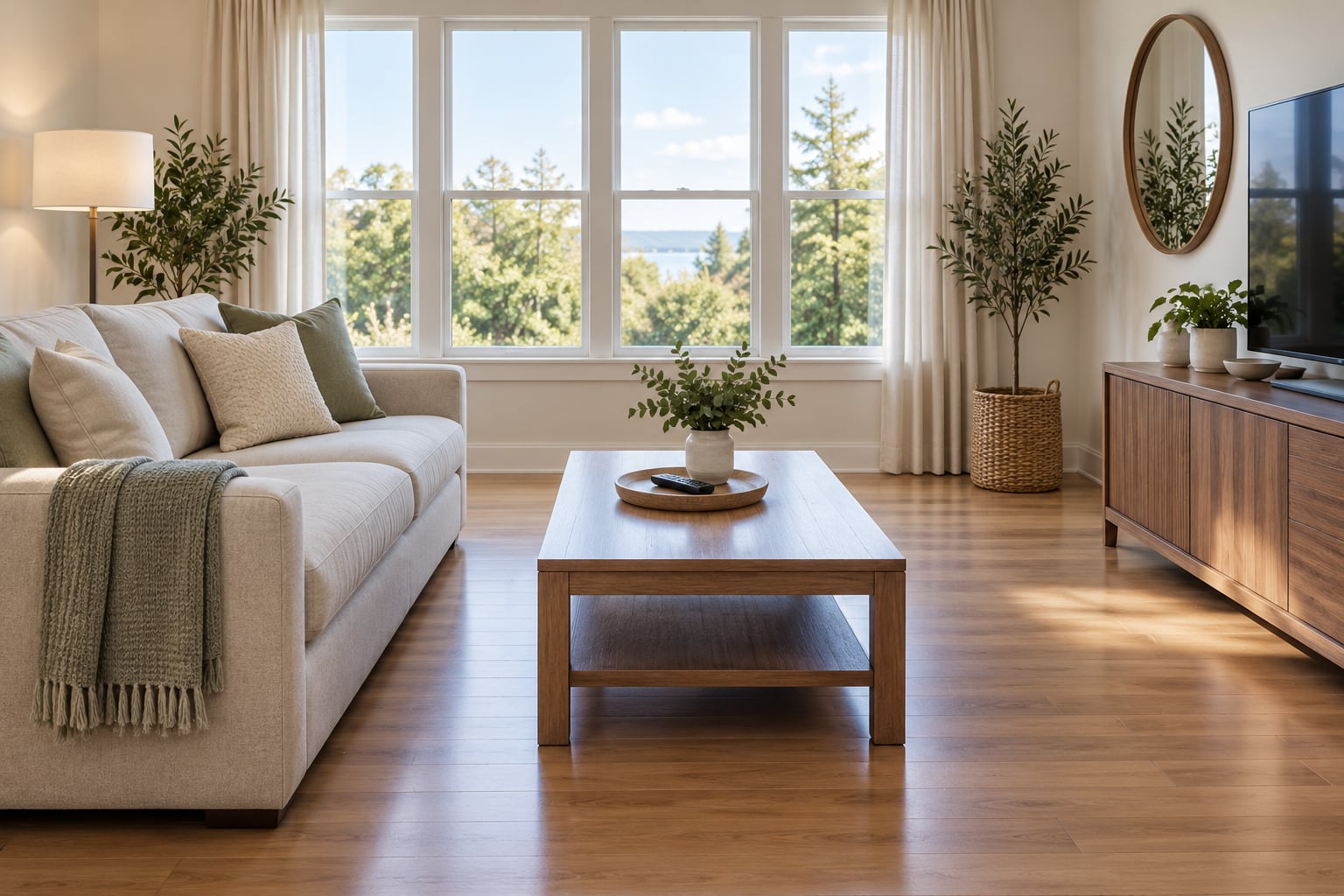
Put the washed throws back on, plump every cushion, and put cushions in their spot rather than stacked. Clear any visible cords, basket clutter and paper from side tables — a small tray holding the remote and a charger reads as intentional, a scatter of them reads as unfinished.
Open the curtains and turn on lamps before guests arrive rather than at the buzzer, because a room lit by three lights reads warmer than one lit by overhead fluorescent. Put out fresh water, restock what you emptied from the bathroom, and change the bin liner in the living room itself.
On smell, open a window and leave a bowl of baking soda out overnight the night before. A candle lit well before anyone arrives spreads scent more evenly than one lit at the door.
Last, walk the room the way a guest would: in from the hallway, stand where they will stand, look at the seat, the floor and the table. That walkthrough takes a minute and catches things a checklist will not.
Common Mistakes
Dusting downward first. You clean every surface and then knock the dust off all of it onto the floor you just finished. Fix: ceiling first, floors last, always.
Cleaning before decluttering. You cannot reach the back of a cluttered console, so you wipe what is visible and call it done. Fix: 15 minutes of sorting before any cloth comes out of the bag.
Spraying and wiping immediately. Disinfectants and degreasers need dwell time to do anything. Fix: spray the light switches and handles first, then go clean something else, then come back and wipe.
Using one product everywhere. Bleach or ammonia-based sprays on wood, vinegar on sealed natural stone, or any liquid on a screen causes damage you cannot undo. Fix: check the label for the surface and, when unsure, use a damp cloth and nothing else.
Skipping the underside and the gaps. TV vents, cushion crevices, behind the sofa, the tops of door frames. Fix: reserve the crevice tool for a deliberate 10-minute pass at the end.
Moving heavy furniture alone. Fix: slide it. Shift only as far as you can comfortably reach behind and under, put a folded towel under the legs to protect the floor, and stop there.
Pet hair straight into the vacuum bag. Fix: rubber glove or stiff brush first, then vacuum. Lift the sofa skirt and vacuum beneath it.
A few habits make the next deep clean cheaper. Shoes off at the door keeps grit out of the room entirely. Fewer objects on each surface means less to dust. Five minutes of tidying on a Saturday evening takes most of the urgency out of the night before guests.
Frequently Asked Questions
How long does a deep clean of a living room take?
A full pass on a normal-sized living room takes two to three hours for one person, most of it in dusting and floors. Sixty minutes is enough for a thorough guest-ready reset if you skip moving furniture, washing curtains and cleaning behind the sofa. Thirty minutes covers the visible essentials: bathroom, floors, glass, seating surfaces and touch points.
What should I clean first before guests arrive?
Clear the clutter, then start at the ceiling and work down: light fixtures, ceiling fan blades, blinds, shelves, walls, skirting boards, hard surfaces and touch points, then upholstery, then floors. Spraying disinfecting cleaner on handles and switches early and coming back to wipe it later uses the waiting time for you instead of against you.
Do I need to move furniture to deep clean the living room?
No. Slide pieces only as far as you can comfortably reach behind and underneath, and never lift or carry heavy pieces alone. Put a folded towel under the legs before you move anything so the floor does not get scratched. Vacuuming behind the sofa and under the lowest chair catches most of the hidden dirt, and nobody checking your room will look further than that.
What is the 5-5-5 rule for cleaning?
The 5-5-5 rule is a daily habit, not a deep clean: spend five minutes a day tidying, five minutes dusting, and five minutes cleaning one bathroom or kitchen surface. Its point is that ten focused minutes beat a long Saturday that never happens. Run it most days for a week and the pre-guest deep clean shrinks to well under an hour.
What is the 80/20 rule for cleaning?
The 80/20 rule says about 80 percent of the cleaning results come from 20 percent of the effort. In a living room, that 20 percent is floors, glass, the seating, visible surfaces and high-touch handles. Cleaning the underside of a rarely seen table while the rug keeps its marks gains you almost nothing. Do the visible high-impact work first and stop worrying about the rest.
How do I get pet hair out of upholstery and rugs without a machine?
Run a slightly damp rubber glove or a stiff upholstery brush across the fabric first to lift hair out of the weave, then vacuum with the upholstery attachment. For rugs, work in the direction of the pile and make slow overlapping passes. Rubber gloves on a dark fabric take up hair almost instantly. Vacuum the sofa seams and the gap behind the cushions last, since that is where hair hides.
If you only have a short window tonight, do the floors, the seating and the glass, then reset the surfaces guests will touch. Guests spend the evening sitting and looking down — clear that, and the rest of the room will carry itself.