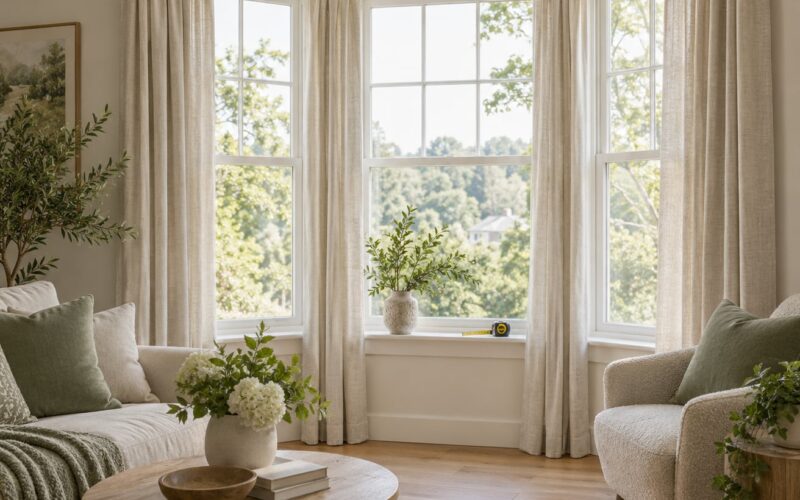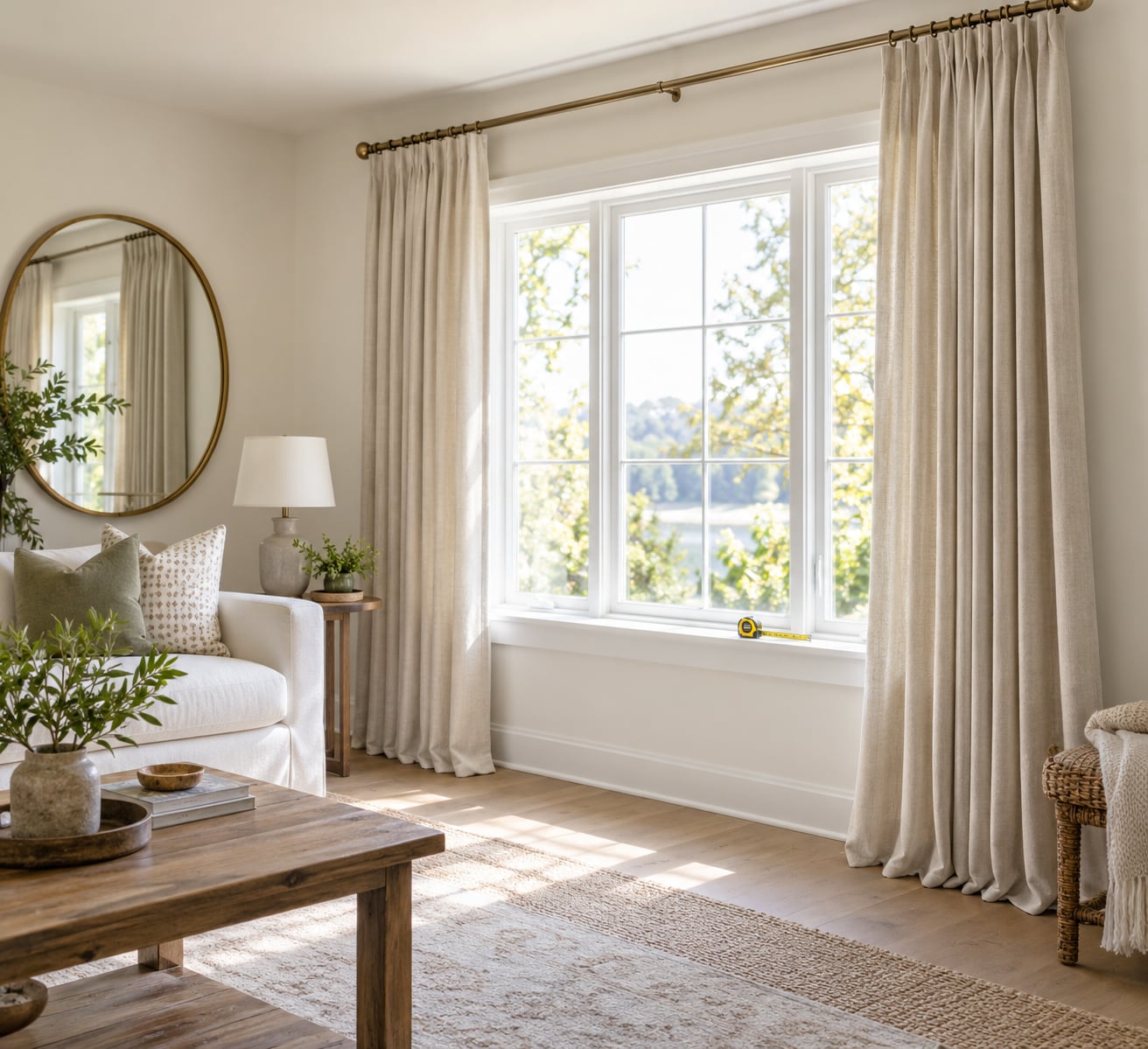
The trick that works in almost every room is short: hang the curtain rod higher than the window frame and wider than the window opening, then hang drapes that run all the way to the floor. Learning how to make a window look bigger with drapes takes about an hour of measuring and an hour of hanging, and it changes the proportions of a room without anyone touching the structure.
Windows shrink when a treatment is mounted too low, too narrow, or too short. Drapes fix all three at once, and they do it with hardware you can pick up at a home improvement store and a few hours on a Saturday.
Table of Contents
- What You Need
- Step-by-Step: How to Make a Window Look Bigger with Drapes
- How to Make a Window Look Bigger with Drapes: Plan the Proportions
- 1. Measure the Window and Intended Coverage
- 2. Choose Drapes That Reach the Floor
- 3. Mount the Rod High and Extend It Wide
- 4. Hang the Panels Outside the Window Frame
- 5. Style and Arrange the Finished Treatment
- Common Mistakes That Make a Window Look Smaller
- Drapes and Window-Size Tips for Different Rooms
- Low ceilings
- Small rooms
- Asymmetrical or mismatched windows
- Bay windows
- Rental spaces
- Furniture under or beside the window
- Frequently Asked Questions
- What is the best curtain length to make a window look bigger?
- Should I use light or dark drapes to make a window look larger?
- How do I hang curtains on one blind window without making it look crowded?
- What is the easiest way to hang drapes without drilling for renters?
- How far above and beside a window should I place the curtain rod?
- Can a ceiling-mounted curtain track make a short window look taller?
- Conclusion
What You Need

Gather the measurements before you buy anything, because the wrong rod length is the most common reason a treatment ends up too small.
- Window frame width and height. Measure the outside of the trim, not the glass.
- Ceiling-to-floor clearance in the spot where the rod will sit. This sets your finished panel length.
- Wall width on each side of the window. You need 6 to 12 inches of clear wall past the frame for the rod to extend.
- Rod or track length. Window width plus 12 to 24 inches for a standard outside mount.
- Mounting hardware matched to your wall: screws and wall plugs for drywall, masonry bits for brick, and a stud finder if the ceiling is framed.
- Tools: tape measure, pencil, level, drill, step ladder, and a second person for holding the rod while you mark.
A level and a stud finder are the two that matter most. A rod mounted even half an inch off-level is the first thing the eye catches in a room.
If you rent, skip the drill. Tension rods that span a window recess, no-drill brackets that grip the trim, and heavy-duty peel-and-stick hooks on a smooth wall all hold a light panel without marking the surface. None of them will hold a heavy lined drape on a wide span, so with renters I would pick a lightweight fabric and a smaller rod.
Before you mark anything, locate wiring. Windows often have a switch or outlet on the nearby wall, and hidden cable runs in older houses. Avoid drilling within about 6 inches of a switch plate, and hire a qualified electrician or handyperson if you find cable where you planned a bracket.
Step-by-Step: How to Make a Window Look Bigger with Drapes
How to Make a Window Look Bigger with Drapes: Plan the Proportions
The proportions do all the work. A rod that sits 6 to 12 inches above the top of the frame pulls the eye upward, and a rod that runs 6 to 12 inches past each side makes the opening read as wider than it is. Panels that stack back onto the wall, clear of the glass, keep the full frame visible when the drapes are open.
For the fabric, plan two to two and a half times the flat width of the rod span. That is what gives a gathered panel enough folds to look generous instead of flat. Look at the trim, the surrounding architecture, and the furniture nearby before you drill: crown molding, a sloped ceiling, or a tall dresser sitting under the window will change where a rod can physically go.
1. Measure the Window and Intended Coverage
Write down four numbers, not one. A 36-inch window sounds small until you see how much wall sits beside it.
- Frame width: outside edge of the trim, side to side.
- Frame height: top of the trim to the sill.
- Ceiling to rod height: how far above the frame the rod will sit, which is usually 6 to 12 inches, and how much clear ceiling you have above that.
- Rod to floor: the drop of the finished panel.
The number that enlarges the window is the rod span, not the frame width. On a 36-inch window, a 60-inch rod is the starting point. The frame width tells you where the fabric must cover when closed; the rod span tells you how much wall and ceiling the treatment claims, and that second number is the one doing the visual work.
A worked example. A 42-inch-wide window in a room with a 96-inch ceiling, with the rod mounted 10 inches above the frame and the hem finishing just off the floor: rod span about 66 inches, finished panel drop about 80 inches, and total flat fabric width at least 132 to 165 inches. That is two panels of 66 to 82 inches each, which lines up with standard ready-made panel sizes.
2. Choose Drapes That Reach the Floor
Length does more for apparent height than color does. Every inch of panel that stops short of the floor shortens the vertical line the eye follows upward, and the room reads smaller.
Three finishes to know: a break, where the fabric bends a fraction on the floor; a kiss, where the hem just touches; and a puddle, where a few inches pool. Break and kiss suit most rooms. Puddle reads as formal and luxurious, but it collects dust and gets stepped on near a doorway, so I would not use it in a hallway or beside a sliding door.
Color and weight matter just as much. A light color, or one that matches the wall paint, keeps the eye moving across the wall rather than stopping at a block of fabric. For pattern, vertical lines push the eye upward, which is the right choice in a room with a low ceiling or a short window. Horizontal bands widen a space, but they fight the floor-length vertical, so use them only on a wide window in a room with a generous ceiling.
The heading style sets how full the panel looks. Rod pocket, grommet, and tab-top give a relaxed, gathered look with moderate fullness. Pinch pleat, goblet, and ripple fold give a fixed, evenly spaced fold and typically need more fabric to look the same as a soft heading. Lining adds body and blocks light; interlined panels hang heavier and hold a fold; blackout lining is for bedrooms and nurseries. A sheer panel over a window keeps daylight coming through while still softening the view.
3. Mount the Rod High and Extend It Wide
Mark the height first. Hold the level where you want the rod, level across the wall, and draw a light pencil line. Measure up from the top of the frame to that line, and check the same distance on the other side. Two marks that disagree mean you have a problem in the wall, and it is cheaper to find that now than after the rod is up.
Then mark the bracket positions, set at least 6 inches past each side of the frame. Use the screws or hardware the rod manufacturer specifies, since a long rod puts real leverage on the bracket and lighter fasteners can pull loose over time.
Check for studs with a finder, then for wiring near any switch or outlet on that wall. If the ceiling is framed and you want the tallest possible look, mount the brackets into the ceiling itself a few inches out from the wall, which is called a ceiling mount. If you find cable where the bracket goes, or the wall is masonry you are not set up to drill, stop and bring in a qualified professional rather than guessing where the wire ends.
4. Hang the Panels Outside the Window Frame
The single most common failure is fabric across the glass. When a panel rests on the window, it covers the frame the eye needs to measure the opening by, and the window reads as exactly its real size.
So place the rod far enough forward that the stack of fabric when open sits on the wall, not on the glass. Most panels at their standard fullness occupy 10 to 14 inches of rod depth once gathered, so a rod mounted 4 to 8 inches in front of the frame usually clears it. Stand in the room and push the panels open, then check from an angle that no fabric crosses the trim.
For more coverage on one panel, two options work. Stack a second panel on the same track behind the first, offset by a few inches, which doubles the fabric at the side without changing the rod. Or use a double-sided track, where the back layer is usually a sheer and the front layer is the drape, so you still see light while keeping the coverage.
5. Style and Arrange the Finished Treatment

Once the panels are up, most of the remaining work is adjustment. Equalize the folds by eye rather than by counting, since a hand-worked panel rarely divides evenly. Vary the spacing slightly, the way a tailor would, and the fold pattern stops looking machine-stiff.
Push the panels to the wall and see the full frame. Then check the hem. It should just clear the floor or break on it, and it should not swing out from the wall or catch under a drawer. Adjust the hem before you add the heading tape back onto the rod, because hemming after hanging is a much harder job.
Stand back to the doorway. You are finished when the frame is fully visible when the drapes are open, the fabric runs in one unbroken vertical from rod to floor, and no part of the treatment is closer to the window than the frame. If the top of the panel disappears into the rod bracket or the folds crowd the glass, go up and out a little further.
Common Mistakes That Make a Window Look Smaller
Almost every disappointing window treatment comes down to one of these. Each one has a quick fix.
- Rod mounted too low. Hanging it 2 inches above the trim is the default many people never outgrow. Move it to 6 to 12 inches above the frame, or mount it on the ceiling, and the same panel instantly reads taller.
- Rod too narrow. A rod exactly the width of the frame gives the window nothing extra. Add 6 to 12 inches on each side so the fabric stack frames the opening instead of ending at it.
- Panels stopping above the floor. Even 8 inches of gap shortens the vertical line and draws the eye down to a bare floor. Let the hem kiss the floor or break on it.
- Dark or heavy fabric on a small window. A large dark panel next to a small opening makes both look smaller. Choose a lighter color, or one that matches the wall, and add a sheer layer if you need darkness later.
- Bulky fabric covering the frame. Folds spilling across the trim hide the edges that make a window look wide. Keep the panels forward of the frame and stack them on the wall.
- Not enough fabric width. Panels narrower than two times the rod span pull flat and look thin. Calculate 2 to 2.5 times the rod span in flat fabric width before you buy.
- Bunching panels in front of the glass. It feels like more privacy, but it visually narrows the opening. Push the stack back onto the wall and leave the glass clear.
- An uneven or unsafe installation. A crooked rod, sagging span, or bracket into a switch box is worse than the problem you were solving. Re-level before tightening, and move the bracket.
One more worth naming: buying panels before measuring the wall. Standard ready-made widths are limited, and buying two narrower panels to make up a wider rod leaves the frame bare in the middle when the drapes close.
Drapes and Window-Size Tips for Different Rooms
The same rules hold everywhere, but the room decides which one matters most.
Low ceilings
Mount on the ceiling rather than the wall if there is any recess to work with. The brackets go within a few inches of the ceiling line, the panels run down from there, and the vertical gains about half a foot. Pair it with a vertical stripe and a light color, and skip anything with a horizontal band.
Small rooms
One continuous rod across every window in the room looks calmer than a separate treatment on each, which chops the wall into segments. Sheers in the daytime, drapes drawn at night, is the version that keeps a small room from feeling shut in. A mirror on the wall opposite the window bounces the same daylight a second time and is the cheapest way to add depth.
Asymmetrical or mismatched windows
Do not buy a panel for each window and call it done, because different heights will read as an error. Hang one straight rod across all of them at the height of the tallest window’s frame, let each opening sit where it sits, and hang equal-length panels on the same rod. The single unbroken line hides the mismatch.
Bay windows
A rod bent around the bay follows the angles and keeps the sightline outside, which preserves the shape. A single straight rod in front of the bay gives a wider, flatter look that can read bigger, which is the goal here if the bay feels chopped up. For a corner bay, the straight rod usually wins because there is no clean wall to return to.
Rental spaces
Tension rods work well on a single window set inside the reveal, no-drill brackets clamp onto the trim, and peel-and-stick hooks on a smooth painted wall can carry a sheer. All three come off at move-out with a hair dryer or a warm cloth and a little patience. Keep panels light and the span short, since adhesive hooks have a real weight limit and it is low.
Furniture under or beside the window
If a dresser or a bed sits against the wall below the window, check the floor clearance before ordering panels. Leave 2 to 3 inches between the hem and the top of the furniture so the fabric does not rest on it, and drop the rod only as far as the furniture allows. A wider rod can extend over furniture just fine, since it is the floor length that gets compromised.
Frequently Asked Questions
What is the best curtain length to make a window look bigger?
Floor length wins, and there is little room for argument. The hem should just clear the floor or break on it, which leaves a continuous vertical line from the rod to the ground. A panel that stops 6 to 10 inches above the floor draws the eye downward and makes the opening look shorter. If furniture sits under the window, leave 2 to 3 inches between the hem and the furniture top and shorten the panel to match rather than letting the fabric rest on it.
Should I use light or dark drapes to make a window look larger?
Light colors, or drapes that match the wall paint, make a window read larger because the fabric stops breaking up the wall surface. Dark or high-contrast panels act like a frame around a picture and shrink the opening by comparison. If you need darkness for sleeping, hang a sheer in the daytime and a blackout layer on a second track for night, so the room keeps its light without the panel going heavy.
How do I hang curtains on one blind window without making it look crowded?
Take the blinds out of the picture and use one clean treatment instead of stacking a shade, a valance, and a panel in the same opening. Hang the rod 6 to 12 inches past each side of the frame and 6 to 12 inches above it, then let a single pair of floor-length panels rest clear of the glass. If you want the blinds to stay, hide them fully behind the drape with a wraparound rod or a blind pocket rather than half-covering them.
What is the easiest way to hang drapes without drilling for renters?
A tension rod set inside the window reveal takes two minutes and leaves nothing behind. Outside the reveal, no-drill brackets clamp onto the trim, and heavy-duty peel-and-stick hooks hold a lightweight panel on smooth painted drywall. Keep the fabric light, the span short, and test one hook in a corner before you hang anything. All three methods come off cleanly at move-out with warm air and a little patience.
How far above and beside a window should I place the curtain rod?
Mount it 6 to 12 inches above the top of the frame, and extend it 6 to 12 inches past each side. On an 8-foot ceiling, a rod set about 8 inches above the frame looks natural; on a 9-foot ceiling, go 12 inches or mount it on the ceiling itself. Measure the wall on both sides first, since the 6 to 12 inch extension only works if there is clear wall there and no tall furniture in the way.
Can a ceiling-mounted curtain track make a short window look taller?
Yes, and it is the best option in a low-ceiling room. With the brackets fixed to the ceiling a few inches out from the wall, the panel starts at the ceiling line instead of at the frame, and you gain 6 to 12 inches of visible vertical. Combine it with a ceiling-to-floor drop and a vertical stripe, and keep the ceiling around the track clear so nothing interrupts that line.
Conclusion
Start with the tape measure, not the fabric. Measure the frame, add 6 to 12 inches to each side for the rod, mount that rod as close to the ceiling as the wall allows, and buy floor-length panels in a light color with 2 to 2.5 times the rod span in total width.
Those four decisions do more for a small window than expensive fabric ever will. The same measurements are current for 2026, and they will still be right next year.