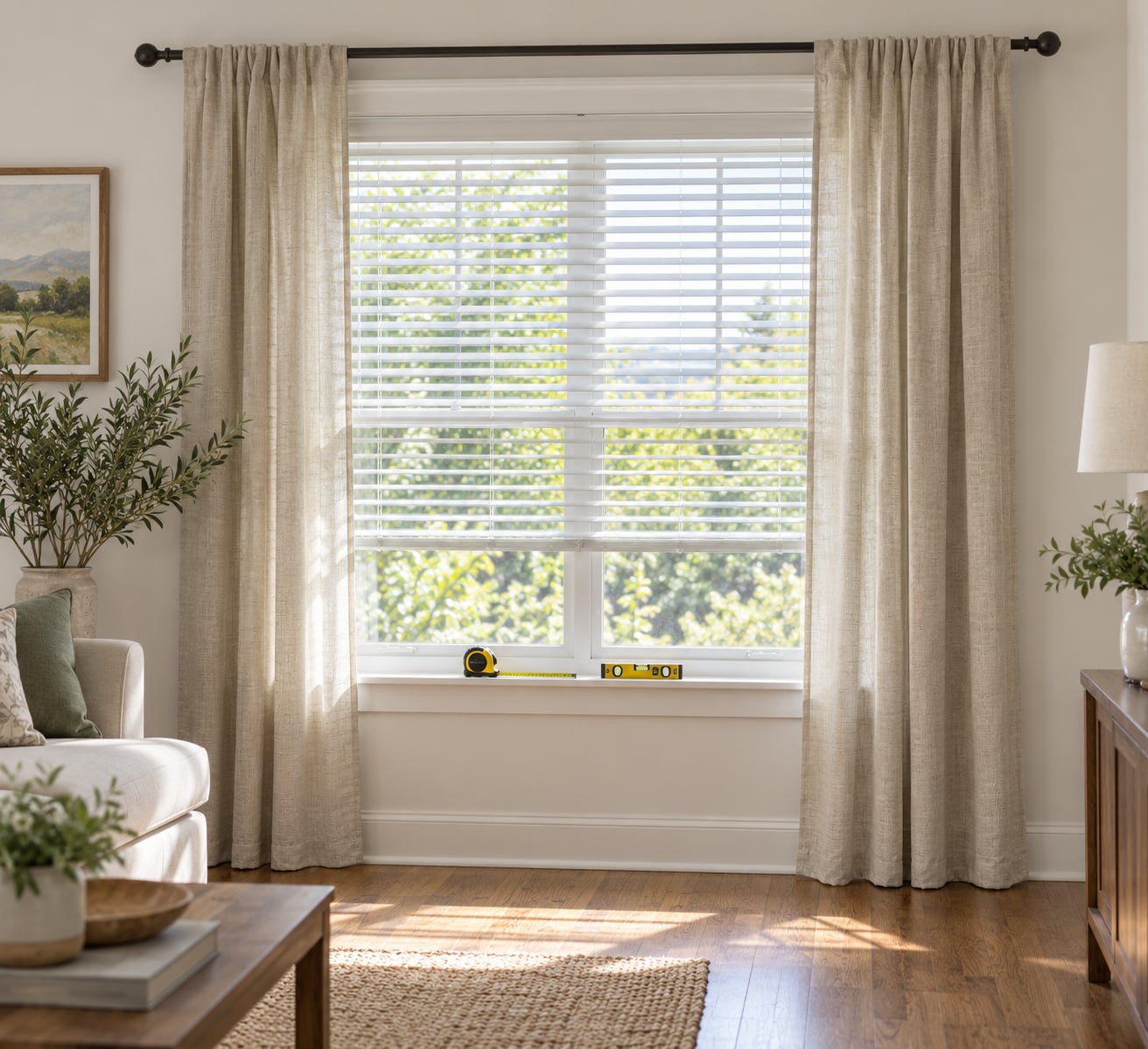
Hang the curtain rod 3 to 6 inches above the window frame and 6 to 12 inches past each side, then buy panels about twice the width of the window. Layering curtains over blinds takes about an hour, and if you rent you can do it with a tension rod or clip-on brackets that leave no holes. The blinds stay behind the fabric and still work.
The trick is clearance. Blinds stick out from the wall more than most people expect, and a shallow bracket is why curtains snag on the headrail and slats. Measure that projection first, and everything after it goes smoothly.
Table of Contents
- What You Need
- How to Hang Curtains Over Blinds Step by Step
- Measure the Window and Blinds
- Choose a Renter-Friendly Rod Position
- Install the Curtain Rod or Tension Rod
- Decide How to Hang Curtains Over Blinds Inside or Outside the Frame
- Hang, Adjust, and Style the Curtains
- Common Mistakes
- Using a Rod That Is Too Short
- Mounting the Rod Too Close to the Blinds
- Forgetting to Check Blind Operation
- Final Placement Tips
- Frequently Asked Questions
- Can you hang curtains over blinds without drilling?
- Should the curtain rod be above or below the blinds?
- How wide should curtains be when hanging them over blinds?
- Do curtains make a room darker when used with blinds?
- What if the blinds are damaged or difficult to clean?
What You Need
Gather these before you start. Nothing here is unusual, but two items get missed and both cause problems: a tape measure long enough to span the window, and a level.
- A curtain rod or tension rod. For a wall mount, go at least 8 to 12 inches wider than the window frame plus 6 to 12 inches of overhang per side. A 1 to 1.5 inch diameter rod holds folds better than a thin one.
- Mounting hardware matched to your situation: drywall anchors with screws if you may drill, adhesive hooks or command strips if you may not, and clip-on or headrail brackets for vertical blinds.
- Measuring tools. Tape measure, pencil, and a small notepad so you can write down numbers instead of guessing.
- Optional but helpful: a bubble level or laser level, painter’s tape for marking bracket positions, a stud finder, and a steamer or iron for the panels.
Skipping the level is the reason a rod looks crooked by a few millimeters and then annoys you every day. Painter’s tape on the wall marks both bracket spots at once, which beats measuring twice and drilling once.
How to Hang Curtains Over Blinds Step by Step
Measure the Window and Blinds
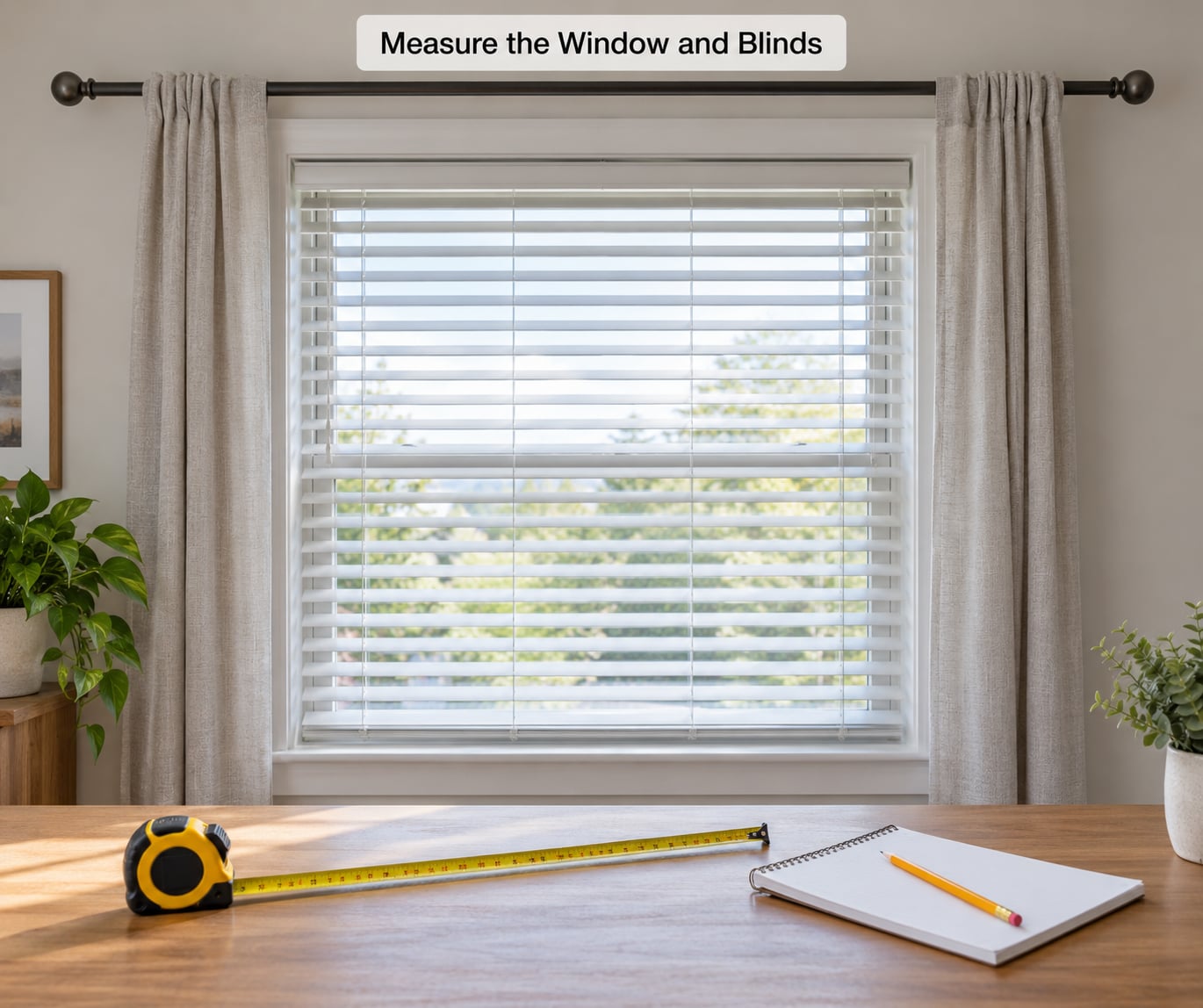
Measure four things and write them down. The window frame width, the width of the blind headrail, the distance the blinds project from the wall, and how far you want the curtain to drop.
For the projection, push a ruler or tape measure against the wall and slide it out until it touches the front of the headrail. On inside-mounted blinds that is often 2 to 3.5 inches. On a deep box or outside mount it can pass 4 inches, and that is where most curtains catch.
Then measure the drop. Most people want floor-length panels that lightly graze the floor, which means rod height equals window height plus the 3 to 6 inch gap above the frame plus about half an inch of clearance. Panels that stop 2 inches above the floor look unfinished unless there is a radiator underneath.
For width, take the window width and double it. That gives you fullness, which is the difference between curtains that look like fabric and curtains that look like flat sheets. Between 2x and 2.5x is the useful range for living rooms.
Choose a Renter-Friendly Rod Position
There are three positions, and only one of them looks intentional.
Above the blinds and outside the frame is the best option. The rod clears the headrail entirely, so the blinds can tilt and lift without touching fabric, and the extra height makes the ceiling look taller. This is the standard designer placement.
Above the blinds but inside the frame recess works when the window is deep and the wall above is tight. It saves space but gives the fabric less room to fall, so it crowds the blind box.
Below the blinds is the one most people try first and regret. The rod ends up below the sill or on the wall beneath, which shortens the panels, chops the window in half visually, and blocks the light that used to bounce off the sill. It is only reasonable when the blinds are on a soffit and the wall below is a single flat surface.
Renters without drilling permission have a fourth route: an inside-mount tension rod in the window recess, or clip brackets that grip the vertical blind headrail directly. Both keep the fabric forward of the blinds.
Install the Curtain Rod or Tension Rod
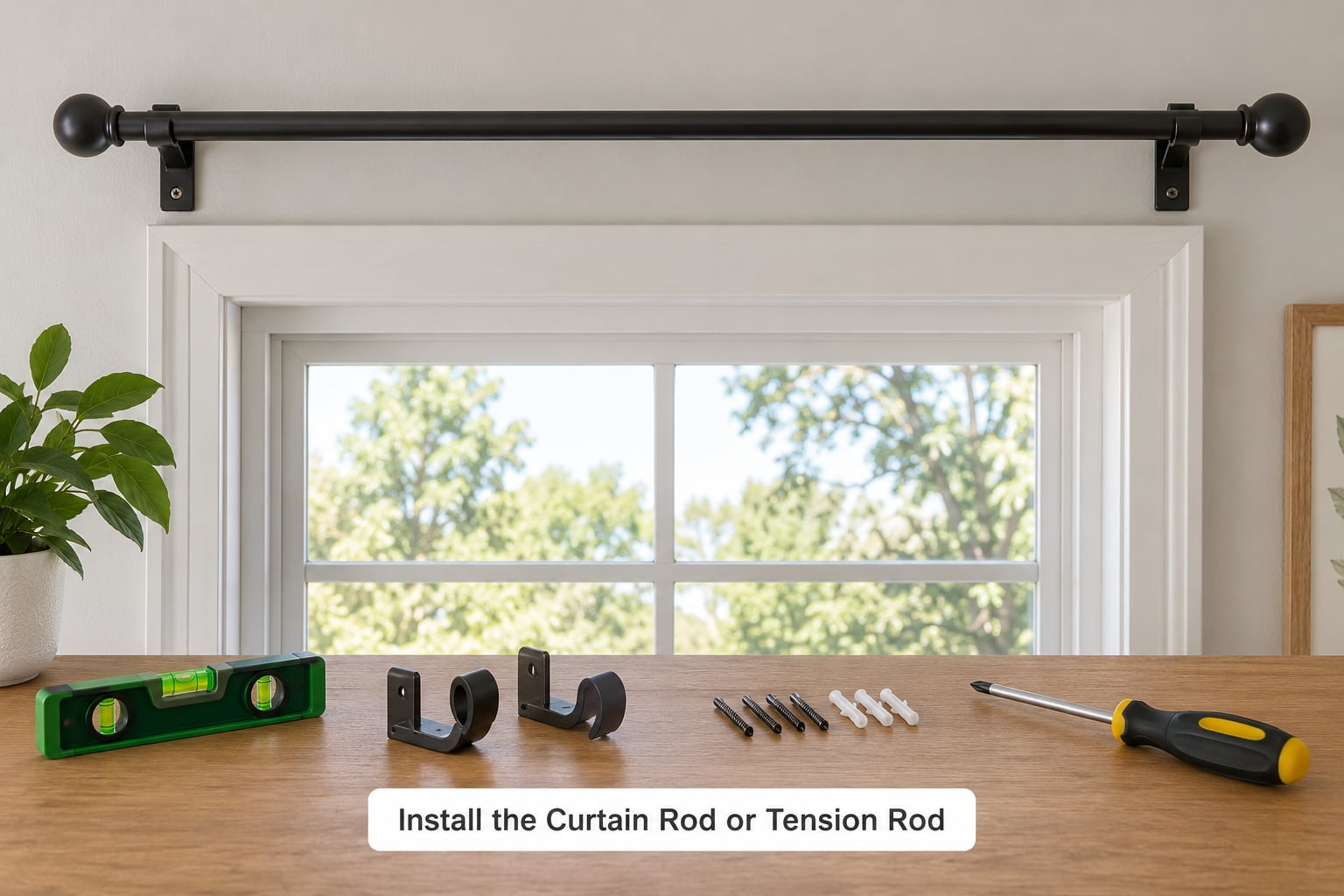
Mark the bracket positions with painter’s tape, then check that the rod clears the blind projection by at least 1 inch. That buffer is the whole ballgame. Brackets sized to a flat wall leave the panel resting against the slats, and you will hear it every time the blinds move.
If you can drill, hold a bracket where you want it, use the level, and mark the screw holes. A stud behind the wall makes the bracket far stronger than an anchor alone; when you find no stud, use a drywall anchor rated above the weight of your panels.
If you cannot drill, set the tension rod in the recess and tighten it slowly until it grips. Turn the knob a quarter more than feels secure, then check again after you hang the fabric, because tension rods lose grip over a few days with heavy panels. Clip brackets that snap onto a vertical blind headrail save a wall entirely, though renters on the forums report they wobble on wide or deep blind boxes and look out of place under a double rod.
Whichever method you used, test it before the panels go on. Load the rod with the weight of the fabric by hand, let go, and see whether it holds.
Decide How to Hang Curtains Over Blinds Inside or Outside the Frame
Outside the frame means the panels hang in front of the casing, with the brackets on the wall past each side. The fabric clears the blinds, the stack-back is wider, and the window reads as larger. This is the default.
Inside the frame means the brackets sit within the recess and the panels fall inside the casing. It looks neat in a small room, but any blind projection eats into the panel space, and the corners of the fabric will touch the blind box when the panels are drawn.
Whichever you pick, the panel should never rest on the headrail. If you pull the fabric straight and it touches the blind hardware, you need a deeper bracket or a higher rod position. That is the fix, not a thinner panel.
Hang, Adjust, and Style the Curtains
Hang the panels and then work on alignment. Ringing rings and hooks are adjustable one ring at a time, so even out the hem by eye rather than pulling the whole panel down an inch and hoping the other side matches.
Test the layers together. Draw the curtains closed and raise the blinds, then open the curtains and tilt the slats. Do both slowly. Most of the failures people describe online show up here: a panel edge caught in a tilt wand, a stack of fabric pressing the blinds shut, a bracket that shifts as the fabric swings.
Then style it. Stack the panels back on both sides and secure them with a tieback or a holdback so the blinds are visible from the center. Steam or iron the fabric first, because wrinkled panels make a good rod placement look bad.
For light control, two layers beat one. A sheer panel behind the main curtains softens daylight in a living room, and a blackout or thermal-lined panel gives you a real bedroom curtain for shift work.
Common Mistakes
Using a Rod That Is Too Short
A rod the same width as the window makes the curtains vanish when they open, and the panels bunch into fat accordion folds at each side instead of stacking flat. The fix is width: run the rod 6 to 12 inches past each side of the window frame or blind headrail, whichever is wider.
Short rods are also why people think layering curtains over blinds makes a window look smaller. The stack-back has nowhere to go.
Mounting the Rod Too Close to the Blinds
Cramming the rod against the headrail causes fabric to catch on the blind box, the tilt mechanism, or the slat edges as the panel swings. It also makes deep folds collapse, so the panel looks thin no matter how much fabric you bought.
Bracket depth should exceed the blind projection by at least 1 inch. If your brackets are shallower than the blind box, swap them for extension or deep brackets rather than tightening anything.
Forgetting to Check Blind Operation
Install the rod and the curtains, then raise, lower, and tilt the blinds through their full range before you call it done. Plenty of installations look fine with the blinds closed and fall apart the moment the slats rotate.
Watch for three specific failures. Curtain edges caught in the tilt wand mean the rod sits too close and needs moving. Blinds that stop partway down mean the stack-back is pressed against them, so widen the stack or move the tieback. A rod that shifts under pressure means the anchors are undersized for the fabric.
Final Placement Tips
Keep the rod level. A quarter-inch of slope over six feet is visible from across the room every single day.
Use blackout or thermal-lined panels in a bedroom and lighter sheers in a shared space where you want daylight to move through. Coordinated color is less important than value: lighter panels against a dark wall pull attention to the window, which is usually what you want.
One more thing worth deciding early. If the blinds are dated, bent, or impossible to clean, remove them before you hang the rod and fill the leftover mounting holes with a small patch of paint. Hanging curtains over blinds is a good solution, but it is a much better look when the layer behind them is one you actually like.
Frequently Asked Questions
Can you hang curtains over blinds without drilling?
Yes. A tension rod inside the window recess, clip-on brackets that grip a vertical blind headrail, or adhesive hooks rated for the fabric weight all work without a single hole. Tension rods are the most common renter option and hold light to medium panels, though they need checking after a few days because grip softens. Heavy blackout fabric is better on clip brackets or on a rod hung from existing hooks.
Should the curtain rod be above or below the blinds?
Above, every time. Mounting the rod 3 to 6 inches above the window frame and above the blind headrail keeps the fabric clear of the slats and makes the ceiling look taller. Below the blinds shortens the panels, cuts the window in half visually, and blocks light that would otherwise bounce off the sill. Only consider a below-blind rod if the blinds sit on a soffit and the wall below is flat.
How wide should curtains be when hanging them over blinds?
Roughly twice the width of the window, measured across the rod span rather than the frame. That fullness lets the panels stack flat at each side and still meet in the middle when closed. Between 2x and 2.5x works for most living rooms. The rod itself should extend 6 to 12 inches past each side so the stack-back has somewhere to sit.
Do curtains make a room darker when used with blinds?
Closed blackout panels do block most light, but the layered setup usually works better than either treatment alone. Close the curtains and raise the blinds for full dark, or leave a sheer panel behind the main curtains to filter daylight instead of blocking it. An air gap between the fabric and the window also helps with drafts and heat, so the combination often performs better than a single heavy layer.
What if the blinds are damaged or difficult to clean?
Take them down and hang the curtains directly on the rod. Most blinds come off by releasing the headrail bracket, lifting the valance or tension bar off the slats, and pulling the mechanism out of the mounting brackets. Fill the leftover screw holes with paint matched to the wall, then mount the rod in front of the frame so the repair is hidden by the fabric.
Start with the tape measure, not the drill. Find how far your blinds project from the wall, pick brackets deeper than that by an inch, and set the rod 3 to 6 inches above the frame and at least a foot wider on each side. Everything else on this list follows from those three numbers, and the whole job takes about an hour.