
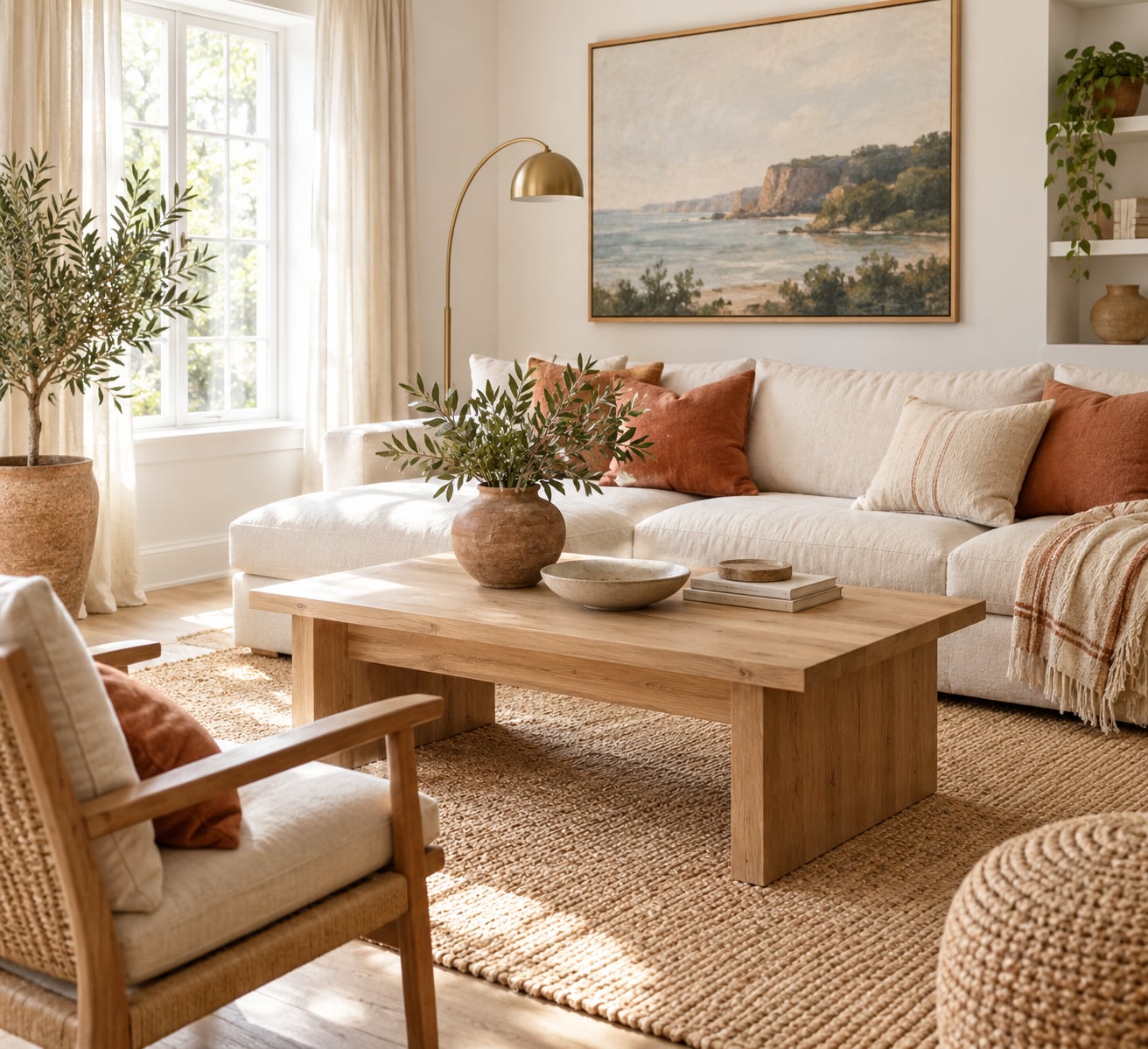
White walls reflect most of the light in a room, which is exactly why they can feel cold. Knowing how to warm up white walls comes down to adding materials that absorb light: warm-toned wood, wool and linen textiles, bulbs around 2700K, and one grounding accent color like rust, olive or ochre.
You can do nearly all of it without painting a thing, and most of it in a weekend. This guide breaks it into six steps, starting with the changes that cost almost nothing and ending with the one that is permanent.
This advice has been written and checked in 2026, and none of it depends on a trend. The lighting, layering and sizing rules below will still be true next year.
Warm bulbs: Swap every bulb in the room for 2700K warm white. This single change does more than any decor purchase.
Wood tones: Light oak, walnut or cane adds visible warmth against white without a single painted surface.
Texture: A jute rug, linen drapery and a wool throw break up flat white planes in minutes.
Dimmers and heights: Put lamps at three different heights and dim them. One ceiling fixture cannot make a room feel cozy.
One accent color: Rust, terracotta, olive, ochre or cognac, used sparingly, gives the white something to sit behind.
Plants and natural materials: A large plant in a terracotta pot and a woven basket bring life and warmth to a corner for very little.
Between them that is twelve ideas: six quick levers below and six steps that go deeper.
Table of Contents
- What You Need
- How to Warm Up White Walls Step by Step
- 1. How to Warm Up White Walls Without Repainting
- 2. Choose a Warm Accent Color
- 3. Add Warm Wood and Natural Texture
- 4. Balance the White With Layered Decor
- 5. Improve the Lighting
- 6. Finish With One Focal Point
- Common Mistakes
- Frequently Asked Questions
- How can I make white walls feel warmer without painting?
- What colors look best on white walls?
- Can I make white walls feel cozy in a rental?
- How do I choose a warm white paint color?
- What lighting makes white walls look warmer?
- How can I stop a white room from feeling cold?
- Conclusion
What You Need
Almost nothing here is required. Pick the items that match the room you actually have.
For diagnosing the room: your phone for photos, a cardboard paint swatch or two, and a cheap light meter if you want to check how dark a corner really is. A tape measure matters more than people expect, since rug sizing is where most rooms go wrong.
For testing color: white poster board, masking tape, and a paint sample in your candidate undertone. Test the sample on the wall itself, not a shelf, and look at it in morning light, at midday and again after dark with your lamps on. A color that looks cream at noon can read beige at night.
For warmth through materials: a jute or wool rug, linen or velvet drapery panels hung floor to ceiling, wood furniture in oak or walnut, and woven baskets. Rattan, cane, seagrass and bamboo all work as budget substitutes.
For lighting: 2700K LED bulbs with a color rendering index of 90 or above, plus a dimmer switch if your switches do not already have one. The CRI number matters because cheap bulbs make wood look gray, which defeats the whole point.
For homeowners: eggshell paint, a primer if you are going over a glossy surface, and panel moulding or wood slat stock if you want an architectural fix. If you rent, skip all of it and read step 1 first.
How to Warm Up White Walls Step by Step

Work in this order. Each step assumes the one before it is done, and later steps cost more, so the cheap wins land first.
1. How to Warm Up White Walls Without Repainting
Start by looking at the room the way a visitor does, not the way you do. Stand in the doorway and note where your eye lands and where it stops.
Check four things. The light: a north-facing room or one with a blocked window gets cool daylight all day, which is why those rooms feel cold even when the furniture is warm. The undertone: hold a clean white paper towel to the wall, and if it reads faintly gray or blue, the paint itself is cool and will amplify cool light.
The flooring matters too, since warm wood floors push the whole room warm while pale gray or white tile pulls it cool. The furniture matters most of all: an all-white sofa on an all-white floor against an all-white wall gives the eye no contrast to land on, so everything blurs together.
The finish matters less than most people think, but a high-gloss wall reflects ceiling light back into the room and exaggerates coolness. Eggshell or matte scatters light instead of bouncing it.
Then choose your fastest affordable update. If the room is light-starved, change the bulbs first, because it costs almost nothing and often solves the complaint outright. If the furniture is white-on-white, throw rugs, cushions and a wood coffee table fix it in an afternoon. If the walls are genuinely cool-toned, that is the one problem paint solves better than anything else, and it is worth doing if you own the place.
One honest trade-off worth saying plainly: painting a single wall a deep color is the single most effective fix there is, and in decorating threads people say so over and over. It is also permanent and expensive, so it is the last step, not the first.
2. Choose a Warm Accent Color
A white room needs a third color, and it needs one that absorbs light. Think of it as the 60/30/10 split: 60 percent white, 30 percent wood and neutral, 10 percent warm accent. That 10 percent is doing far more work than its size suggests.
Here is how the warm options behave against different rooms.
Rust and terracotta: the strongest warmth per square foot, and they pair naturally with light oak and cream textiles. On a north-facing wall they read as sunset, which is the point.
Olive and moss green: softer than rust and easier to live with in a small room. Olive also sits well beside warm woods without competing.
Ochre and mustard: bright and optimistic, best used in cushions, a lampshade or one chair rather than a whole wall.
Cognac leather: warm, expensive-looking and almost impossible to clash with white walls.
Deep navy: technically cool, but so dark it grounds a room the way rust does. The strongest higher-effort option for an owner.
Warm whites and creams: if you want to stay in the neutral family, layer different shades rather than adding color. Cream, oatmeal, greige and taupe together read warmer than one flat white does.
Dusty blue: the one cool-leaning accent that works, and only in a muted, greyed version. A clean sky blue next to white will make the room feel like a clinic.
Test before you commit. Tape a sample to the wall and live with it for two days. If you are painting, buy a sample pot and test at least two shades in the same room, because the same color looks different in a north room than a south one.
3. Add Warm Wood and Natural Texture
Wood is the fastest-working material in a white room because it absorbs light instead of returning it.
Light oak and ash are pale but unmistakably warm, and they suit small rooms because they do not add visual weight. Walnut and medium-tone oak go darker and hold a room together. If your floor is already warm wood, pick furniture in a similar tone rather than a matching one, since an exact match reads as a set from a catalogue.
Natural fiber brings the same effect for very little. Rattan, cane, seagrass, wicker, jute and bamboo all have visible texture, and texture is what stops a white wall from looking like a blank screen.
Linen, wool and boucle on curtains and cushions work the same way. They look expensive, they soften hard wall planes, and they hold warm light instead of bouncing it.
4. Balance the White With Layered Decor
Layering works because it puts warm tones at three heights: floor, furniture and wall.
At floor level, size the rug so the front legs of all the seating sit on it. A rug that floats with a white border showing around the edges is the single most common complaint in decorating forums, and it is a pure sizing error. Most living rooms need something in the 8 by 10 foot range, and if that is out of reach, layering a plain low-pile jute rug under a smaller patterned one fakes the size for very little money.
At furniture height, add a wood coffee table, a warm-toned throw draped over a chair arm, and two or three cushions in your accent color rather than six in three colors.
At wall height, hang drapery panels from a rod mounted close to the ceiling and run them to the floor, even if the windows are small. The vertical line of full-length fabric stops the wall from reading as flat. Then add art, and mix frame finishes if you like rather than matching everything.
A large mirror on the wall that faces a window will bounce daylight across the room, which is the cheapest lighting upgrade available and also doubles as a warmer surface than white paint.
5. Improve the Lighting
White walls magnify whatever light you give them, including light you did not choose. This is where most rooms start, and it is why so many people go shopping for decor when they needed a bulb swap.
Kelvin measures how warm a light source looks. Here is what each range does to a white room.
2200-2700K: candle-warm, softest, best for living rooms and bedrooms in the evening.
2700K: the sweet spot for a white room you want to feel cozy. This is what most people mean by warm white.
3000K: soft neutral, slightly crisper. Fine for kitchens and bathrooms where you want clean light.
3500K: neutral. Acceptable but doing little for warmth.
4000K and above: cool blue-white, and the usual reason a white living room feels like a waiting room. Replace these first.
Check the CRI number while you are shopping. Anything at 90 or above shows wood and fabric in their true color, while cheaper bulbs flatten warm tones toward gray, which is the exact opposite of what you paid for.
Then layer the sources. One ceiling fixture lights a room evenly and flattens it, so add at least two lamps at different heights, a floor lamp in a corner that reaches above eye level, and a table lamp on a surface where the light lands on something rather than into your eyes. Dimmers let you run the room at 30 percent in the evening, and the change is dramatic.
Sheer curtains or a light linen panel diffuses daylight and stops it from hitting the wall at a harsh angle. If the room gets no sun at all, a warm floor lamp standing a few inches from the wall will create a glow the flat overhead fixture never could.
6. Finish With One Focal Point
A white room without a focal point feels unfinished because there is nowhere for the eye to settle.
Pick exactly one. A large piece of art in a warm wood or brass frame is the simplest and the most reversible. A vintage or antiqued mirror in a salvaged frame works, especially opposite a window. A painted cabinet in a muted green or warm terracotta does a lot of work in a small room while taking up no wall space at all.
For a weekend project, wood slat panels on one wall give a flat rental wall real texture and shadow. For renters who want nothing drilled, hang a large textile or woven piece on a single sturdy hook and let it be the anchor.
Whatever you choose, give it the wall to itself. Surrounding a focal piece with competing small items is what makes a white room look cluttered rather than composed.
Common Mistakes
Almost every cold white room repeats the same handful of mistakes, and each one has a straightforward fix.
1. Undertone clash with the flooring. A warm grey-beige accent on cool gray tile will fight all day. Pull the undertone from the flooring, not from an imagined mood board, and test it taped to the wall.
2. Too many colors at once. People try to fix a cold room by adding rust, olive and mustard in the same week. Use one accent family and let wood do the rest. Simplicity is the point, and over-decorating reads as clutter, not warmth.
3. Keeping the cool overhead bulbs. A 4000K bulb in a white room undoes hours of styling work. Swap the bulbs before you swap anything else.
4. Overcrowding the walls. A dense gallery of small frames over a white wall flattens into noise. Fewer, larger pieces with space around them give the same coverage and far more calm.
5. Making a small room heavier. Dark on all four walls or a floor-to-ceiling dark rug shrinks the space. Concentrate the dark in one area and keep the rest light, and put the rug on top of pale flooring rather than replacing it.
6. All-white furniture fighting white walls. If you cannot replace the sofa, contrast it from below and behind with a rug, a wood table and a tall plant. You do not need to remove the white piece to stop it echoing the room.
Frequently Asked Questions
How can I make white walls feel warmer without painting?
Add materials that absorb light rather than reflect it: warm wood furniture, wool, linen or jute textiles, a rug sized so all furniture legs rest on it, and full-length drapery panels. Swap every bulb to 2700K warm white, layer two or three lamps at different heights, and add one warm accent color such as rust, olive or ochre. All of it is reversible, which makes it the right approach for rentals.
What colors look best on white walls?
Warm, light-absorbing colors read best because they soften the brightness white throws back at you. Terracotta, rust, olive green, ochre, cognac leather and deep navy all work, as do layered neutrals like cream, oatmeal and taupe. Muted dusty blue also works if it stays greyed out. Keep the accent to roughly 10 percent of the room and let wood tones carry the rest.
Can I make white walls feel cozy in a rental?
Yes, and nothing on this list touches the walls. Change to 2700K bulbs, add a dimmer if the switch allows it, layer a large jute rug under a smaller one, hang floor-length curtains from a tension rod, and bring in wood furniture and warm textiles. For the wall itself, use a large textile, a mirror or peel-and-stick panels, all of which come off with the deposit.
How do I choose a warm white paint color?
Look at the undertone rather than the name. Warm whites lean red, yellow or orange, while cool whites lean blue, purple or gray. Tape two or three samples to the wall and check them in morning light, at midday and at night with lamps on. If the room is north-facing, go one step warmer than you think you need, because the wall will receive less sun to soften it.
What lighting makes white walls look warmer?
Bulbs around 2700K, the range usually labeled warm white. Between 2200K and 2700K gives a softer candle-like glow best for living rooms and bedrooms, while 3000K stays slightly crisper for kitchens and baths. Anything at 4000K or above is cool blue-white and is the most common reason a white room feels clinical. Choose bulbs with a color rendering index of 90 or above so wood tones look true.
How can I stop a white room from feeling cold?
Diagnose before you decorate. Check the bulb temperature first, then hold a white paper towel to the wall to read the paint undertone, then look for the real issue, which is usually all-white furniture echoing all-white walls. Add warmth in this order: bulbs, then a correctly sized rug and full-length drapery, then wood and natural texture, then one accent color. Painting an accent wall works best but belongs last.
Conclusion
Start by finding what is already warm in the room. The floors, the light, one piece of furniture. Then add one accent color and layer texture from the floor up before you touch lighting or paint.
That is how to warm up white walls on a small budget: bulbs and rug first, then wood, then a single accent. Most of it costs less than one armchair and none of it requires a landlord’s permission. Do the bulbs and the rug this weekend, and reassess in a week.


