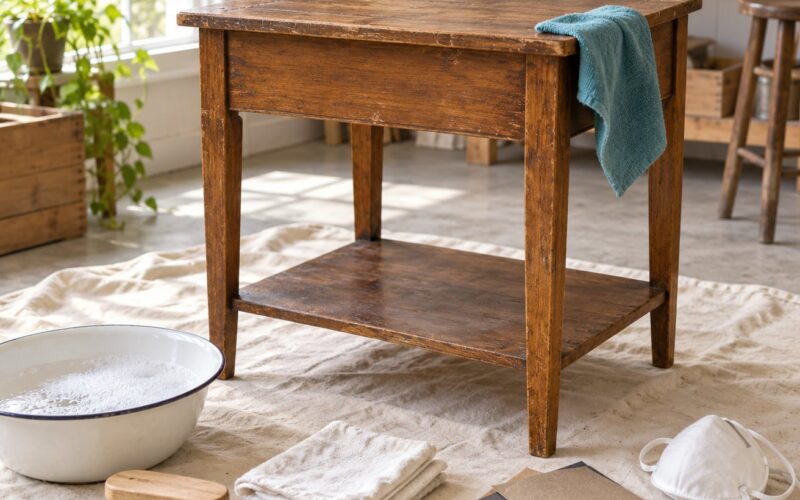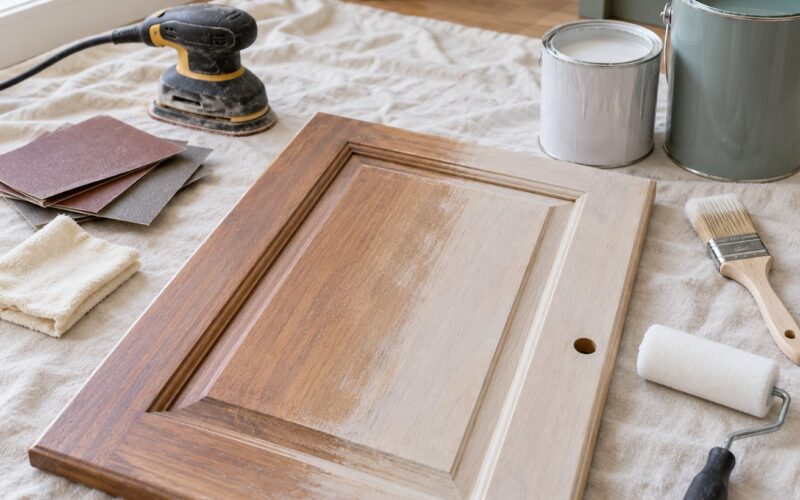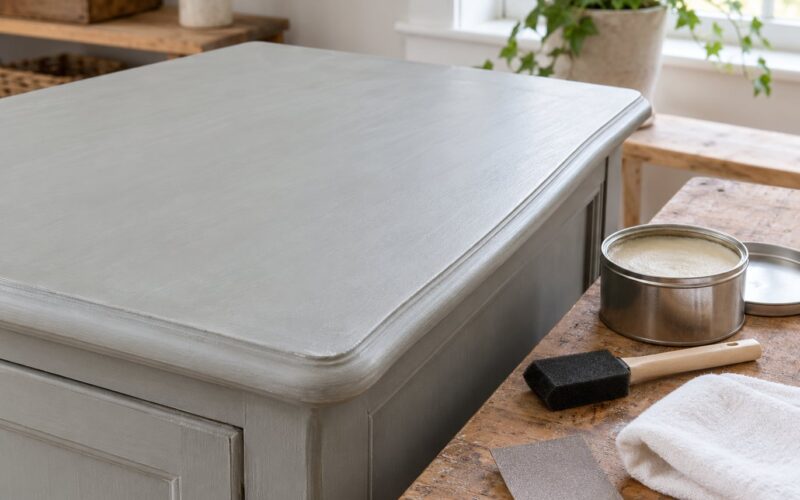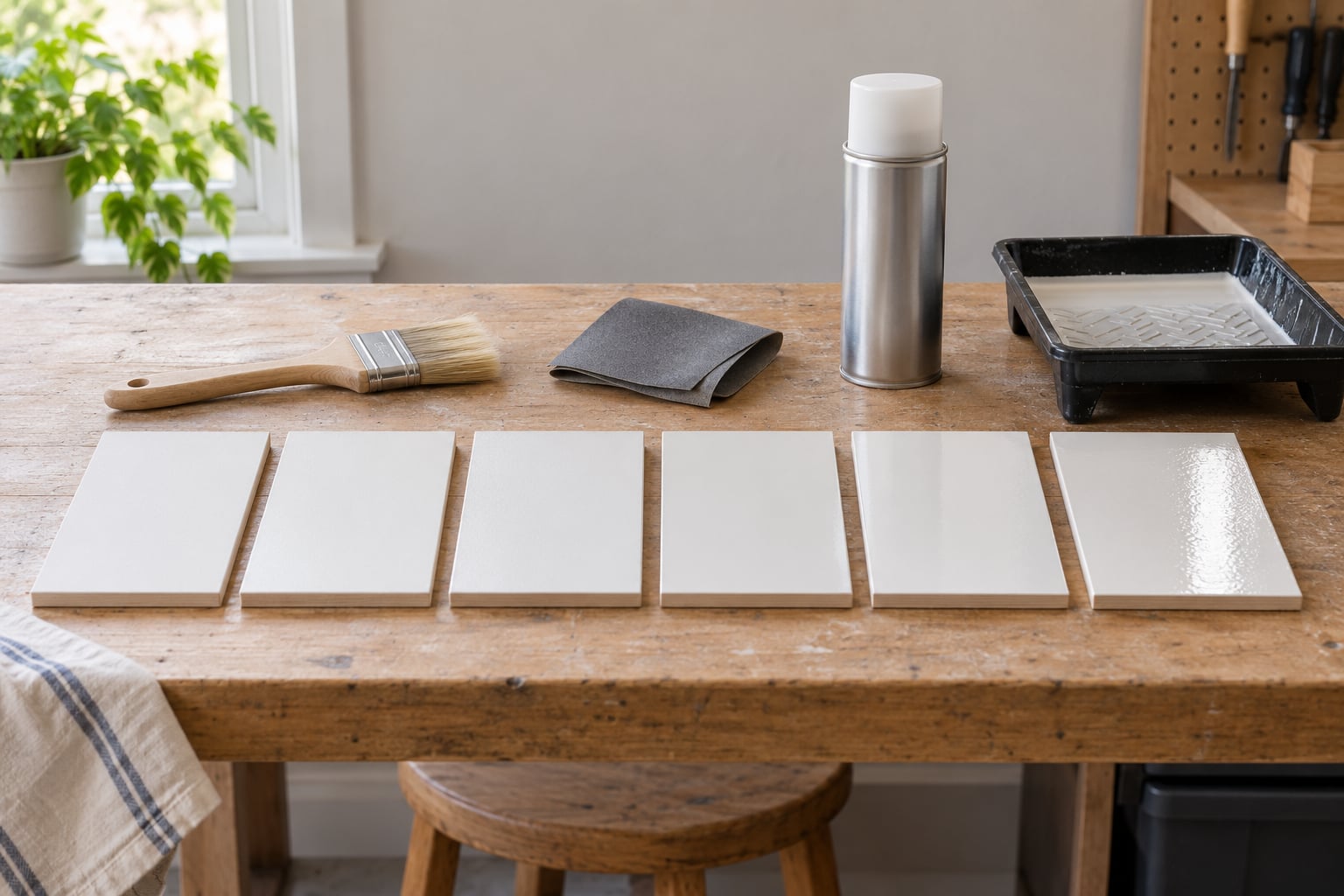
The best paint finish for furniture is satin or semi-gloss for almost everything you will paint at home, because those sheens dry into a hard film that survives hands, spills and daily wiping. The catch is the trade-off nobody mentions up front: the higher the sheen, the more every dent, brush mark and bad patch shows. Matte and flat look forgiving and scuff within weeks, while high gloss looks like a factory job and mirrors every flaw in the wood underneath.
Searchers use the word “finish” for two different things, and mixing them up is where a lot of DIY furniture goes wrong. Sheen describes how much light a dried surface reflects: flat, matte, eggshell, satin, semi-gloss, gloss. Finish type is the actual material: water-based acrylic, water-based alkyd, oil-based enamel, lacquer, shellac, wax. You pick both, and they pull in opposite directions.
Here is the short version before the detail. If the piece gets touched every day, push up the sheen and use an alkyd-emulsion or oil-based paint. If the piece is decorative or the prep was rushed, stay lower and protect it with a top coat. The rest of this guide breaks down six options by durability, appearance, drying time and cleanup.
Table of Contents
- Best Paint Finish for Furniture at a Glance
- Water-Based Acrylic Paint
- Water-Based Alkyd Paint
- Oil-Based Paint
- Why the best paint finish for furniture is rarely oil-based
- Lacquer
- Shellac
- Wax
- How to Choose the Best Paint Finish for Furniture
- How hard does the piece get touched?
- What is the piece made of?
- How good is your prep?
- What is your drying and cleanup tolerance?
- Which Should You Choose?</
- Frequently Asked Questions
- Is satin or semi-gloss better for furniture?
- Should furniture be satin or semi-gloss?
- What is the best finishing coat for painted furniture?
- Do you need to seal painted furniture with a top coat?
- How long should furniture paint dry before you use the piece?
- What is the hardest-wearing paint for furniture?
- Conclusion
Best Paint Finish for Furniture at a Glance
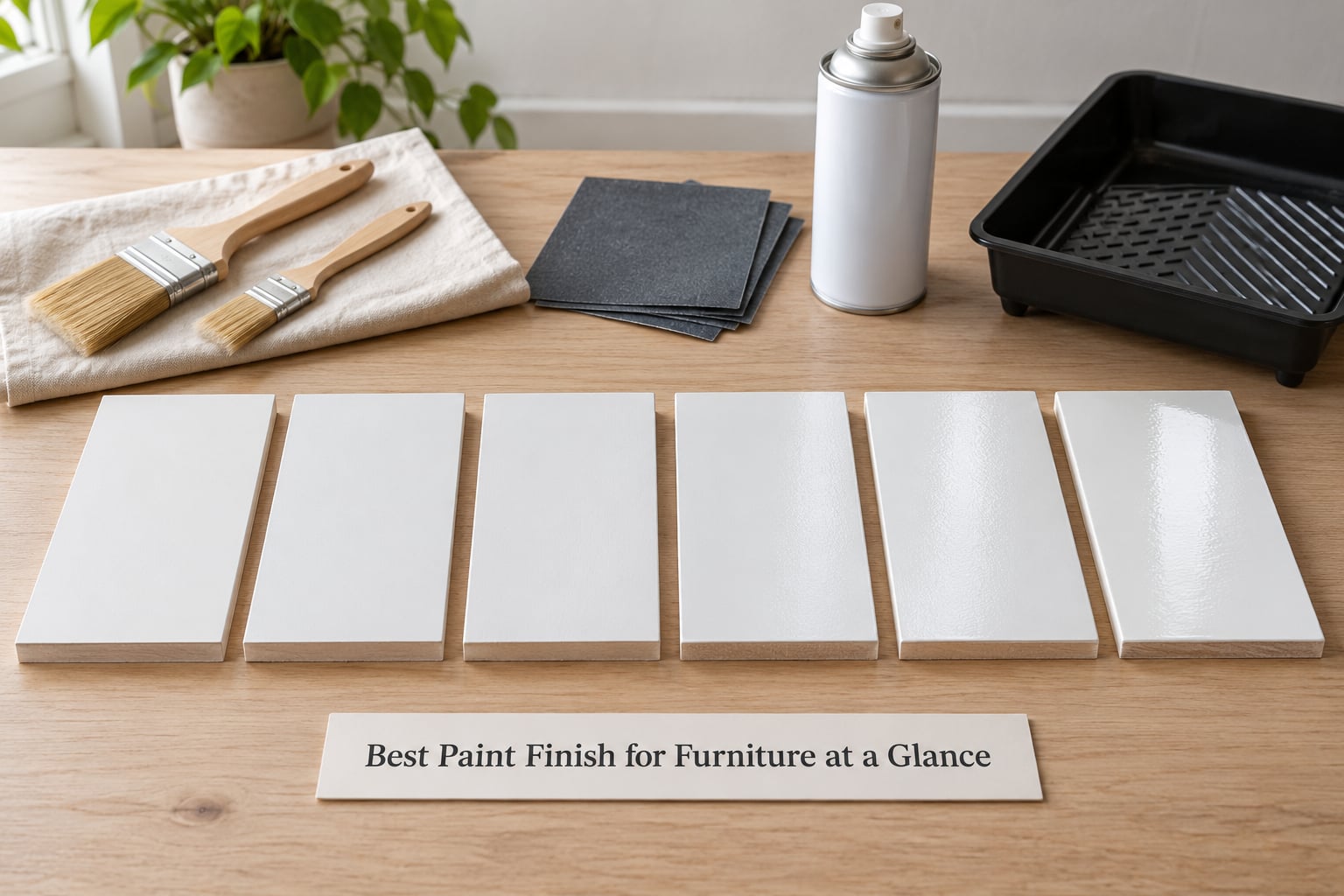
No single finish wins every project, so start with how the piece is used rather than with a brand name. Water-based acrylic is the easiest starting point, lacquer is the fastest to spray, and oil-based enamel is the most forgiving film. The table below puts all six side by side.
| Finish | Best for | Durability | Appearance | Cleanup | Watch out for |
|---|---|---|---|---|---|
| Water-based acrylic | Budget pieces, quick makeovers, sealed or primed surfaces | Low to medium | Flat to gloss available, can look chalky | Soap and water | Scuffs and sticks to bare wood |
| Water-based alkyd | Cabinets, dressers, tables, anything daily | High | Smooth, cabinet-style, levels well | Soap and water | Longer dry than acrylic, needs full cure |
| Oil-based enamel | Doors, tables, heavy-use pieces | Very high | Deep colour, very smooth brush-out | Mineral spirits or turpentine | Odour, ventilation, days to cure |
| Lacquer | Sprayed refinishes, colour matching, factory results | Medium to high | Smooth, very high gloss range, thin film | Thinner and spray booth | Spray setup, many thin coats, solvent |
| Shellac | Sealing knots, sealing stain, quick colour change | Low | Clear or flake, warm amber tint | Denatured alcohol | Brittle, alcohol attacks cured shellac |
| Wax | Topping painted or stained pieces you will maintain | Low alone, good as a top coat | Soft sheen, buffs out fingerprints | Cloth and wax | Shows heat, needs refreshing often |
One more piece of vocabulary before you go further. Sheen is measured in gloss units on a 0 to 100 scale, and the durability of the film climbs with the number: roughly 0 to 5 for flat, 5 to 10 for matte, 10 to 25 for eggshell, 25 to 35 for satin, 35 to 55 for semi-gloss, and 55 upward for gloss. You will rarely see the number on the can, but it is the reason a dining table in semi-gloss outlasts the same table in matte.
Water-Based Acrylic Paint
Water-based acrylic is the easiest paint to work with and the first one most people try. It dries to the touch in an hour or two, cleans up with warm soapy water, and comes in every sheen from flat to gloss in any paint shop.
The weakness is the cured film. Acrylic sits near the soft end of the ladder, which is fine on a wall but frustrating on a coffee table. Expect scuff rings from a set of keys and colour transfer from a damp cloth within a couple of months of daily use. Painters on the r/furniturerefinishing and r/finishing forums keep coming back to the same conclusion: acrylic needs a primer and a top coat to behave like a furniture finish.
Two things make it behave better. Use a bonding primer on bare wood, laminate or MDF, because paint will lift off those surfaces within weeks otherwise. Then finish with a clear water-based coat, which hardens the surface and takes the scrubbing. Ceiling and wall paint labelled for interiors is not the same thing as a paint sold for furniture, so check the label.
Where it still wins: quick projects, a colour you plan to repaint in a year, low-contact pieces like a bookshelf, and any job where the clean-up matters more than the wear life.
Water-Based Alkyd Paint
Water-based alkyd is an alkyd-emulsion hybrid, and it is the reason cabinet painters can work with a water container and still get a hard, cabinet-grade film. It flows out and levels on its own, which is a big help on a dresser drawer front or a tabletop that will show every texture.
This is the hardest-wearing paint you can brush or roll without a spray gun. It resists scuffs, it wipes clean without taking colour with it, and it holds a semi-gloss or gloss sheen without going soft. A water-based alkyd enamel in satin is the most common recommendation in woodworking forums for a dining table because it handles heat rings, spills and daily wiping without the yellowing that comes with an oil-based top coat.
The cost is time. It is thicker and slower than acrylic, so expect at least four hours between coats, and treat the final coat as not finished until it has cured for a week or more. Many people also prefer to spray it, and when sprayed with a fine nozzle tip it is close to a sprayed lacquer result.
For a high-use piece that you do not want to spray, this is my default pick. It is the answer when someone asks me for the best paint finish for furniture and the piece is a dresser, a cabinet or a desk that has to survive kids.
Oil-Based Paint
Oil-based enamel, often called alkyd enamel, produces the hardest and smoothest painted surface of the three paint types here. It levels out beautifully, hides colour differences better than water-based paint, and shrugs off scrubbing long after the acrylic has given up.
The trade-off is the whole job. It smells strongly, so you need windows open and a fan running, and the cleanup is solvents rather than soap. Give it a full day between coats and remember that dry to the touch is not cured: oil-based paint stays soft for days, so moving a freshly finished table into a doorway a week later can leave you with fingerprints baked into the surface.
Choose it for a front door, a sturdy dining table, or a piece with a lot of detailed moulding where you want the paint to sink into every curve without brush lines. If you are painting white or any pale colour, plan the top coat carefully, because oil-based polyurethane amber over time and that is the single most common long-term complaint about painted white furniture.
Why the best paint finish for furniture is rarely oil-based
Oil-based wins on film quality and loses on everything else in a home. Drying times, odour and cleanup push most people to a water-based alkyd instead, and the durability difference between a good water-based alkyd and a quality oil-based enamel is far smaller than the difference in how pleasant the project is. Reach for oil-based when the piece is small, detailed, and worth the ventilation.
Lacquer
Lacquer is sprayed, not brushed, and it is the classic furniture finish because it dries in minutes and can be cut back with fine sandpaper between coats. That lets you build a perfectly smooth, deep, glassy surface that nothing you can brush will match.
You need proper setup: a ventilated spray area, a decent gun or aerosol can, and ear and respiratory protection. Work in thin coats, let each one flash off, and sand lightly with 320 to 400 grit between them. Many coats are needed because lacquer is a thin film, and a thin film means a thinner wear layer, so heavy-use tables still get an extra clear pass or a wax after the colour.
It also changes colour as it ages. Nitrocellulose lacquer, the classic type, is amber and keeps going, which is charming on warm wood and unwelcome on a white dresser. Newer acrylic lacquers stay clear. Lacquer also requires care around finishes already on the piece, because it will lift an unknown old coating or react with shellac, so test a hidden spot first.
Lacquer suits refinishing where you want a factory look, and it is the answer for colour matching a cabinet door to an existing piece.
Shellac
Shellac is a fast-drying sealer and a fast-drying colour changer, and it does both better than almost anything else in a home shop. Brush it on, wait fifteen minutes, and it is already dry enough to sand or coat. That is why it has been the traditional knot sealer and stain barrier for painted furniture for a century.
Its limits are real. Shellac is brittle compared with polyurethane, it takes solvent and heat badly, and alcohol dissolves cured shellac, which means a spilled drink can etch the surface. It also carries a natural amber tint that will shift white paint warm over time.
Use shellac when you need a fast sealer between coats, when you are sealing knots and sap pockets, or for a quick refinish on a low-wear piece. Do not use it as the only protection on a dining table or a child’s chest of drawers.
Wax
Wax is not really a paint finish. It is a sacrificial protective coat that goes on top of paint, stain or shellac, and it softens and disappears with use before you reapply it. That maintenance cycle is the whole point, and it is also why wax is underused.
Wax earns its place on painted furniture in a few specific situations. It gives a soft, low, velvety sheen that flat and matte cannot match. It hides fingerprints better than almost any other top coat. And it will not yellow, which makes it the safer choice over white or pale paint than an oil-based polyurethane.
Apply it after the paint is fully cured, not merely dry, and buff it off thoroughly with a clean cloth. Paste wax gives more protection and takes more effort, while a liquid or spray wax gives up durability quickly but takes two minutes. If you will not enjoy waxing a piece twice a year, skip it and go with a clear coat instead.
How to Choose the Best Paint Finish for Furniture
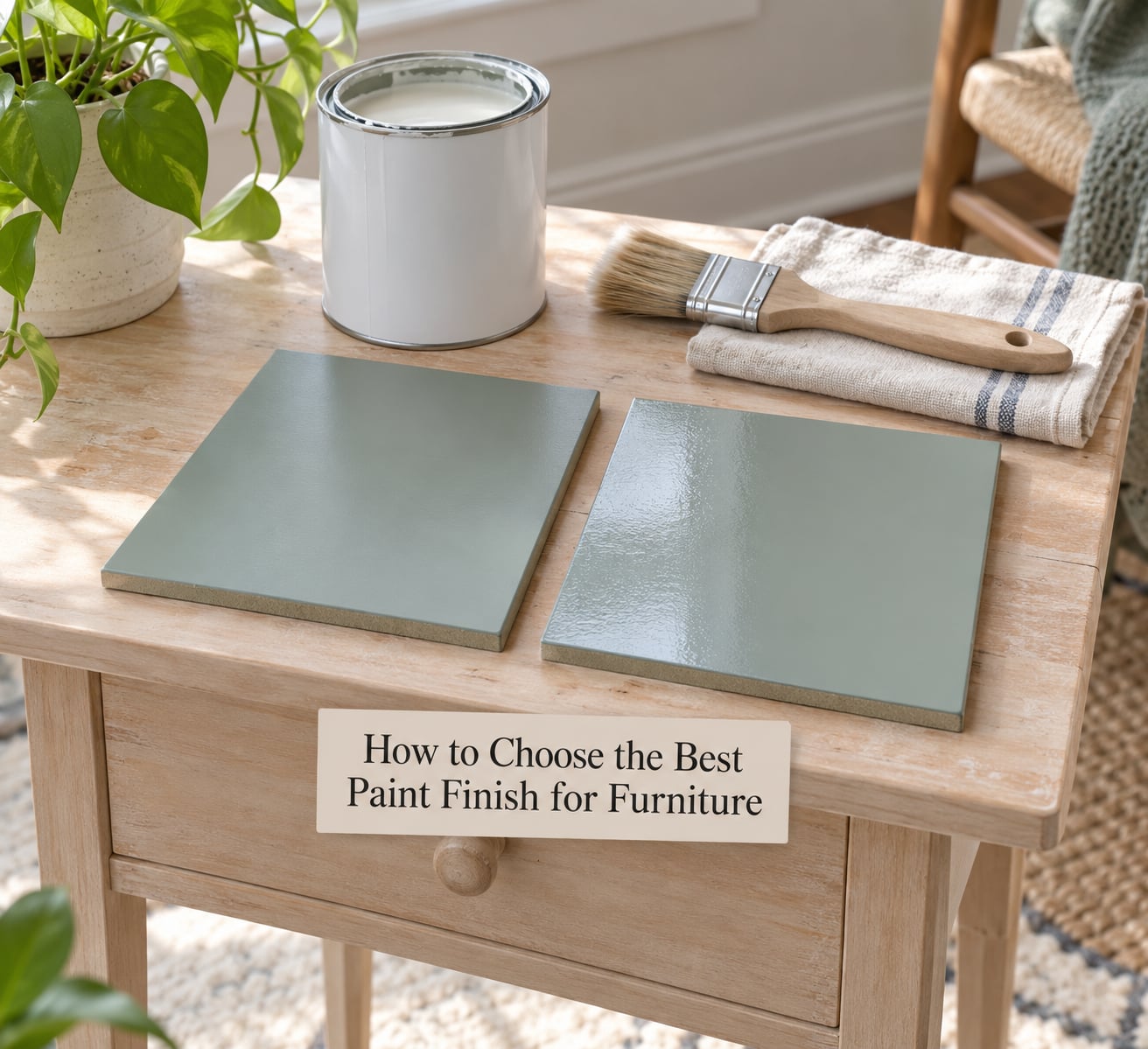
Choosing the best paint finish for furniture comes down to four questions asked in order: how much contact does the piece get, what is the piece made of, how good is your prep, and how patient are you with drying and cleanup. Answer those and the finish picks itself.
How hard does the piece get touched?
A tabletop, a desk, a coffee table and a cabinet door take hands, keys, sleeves and water every day. A bookshelf, a wardrobe and a nightstand take occasional contact. Decorative trim and the inside of a drawer take almost none. Contact level is the strongest single factor in durability, and it matters more than any brand name.
What is the piece made of?
The substrate decides your primer, and the primer decides how the finish behaves.
- Bare pine or poplar: soft, and it drinks the first coat and often bleeds tannins. Prime it or the colour goes patchy and flat.
- MDF and particleboard: edges swell and must be sealed, or paint bubbles along the profile. Needs a dedicated primer.
- Laminate: non-porous and factory-smooth, so it will not take paint without sanding or a bonding primer to give it something to grip.
- Veneer: thin and delicate, so sand lightly. Heavy sanding cuts through to the base colour and there is no fixing it.
- Previously painted or stained: clean, scuff, and prime to cover the stain. Glossy old paint needs a deglosser or a bonding primer first.
How good is your prep?
Satin and semi-gloss will not hide a bad surface. They will show every brush mark, lap line and dent, which is why furniture flippers push back hard against semi-gloss on pieces they did not fully strip. If you are rushing, either do the prep properly or choose a lower sheen and a protective top coat.
What is your drying and cleanup tolerance?
Acrylic gives you a project in an afternoon. Water-based alkyd asks for overnight gaps between coats. Oil-based asks for a day between coats plus a week before you can lean on it. Lacquer is quick to spray and unforgiving to set up. Pick the finish you can actually finish, not the one that scores best on paper.
Which Should You Choose?</
Match the finish to the piece and the way it is used, then keep the sheen consistent across a matched set so a nightstand and dresser from the same collection do not look like two different projects.
| Furniture piece | Contact level | Recommended finish | Top coat | Why |
|---|---|---|---|---|
| Dining table and chairs | Very high | Water-based alkyd or oil-based enamel, satin or semi-gloss sheen | Water-based poly or paste wax | Takes heat rings, spills and daily wiping |
| Coffee table | Very high | Water-based alkyd, semi-gloss | Water-based poly | Keys, rings and grit land here constantly |
| Dresser or chest of drawers | High | Water-based alkyd, satin | Optional, wax for extra wipe-clean | Drawers and knobs get constant hands |
| Desk | High | Water-based alkyd or oil-based enamel, satin | Water-based poly | Rubbing, elbow wear and spills |
| Nightstand and side tables | Medium | Acrylic or water-based alkyd, satin | Wax | Contact now and then, not daily |
| Bookshelf or built-in | Low | Acrylic, eggshell to satin | None usually | Vertical surface, rarely scuffed |
| Kitchen cabinets | High | Water-based alkyd, semi-gloss | None, or water-based poly | Grease and moisture around doors and drawers |
| Bathroom vanity | High | Water-based alkyd, semi-gloss | Water-based poly | Humidity and standing water |
| Kids’ furniture | Very high | Water-based alkyd, semi-gloss, with poly | Water-based poly | Impact, sticky fingers and spills |
| Outdoor or patio furniture | Very high plus weather | Exterior oil-based enamel or exterior acrylic | Exterior polyurethane | UV, rain and temperature swings |
| Antiques and open-grain wood | Low | Sprayed lacquer, thin coats | Wax or extra clear lacquer | Preserves the wood, keeps the pores open |
| Rental or first apartment piece | Medium | Acrylic, eggshell or satin | Light top coat | Cheap, fast, forgiving of rushed prep |
One case worth calling out: painted cabinets and painted furniture are not the same decision. Cabinet paint sold as self-sealing is designed to cure hard on its own, and many furniture flippers argue firmly against adding polyurethane on top. That advice is reasonable for a cabinet in good condition, and wrong for a thrift-store table with an unknown old finish underneath, where a top coat is your only insurance.
Frequently Asked Questions
Is satin or semi-gloss better for furniture?
Satin is the better all-round choice because it is hard enough to scrub yet soft enough to hide brush marks and small dents. Semi-gloss is tougher and better for dining tables, coffee tables, cabinets and desks that take daily contact, but it shows every flaw in the surface. If your prep was rushed, satin hides more. If the piece is used hard, semi-gloss lasts longer.
Should furniture be satin or semi-gloss?
Furniture should be satin for low to medium contact pieces such as dressers, nightstands, bookshelves and desks, and semi-gloss for high contact pieces such as dining tables, coffee tables, cabinets and kids’ furniture. The higher sheen is harder and more washable but more revealing, so a well-prepped piece can go high while a quickly patched one is better kept at satin.
What is the best finishing coat for painted furniture?
For most painted furniture, a water-based polyurethane or polycrylic in a satin or semi-gloss sheen is the best finishing coat because it adds hardness and stays clear over white paint. Over bare or stained wood that has been finished with oil, a hardwax oil gives a more natural look. Wax is the right pick when you want a soft hand-feel and do not mind refreshing it twice a year.
Do you need to seal painted furniture with a top coat?
You do not always need one. Self-sealing cabinet and furniture paints are built to cure hard on their own, and many flippers leave them bare deliberately because an extra layer can chip or peel at edges. Add a top coat when the piece gets heavy use, when the paint is a softer acrylic, when you are painting over bare wood, or when you want a higher sheen than the paint itself offers.
How long should furniture paint dry before you use the piece?
Acrylic is touch-dry in one to two hours and recoatable after about four. Water-based alkyd wants at least four hours between coats, and oil-based enamel needs a full day. None of them are truly finished when they feel dry, though. Curing takes about a week for water-based products and two to three weeks for oil-based, so avoid heavy use or setting things on a fresh coat during that window.
What is the hardest-wearing paint for furniture?
A quality water-based alkyd enamel is the hardest-wearing paint most people can apply at home, and it brushes and rolls without a spray gun. Sprayed lacquer with a clear coat is close behind and looks smoother. Oil-based enamel cures hardest of all but costs you drying time, odour and solvent cleanup, so the practical answer for a busy household is a water-based alkyd in satin or semi-gloss.
Conclusion
Satin or semi-gloss gets you most of the way on almost any furniture project, and a water-based alkyd enamel in one of those sheens is the easiest route to a hard, wipeable surface. The finish only matters as much as the prep underneath it, so the higher you go in sheen, the more careful you need to be with sanding, priming and thin coats.
Before you open a can, look at the piece and ask how hard it gets used, then look closely at the surface and decide how honest it is. Pick the sheen that matches the wear, test the finish on a hidden side or a scrap board, and only then commit to the full piece. Those three steps take an afternoon and save you a table covered in white scuff rings.