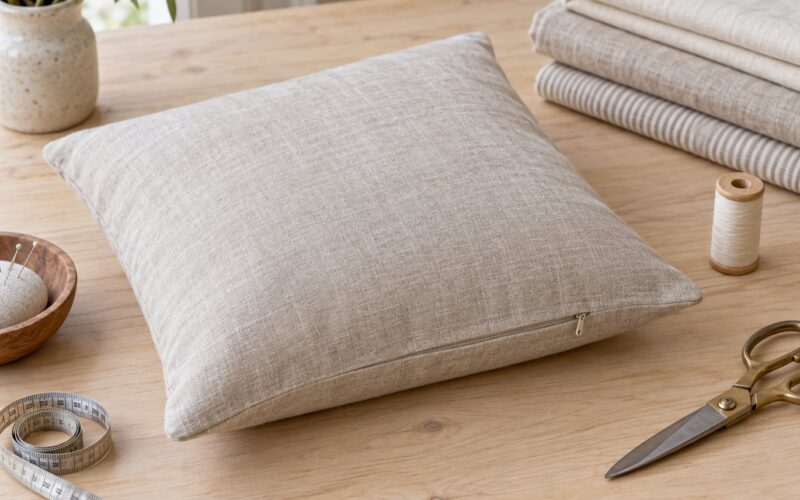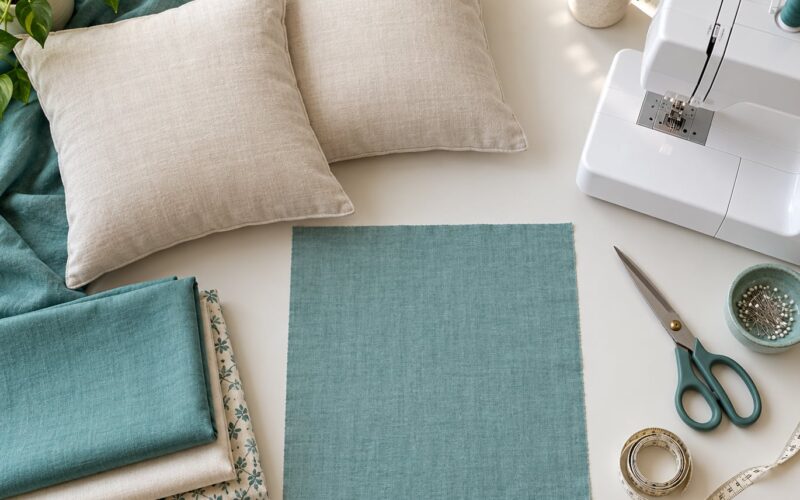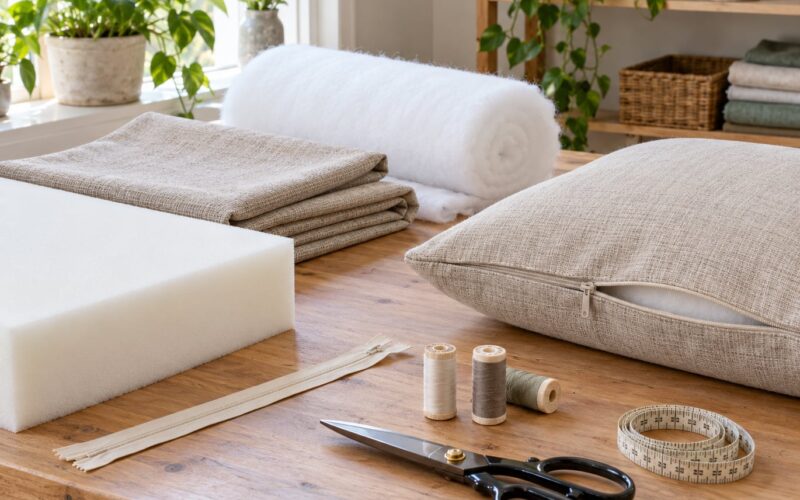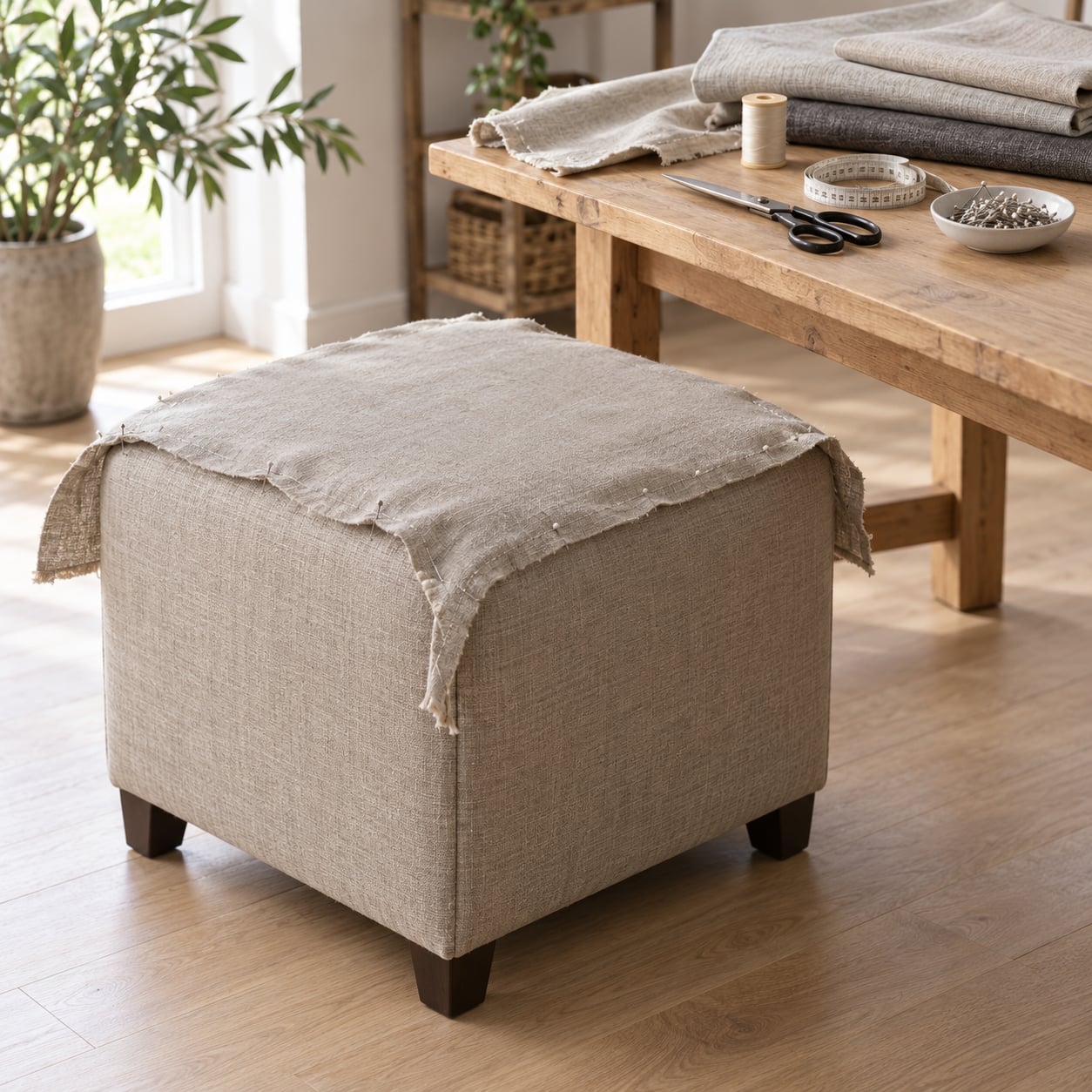
A slipcover for an ottoman is a removable fabric shell made from one top panel and four side panels that slips straight over the piece, hiding whatever upholstery is underneath. Sew one and you can wash it, swap it out with the season, or make a thrift-store find look like it cost far more than it did.
The whole job is three stitches you already know: straight stitch, backstitch, and a hem. A first-timer who has sewn a pillow or a curtain panel can finish this in an afternoon plus drying time, and a confident beginner with a rotary cutter and a sharp pair of shears gets a crisper result in about three hours.
You do not need a pattern, and you do not need tailoring experience. You measure the ottoman itself, add a seam allowance, cut five rectangles, and that is genuinely all it takes to learn how to make a slipcover for an ottoman. Everything below is in that order.
Table of Contents
- What You Need
- Fabric
- Tools
- How much fabric to buy
- Step-by-Step: How to Make a Slipcover for an Ottoman
- Measure the Ottoman and Plan the Cover
- Choose the Fabric and Cut the Pieces
- Sew the Main Cover Panels
- Add the Closure and Finishing Details
- How to Make a Slipcover for an Ottoman Fit Snugly
- Care and Washing
- How to Slipcover a Round Ottoman
- Ottoman Covers Without Sewing
- Common Mistakes and How to Fix Them
- Frequently Asked Questions
- What is the best fabric to cover an ottoman?
- How many yards of fabric do I need for an ottoman slipcover?
- Can I make an ottoman slipcover without sewing?
- How do you make a slipcover for a round ottoman?
- How do you get a slipcover to fit snugly?
- Do ottoman slipcovers wash?
- Conclusion
What You Need
Gather everything before you cut, because interrupting a pinned panel to find a pin is how corners end up mismatched. Most of this list is stuff you already own or can borrow.
Fabric
- Upholstery-weight fabric, sold at 54 or 55 inch widths
- Yardage based on the table below, plus 1/2 yard if you want a pleated or ruffled skirt
- Matching thread, all-purpose polyester
Tools
- Measuring tape and a pencil
- Fabric shears or a rotary cutter with a cutting mat and acrylic ruler
- Washable marking pen or tailor’s chalk
- Straight pins, roughly 30
- Sewing machine with a straight stitch, plus a 1/2 inch presser foot if you have one
- Iron, steam setting
- Seam ripper, for the fits that do not work
- Optional: welt piping cord, hook-and-loop tape, 1/2 inch elastic, or a serger
How much fabric to buy
Upholstery fabric is sold by the yard at a 54 inch width, but yardage is measured as if the bolt were 36 inches wide, so a 3 yard piece gives you 162 inches of usable width. The table assumes a snug cover with a 1/2 inch finished hem and no full drop to the floor.
| Ottoman (length x width x height) | Fabric needed at 54 inch width |
|---|---|
| 24 x 18 x 14 in | 2 to 2.5 yards |
| 30 x 22 x 15 in | 2.5 to 3 yards |
| 36 x 26 x 15.5 in | 3 to 3.5 yards |
| 40 x 28 x 17 in | 3.5 to 4 yards |
| Round, 24 in diameter x 16 in tall | 2.5 to 3 yards |
| Add for a pleated or ruffled skirt | Plus 1 to 1.5 yards |
A worked example from a real project: a 36 x 26 x 15.5 inch ottoman took 3 yards of 54 inch fabric with a 1 inch seam allowance and a 1/2 inch drop below the base.
Step-by-Step: How to Make a Slipcover for an Ottoman
Measure the Ottoman and Plan the Cover
Measure every face separately and write the numbers down. Tape measure the top length and the top width, then the height from the top edge to the floor or to the bottom of the feet.
Add a 1 inch seam allowance to each measurement. That 1 inch is what gives you a seam to sew on later, and it is the single number people skip and then regret. If you want the cover to break slightly over the base, add another 1/2 inch to the height on all four sides.
Decide the fit before you cut. A snug fit follows the shape of the ottoman and shows off the furniture. A relaxed fit drapes a soft fold over the top edge, which hides seam mistakes and looks forgiving on a secondhand piece. Beginners usually have an easier time with a 1/4 inch relaxed drop.
Record the dimensions like this: top length plus 1 inch, top width plus 1 inch, side height plus 1 inch, plus your chosen drop. This is the only planning you need before the machine comes out.
Choose the Fabric and Cut the Pieces
Upholstery-weight cotton and cotton-linen blends are the sweet spot. They press well, sew with a normal straight stitch, and hold a hem. Pure linen looks beautiful but wrinkles badly, which is the most common complaint from people who finished this project. Performance canvas and denim are tougher and hide stains; velvet and corduroy look luxurious but need careful nap direction and shade the seam lines.
Pre-wash and dry the fabric before cutting, using the care label and no fabric softener. Cotton and linen shrink in the first wash, and a cover cut from fabric that has not been washed can end up two sizes too small after one trip through the machine.
Cut five pieces. The top panel is your ottoman’s top length plus 1 inch by top width plus 1 inch. Each side panel is top length plus 1 inch by side height plus 1 inch. If the sides are all the same height you can cut one long strip the full width of the fabric and divide it, which wastes less cloth.
Keep the grain line straight on every panel unless you want stretchy drape. For a print, center the motif on the top panel and plan where each side piece lands before the first cut, because you cannot fix print placement after sewing. For a stripe, match the stripe across all four sides so it lines up at the corners.
Sew the Main Cover Panels
Hem the bottom edge of each side panel first, pressing a clean 1/2 inch fold and a second 1 inch fold on the raw edge. Hemming before sewing means the bulk of the fold stays inside the cover instead of bunching at the bottom corners.
Turn the ottoman upside down and lay one side panel right side down against it, with the hemmed edge at the bottom. Pin along the top edge, then pin the top panel over the sides with the right sides facing each other, working from the bottom pins upward so the alignment stays true.
Sew the top panel to the side panel with a 1/2 inch seam. Backstitch at each end. Move around the ottoman one panel at a time, always right sides together and always stitching with the bulk of the fabric on your left so it does not drag the seam.
At the last seam, pin both edges before sewing and check that the two side panels meet flush. If they do not, the fix is a seam ripper, not a deeper stitch. Pull that seam out, re-pin, and go again. Keeping the cover inside out the whole time means the raw seams end up hidden in the middle.
Turn the cover right side out over the ottoman and press the corners with a little starch or steam to get a crisp edge.
Add the Closure and Finishing Details
There are three closures worth knowing, and the right one depends on how the cover meets the floor.
- Simple hem: the default. A neat 1/2 inch hem looks like a fitted cushion cover and takes under five minutes.
- Hook-and-loop tape: sew or iron a strip around the bottom edge of the cover and a matching strip on the ottoman base, so the cover pulls off in seconds. Lift or remove the small feet first with a screwdriver so you have a flat surface to attach to.
- Elastic in a casing: a quarter inch of elastic around the bottom edge grips the base and gives a fitted look on an ottoman with no removable feet.
Two upgrades make a plain cover read as expensive. Welt piping along the top seam covers the raw edge and defines the line, and it is the only detail that turns a home-sewn look into a tailored one. Cut bias strips from your fabric or buy pre-made piping, sandwich it between the top panel and the side panels, and sew through all three layers. A pleated skirt, made by folding 3 inch pleats into 5 inch panels and catching them with a basting stitch before sewing them on, adds height and hides the bottom edge entirely.
How to Make a Slipcover for an Ottoman Fit Snugly
Put the cover on, stand back, and look at it from across the room. Wrinkles and pulling are normal at this stage and most of them are fixable in a few minutes with pins.
Where the fabric pulls taut at a corner, take a small pleat or a running dart and stitch it down, or release a little of the top seam if the corner is simply too tight. Where fabric pools on the top, unpin a few inches, lift the excess, and redistribute it toward the back where nobody looks. Pull the cover down evenly from all four corners, then re-pin any side that has ridden up.
Finally, press the whole cover, check that the hem sits level all the way around, and walk around the piece once more at floor level. Most covers need two fitting rounds, not one.
Care and Washing
Machine wash the cover in cool water on a gentle cycle and line dry, then put it back on slightly damp to relax the wrinkles out. Follow the care label on the fabric, not on the cover, since interfacing and piping can have their own limits. Vacuum under the cover between washes, and slip it on only when the upholstery underneath is completely dry.
How to Slipcover a Round Ottoman
A round or cylindrical ottoman follows the same logic with one different piece: instead of four flat sides you need a single long side panel wrapped into a tube.
- Measure the diameter across the widest point and the height, then add 1 inch to each.
- Cut the top as a circle using the diameter plus 1 inch, or cut a rectangle large enough to fold down over the edge and cut it round once the seams are sewn.
- Cut the side panel at the full fabric width: it must be at least 3.14 times the diameter plus 2 inches, since the fabric wraps all the way around.
- Fold the panel right sides together, sew a 1/2 inch seam, and press the seam open.
- Hem the raw bottom edge, then sew the tube to the top circle with right sides together, easing gently as you go.
- Add a hook-and-loop strip at the base so the round cover can be pulled off for washing.
A 24 inch diameter by 16 inch tall round ottoman needs roughly 2.5 to 3 yards at 54 inch width. The seam is the weak spot on a round cover, so press it flat and topstitch it if you want the silhouette to stay perfectly circular.
Ottoman Covers Without Sewing
You can cover an ottoman with no machine and no needle, and plenty of people do. These methods work best on a boxy piece with straight sides.
- Two curtain panels. Buy a pair of 84 inch curtain panels, fold them in half the long way, and drape them over the ottoman with the fronts meeting in the middle. Add a length of 1/2 inch elastic around the top of each panel, and they hug the top edge. Leave the bottom edges long enough to reach the floor and tuck the excess under.
- A fitted sheet. A queen fitted sheet cut down the middle and pulled over the ottoman works if your ottoman is close to mattress height. Roll the cut edges under and tuck them beneath.
- A tablecloth or flat sheet. Center a rectangular cloth over the top, tuck the excess under the base on all four sides, and hold it with hook-and-loop squares at the corners.
- A throw blanket folded and clipped. Fold a large blanket over the top, tuck the sides under, and clip the front and back edges with decorative clamps.
No-sew covers wash easily and change fast, but they shift with use and rarely look as tailored. If you want one cover that reads custom from across the room, sewing five rectangles is the better use of an afternoon.
Common Mistakes and How to Fix Them
- Skipping the seam allowance. Add 1 inch to every measurement. Without it you will sew a cover that is two inches too small all the way around.
- Cutting on the floor or a sagging table. Use a cutting mat on a flat surface or a large piece of cardboard on the floor. A fabric pen marks better than pencil and does not need sharpening.
- Not pre-washing the fabric. Fabric that shrinks after the first wash leaves a cover that no longer fits. Wash and dry it first, every time.
- Skirt or hem attaching at an angle. Hem the bottom edges before you sew the panels together so the fold stays flat and level.
- Corners that pull and wrinkle. Pleat, dart, or release the top seam slightly. Do not force the corner and do not shrink the fabric to fit.
- Print or stripe landing wrong. Seam ripper, re-lay the panels, and re-pin before sewing the seam again. It is a ten minute fix now versus an hour of unpicking later.
- Cover too baggy to read as fitted. Take in a half inch on each side panel and re-press. Snug and slightly tight beats loose every time.
- Upholstery fabric intimidating a garment sewer. Switch the needle to an upholstery or denim needle, drop the presser foot pressure, and sew slowly. Stiff fabric is predictable, just heavy.
Frequently Asked Questions
What is the best fabric to cover an ottoman?
Upholstery-weight cotton and cotton-linen blends work best for a beginner. They press cleanly, sew with a straight stitch, and hold a hem without fuss. Pure linen wrinkles badly, which is the most common complaint from people who have made this cover. Performance canvas and denim are tougher and hide stains well. Buy 54 or 55 inch width and pre-wash it before cutting.
How many yards of fabric do I need for an ottoman slipcover?
A typical box ottoman takes 2.5 to 3.5 yards of 54 inch upholstery fabric, depending on size. A 36 by 26 by 15.5 inch ottoman needs about 3 yards for a snug cover with a half inch hem. Add 1 to 1.5 yards for a pleated or ruffled skirt, and buy an extra half yard if you are matching a print.
Can I make an ottoman slipcover without sewing?
Yes. Drape a pair of folded curtain panels over the ottoman and add half inch elastic to the top edge of each panel so they grip. A fitted sheet cut down the middle, a tablecloth tucked under the base, or a throw blanket secured with clamps all work too. These covers come off in seconds for washing but shift with use and look less tailored.
How do you make a slipcover for a round ottoman?
Measure the diameter and height, then add 1 inch to each. Cut a circle for the top and one long side panel at least 3.14 times the diameter plus 2 inches, since it wraps the full circumference. Sew the side panel into a tube, hem the raw edge, then sew the tube to the top circle with the right sides together, easing as you go.
How do you get a slipcover to fit snugly?
Fit the cover to the ottoman itself rather than to a table, working from the bottom pins upward so the panels stay aligned. Pull the cover down evenly from all four corners, then redistribute any fabric pooling on the top toward the back. Where a corner pulls taut, take a small pleat or dart rather than forcing it. Expect two fitting rounds.
Do ottoman slipcovers wash?
They do, and that is the main reason to make one instead of reupholstering. Machine wash in cool water on a gentle cycle and line dry, then put the cover back on slightly damp to release wrinkles. Follow the care label on the fabric itself. A hook-and-loop strip at the base makes the cover removable in seconds.
Conclusion
The first step in how to make a slipcover for an ottoman is the measuring tape, not the fabric. Write down the length, width, and height of every face, add 1 inch to each number, and you will have everything you need to buy the right amount of upholstery-weight fabric in one trip.
From there the project is five rectangles, five seams, and a hem, which makes it a realistic afternoon for anyone who has sewn a pillow. A thrifted ottoman in the wrong color is still a good ottoman, and a washable cover you can swap in October is a better answer than replacing it.