A new rug curls because its fibers and backing hold the memory of the tight roll they were shipped in, and they keep trying to spring back to that shape. To flatten a new rug that curls, the formula is moisture, pressure and time: relax the curl with a little water or low steam, lay it flat, weigh it down, and let it dry fully. Most jobs take one afternoon plus an overnight wait, and the whole thing costs nothing beyond a towel, a spray bottle and some heavy books.
I still go through this every few months with whatever rug is currently under protest, and the routine has not changed. Guests arriving tonight means ice and weight. A rug that has been folded in a closet for a year means the reverse roll and a full 48 hours.
Table of Contents
- What You Need
- How to Flatten a New Rug That Curls: Step by Step
- Identify Why the New Rug Is Curling
- Roll a New Rug That Curls Backward and Let It Relax
- Apply Controlled Heat to the Curled Area
- Use Even Weights to Hold the Rug Flat
- Confirm the Rug Is Fully Flat and Dry
- Common Mistakes
- Frequently Asked Questions
- How long does it take for a new rug to flatten out?
- My rug won’t lay flat. What can I do to help it?
- Can you iron a rug to flatten it?
- Why do my rug corners keep curling back up?
- How do you keep area rug corners down?
- Conclusion
What You Need
You need very little, and every method below uses a subset of the same short list. Nothing here is specialist equipment.
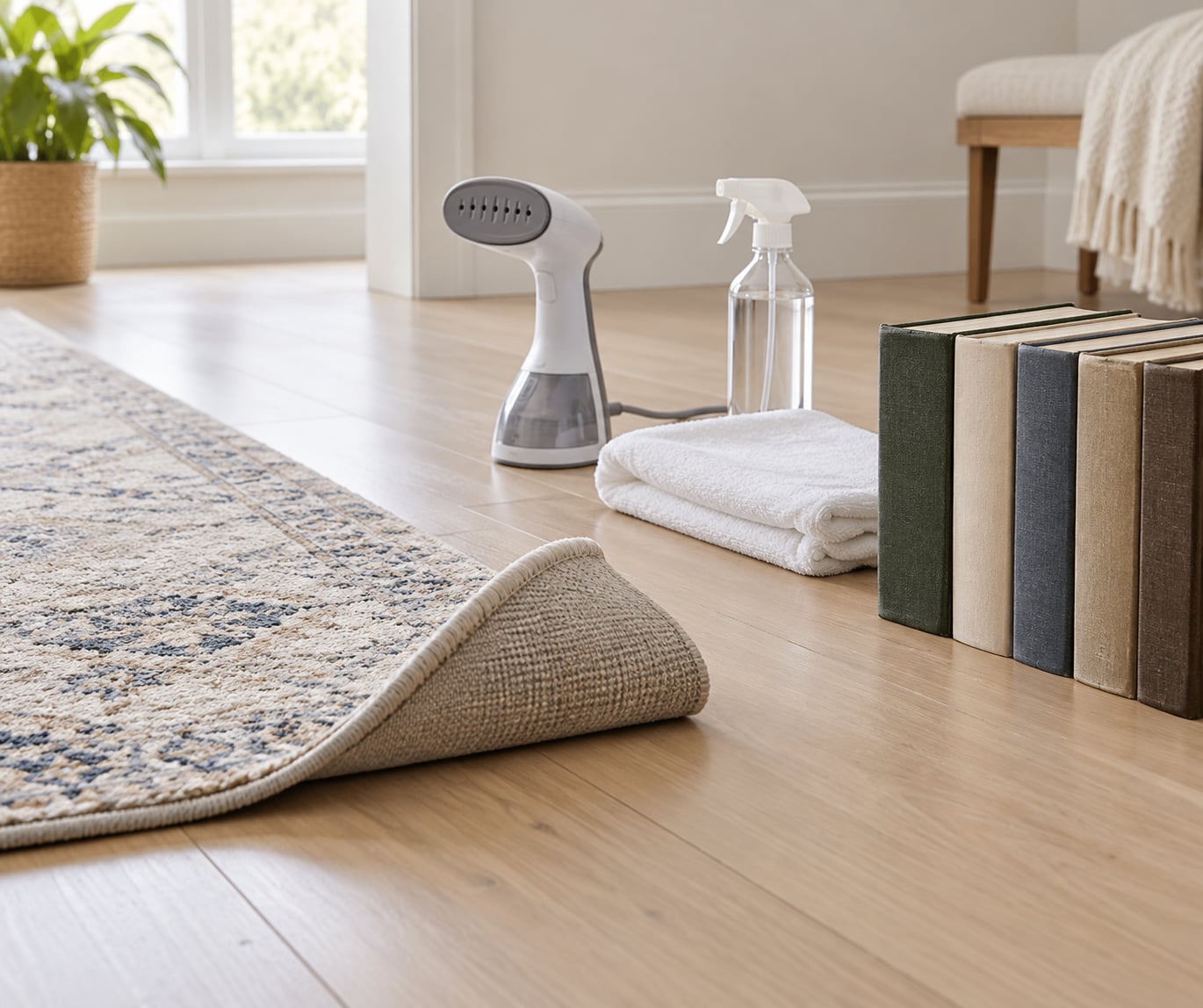
- Spray bottle with plain water — for the dampening step and for misting the backing after you roll the rug.
- Clean, light-colored towel or cloth — a barrier between any hot tool and the fibers, and a spreader for the weight.
- Heavy books, weights or a stack of pantry cans — flat, even pressure is what actually resets the curl.
- Handheld steamer or an iron on its lowest setting — optional, and only for stubborn waves in synthetic rugs.
- A ruler or tape measure — for checking that the edges are lying square before you weigh anything down.
- A flat, dry floor area — hardwood, tile or low-pile carpet all work; concrete in a damp basement does not.
Two things worth grabbing if you do not own them: a rug pad with gripper strips, and double-sided rug tape. Both belong in the prevention stage rather than the repair stage, but you will want them ready on day two.
How to Flatten a New Rug That Curls: Step by Step
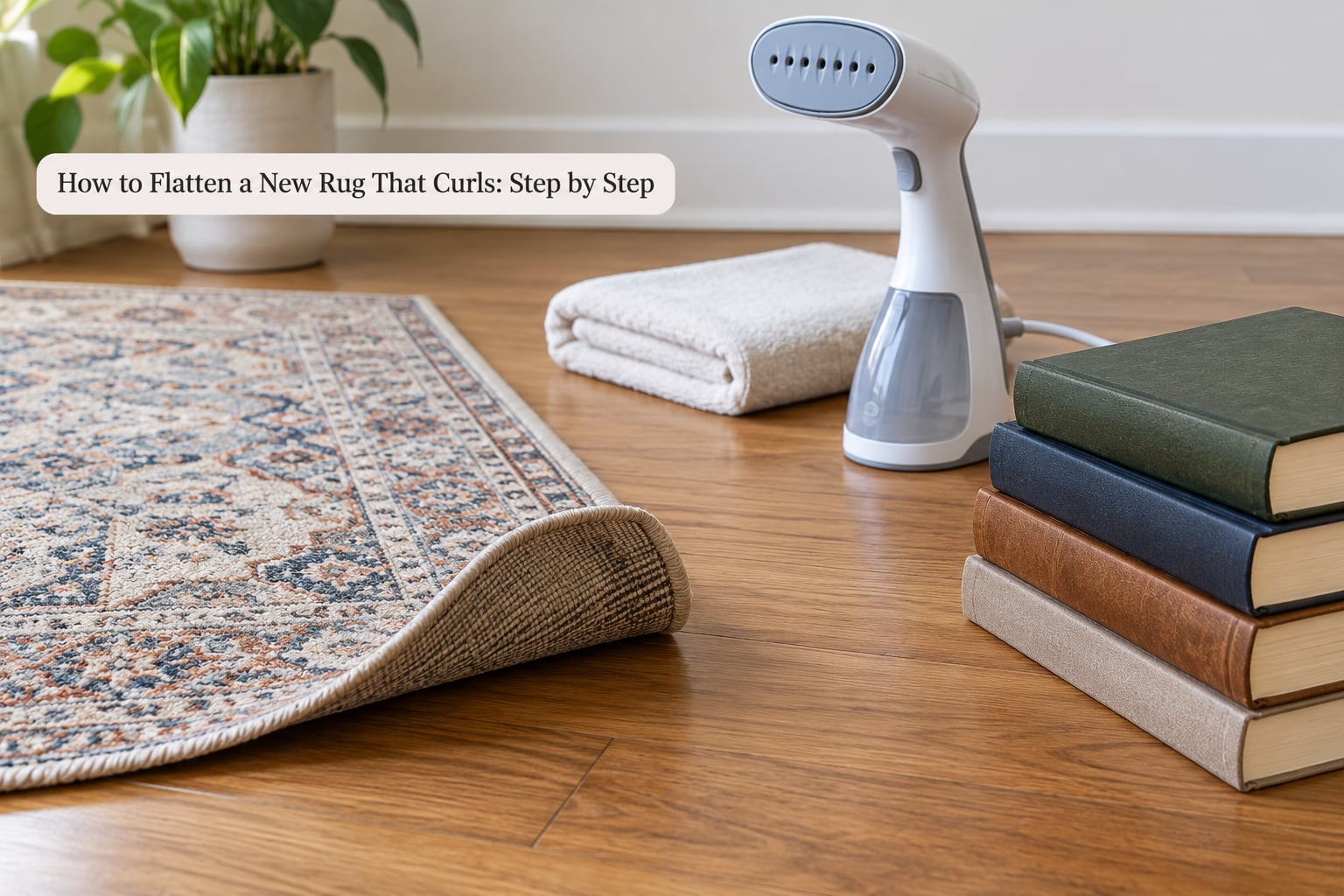
Work through these in order, gentlest first. Most rugs never make it past step three, and jumping straight to heat on a rug that only needs pressure is how people damage fibers they did not need to touch.
Identify Why the New Rug Is Curling
The cause decides the method, so spend a minute on it before you touch anything.
Usually it is roll memory: the rug spent weeks or months wound around a core, pile facing inward, and the fibers learned the curve. A damp basement or a humid summer adds to it, since natural fibers expand and contract with moisture and tighten the curl as they go. A missing rug pad means the corners have nothing resisting them, and furniture legs pressing on one edge can push a corner up from underneath. And a rug stored folded rather than rolled develops a hard crease that reads as a curl but needs different treatment.
Check the back of the rug before you start. If the binding along the curled edge feels stiff or slightly lifted, that is a manufacturing looseness, and it is worth a call to the retailer inside the return window rather than a DIY fix.
On timing: a new rug left alone with no traffic usually lies flat on its own in 2 to 6 weeks. Walk on it constantly or keep it in a humid room, and that stretches toward the three-month mark. If you need it flat today, do not wait for nature.
Roll a New Rug That Curls Backward and Let It Relax
Unroll the rug in the opposite direction and the curl usually loses most of its fight in a single pass.
Start at the corner that is curling, lift it, and roll the rug away from you, tight but without straining, working along the edge and across the width until it is fully rolled. Mist the backing as you go. Then unroll it again in the direction that leaves the curled section stretched flat rather than bowed, and smooth it out with your palms from the center toward the edges.
People in home decorating forums report this works far better than flipping the rug over, which just reverses the problem into a curl at the opposite corner. One detail from people who do this well: put your weights on while the rug is still partly rolled, then move the blocks along as you unroll, so the pressure follows the section you are releasing.
Leave it like that for several hours with nothing on it. Many curls give up here and never need water.
Apply Controlled Heat to the Curled Area
Heat relaxes synthetic fibers fastest, but only with a barrier and only on a low setting.
Lay a clean towel over the curled section and work over it with a steamer, or an iron on low with the steam setting, moving constantly in small circles. Never set a hot tool directly on the pile, on the binding, or on a rug with a rubber or latex backing — those materials melt or glaze at temperatures a synthetic pile shrugs off. Test an inconspicuous spot for two minutes first; if the fiber feels slick or the color shifts, stop.
Skip heat entirely on jute, wool and any hand-knotted or tufted rug. Wool felts under pressure when it is warm and damp, and jute shrinks. Those two want the damp-and-weight route instead, used sparingly.
On hardwood, put a towel under the whole rug area before you dampen anything. Water plus a sealed floor is how you get a swollen board or a bleached patch.
Use Even Weights to Hold the Rug Flat
This is the step that actually fixes the curl, and the one most people rush.
Spray the underside of the curl until the backing is damp, not wet. Press the section flat with your palm, spread the towel over it, and place weights on top, distributed across the whole curl rather than stacked on the peak of it. Books work; a stack of tins does too. Move every few hours if you are home, since books tend to creep toward the middle and open a gap at the edge.
Keep it weighted for 24 to 48 hours. On thick low-pile rugs, longer. And never leave a single heavy item sitting in one spot overnight — on soft pile it leaves a dent that is harder to fix than the curl was.
Confirm the Rug Is Fully Flat and Dry
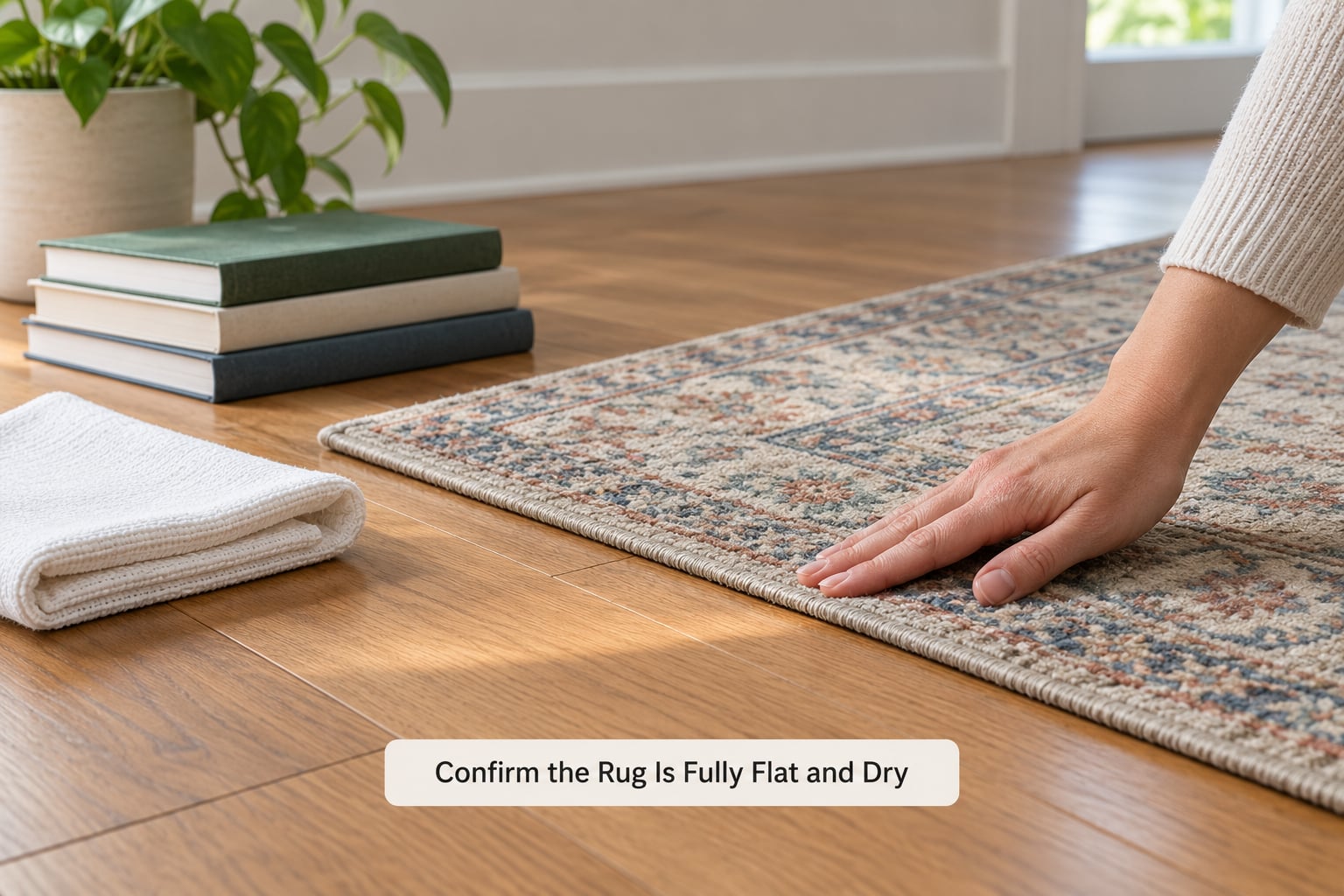
Take the weights off in stages, a corner at a time, and press down as you go. If it springs back, put the weight back on and give it another day.
Run your hand along the full edge and both corners. What you are looking for is an edge that sits flush with no daylight underneath and no resistance when you press. Then check the rug is bone dry all the way through, especially along the binding, because a damp backing under a weight can pick up grit or leave a mark on the floor.
Only when it is flat and dry do you put a rug pad down. If the curl comes back a week later, that is the signal to go straight to the reverse roll again with more weight and more time, not to add more water.
| Method | Time needed | Best for | Risk of damage |
|---|---|---|---|
| Ice cubes plus weight | 4 to 8 hours | Small corner curls, fix needed today | Very low, water only and no heat |
| Damp towel plus weight | 24 to 48 hours | Most new rugs straight out of the box | Low if you keep the water light, especially on jute |
| Low steam or iron over a towel | 30 to 60 minutes active, then 12 to 24 hours drying | Stubborn waves in synthetic rugs | Medium, never directly on pile or binding |
| Reverse roll | 24 to 48 hours | Rugs uncurled after months in storage | None, no heat and no water |
| Hair dryer on cool to finish drying | 20 to 30 minutes | Speeding up a damp corner before guests arrive | Low on cool, avoid wool |
| Rug pad with gripper strips | Ongoing prevention | High-traffic entries and hallways | Low, though grippers can lift carpet fibers |
Common Mistakes
Nearly every damaged rug I have seen came from one of these five.
- Pulling the curl flat by hand. You are fighting fiber memory and you will lose, or you will stretch the backing out of shape. Relax it with moisture first, then press it down.
- Putting a hot iron straight onto the fibers. Synthetic pile can glaze, wool felts, and rubber-backed rugs melt. Always work through a towel, on low.
- Soaking the corner. Heavy water encourages dye bleed on wool and dyed jute, shrinks natural fibers, and can lift a glued backing. Damp is enough.
- Uneven or single-point weights. One stack of books in the middle opens a gap at the edge and dents the pile. Spread the load across the whole curl.
- Flattening a damp rug and calling it done. Trapping moisture under a weight invites musty smell and can mark a wood floor. Dry it fully before you lift the weights.
To stop it coming back, five habits do most of the work. Lay a quality rug pad under the rug, sized slightly smaller than the rug itself so the edges can tuck. Add gripper strips or a few rug pads with adhesive corners where the curl starts. Rotate the rug a quarter turn every few months so one edge does not take all the foot traffic. Keep basement and sunroom humidity in check, ideally under 60 percent. And when you store it, roll it pile inward rather than folding it, then roll it out of the roll the same way you would a fresh one.
On carpet specifically, put the grippers under the rug edge rather than sticking them to bare carpet, since adhesive pulls carpet fibers and leaves residue that is annoying to clean later.
Frequently Asked Questions
How long does it take for a new rug to flatten out?
Left alone and walked on normally, most new rugs lie flat in 2 to 6 weeks, with thick low-pile rugs taking longest. With the damp-and-weight method you can cut that to 24 to 48 hours of weighted drying time. Give it a full extra day if the backing still feels cool or stiff to the touch before you walk on it.
My rug won’t lay flat. What can I do to help it?
Start with the gentlest fix: unroll the rug in the opposite direction, press the curl flat with your palm, cover it with a towel and weigh it down. If that is not enough, lightly dampen the underside first so the fibers relax before you press. Avoid heat on wool, jute and hand-knotted rugs, since those materials shrink or felt.
Can you iron a rug to flatten it?
You can, but never the iron directly on the pile or the binding. Work on a low setting with a clean towel between the iron and the rug, keep the tool moving, and test a hidden spot first. Heat works well on synthetic rugs and badly on jute, wool and anything with a rubber or latex backing, which can melt at temperatures the pile tolerates.
Why do my rug corners keep curling back up?
Four causes account for most repeat curls: the fibers still hold memory from the shipping roll, humidity is tightening them as they expand and contract, there is no rug pad or gripper resisting the corner, or the binding along that edge was loose from the start and never holds. If the binding itself is lifted rather than the pile curling, treat it as a defect and use the retailer’s return window.
How do you keep area rug corners down?
Layer the fixes: a proper rug pad under the whole rug, gripper strips or adhesive corner pads at the curled edges, and even weight over the corner overnight once a week. Rotate the rug a quarter turn every few months so the same edge does not take all the traffic, and keep room humidity below about 60 percent. On carpet, trap the gripper under the rug edge rather than adhering it to the carpet itself.
Conclusion
To flatten a new rug that curls, start with the no-equipment step: unroll it in the opposite direction, press the curl flat and let it sit for a few hours. If it is still curled, dampen the underside lightly, cover it with a towel and weight it evenly for 24 to 48 hours. Save steam and heat for synthetic rugs only, keep a towel barrier in place, and put the rug pad down once the edge is flat and completely dry.