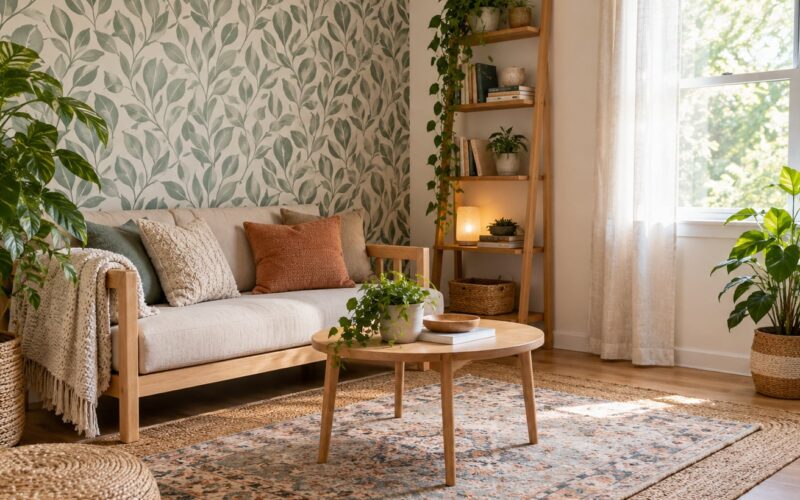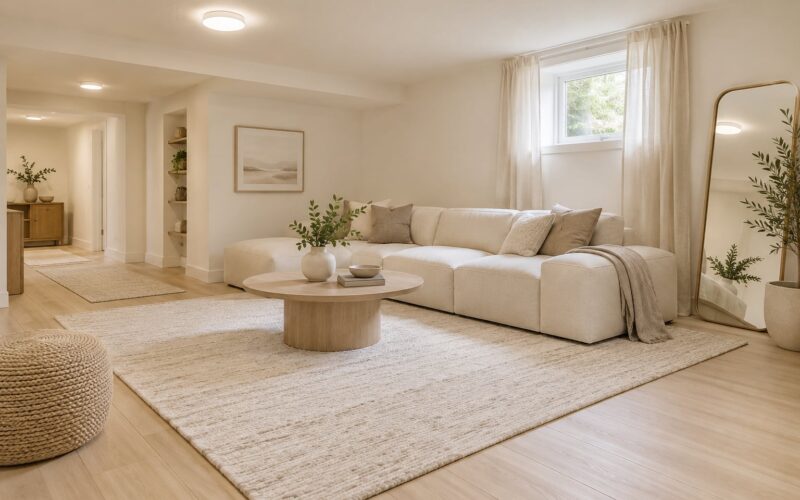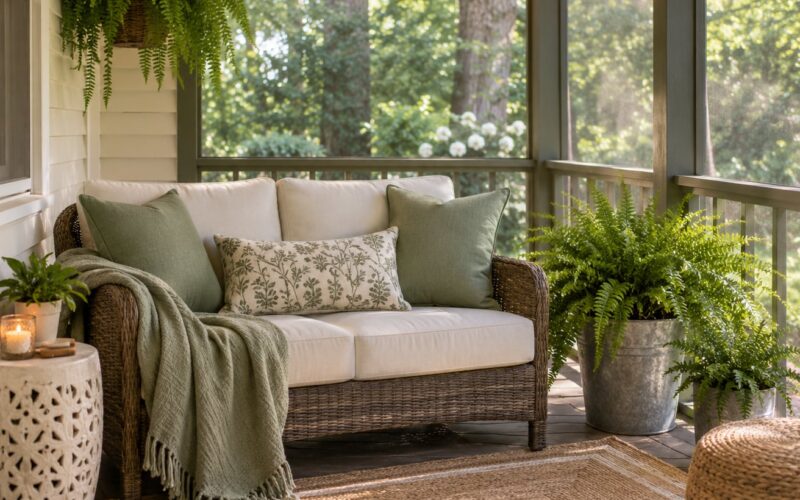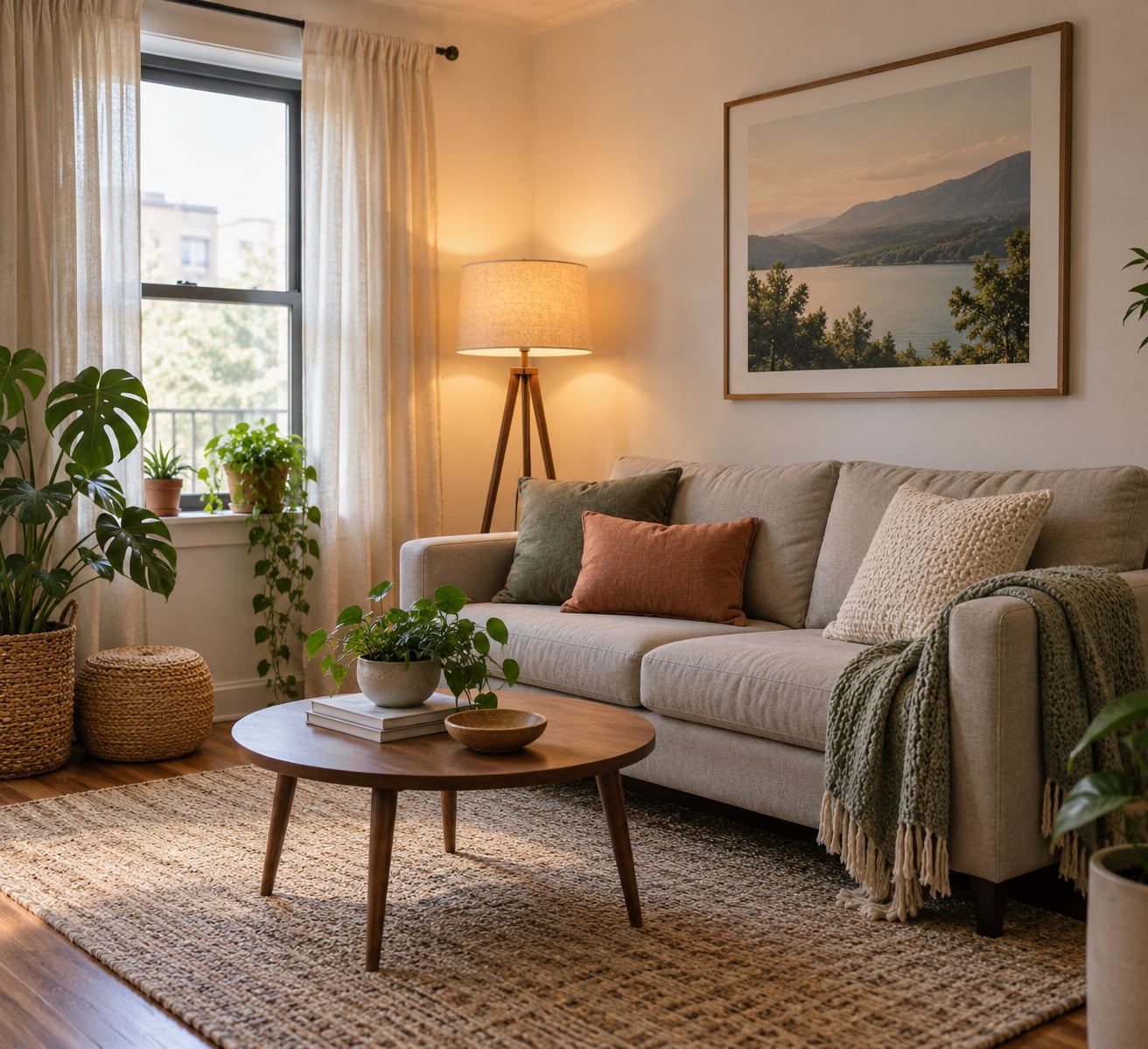
Knowing how to make a rental apartment feel like home comes down to three things: warm light at more than one height, soft textiles on the floor and windows, and something personal on the walls. None of that requires paint, built-ins, or a landlord’s signature. You can do all of it with reversible pieces — renter-friendly upgrades you pull out in an afternoon when you move.
That matters because the two things most people reach for first are the two things most likely to cost them money at move-out. A coat of paint on a landlord’s beige wall is a repaint charge. A hole from a picture hook the building never wanted is a patch charge, and if the wall was already scuffed, an argument about which scuff was yours.
The order below follows how much each change actually shifts a room, not how fun it is to shop. Most people can complete steps one through five in a weekend and live in a room that finally feels settled.
Table of Contents
- What You Need
- Step-by-Step: How to Make a Rental Apartment Feel Like Home
- Step 1: Review the lease and ask about restrictions
- Step 2: Set a color, texture, and style direction
- Step 3: Fix the basics with cleaning and organization
- Step 4: Add removable lighting and window treatments
- Step 5: Make the walls feel personal
- Step 6: Layer rugs, curtains, and textiles
- Step 7: Finish with small, high-impact details
- Common mistakes
- Tips for Making the Whole Apartment Feel Cohesive
- Frequently Asked Questions
- Can I decorate a rental apartment without making the walls look damaged?
- What is the best way to hang pictures in a rental apartment?
- How can I make a small rental living room feel less crowded?
- What should I update first in a rental apartment on a tight budget?
- Should I paint the walls in my rental apartment?
- How do I make a rental apartment feel like home with pets?
- Conclusion
What You Need
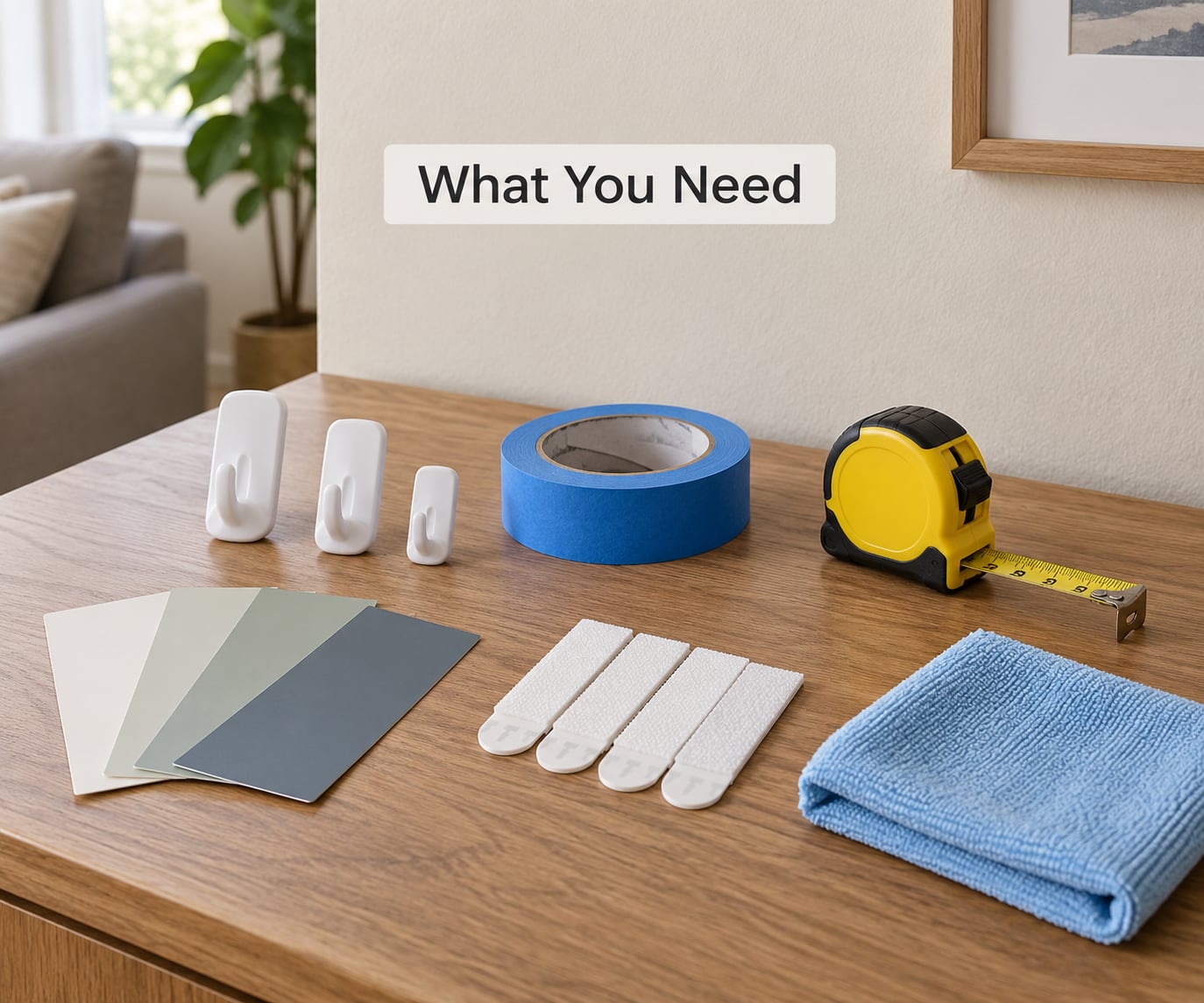
You need very little, and almost all of it is optional. Start by reading your lease before buying anything, because it decides which of these supplies are even allowed.
- Removable adhesive products — picture-hanging strips and hooks, rated for the weight of what you actually hang. Bigger strips are not better; oversized adhesive on a light item is what leaves a mark.
- Measuring tools — a tape measure and a roll of painter’s tape for marking where a rod or frame will sit. Painter’s tape marks a wall for weeks without lifting paint.
- Paint samples — a small card or chip of the existing wall color. Useful for asking permission and for touching up a scuff at move-out.
- Storage and hanging hardware that leaves no holes — tension rods, over-the-door hooks, adhesive closet organizers, and removable bins.
- Basic cleaning supplies — a microfiber cloth, an all-purpose cleaner, a soft brush for grout lines, and a vacuum with a narrow attachment for corners and vents.
The landlord-friendly alternative to almost every item above is time instead of hardware. A freestanding bookcase does the work of built-in shelving, a leaning floor mirror does the work of a wall mirror, and a hook over the top of a door holds a towel without a single screw.
Step-by-Step: How to Make a Rental Apartment Feel Like Home
Step 1: Review the lease and ask about restrictions
Your lease is the whole game, and it is usually specific about more than you expect. Look for clauses on painting, wall damage, nails and screws, adhesives, window coverings, light fixtures, and approved contractors. Many leases ban holes outright while staying silent on adhesive products, so silence is not permission.
Ask your landlord or property manager these questions in writing, and keep the reply with your move-in photos:
- Can I hang anything on the walls, and are adhesive strips allowed?
- Are peel-and-stick coverings allowed, or only on specific walls?
- Can I replace window coverings or blinds?
- Do I need written approval to swap a bulb, a shower head, or cabinet hardware?
- What counts as normal wear at move-out, and how is it photographed?
Written does not mean unkind. A short email asking about one specific item takes two minutes and gives you a record that settles the argument later.
Step 2: Set a color, texture, and style direction
Choose a direction from what you cannot change: the floors, the cabinets, the counters, the doors. Pull two or three colors out of those fixed finishes and build around them rather than fighting them. A rental with warm oak floors looks natural with cream, rust, and olive; gray vinyl and flat white cabinets suit charcoal, mustard, and one clean green.
Coordinating through textiles is how you do this without touching a wall. Curtains, a rug, and two cushions in the same family of colors make mismatched rooms read as deliberate, and everything you just named comes off at move-out in a duffel bag.
Step 3: Fix the basics with cleaning and organization
Nothing makes a space feel more like an office than grime in the corners. Give the place one honest deep clean before anything goes on the walls: vents and returns, baseboards, light switches, cabinet hinges, the film on the oven door, and the grout lines everyone avoids.
Then contain what you can see. Cords get bundled and run along a baseboard with clips, not draped over the back of a desk. Small items go into matching bins or baskets rather than onto open shelves, because open shelves advertise clutter to the whole room. This is the least glamorous step, and it does more for how to make a rental apartment feel like home than most renters expect.
Here is the check: stand in the doorway, turn the lights on, and look at the room. If your eye lands on a pile, a cable, or a dusty surface, that is the next job. If the room looks calmer from the door, your foundation is done.
Step 4: Add removable lighting and window treatments
Rental lighting is almost always too bright and too high, which is why nice rooms feel cold. Replacing bulbs with warm-white LEDs around 2700K is the cheapest change on this whole list, and a floor lamp or a table lamp adds a second and third source at a height that flatters a face. Two or three sources per room is a good target; one overhead fixture is what makes a room feel institutional.
For windows, a tension rod gives you full-length curtain panels with no holes in the wall or the trim. It has to sit inside the frame, so measure the inner width and subtract an inch or so before you buy.
On electrical safety: use only intact, undamaged products, keep lamps away from fabric curtains, and never daisy-chain extension cords or run them under a rug. Replace any bulb or fixture with the correct wattage and fitting, and never touch anything hardwired. Anything beyond a bulb swap belongs to a licensed electrician.
Step 5: Make the walls feel personal
One large piece of art reads better than a scatter of small ones, and a big piece on a rental is the highest-impact wall change you can make without paint. Buy something you actually like rather than assembling a gallery wall on day one and adding to it whenever you find something at a thrift store.
Removable strips work best on smooth, painted, previously unfilled surfaces. Small standard picture hooks are more reliable on textured walls, older paint, or anywhere a previous tenant hung things. Whichever you use, check the weight rating and size the product to the item, not the other way round — an adhesive strip rated for several times the weight of a light frame is a strip that can slide down and take paint with it.
For a gallery effect without frames, unframed prints taped with removable tape or hung from a single strip laid horizontally read as a considered arrangement. Test any adhesive on an inconspicuous corner for a day before you commit.
Step 6: Layer rugs, curtains, and textiles
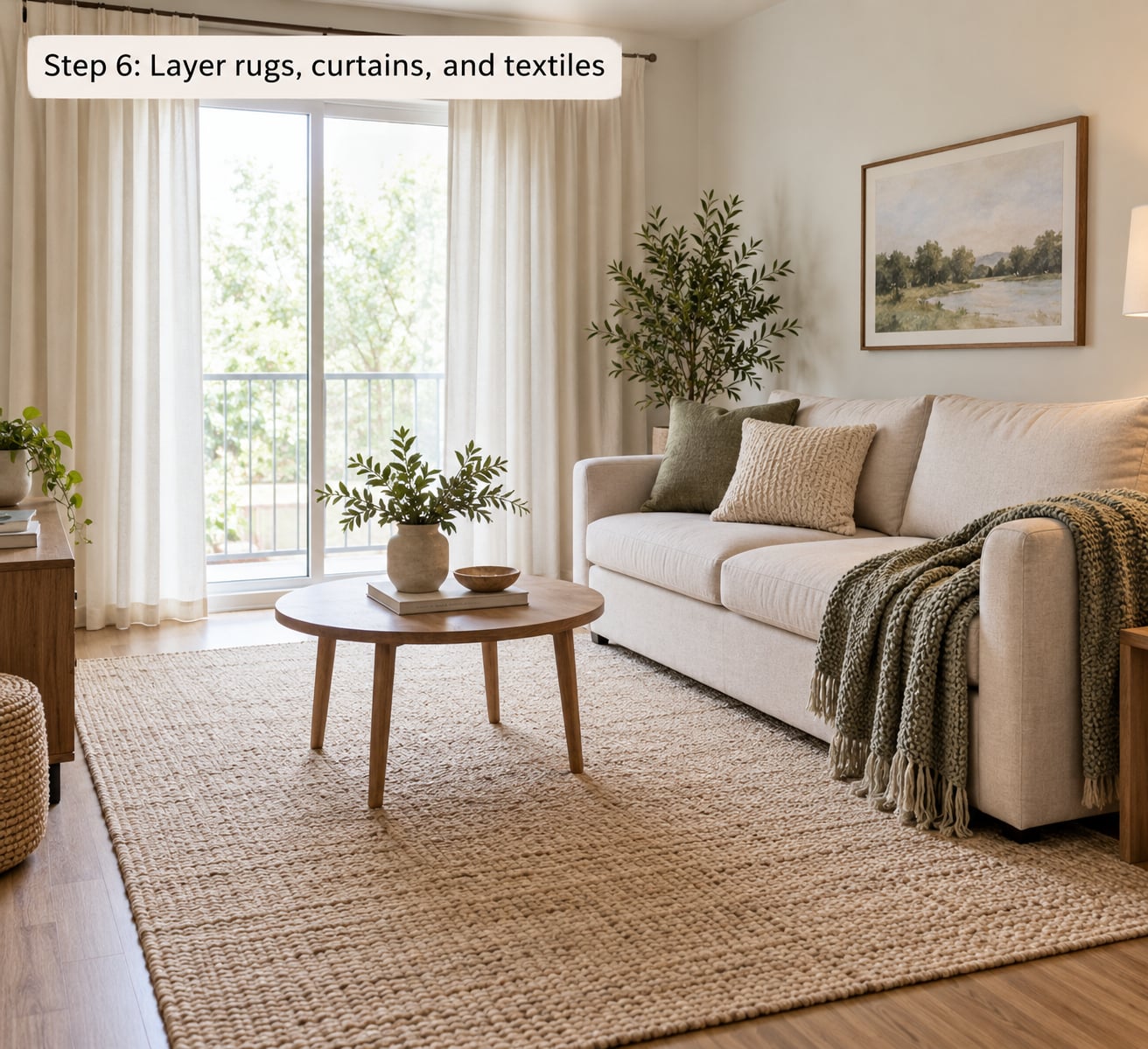
Soft materials are what stop a rental from sounding and looking empty. An area rug covers the worst of a tired floor and cuts echo in a hard-walled room; curtains in a heavier fabric soften both. If you are working out how to make a rental apartment feel like home on a small budget, textiles are where the return is.
Measure the room before you buy a rug. Leave two feet of bare floor on the long sides and around the front, so the furniture sits on the rug rather than beside it, and go two-thirds the length of the sofa for an 8 by 10. If you are undecided, lay a blanket or sheet in the shape you want and walk around it for a day.
Then add two or three pillows and one throw in colors that repeat something already in the room. That repetition is what ties a mismatched rental together — not matching everything, just repeating two or three colors and one shape across rooms.
Step 7: Finish with small, high-impact details
Close with the cheap things that make a room look lived in. Plants in simple pots, a set of framed or mounted paper prints, a mirror leaning safely against a wall, a basket by the door for keys, and a few coordinated kitchen items in one color family.
Be deliberate about the mirror: stand it on the floor against a solid wall or hang it from a rated strip, never lean it against a wall above a stair or a piece of furniture a child could climb. A large mirror opposite a window bounces daylight deeper into a dark room, which is the cheapest fix for a space with no natural light.
Then edit. Remove one small item from every surface until each has clear space around it. Overcrowding a small room is a layout problem before it is a styling problem, and editing fixes it instantly.
Common mistakes
Most rentals that look unfinished make one of a handful of avoidable errors. Each has a simple correction.
- Impulse purchases that only suit the room you saw online. Measure everything and check the color in your own light before you buy, not after.
- Twelve small decor items instead of one focal piece. One large artwork, one large rug, or one strong mirror outshines a shelf of odds and ends every time.
- Fixtures the lease never authorized. Swapping a ceiling fixture, a shower head, or a cabinet pull without written approval can cost you the deposit; ask first, and offer to put the original back.
- Too many colors at once. Pick two or three and repeat them. Every new color is a new decision the room has to reconcile.
- Hanging a heavy frame from adhesive strips. Use a strip rated for the frame with margin, or use small hooks in an approved spot. Oversized adhesive is the main cause of stripped paint.
- Filling a small room with large furniture. Go slimmer and lower, keep walkways clear, and let one wall stay visually quiet.
- Ignoring scale. A rug that stops short of the sofa or art hung close to the ceiling makes a room feel cheap. When in doubt, size up slightly.
- Painting without permission. Even a color you think is an improvement is a repaint charge. Ask, or use a removable covering instead.
Tips for Making the Whole Apartment Feel Cohesive
Cohesion comes from repetition, not from matching everything you own. Carry two or three colors from the living room into the bedroom and entry, and repeat one shape — a round mirror, a rectangular frame, a woven basket — in more than one room. The eye reads those echoes as a scheme even when nothing actually matches.
Use containers to control what you see. Two or three baskets or lidded bins in one material will quietly absorb more visual mess than any amount of rearranging, and they keep counters and shelves mostly clear.
Keep the reversible rule all the way through. Every item you add should come off in under ten minutes and leave the surface as you found it. That protects the deposit, and it also keeps you honest: if something only works because you committed to it permanently, it was not a fit for a rental in the first place.
Take photos of every wall, floor, and fixture before you hang anything, and again on moving day. Dates on those photos settle most deposit disagreements faster than an argument does.
Frequently Asked Questions
Can I decorate a rental apartment without making the walls look damaged?
Yes, as long as you stay inside what your lease allows and use products rated for the weight of what you hang. Removable picture strips, static window clings, and leaning frames that never touch the wall leave the surface untouched. Avoid oversized adhesive strips, and always test a product in a corner for a day before you use it across a whole wall. Photograph every wall before you start.
What is the best way to hang pictures in a rental apartment?
Removable picture-hanging strips work well on smooth, previously unfilled painted walls, and small standard picture hooks are more reliable on textured or older paint. Size the strip to the frame rather than the reverse, and never hang a heavy frame from a light-duty strip. Mark your position with painter’s tape first so you can correct it before anything sticks.
How can I make a small rental living room feel less crowded?
Edit before you add. Remove one item from every surface, then confirm the room looks calmer from the doorway. Keep walkways clear, go slimmer and lower with furniture, and leave one wall visually quiet. A large rug that sits under the front legs of the sofa pulls everything together, and a mirror opposite a window makes a dark room feel wider without adding footprint.
What should I update first in a rental apartment on a tight budget?
Warm-white bulbs and a second light source, then curtains on a tension rod, then a rug. Those three changes carry most of the visual load and all three come out cleanly at move-out. A second-hand rug, lamp, or thrifted mirror does the same job as a new one if you check the condition. Save peel-and-stick coverings and new hardware for once the basics are done.
Should I paint the walls in my rental apartment?
Only with written permission, and only if the lease allows it. Many leases prohibit painting, and a repaint charge can exceed a month’s rent. Ask what colors are acceptable and whether a professional painter is required. If the answer is no, a removable peel-and-stick covering or a large leaning frame gives you the same effect and comes off in minutes.
How do I make a rental apartment feel like home with pets?
Learning how to make a rental apartment feel like home gets harder with pets because rugs, curtains, and upholstery take more abuse. Choose washable covers, a machine-washable throw, and curtains that can be removed for cleaning. Use adhesive hooks rated for the pull of a jumping dog, keep cords and toxic plants out of reach, and check which plants are safe before you bring one home.
Conclusion
Start with the lease, get your permission questions answered in writing, and photograph everything before you touch it. Then pick two or three colors from the floors and cabinets and repeat them in textiles.
Clean and organize the room until it looks calm from the doorway, then make one high-impact change: warm bulbs plus a floor lamp, full-length curtains on a tension rod, or one large piece of art. Check that everything you added can be removed in minutes and returned to exactly how you found it, and your rental will feel like home without putting the deposit at risk.