If you are about to repaint a room, most interior walls need two coats of paint. One coat can look fine while it is still wet, yet it rarely gives you the even color and uniform sheen that makes a room look finished, and a thin coat scuffs and peels sooner. Repainting the same color over sound existing paint? One coat may genuinely be enough.
The rest of this guide breaks the answer down by wall color, surface, paint type and application method, plus how to tell whether your wall actually needs a third coat. Updated for 2026.
Table of Contents
- How Many Coats of Paint Do Walls Need?
- One Coat vs. Two Coats: Which Does Your Wall Need?
- What Changes the Number of Coats Walls Need?
- How Many Coats of Paint Different Wall Colors Need
- What Paint Type and Finish Should You Use?
- Does the Wall Surface Affect Paint Coverage?
- How to Tell When a Wall Has Enough Paint
- How to Apply Each Coat for Smooth Coverage
- Frequently Asked Questions
- Can I paint a wall with just one coat?
- Is two coats of paint always better than one?
- How long should I wait between coats of wall paint?
- Do I need primer before painting walls?
- Can I paint over a darker color with fewer coats?
- Why does fresh paint look patchy while it is wet?
- Bottom Line
How Many Coats of Paint Do Walls Need?
Most interior walls need two coats of paint. How many coats of paint do walls need in practice depends on what is underneath and what you are putting on top, but the industry benchmark is two full applications of finish paint over a primed or self-priming base.
Here is the short version by situation:
- Repainting the same color, same sheen, on a clean wall: 1 coat is usually enough.
- Standard repaint with a light color change: 2 coats.
- Dark color going to a lighter color: 2 to 3 coats, and a stain-blocking or tinted primer first.
- Bold red, yellow or purple over a darker base: 3 coats, or primer plus 2.
- New drywall, bare plaster or bare wood: primer plus 2 coats of finish paint.
- Patched holes, spackled areas or stains that have bled through before: stain-blocking primer plus 2 coats.
- Ceilings painted white over white with even lighting: often 1 coat.
- Switching from oil-based paint to latex: primer plus 2 coats.
Here is why two is the default. Each coat has to build to a roughly uniform wet film thickness, about 3 to 5 mils, to fully hide what is underneath. Paint applied too thin never forms that film. It looks flat and blotchy, lets the old color or patch filler telegraph through, and dries into a film that scuffs off with a fingernail.
A second coat fixes most of that because it levels out lap marks, roller texture and sheen differences, and doubles the film thickness. Doubled film thickness is also why a two-coat job holds color longer and survives scrubbing.
One Coat vs. Two Coats: Which Does Your Wall Need?
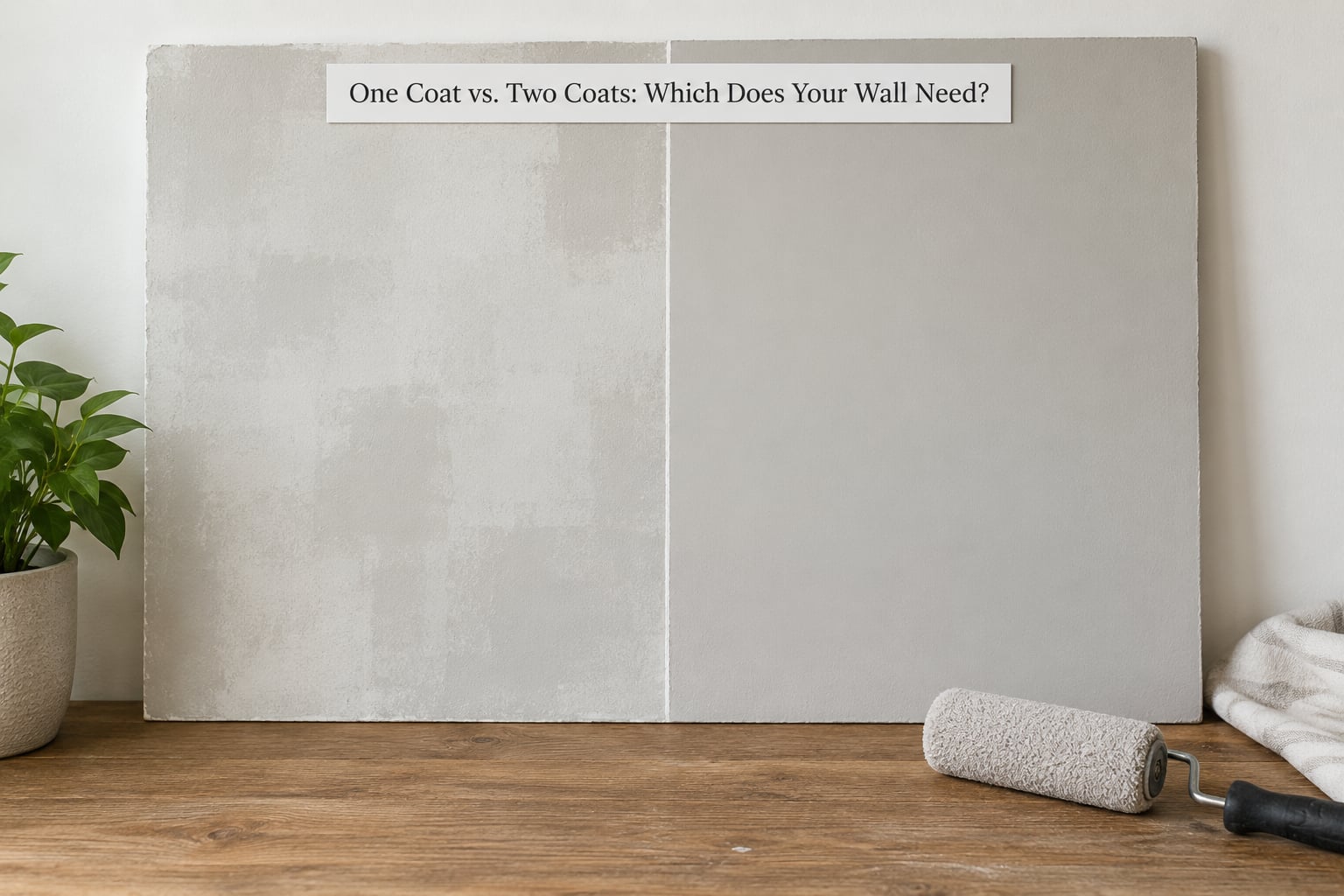
Both options can look passable from across the room. The differences show up in how even the color reads, how well the wall holds up, and how much time the job takes.
| Factor | One coat | Two coats |
|---|---|---|
| Coverage | Covers the surface but leaves thin spots, lap marks and roller texture visible | Hides the first coat completely and evens out texture |
| Color payoff | Color reads uneven, especially over a contrasting base color | Even, saturated color with consistent sheen wall to wall |
| Durability | Thin film scuffs, tears and peels sooner, and repaints sooner | Roughly double the film build, better scrub and wear resistance |
| Time | One application, done for the day in a few hours | Adds a drying window, frequently an extra calendar day |
| Best for | Same color, same sheen, glossy sound surface, white-on-white ceilings | Color changes, patches, repairs, new drywall and most full-room repaints |
Paint that advertises one-coat coverage is not a scam, it is just a narrower claim than it sounds. The better versions work by pairing a self-priming formula with a hiding pigment so strong that one layer genuinely covers. Even so, professionals tend to put a second coat on when the result has to look flawless, and the label on the can is written for a good day with good technique.
There is a related trick worth knowing about. Tinting your primer toward the color you are painting, sometimes a gray primer under a bold color, blocks the old color from bleeding up. Painters use it to save a coat on hard color changes. It works, but the extra primer step eats most of the time you saved.
What Changes the Number of Coats Walls Need?
Six things push the coat count up or down, and they rarely act alone.
Existing color. Going from white to a color hides better than going from a dark color to white. Dark to light is the hardest direction because the light paint has to cover a color that wants to push back up through every layer.
Color contrast. Anything where the old and new colors are far apart on the spectrum demands opacity. A bold red over a dark brown will bleed through two thin coats no matter how good the roller work is.
Sheen change. Dropping from semi-gloss to flat, or going from flat to eggshell, changes how the surface reflects light. Mixed sheens across a room read as blotchy even when the color is spot on, so a full two coats matters more here.
Surface texture. Popcorn ceilings, orange peel and heavy knockdown stucco hold paint in the valleys and leave the peaks thin. Texture swallows a lot of paint and never levels out completely, so budget an extra coat on those surfaces.
Primer. Primer or a paint-and-primer formula decides how much work the finish coat has to do. Without a base coat on bare drywall, stain-blocking areas or repairs, the finish coat spends itself hiding the substrate and the second coat becomes a third.
Application method. A sprayer lays down an even film fast and covers texture better than a roller. A roller is easier to control on walls, but a thin-nap roller loaded too lightly gives you a patchy first coat that will still need a second.
How Many Coats of Paint Different Wall Colors Need
- Same color, same sheen: 1 coat, provided the surface is clean and the existing paint is sound.
- Very similar shade, same family: 1 coat often works with a good hiding paint, otherwise 2.
- Lighter color over a darker color: 2 coats minimum, 3 without a tinted or stain-blocking primer. Deep reds, purples and greens are the worst bleeders.
- Darker color over a lighter color: 2 coats almost always, and darker colors tend to hide patchy jobs well.
- Bold contrasting color: 2 coats over a tinted primer, or up to 3 without one.
What Paint Type and Finish Should You Use?
For interior walls, water-based latex and acrylic are the standard. Both are easy to clean up, dry fast, allow the wall to breathe, and take a second coat without a long wait. Acrylic tends to hold up a bit better in humid rooms like bathrooms and kitchens, where latex is fine on most walls but less forgiving of constant moisture.
Oil-based paint is now a niche choice, mostly for surfaces that need extra adhesion or very high scrub resistance. If the wall is already oil-based and you want to switch to latex, prime first. Water-based paint will not stick reliably to a cured oil film.
Finish matters for coat count more than people expect:
- Flat: Hides lap marks and roller texture best, and is forgiving on patchy walls. It scuffs and cleans poorly, and it takes careful work to look truly even.
- Eggshell: The most common living room and hallway finish. Balanced scrub resistance, and two coats matter because any sheen variation is visible.
- Satin: More scrub-resistant and slightly more reflective. Shows every lap mark, so a consistent second coat is close to mandatory.
- Semi-gloss and gloss: Durability and washability for trim, doors and cabinets, but every brush or roller stroke reads on the surface. Use a brush, take thinner coats, and plan on two.
Does the Wall Surface Affect Paint Coverage?
Same paint, very different results, depending on what you are painting over.
Painted drywall. The easy case. It does not absorb much, so one coat covers when the color is unchanged.
New drywall. The paper face is thirsty and uneven, and the tape and screw patches drink paint differently from the board. Prime or use a self-priming paint, and expect two coats to look like one.
Bare plaster. Very absorbent and prone to suction variations that cause sheen to shift between the first and second coat. Primer is close to mandatory here.
Patched holes and spackled areas. Filler absorbs paint faster than the wall around it and stays slightly different in sheen. Sand the patches flush, dust them off, prime if the filler is deep or the repair is recent, and do not rush to a single coat. Repairs telegraph through a one-coat job almost every time.
Bare wood or trim. Wood drinks the first coat and moves with humidity. Prime, especially on the end grain of baseboards.
Masonry and concrete. Porous, alkaline, and prone to moisture that pushes paint out in blisters. A masonry primer and two coats are the safe plan.
Textured surfaces. Popcorn and knockdown textures hold paint in the low spots. You will never get a glass-smooth look, so aim for two even coats rather than one perfect one.
Glossy existing paint. Smooth and non-absorbent, which is good for hiding power and bad for adhesion. Clean it and scuff it before painting, or expect peeling.
How to Tell When a Wall Has Enough Paint
Do this check once the wall is fully dry, not merely dry to the touch. Wet paint reflects light differently than cured paint, and a wall can look blotchy while it will be fine once cured.
Here is the five-step self-check:
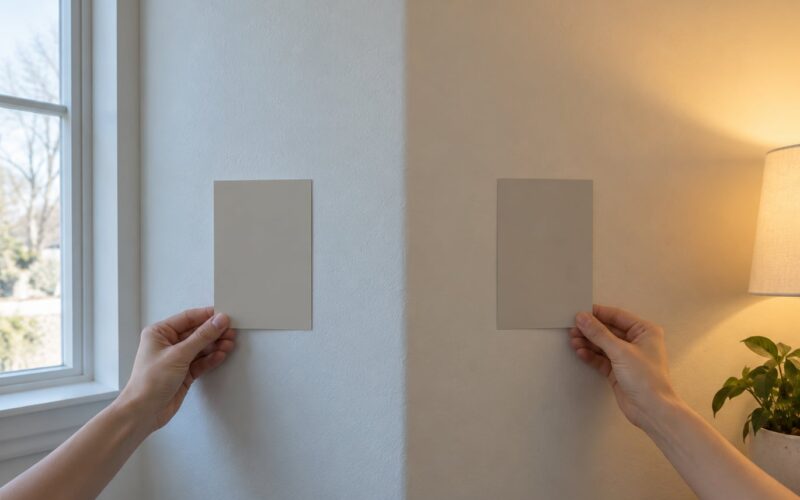
- Check it in raking light. Turn off the overhead lights and use a lamp held at an angle to the wall. Flaws that vanish under flat ceiling light show up immediately at an angle.
- Compare sheen across the room. Look at an area you did not touch, such as inside a closet or behind furniture, next to the wall you painted. A visible difference in reflectivity means you need another coat.
- Look for lap marks. Hold your head at about a 45-degree angle to the wall. Overlapping roller passes that dried into slightly different texture read as stripes from this position.
- Check for bleed-through. Look in corners, behind outlets and around fixtures, where the first coat tends to be thin. Dark halos around a bright red or a warm off-white over brown mean the base color is pushing through.
- Check the repairs. Compare patched areas with the surrounding wall in the same light. If the repair is still visible as a shape, patch, or a change in sheen, the coat count is not there yet.
Three words get confused constantly, so it is worth naming them. Dry to touch is when paint stops feeling tacky, often within an hour or two. Recoat ready is when it can take another layer without lifting or imprinting, typically the 2 to 4 hour window on the can for a light coat and closer to 24 hours for full coverage. Cured is the point at which the film has hardened enough to scrub, and that takes days, sometimes weeks.
If any one of the five checks fails, a third coat over the whole wall will look better than spot-fixing the problem area.
How to Apply Each Coat for Smooth Coverage
Coat count is only half of it. Two thin, badly applied coats will still look like one coat.
- Prepare the surface. Fill holes, sand flush, wash off dust and grime, and scuff glossy existing paint. Scuffing matters as much as cleaning, because a clean glossy wall is still a slippery wall.
- Cut in first. Use a brush along edges, corners and behind fixtures. A narrow brush lays down too little paint for the roller to pick up cleanly, and those thin edges are the first place coverage fails.
- Roll with a load, not a pass. Use a roller nap matched to the texture: about 3/8 inch for smooth drywall, 1/2 inch or longer for rough and textured surfaces. Load the roller fully, roll a W pattern to spread the paint out, then go back over the same area with firm even passes to lay off the texture. That back-rolling step is what removes roller marks.
- Keep a wet edge. Work in manageable sections and roll into a previously painted area that is still wet. Letting a section dry before you join it is what creates lap marks.
- Let it dry properly. Recoat inside the window on the can, and use the touch test in a low corner. If paint transfers to your finger, wait.
- Between coats, check the wall. Do not sand aggressively. A light scuff with fine sandpaper on any raised texture helps the next coat grip, but keep it light or you will scuff through the first coat.
- Clean up before the paint cures. Brushes and rollers rinse in warm soapy water while the paint is still wet. Once it cures, it comes out of the nap with a razor blade or a special tool, not a rinse.
Can a painter get two coats in one day? Sometimes. Fast-drying paint in a warm, dry, well-ventilated room can take a light first coat and a second coat in a single day, and experienced painters do it on small rooms. It is not a good idea on a full house in a humid spell, where you risk lifting the first coat, printing roller texture into it, or getting a softer, less durable film.
Plan your quantities from the coat count. A gallon of quality latex typically covers roughly 350 to 400 square feet per coat over a primed, smooth wall, and the label figure assumes one coat. Two coats on that wall means two gallons for the same area. Add a third coat for a dark-to-light color change and you are shopping again, which is one reason to buy the tinted primer instead of the third coat.
Frequently Asked Questions
Can I paint a wall with just one coat?
One coat is fine when you are painting the same color over the same sheen on a clean, sound wall, or white-on-white on a ceiling with even lighting. Anything else, such as a color change, patches, scuffed walls or glossy paint underneath, usually needs a second coat. One coat can look acceptable while wet and disappoint you once it dries.
Is two coats of paint always better than one?
Not always. Two coats give even color and a thicker film that resists scuffing, washing and fading. But on a sound wall with no color change, a well-applied coat can match a two-coat job in appearance. The extra coat mainly buys uniformity and durability, and it is nearly impossible to fake over patches, repairs or a change of sheen.
How long should I wait between coats of wall paint?
Follow the recoat window on the can, which for most interior latex paint is 2 to 4 hours for a light coat and about 24 hours for full coverage. Dry to the touch is not the same as recoat ready. In a cool or humid room, wait toward the longer end of the range and test a low spot. If it feels tacky or leaves paint on your finger, wait longer.
Do I need primer before painting walls?
You can skip primer when painting the same color over sound, clean drywall or previously painted walls with a paint-and-primer formula. Prime bare drywall, bare plaster, bare wood, patched areas, water or smoke stains, glossy paint that has been scuffed, and any switch from oil-based paint to latex. Primer gives those surfaces the even base the topcoat needs to bond to.
Can I paint over a darker color with fewer coats?
Sometimes, but not reliably. Light paint over a dark base needs a stain-blocking or tinted primer to stop the dark color bleeding up, then two finish coats. Deep reds, purples and greens are the worst offenders because they bleed through thin films. With the right primer and a good hiding paint, two coats usually cover. Without it, expect three.
Why does fresh paint look patchy while it is wet?
Wet paint reflects light differently than dry paint, so differences in sheen that will disappear can look obvious, and darker wet areas read as blotches. It also shows every lap mark and roller texture. Let it dry fully before you judge the result. If patches or sheen differences are still there once it is dry, that is a real miss and the wall needs another coat.
Bottom Line
Two coats is the rule for almost every interior wall, and one coat is the exception worth taking when the color and sheen are unchanged and the surface underneath is sound. Everything else, a color change, patches, repairs, new drywall or glossy paint, wants two coats and often a primer.
Start with one full coat, keep a wet edge while you roll, and let it dry inside the window on the can. Then check the wall in raking light against an untouched spot, look for lap marks and bleed-through, and add a second coat wherever the light gives it away. Spending the evening on a second coat is a lot cheaper than living with blotchy walls.