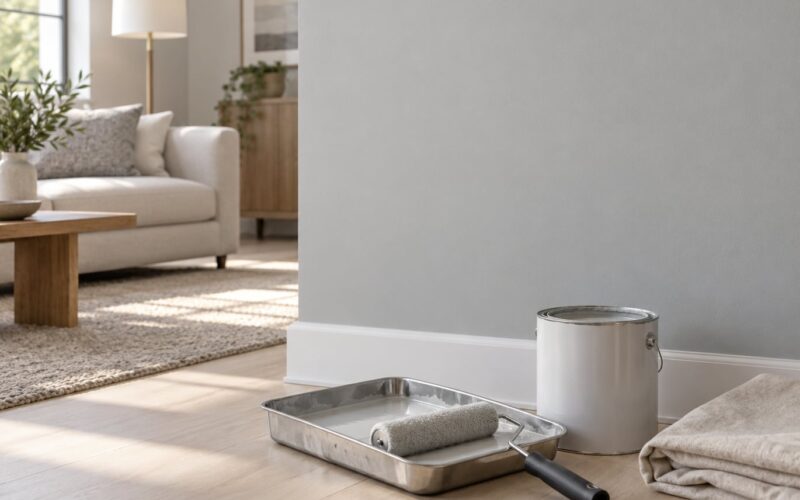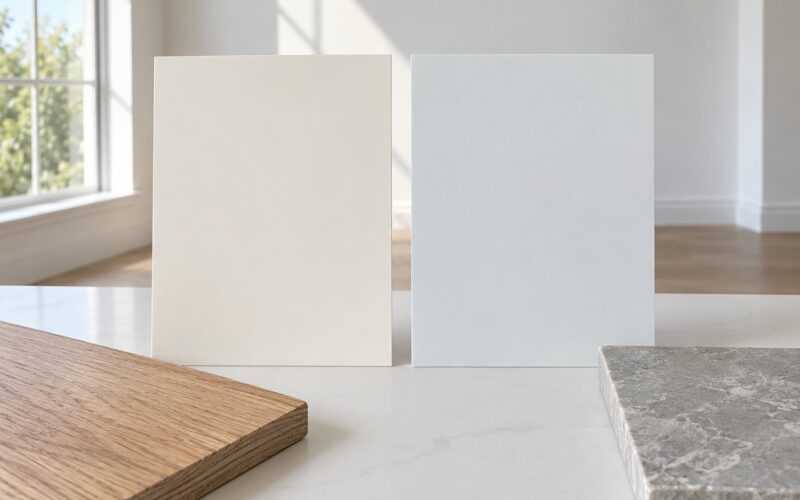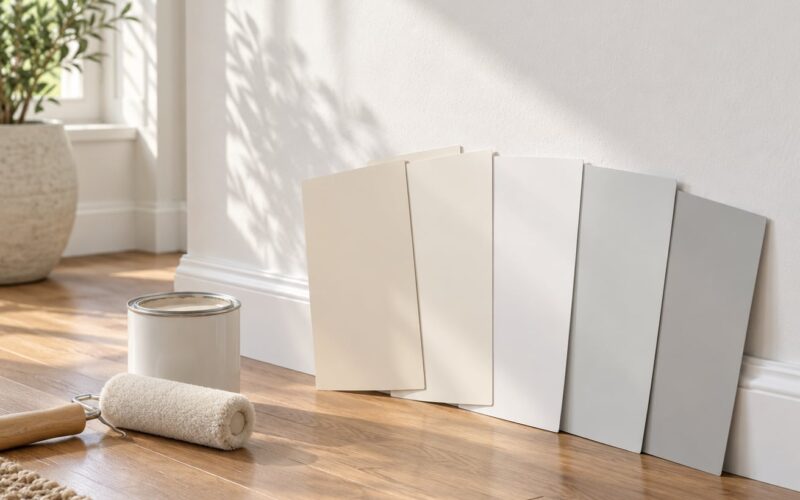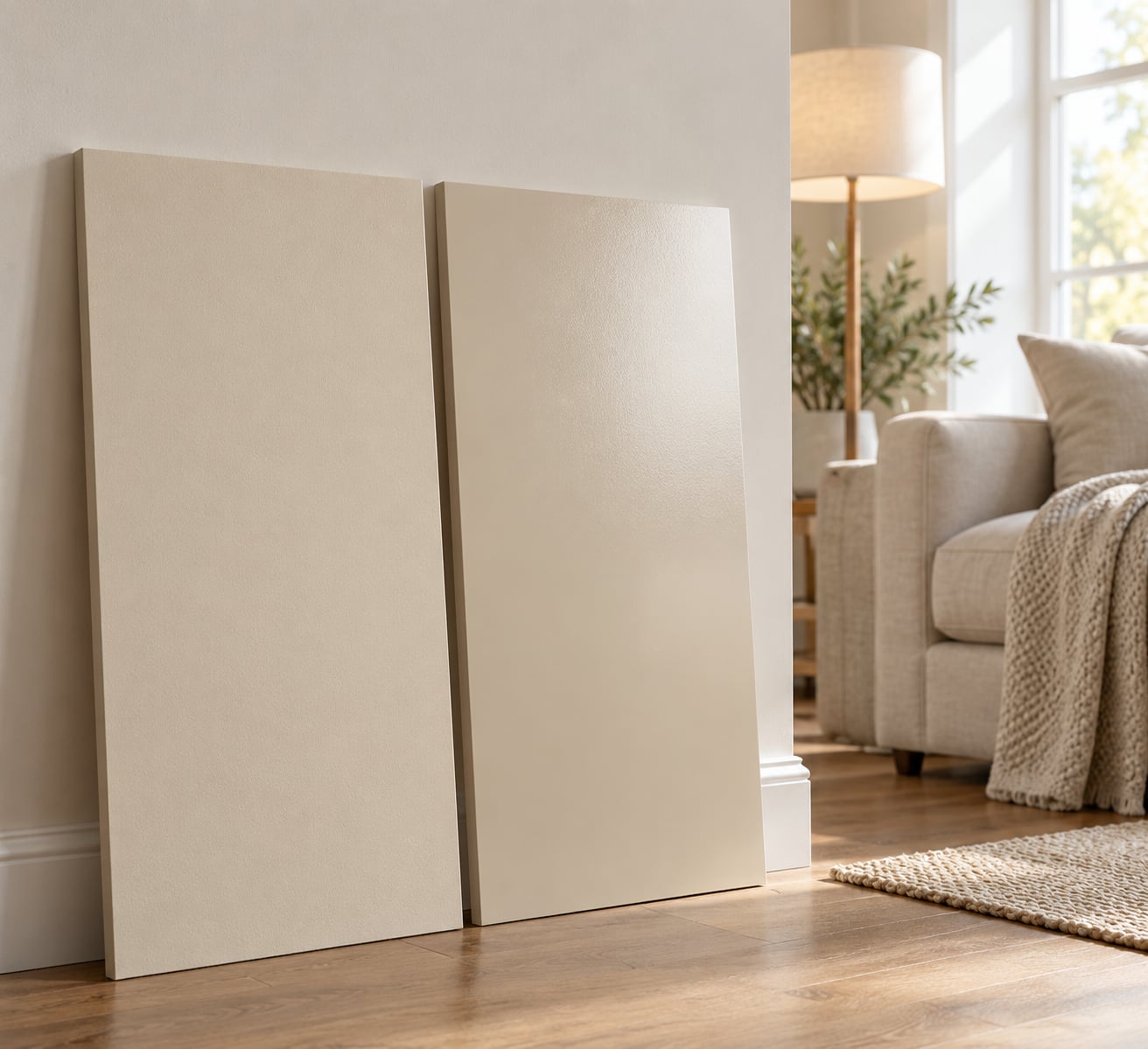
Eggshell is usually the better finish for living room walls because it softens bumps and dings while keeping glare low. Satin earns its place when a room takes heavy traffic, pets, or frequent cleaning, because its harder film wipes clean. The right pick comes down to your wall condition and how much the room actually gets touched.
Almost everyone agonizes over the wrong part of the decision. Color first, sheen second, prep always. The two finishes people argue about on every forum are close cousins: eggshell is the soft one, satin has a low pearl glow and a tougher skin. Neither is a quality grade, and neither is wrong for a living room.
Here is how each one behaves in a real room, and what happens six months later if you pick the other.
Table of Contents
- Eggshell vs Satin Paint for Living Room Walls at a Glance
- What Is the Difference in Paint Sheen?
- Why satin feels harder, not just shinier
- Eggshell, in plain terms
- Satin, in plain terms
- Which Finish Hides Wall Imperfections Better?
- What satin gives away
- The touch-up problem
- Which Finish Is More Durable and Washable?
- Where satin pulls ahead in daily life
- How Does Lighting Change the Look?
- North-facing and low-light rooms
- South-facing and sunlit rooms
- Lamp color and wall color
- Glare and where people sit
- Which Is Easier to Apply?
- Practical application notes
- Eggshell vs Satin for Different Living Room Styles
- A calm, matte-like room
- A bright, traditional living room
- A family room with kids and pets
- A rental refresh
- A polished DIY makeover
- Which Should You Choose?
- When eggshell is enough
- When satin is worth it
- If you want to move from one sheen to the other
- Frequently Asked Questions
- Is satin paint more durable than eggshell for a living room?
- What sheen is best for a high-traffic living room?
- Is eggshell paint good for walls in a sunny living room?
- Can I paint eggshell over satin or satin over eggshell?
- Does satin paint show fingerprints and wall imperfections more?
- What is the best paint sheen for painting over a rental home?
Eggshell vs Satin Paint for Living Room Walls at a Glance
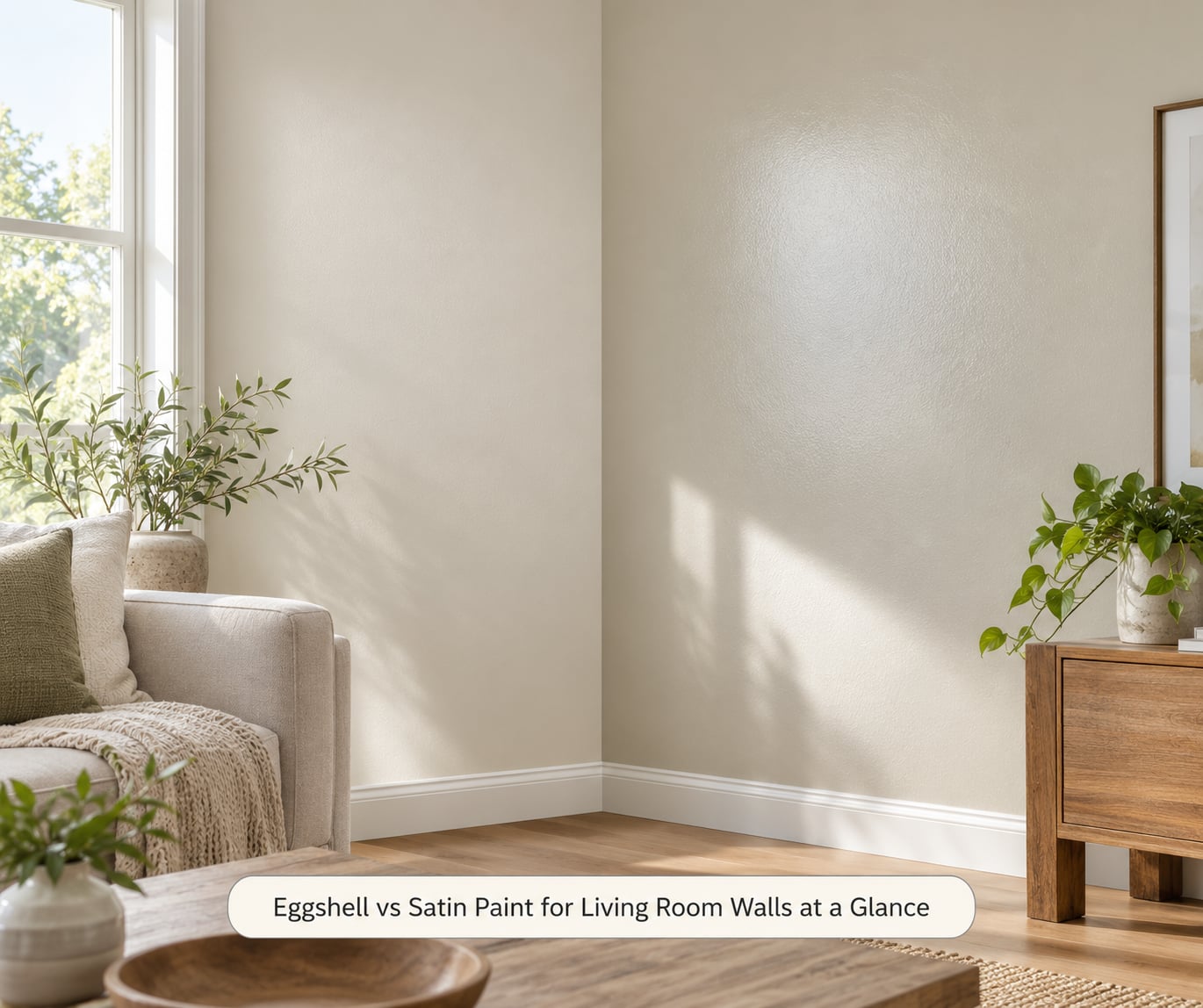
| What it means | Eggshell | Satin | Which wins in a living room |
|---|---|---|---|
| Sheen level | Low, soft luster, almost matte | Deeper luster with a faint pearl look | Tie, unless glare is a problem |
| Hides bumps and drywall dings | Very well | Poorly | Eggshell |
| Shows roller marks and lap lines | Barely | Clearly on raking light | Eggshell |
| Scrubbability | Light wiping only | Repeated scrubbing | Satin |
| Scuff and fingerprint visibility | Marks stay visible | Rub off more readily | Satin |
| Touch-up blending | Patch hides well | Spot often stands out | Eggshell |
| Reflected light in a bright room | Soft, even | Brighter, can glare | Eggshell |
| Best suited to | Formal rooms, older walls, textured surfaces | Family rooms, entries, sunlit spaces | Depends on traffic |
| Ideal user | Someone who cares most about the finish looking calm | Someone who cares most about scrubbing the walls | Ask which one you are |
One column to skim if you are in a hurry: hides imperfections and touch-ups go to eggshell, everything to do with cleaning and scuffs goes to satin.
What Is the Difference in Paint Sheen?
Sheen is how much light a dried paint film bounces back at you, and the word on the can is simply the manufacturer’s label for that bounce.
The interior scale runs flat or matte, then eggshell, then satin, then semi-gloss, then high-gloss. Eggshell sits just above flat, low enough that you would call it matte in a dim room. Satin sits one rung higher, and it is the first level where people start saying the wall looks shiny rather than soft.
Why satin feels harder, not just shinier
Higher sheens carry less pigment and more resin binder. The pigment is what gives paint its color and body, and it sits on top of the binder. More binder and less pigment means a denser, smoother film once it cures, and that film is what resists a scrubber and a scuffing shoe.
So the name describes gloss, not quality. A cheap eggshell and a premium eggshell behave differently, and a bargain satin from a hardware store will not scrub like a satin from a paint line designed for high traffic. The sheen tells you the direction of travel; the product tier decides how far you get.
Eggshell, in plain terms
Eggshell has a soft glow that most people read as matte. It throws very little light back into the room, which makes a small or dim space feel calmer and slightly deeper in color. It also forgives a lot, because a low sheen has nothing to catch light and nothing to exaggerate.
Satin, in plain terms
Satin adds enough reflectivity to make a color look a touch richer and to bounce more daylight around the room. Some people love that brightness. Other people see it as a sheen that announces itself, especially at night under a lamp that grazes the wall.
Which Finish Hides Wall Imperfections Better?
Eggshell hides wall imperfections better, and this is the single strongest argument for it in an older house.
Light does the revealing. A low sheen scatters light in every direction, so a roller lap mark or a sanding ridge disappears into the surrounding color. Higher sheen sends light back along the surface, and every bump becomes a tiny highlight with a shadow beside it.
What satin gives away
- Roller lap marks and the faint stripes where one pass overlapped another
- Brush strokes at the cut-in line, especially on long walls
- Drywall dings, nail pops and shallow gouges
- Patches that took primer differently from the bare wall
- Orange peel texture and old spray texture, which go blotchy and streaky
If your walls are flat and smooth, satin looks fine. If they carry any history at all, satin turns that history into a display case.
The touch-up problem
Eggshell also forgives a bad patch. Fresh eggshell over cured eggshell, feathered at the edge, usually reads as one continuous wall. The same patch in satin shows up as a shiny rectangle even when the color matches exactly, and that is the single most common complaint in homeowner threads about satin walls.
One workaround worth knowing: scuff-sand the cured patch with 220 grit, wipe off the dust, and feather the new paint outward with a dry brush. You are knocking the gloss down so the touch-up sits closer to the surrounding sheen. It helps. It does not always disappear completely, which is why a satin touch-up in a quiet corner still gets a wider brush than you would like.
Which Finish Is More Durable and Washable?
Satin is more durable and more washable, because its denser resin film resists scrubbing and sheds scuffs instead of holding onto them.
Think about what happens to a scuff. On eggshell, a black shoe mark or a hand print has nowhere to go. You rub at it and the mark spreads or thins the top layer, so the repair takes a spot primer and a second coat. On satin, the mark is sitting on top of a harder surface, and a damp cloth usually takes it off in one pass.
Where satin pulls ahead in daily life
- Kid traffic: hands at shoulder height along hallways, markers at art-table height
- Pets: dogs who lean against walls on return walks, cats who rub along doorframes
- Entry points where backpacks and jackets bump the wall
- Smaller sitting rooms that double as play spaces
Where eggshell holds its own is light duty. Dusting, a quick wipe of a hand print near a light switch, the occasional scuff from a moving chair. Eggshell handles all of that. It simply does not handle a second round of scrubbing as gracefully.
Both finishes take a full cure of roughly a week or more before they reach their hardest state, so treat fresh walls gently no matter which one you chose. Scrubbing a wall that looks dry but has not cured is how people end up with a shiny worn patch in the middle of a matte finish.
How Does Lighting Change the Look?
Lighting decides more about how a finish looks than most people expect, and the same gallon of paint can read as calm in one room and glossy in the next.
North-facing and low-light rooms
These rooms get soft, steady, shadowless light, which is eggshell’s favorite condition. A satin wall here can look almost flat during the day and then pick up a distinct glow once lamps come on in the evening. If a room feels small, low sheen keeps the visual edges soft; satin adds depth you may not want.
South-facing and sunlit rooms
Direct sun is where satin earns its keep. The stronger light reflects off the resin film and picks up color and texture in a way flat or eggshell cannot, so a room with big south-facing windows often looks richer in satin. The tradeoff is glare: a wall opposite a large window can throw a bright band that is distracting on a screen or across a desk. Eggshell keeps that under control.
Lamp color and wall color
Warm bulbs deepen the look of a satin wall and make a light color feel cozier. Cool bulbs push it toward gray and emphasize any sheen, because cool light shows specular highlights more harshly. Dark colors absorb light and hide sheen, so a deep color in satin is less risky than a soft warm white in satin. Pale colors show gloss the most.
Glare and where people sit
If anyone in the house works at a table facing that wall, or watches a screen mounted opposite it, treat glare as a real factor. Satin in a dim room under a single lamp can put a visible highlight right where a face sits.
Which Is Easier to Apply?
Neither finish is meaningfully harder to roll on, and most application problems that get blamed on satin would have happened in eggshell too.
The real difference shows up in how forgiving the finish is afterward. Eggshell lets a rushed second coat pass without much consequence. Satin preserves every trace of your technique, so cutting in neatly and keeping a wet edge matters more.
Practical application notes
- Use the same roller nap the can recommends; a thick nap on a low-sheen wall can leave an orange-peel texture that satin then highlights.
- Roll from a corner and work back into the light so you are not looking straight down the stroke.
- Load consistently. Lap marks come from a roller that dries out mid-wall, and they show up in satin long before eggshell.
- Feather edges rather than pushing the roller into the corner and leaving a ridge.
On textured walls, no sheen choice fixes the texture. If you have knockdown or spray texture, patch the damaged spots to match, then pick the finish based on traffic instead of expecting the paint to flatten anything.
Eggshell vs Satin for Different Living Room Styles
The finishes suit different decorating goals, and your intended look usually tells you as much as your cleaning habits do.
A calm, matte-like room
Eggshell, without hesitation. If you are after the look people describe as soft, museum-like, or expensive, low sheen is how you get there. It is the finish that disappears into the decorating.
A bright, traditional living room
Satin, if the room has good light. Traditional rooms often carry dark wood, warm golds, and jewel tones, and satin gives those colors a little more life. Eggshell is the safe alternative when the wood is dark enough that the wall should not compete.
A family room with kids and pets
Satin. This is the case where washability settles the question, and it is also the case where the extra effort in application pays off in everyday scratches nobody sees.
A rental refresh
Eggshell, on cost and forgiveness. Renters repaint a scuffed wall more often than they repaint a good one, and eggshell patches match without the gloss halo that makes a satin repair obvious. Extra sheen also shows every landlord inspection light more clearly.
A polished DIY makeover
Either works, depending on the wall. If you are starting from flat, smooth drywall you have sanded down yourself, satin gives the room a finished, reflective quality. If the walls are older and textured, eggshell is the DIY-friendly choice that will not broadcast your roller technique.
Which Should You Choose?
Choose eggshell if your walls show their age or your room is calm and formal, and choose satin if the room is used hard and cleaned often. Everything else is detail.
Five questions settle it in about a minute:
- Do kids, pets, or regular guests rub against these walls? Yes points to satin.
- Are the walls smooth, or do they carry texture, patches, and old dings? Imperfect walls point to eggshell.
- Does the room get strong direct sun, or sit opposite a large window? Sun favors satin for richness, glare favors eggshell.
- Will you touch up scuffs over the next few years? Frequent small repairs favor eggshell.
- Do you want the walls to recede or to brighten the room? Recede equals eggshell, brighten equals satin.
When eggshell is enough
- Formal living or dining rooms with light furniture traffic
- Older homes with textured or previously patched walls
- Bedroom-style sitting rooms used mainly in the evening
- Small rooms or north-facing rooms where glare would show
- Rentals and quick refreshes where patching matters more than scrubbing
When satin is worth it
- Family rooms and finished basements that take constant activity
- Entryways, stairways, and rooms with pets
- Sunlit rooms where you want color to look richer
- Walls you would rather scrub than patch
If you want to move from one sheen to the other
Switching finishes in the other direction is the easier half of this decision, so start there. Painting eggshell over satin means the new paint is less shiny than what is underneath, and a mismatch reads as a slightly duller patch rather than a glossier one.
Going satin over eggshell needs more work. Clean the walls, scuff-sand them so the new film has something to grip, and spot-prime anywhere you sanded through to bare drywall. If the room is large or heavily lived in, repainting corner to corner usually looks better than convincing yourself a scuffed, primed satin patch will disappear.
Before you commit, buy 8-ounce samples of your color in both sheens and tape them side by side on the wall that gets the most light. Look at them in the morning, at dusk, and with the lamps on. Ten minutes of observation beats an hour of reading.
Frequently Asked Questions
Is satin paint more durable than eggshell for a living room?
Yes, satin is more durable because its higher resin content creates a denser film that resists scrubbing and scuffs. Eggshell is meant for light wiping, not repeated cleaning. If your living room takes regular traffic from kids, pets, or guests, satin will outlast eggshell and hold up better to repeated touching up.
What sheen is best for a high-traffic living room?
Satin is the standard choice for high-traffic living rooms, hallways, and entryways. It wipes clean, resists scuffing, and holds color longer under repeated handling. If the walls are textured or uneven, that advantage shrinks, because satin makes every flaw more visible. Smooth walls plus heavy traffic equals satin.
Is eggshell paint good for walls in a sunny living room?
Yes, and sunny rooms are one of eggshell’s better placements. Eggshell reflects very little light, which keeps glare under control on a wall facing a large window. Satin will look richer in the same sunlight, but it can throw a bright band across the room. Pick based on whether you want brightness or a calm surface.
Can I paint eggshell over satin or satin over eggshell?
Both directions work, but they are not equally easy. Painting eggshell over satin is more forgiving, since the duller new finish hides better against the shinier old one. For satin over eggshell, scuff-sand the walls, prime bare spots, and expect to repaint full walls for a seamless result.
Does satin paint show fingerprints and wall imperfections more?
Yes to both. Satin shows fingerprints, scuffs, roller marks, drywall dings, and uneven patches more than eggshell because it reflects light back along the surface instead of scattering it. Eggshell is the safer choice on imperfect walls or anywhere you plan to patch scuffs later.
What is the best paint sheen for painting over a rental home?
Eggshell is usually best for a rental. Existing paint in a rental is often satin or semi-gloss, and eggshell goes over it more easily without sanding. Eggshell also patches invisibly, which matters when you need to fix a scuff before moving out. Trim and doors can stay in their existing higher sheen.
Start by standing in front of your living room wall in the light you use most, and decide whether you want the room to glow or to stay calm. Glowing and getting scrubbed go together, so satin suits a busy room with smooth walls. Staying calm and hiding a wall’s history go together, so eggshell suits everything else. Buy the two sample sizes, tape them up, and let the room answer the question for you.