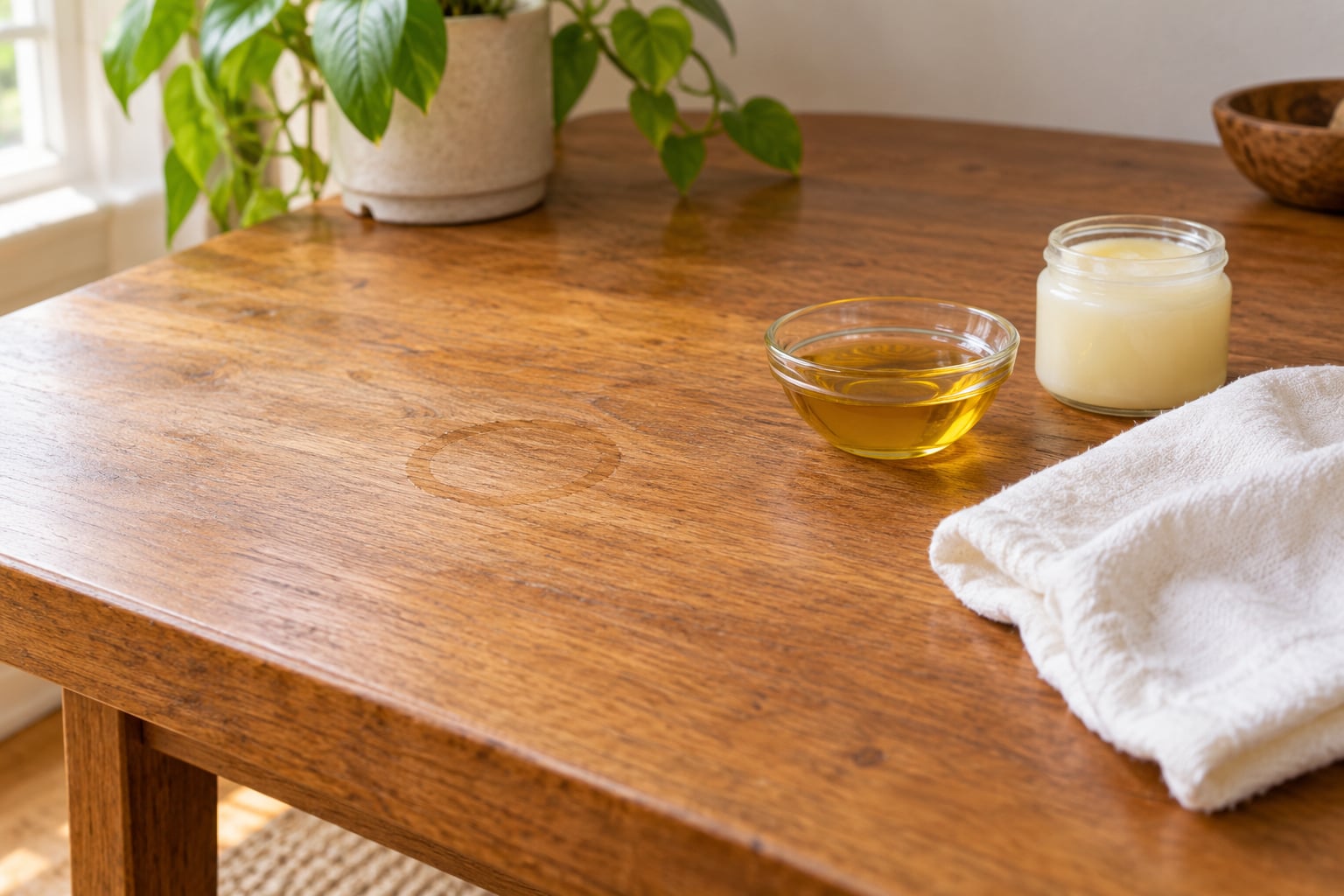
A water ring on a wood table is nearly always repairable at home, and the fix starts with a household oil and a soft cloth. Whether the mark takes fifteen minutes or three days depends on one thing: whether it is a white cloudy ring sitting in the finish, or a dark stain that soaked into the wood underneath. Most glass rings are the first kind, which is good news.
I have repaired a handful of tables this way, and the common thread is that the people who succeed are the ones who test a small spot before they touch the whole mark. The people who end up with a bigger problem are the ones who scrub first and ask questions afterwards.
Table of Contents
- What You Need
- Step-by-Step: How to Fix Water Rings on a Wood Table
- 1. Identify the table finish and test a hidden spot
- 2. Remove the ring with gentle oil or baking soda
- 3. Treat stubborn water rings on a wood table without stripping it
- 4. Restore the finish and protect the table
- Common Mistakes
- Frequently Asked Questions
- What removes water rings from a wood table?
- Can I fix a water ring without sanding the whole table?
- What is the best method for a water stain on varnished wood?
- Will baking soda remove a water ring from wood?
- How do I match the finish after fixing the mark?
- When is a water ring too deep to repair as a DIY project?
- Start Here
What You Need
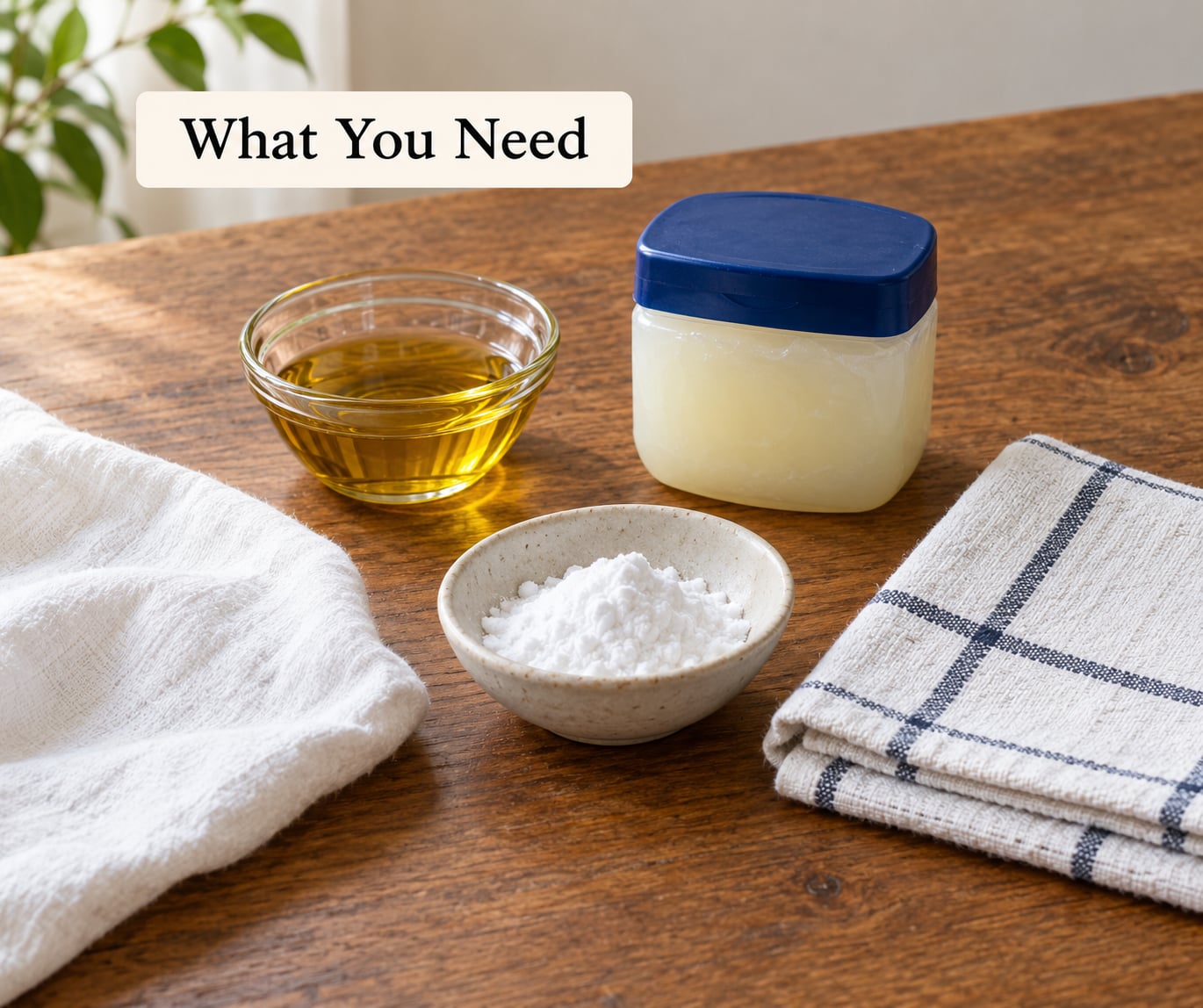
Start with the least invasive supplies. They cost almost nothing and they will not strip a finish if you get the technique wrong.
- A soft white cloth or a clean cotton T-shirt. Dye from a coloured shirt can rub off onto the repair.
- Warm water and a few drops of mild dish soap for cleaning before and after.
- Wood-safe oil, such as a plain furniture oil or mineral oil.
- Petroleum jelly. It works about as well as mayonnaise and is easier to control.
- Baking soda, for a very gentle scrub on a shallow mark.
- Denatured alcohol, for finding out whether the finish is shellac.
Only pull out the stronger tools if the mark is still there after the gentle pass. An iron on its lowest setting, a cotton tea towel, extra-fine steel wool or 320 grit sandpaper, and a matching furniture finish are the second tier. Keep them within reach but do not start with them.
Set up somewhere with good light and no dust, and lay a towel under your work. You will want to check the repair as it dries, and overhead lighting hides more than it shows.
Step-by-Step: How to Fix Water Rings on a Wood Table
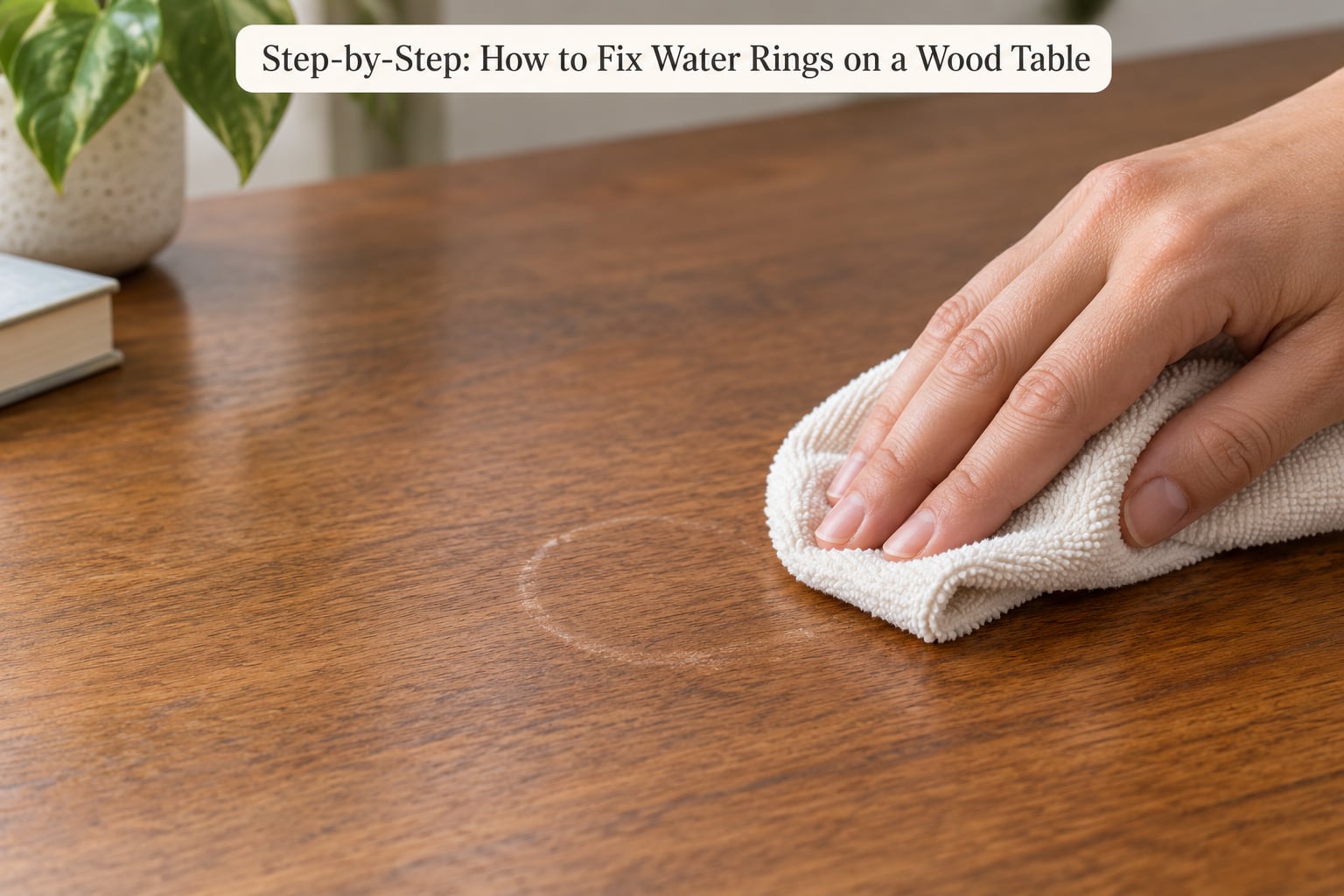
1. Identify the table finish and test a hidden spot
Almost every failure I have seen comes from using the wrong method on the wrong finish. Spend five minutes working out what is on the table before anything goes near it.
Dab a little denatured alcohol onto an inconspicuous spot, inside a drawer edge or under a table leg. If the finish softens, dulls or feels tacky right away, it is shellac, and only an alcohol-based product should touch it. Polyurethane, varnish and lacquer stay hard, so they will not budge.
Put a drop of water on the same hidden spot. A beaded drop means a film finish is present. If the water disappears into a dark, soft patch, the wood is bare or oiled, and every method here needs a lighter hand.
| Finish | How it behaves | Safe first move |
|---|---|---|
| Shellac | Alcohol softens it almost instantly | Alcohol on a cloth, light pressure |
| Lacquer | Glossy, softens with heat, easily scratched | Low heat or fine steel wool with a wax product |
| Varnish or polyurethane | Hard, water resistant, stands up to most methods | Petroleum jelly or baking soda paste |
| Oil or wax finish | Water soaks straight in and darkens the wood | Light re-oil after cleaning; skip the heat |
| Painted | Colour sits on top of bare wood | Clean gently first, then spot from the reverse side |
Whichever method you pick, try it on that hidden spot first and give it the full dwell time the method calls for. A test that has not dried tells you nothing.
2. Remove the ring with gentle oil or baking soda
For a white or cloudy ring on a film finish, petroleum jelly is the safest first attempt. Dab a thick layer directly over the mark, keeping it off the surrounding area, and do not soak the wood. Let it sit for a couple of hours, or overnight for a deeper ring, then wipe it off with a clean cloth and follow with a dab of soapy water on a barely damp cloth.
The reason it works is simple. Water gets trapped in or just under the finish layer, and oil displaces it. Mayonnaise does the same job because it is mostly oil with a little vinegar and egg, which is why the method is so widely repeated. Being honest about the limits matters here though. People on woodworking forums report mayonnaise doing nothing at all on lacquer and on already-oiled surfaces, and a finish that has been re-oiled many times can only absorb so much more oil.
Baking soda paste is the gentler second option. Mix one tablespoon of baking soda with one tablespoon of water to a thick paste, dab it on with your fingers or a cloth, and work in small circles for ten to fifteen minutes. Then wipe and dry. This is a mild abrasive, so it can lift a surface mark that oil left behind, but it will not touch a stain that has reached the wood itself.
3. Treat stubborn water rings on a wood table without stripping it
If the mark is still there, move up one step rather than sideways. Heat is the next tool, and on lacquer it is the one that works best because lacquer softens and re-flows with warmth. Set an iron on its lowest heat with no steam, put a dry cotton tea towel over the ring, and press in short passes of ten to twenty seconds. Move constantly. A hair dryer held about a foot away and kept moving does something similar. Skip the heat on shellac and on any finish that has already started to craze or blister, because those marks need a different answer entirely.
For shellac, alcohol is the tool. A cloth barely damp with denatured alcohol, wiped once across the mark, will often dissolve the swollen finish and leave clean wood behind. Wipe again immediately with a dry cloth and follow with furniture oil within the hour, because shellac oxidises faster once it is opened up.
Extra-fine steel wool with a wax and oil furniture treatment works on lacquer and solid wood. It is a light abrasion, so keep the strokes along the grain and count the passes. Two or three passes is a treatment; ten is damage.
When the stain is dark, stop treating it as a surface problem. Dark colouring means water travelled through the finish and reacted with the tannins in the wood, which is what happens under a plant pot or a sweating metal vase. No oil, heat or baking soda will lift that. Oxalic acid, sold as wood bleach, will lighten the tannin stain, after which you sand the area and refinish it. It needs gloves and eye protection, it needs rinsing with plain water afterwards, and it must never be mixed with bleach or ammonia. On a valuable piece, or a ring larger than a coin, this is the point to call a refinisher.
4. Restore the finish and protect the table
Once the mark is gone, the surface can feel dry and slightly dull next to the surrounding finish. Rub a light coat of the same oil you tested with, along the grain, and buff it off when the product says to. If you have thinned a lacquer or varnish finish, a thin coat of the matching product applied with a cloth and feathered at the edges will blend it back in.
Follow the cure time on the can rather than on the internet. Water-based polyurethane usually feels fine to touch in a few hours but wants a full day before you judge the sheen, and the sheen will always be slightly flatter than a factory-applied coat. Look at the repair in daylight from a normal viewing angle, not from directly above, because side light shows every mismatch and overhead light hides them all.
Then stop the next ring before it starts. Coasters and placemats do the heavy lifting, trivets for anything hot, and a felt or silicone pad under anything that sweats. Wipe standing water promptly, refresh the wax or oil on the schedule the finish recommends, and lift decorative objects instead of sliding them across the top.
Common Mistakes
Using water to clean a water ring. The surface may already be damp underneath, and a wet cloth adds more. Use a barely damp cloth and dry the area immediately.
Scrubbing hard, with toothpaste or a melamine sponge. Both are popular online and both will strip or scratch lacquer and shellac. A melamine sponge has been reported on furniture forums to lift white marks off a cherry lacquer desk, but it also takes finish with it, and the trade is rarely worth it.
Applying an oil or finish that does not match. A water-based polyurethane over an oil finish, or an oil over a cured film finish, will either never blend or will slowly fail. The alcohol test costs nothing and prevents most of this.
Sanding before trying the gentler methods. Most rings are a surface issue, and sanding takes you straight past the surface into bare wood on a table you wanted to keep.
Judging the repair too early, or in the wrong light. Wet oil looks darker than dry oil, and warm overhead lighting flatters everything. Wait for the product’s full cure time, then look at the table in daylight from where you normally sit.
Ignoring the colour of the mark. White means the finish is still there and can usually be coaxed back. Dark means the wood is stained, and no household method will return it to the colour it was before.
Assuming an antique will react like a modern table. Older shellac and lacquer pieces have thinner, more fragile finishes, and a piece with family history deserves a spot test that takes longer than the repair would have.
Frequently Asked Questions
What removes water rings from a wood table?
Petroleum jelly or mayonnaise, left on the mark for a couple of hours and wiped away, is the safest first method for a white ring on most film finishes. Low heat applied through a dry cloth is fast on lacquer. Baking soda paste handles shallow surface marks, and anything that does not respond has probably stained the wood itself.
Can I fix a water ring without sanding the whole table?
Yes, for a white or cloudy ring. Oil, gentle heat and a light abrasion all work at the surface, and most repairs need nothing more than re-oiling the patch afterwards. You only reach for sandpaper when the mark is dark, because a dark stain is in the wood, not on it, and then you sand only the stained area rather than the whole top.
What is the best method for a water stain on varnished wood?
On varnish and polyurethane, petroleum jelly is the safest first choice because both are water-resistant finishes and the mark stays near the surface. Leave it for two hours or overnight, wipe, then clean with a barely damp soapy cloth. Skip the iron, since varnish blisters rather than re-flows if you push the heat too long.
Will baking soda remove a water ring from wood?
Baking soda works on shallow white marks and hard water deposits because the mild grit scuffs the swollen surface layer away. Mix it with water to a paste, work gently in circles for ten to fifteen minutes, then wipe and dry. It will not touch a dark stain, and on lacquer or shellac it can dull the sheen if you scrub too long.
How do I match the finish after fixing the mark?
Use the same finish type you identified in the spot test, in a thin coat applied with a cloth and feathered at the edges. Match the level too, so satin goes over satin rather than gloss over satin. Oils are easier still: apply the same wood-safe oil used earlier and buff it off on the schedule the product specifies.
When is a water ring too deep to repair as a DIY project?
A dark stain, a mark wider than a coin, or a ring sitting next to a blistered or lifting finish are all signals to stop. Those need oxalic acid, targeted sanding and a refinish, or a professional refinisher who can match the original coating. Valuable or inherited pieces are worth the call before anything touches the surface.
Start Here
Wipe the table clean, dab petroleum jelly on the ring, and wait. If the mark was white and it fades as the oil lifts, you are done for the evening. If it has not moved, come back to the alcohol test before you reach for heat, because the finish type decides your next move more than the stain does.