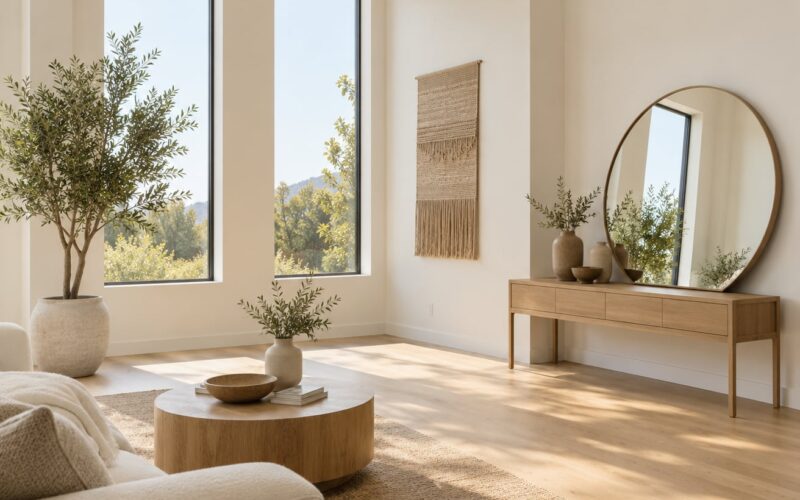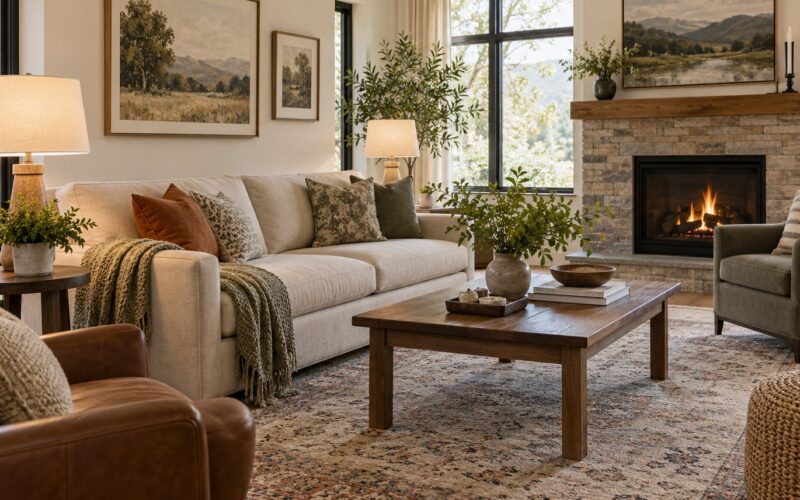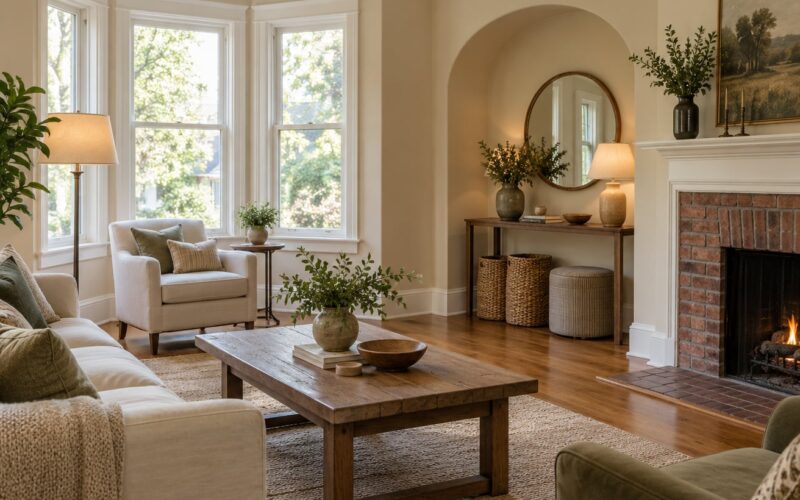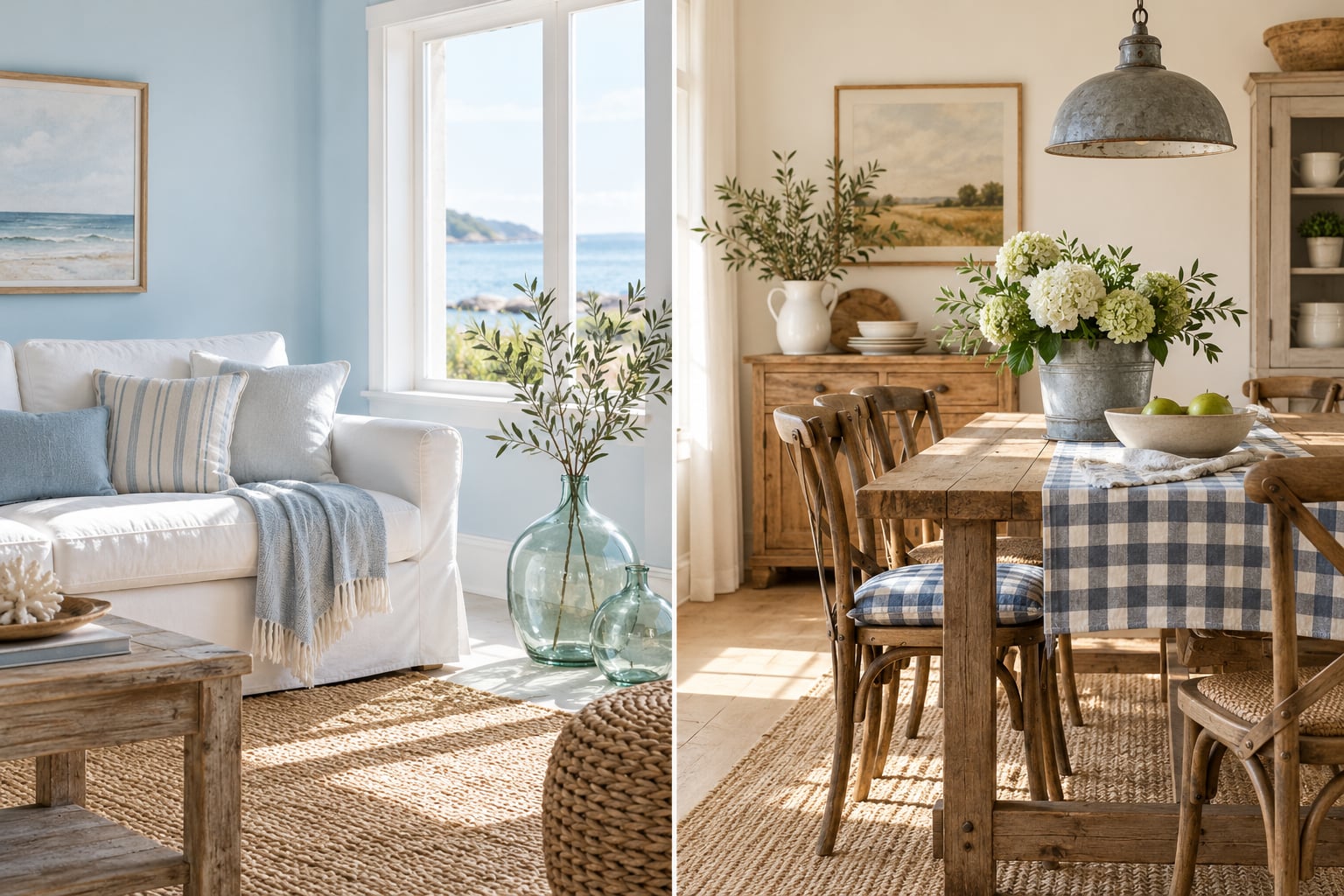
Coastal and farmhouse are both relaxed, lived-in looks, but they point in opposite directions. Coastal decor style differences come down to light, air and a cool blue-white palette, while farmhouse leans warm, layered and textured, built on reclaimed wood and practical pieces that age well. Coastal asks for a bright room; farmhouse forgives a dim one.
The coastal vs farmhouse decor style differences show up most clearly in three places: the temperature of the color palette, the finish of the wood, and how much texture the room can hold. Get those three right and the rest follows fairly easily.
Table of Contents
- Coastal vs Farmhouse Decor Style Differences at a Glance
- How the Two Styles Feel and Where They Come From
- Coastal vs Farmhouse Decor: How Color Palettes Differ
- Coastal vs Farmhouse Decor: Materials and Textures
- How light and finish decide which style reads correctly
- How Furniture and Room Layouts Set the Style
- Room-by-room
- Decorative Details That Make Each Style Recognizable
- Which Should You Choose?
- Frequently Asked Questions
- Which style works better in a small apartment?
- Is farmhouse decor outdated?
- How do I keep farmhouse decor from looking themed?
- What is the difference between coastal cottage and farmhouse decor?
- Can coastal and farmhouse styles work in the same home?
- Which style is easier to create on a budget?
- Conclusion
Coastal vs Farmhouse Decor Style Differences at a Glance
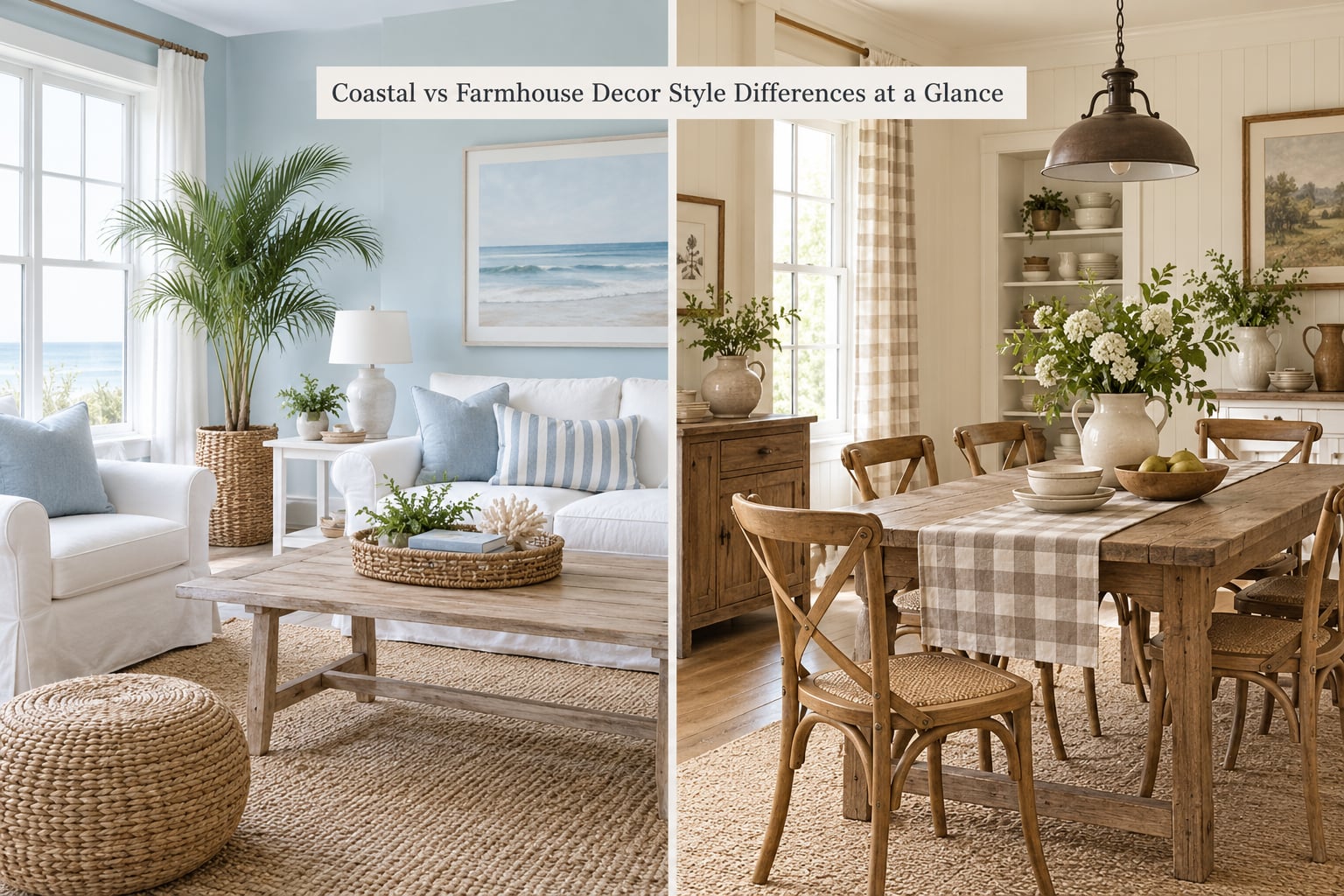
| Category | Coastal | Farmhouse |
|---|---|---|
| Overall mood | Airy, breezy, calm, collected from beach days | Warm, grounded, cozy, practical |
| Color palette | Cool and pale: soft blue, seafoam, navy, sand, warm white | Warm and layered: warm white, greige, navy, sage, muted terracotta |
| Wood tone | Whitewashed, driftwood, bleached, pale oak | Medium to dark reclaimed, stained or natural grain |
| Key materials | Linen, rattan, jute, seagrass, rope, clear glass | Reclaimed boards, cotton canvas, galvanized metal, stoneware, checked cotton |
| Furniture shape | Low, light, open silhouettes; slipcovers, clean legs | Substantial and simple; parsons chairs, plank tables, slipcovers too |
| Hardware and metal | Polished nickel, brushed brass, matte black sparingly | Black iron, aged brass, galvanized buckets and trays |
| Light needs | Needs real natural light or it reads cold and washed out | Works in bright and dim rooms alike |
| Hardest part | Keeping pale-on-pale from looking unfinished | Stopping the accessories from turning into a theme park |
| Suits best | Sunny beach-adjacent rooms, small bright apartments, bathrooms, bedrooms | Kitchens, entryways, mudrooms, basements, family rooms, rentals |
How the Two Styles Feel and Where They Come From
Both styles grew out of lived-in residential rooms rather than showrooms, which is why they feel related. Neither is precious, and both assume the space gets used.
Coastal comes from seaside cottages and beach houses, where limewash, faded textiles and open windows did the decorating. The result is a room that feels lightly used, slightly bleached, and never too precious.
Farmhouse comes from working farmhouses and practical country kitchens, where the objects on the shelves had jobs. Shiplap, plank doors, a heavy table and galvanized buckets all came from function first.
That history explains the split in the coastal vs farmhouse decor style differences: coastal edits everything down, farmhouse keeps everything honest and visible. One hides the machinery of the house. The other shows it.
Modern farmhouse adds cleaner lines and matte black hardware to the older look. Coastal cottage decor is its own thing, more floral and collected than nautical. Many people who think they want farmhouse end up with coastal cottage instead.
Coastal vs Farmhouse Decor: How Color Palettes Differ
Coastal runs cool and pale. Common choices include soft blue, seafoam, navy, sand, driftwood gray and a warm-leaning white rather than a bright optic white.
Farmhouse runs warm and layered. The base is usually warm white, greige or soft beige, with navy, sage, muted terracotta or black as supporting colors.
Wood tone changes the effect more than wall color does. A driftwood-finish table makes a coastal room feel like a beach house, while the same pale piece in a farmhouse room just looks unfinished. Reclaimed oak under a farmhouse wall reads deliberate.
If you rent, wall color is the cheapest lever. Coastal takes a light blue-gray or a warm white with a matte finish. Farmhouse takes a warm white or greige, then lets a checked textile or a painted cabinet carry the color.
The classic failure here is the beige middle. Both styles turn muddy when the palette has no clear temperature. Pick one and commit.
Coastal vs Farmhouse Decor: Materials and Textures
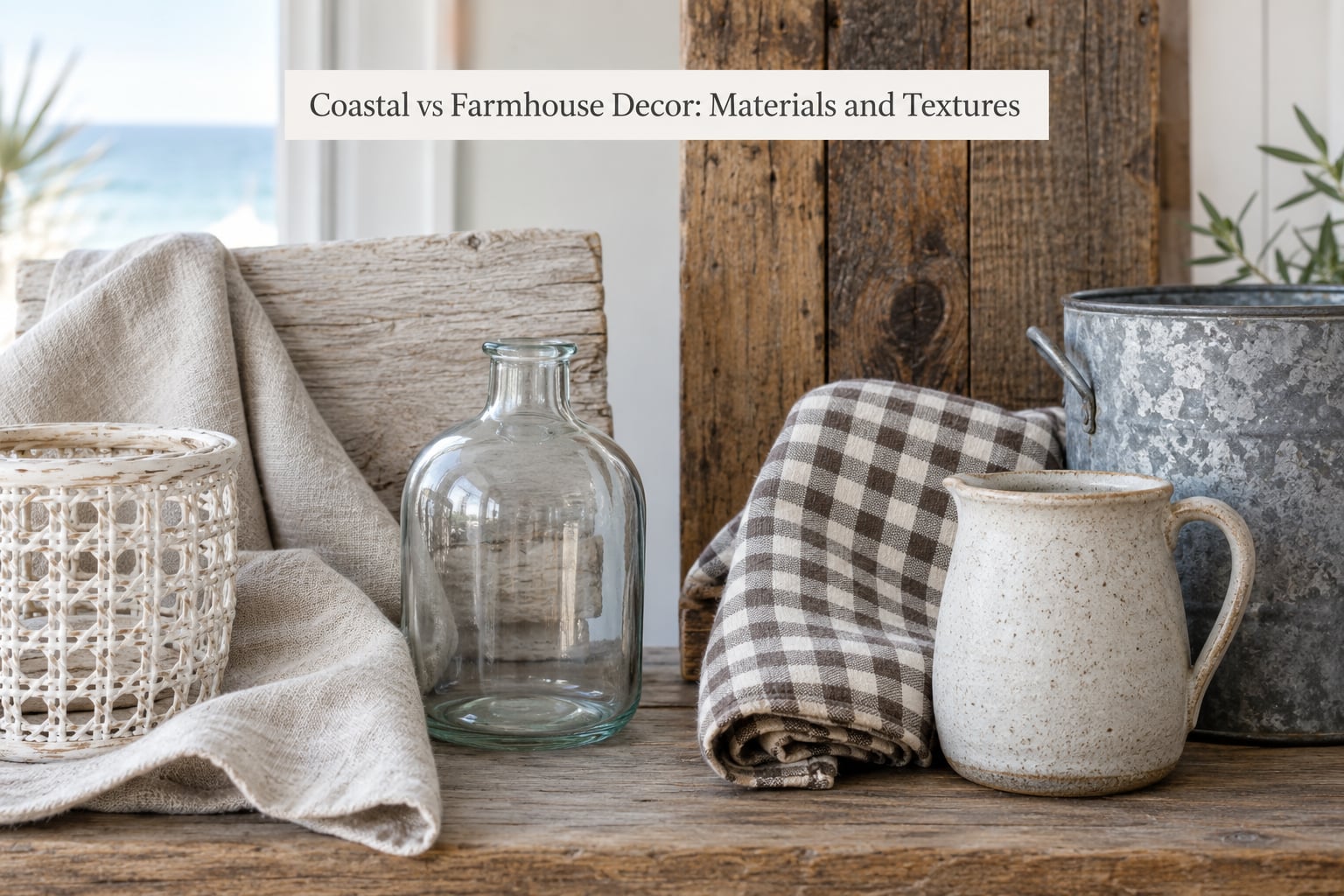
Coastal materials are light and matte: linen, washed cotton, rattan, jute, sisal, seagrass, rope and clear glass. Nothing shiny, nothing heavy, nothing that shows fingerprints.
Farmhouse materials have weight and evidence of age: reclaimed boards, galvanized buckets, stoneware, checked cotton, brick, cast iron and leather. Texture is the point, and it is meant to stack.
How light and finish decide which style reads correctly
Finish is the cheapest way to move a room from one style to the other. Swapping a polished chrome lamp pull for matte black or aged brass pushes a room toward farmhouse without buying anything new. A pale wood frame does the same job toward coastal.
Thrifted finds work well in both styles, with different picks. For coastal, look for white or pale-painted frames, woven baskets, glass bottles and simple linen. For farmhouse, look for turned wood, sturdy tables, metal pans, stoneware and checked fabric, even if the colors are faded.
The caution applies to both: one themed object reads as taste, five read as a shop display. A single rope coil or a single checked curtain is fine. Covering every surface is not.
How Furniture and Room Layouts Set the Style
Furniture profile is the difference you feel when you walk in. Coastal furniture is low, light and visually thin, with clean legs, slipcovers and open frames. Farmhouse furniture is heavier and simpler, with plank tops, straight legs, parsons chairs, slipcovers and visible joinery.
Layout follows from that. Coastal rooms want space around the furniture, fewer and larger pieces, and a clear visual path to the window. Farmhouse rooms handle a denser arrangement, a big table with mismatched chairs, and layers that build up over time.
Room-by-room
In a small apartment, coastal wins on visual space and farmhouse wins on hiding wear. If the room is bright, go coastal. If it is a rental or a basement, go farmhouse.
In an open-plan living and kitchen area, farmhouse anchors better because the kitchen half pulls toward it. Coastal works if the whole space is flooded with light.
In a bedroom, coastal is softer and cooler, and it suits north-facing windows better than people expect. Farmhouse suits a north or west-facing room and adds warmth that a low sun cannot.
In a kitchen, farmhouse is the natural fit, especially with open shelving. Coastal kitchens work with white shaker cabinets and a light backsplash, but only when the room has real daylight.
In a bathroom, coastal wins easily. Glass, light tile and a woven basket are honest to the style and need no window.
On a porch, both fit. Coastal for a bright screened-in space, farmhouse for a covered one with wood and metal.
In a home office, farmhouse suits a desk with weight and closed storage. Coastal suits a small room where you want the walls to disappear.
Decorative Details That Make Each Style Recognizable
Coastal details are few and mostly light: framed coastal photography in simple frames, a small glass vase, a shell or two, a branch in a jug, woven wall baskets, and blue accents repeated twice rather than everywhere.
Farmhouse details are more numerous and more specific: signage with a short phrase, checked textiles, traditional landscape art, a wall clock, woven baskets, galvanized containers, open shelves with everyday dishes, and small practical objects like jars and scales.
Repetition is what separates a styled room from a themed one. Two blue pillows and one blue book cover reads calm. Eleven blue things reads nautical-themed.
Forum threads on decorating boards keep circling the same worry: rooms that look styled but cannot hold personal objects or plants. Both styles survive that only if you leave room for the thing you actually love.
Which Should You Choose?
Choose coastal if your room gets strong natural light, you want it to feel open and calm, and you prefer a small number of well-chosen objects to a layered collection.
Choose farmhouse if your room is dim, you want warmth and texture, you like visible wood grain and practical pieces, and you want a look that shrugs off scratches and trend changes.
If you want both, pick one as the base and use the other as accent. A farmhouse room with linen, a jute rug and two blue pillows reads coastal farmhouse without turning beige. Coastal rooms usually need the reverse.
Frequently Asked Questions
Which style works better in a small apartment?
Coastal works better in a bright small apartment because its pale palette and thin furniture silhouettes make walls and corners feel larger. If the apartment is dim or faces away from direct sun, farmhouse is the safer pick: its mid-tone wood and heavier textures do not depend on daylight to look intentional. Rentals in either style benefit from the same approach: paint, textiles and hardware finish do most of the work.
Is farmhouse decor outdated?
Farmhouse in its original form, with mason jars, roosters and cursive wall decals, does look dated. The pared-back version, warm white walls, one piece of reclaimed wood, matte black hardware and a checked textile, does not. Designers now use the word loosely for any warm, textured, practical room. The style ages better than coastal because worn wood and metal improve with use.
How do I keep farmhouse decor from looking themed?
Keep it to one or two recognizable farmhouse objects rather than a set. A galvanized tray, a checked curtain or a reclaimed wood shelf will read as farmhouse on their own. Skip roosters, distressed signs in cursive, bead board on every surface and collections of jars. If a visitor would describe the room as a theme, you have gone too far.
What is the difference between coastal cottage and farmhouse decor?
Coastal cottage decor is floral, light and collected, with chintz, painted furniture, soft pastels and a romantic, gathered quality. Farmhouse is plainer and more practical, built on wood, metal, simple stripes and checked cotton. Coastal cottage tends to feel layered and pretty, while farmhouse feels functional and grounded. People often say they want farmhouse and end up with coastal cottage once the fabrics arrive.
Can coastal and farmhouse styles work in the same home?
Yes, and it is a common result. Choose one style as the foundation across main rooms, then let the other appear as accents in one or two rooms. A farmhouse kitchen with linen curtains, a jute rug and two blue pillows reads as coastal farmhouse without going beige. Mixing works best when both styles share the same undertone, warm or cool, rather than fighting over temperature.
Which style is easier to create on a budget?
Farmhouse is usually cheaper to achieve, because thrifted wood, secondhand tables and galvanized metal are widely available and hide wear well. Coastal requires more matching across pale items, and light slipcovers and washed fabrics take planning to keep coordinated. The cheapest coastal swaps are hardware finish, a woven rug and a single blue accent repeated twice in the room.
Conclusion
Coastal vs farmhouse decor style differences come down to four things: how much light your room has, whether you want cool or warm color, how much texture it can hold, and whether you prefer editing down or layering up. Coastal edits down and needs daylight. Farmhouse layers up and forgives a dim room.
Start by standing in the room at the time of day you use it most. Note the light, the existing wood tone, and how much clutter you actually keep. Those three answers usually settle the choice faster than any mood board.