If you have typed how to get a boho look without clutter into a search box at 11pm, you already know the problem. Boho is supposed to feel relaxed, and a room stuffed with objects feels like work. The answer is editing, not adding: build a quiet neutral base, let texture and warm light carry the personality, and set hard limits on how much pattern and how many objects get in.
None of this requires a large budget or a free weekend. Most of it happens before you buy anything, in the decisions about what stays and what leaves. I work through a living room in about 20 minutes once the foundation is in place, and the difference shows up the same night.
Table of Contents
- What You Need
- How to Get a Boho Look Without Clutter: Step-by-Step
- Start with a neutral base for your boho look without clutter
- Layer texture instead of adding more objects
- Use a few deliberate pattern and color accents
- Choose multifunctional storage and natural accents
- Leave breathing room and edit what stays
- Common Mistakes
- Frequently Asked Questions
- How do I make a boho room feel less cluttered?
- What colors work best for a clutter-free boho look?
- Can I create a boho style using thrifted furniture?
- How many decorative pillows and blankets are too many?
- What if my boho room is small?
- How do I know when a room has too many accessories?
What You Need
You are not assembling a shopping list so much as making five decisions. Gather these first, and the styling gets much easier.
- A neutral base. A sofa, bed frame or curtain set in cream, beige, oat, warm white, clay or soft sage. This is the canvas, and it has to stay quiet.
- Two or three natural textures. Linen or cotton for upholstery and drapery, jute or wool for a rug, rattan or wicker for baskets, raw or reclaimed wood for tables. Pick the ones that already exist in your home before you buy new ones.
- Storage that looks like part of the room. Woven baskets with lids, lidded ceramic or enamel bins, a cane chest, a footstool that opens. Closed storage is the single biggest lever on a cluttered boho space.
- One or two plants, chosen for size. A large bird of paradise, fiddle leaf fig or rubber plant in a plain pot reads better than a windowsill crowded with small succulents.
- Warm bulbs and at least three light sources. 2700K warm white bulbs in a floor lamp, a table lamp and a lamp near your seating. Cool white bulbs above 3000K are the fastest way to make a boho room look flat.
- A rule for what comes in. One in, one out. Every new basket, cushion or framed print sends something else to the garage, the donation bin or a friend.
Aim to gather two or three of these before you move on. If you can style the room with what you already own, every purchase after that gets easier to justify.
How to Get a Boho Look Without Clutter: Step-by-Step
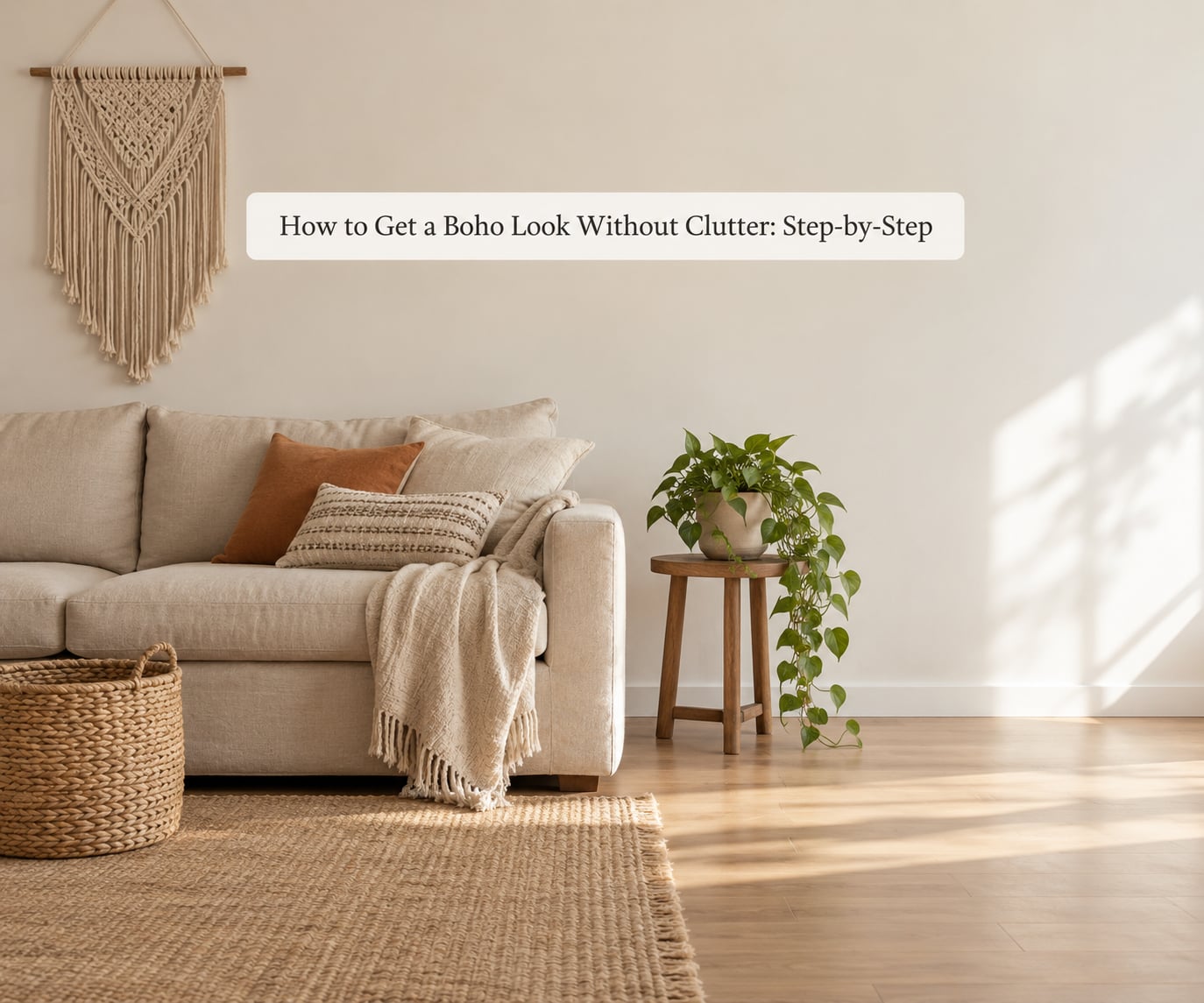
Work from the floor up and largest object to smallest. Each step below explains what to do, why it works, and how to tell it landed.
Start with a neutral base for your boho look without clutter
Begin with the biggest surfaces in the room: the sofa, the rug under it, the walls, and any large curtain. If those carry pattern or strong color, everything you add later has to compete with them, and competition is what makes a room feel busy.
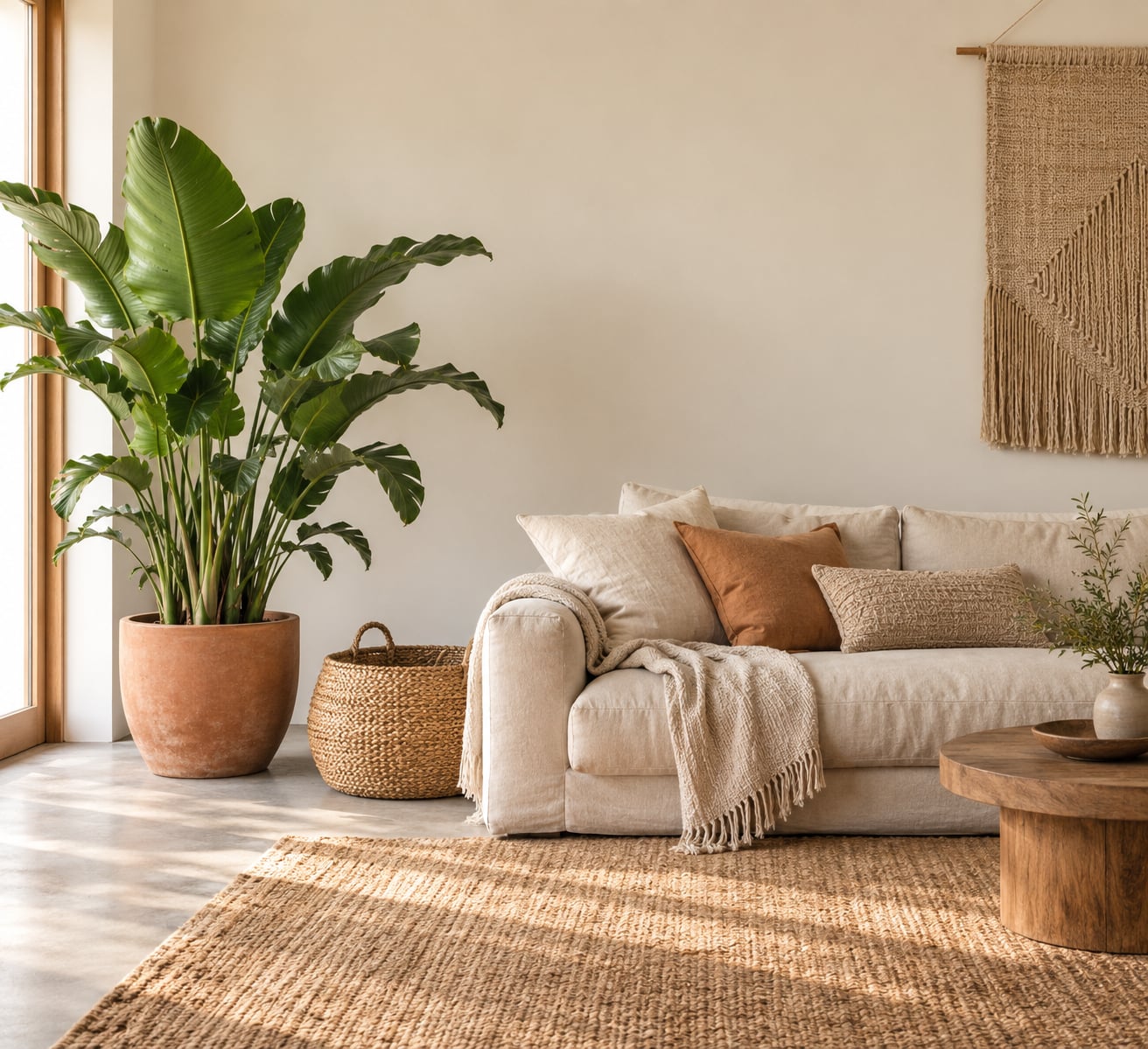
Choose a foundation of cream, beige, tan, warm white or muted earth tones. Warm neutrals are the safest bet because they let rust, ochre, sage and rust-red sing without turning the room loud. A cool grey sofa, by contrast, pushes the whole room toward a different style and makes warm boho accents look pasted on.
Keep the ratio roughly 60 percent neutral to 30 percent mid-tone to 10 percent accent color. If you want a patterned rug, the sofa stays plain. If you want patterned cushions, the curtains stay solid. You are choosing one place for each decision instead of spreading everything everywhere.
You will know the base is right when you can walk into the room and describe it in one color word rather than five. Warm, earthy, and calm. That is your base, and everything after this step is decoration on top of it.
Layer texture instead of adding more objects
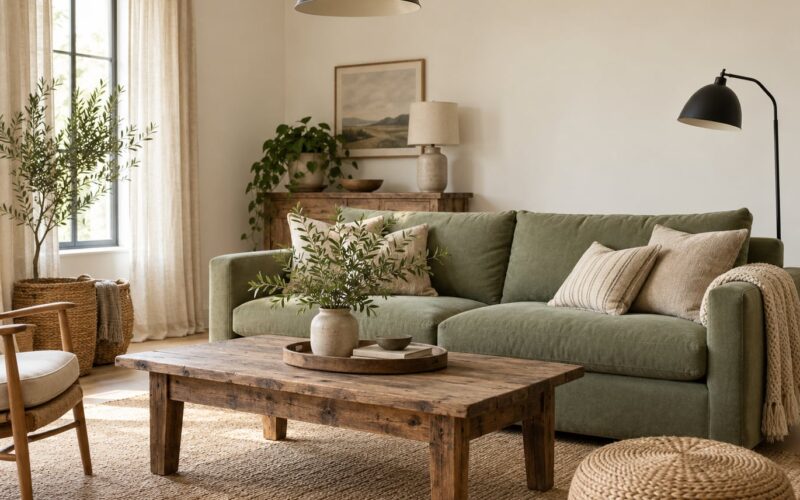
This is the step that separates a calm boho room from a cluttered one. Objects each create a silhouette, a shadow and a thing to dust. Textures create depth on surfaces you already own. A smooth sofa, a nubby wool throw and a nubby jute rug give you three visual layers with zero extra furniture.
Pick two or three textures that contrast and repeat them across the room. Linen with jute. Cotton with wicker. Wool with raw wood. Contrast is what makes texture read at a distance, and repetition is what makes the room look intentional rather than accidental.
Put the texture where people actually touch it. A throw on the arm of the chair that gets used, a runner on a table that gets leaned on, a cushion on a floor cushion nobody sits on. Skipped textures that never get touched are just objects in disguise, and they add clutter without adding warmth.
A room with four textiles and no accessories usually feels calmer and more expensive than a room with ten objects and no textiles. Once you have that, the picture tells you it worked: you see depth when you look at the sofa, and you can still see the floor underneath.
Use a few deliberate pattern and color accents
Pick a number and hold it. Most edited boho rooms run on one patterned rug, two or three patterned cushions, and one wall piece, or one patterned curtain and plain cushions, and one wall piece. Where the pattern lives is your call. Where it lives twice is clutter.
Repeat colors across the room so the accents belong to each other. If the rug carries rust, clay and charcoal, pull those same three colors into a cushion, a vase and a throw. Repeat one pattern motif at a different scale, such as a wide kilim stripe next to a fine stripe on a linen curtain, and never two unrelated patterns competing at the same scale.
Give your accent one job. If the rug is the focal point, the coffee table stays low and quiet. If the wall hanging is the focal point, keep the sofa wall plain and let it breathe. Focal point anchoring is what stops a room from arguing with itself.
Watch for the failure case: three patterned cushions, a patterned throw and a patterned rug, all in different color stories. That is the look people call clutter core, and boho deserves better than the two words getting stuck together.
Choose multifunctional storage and natural accents
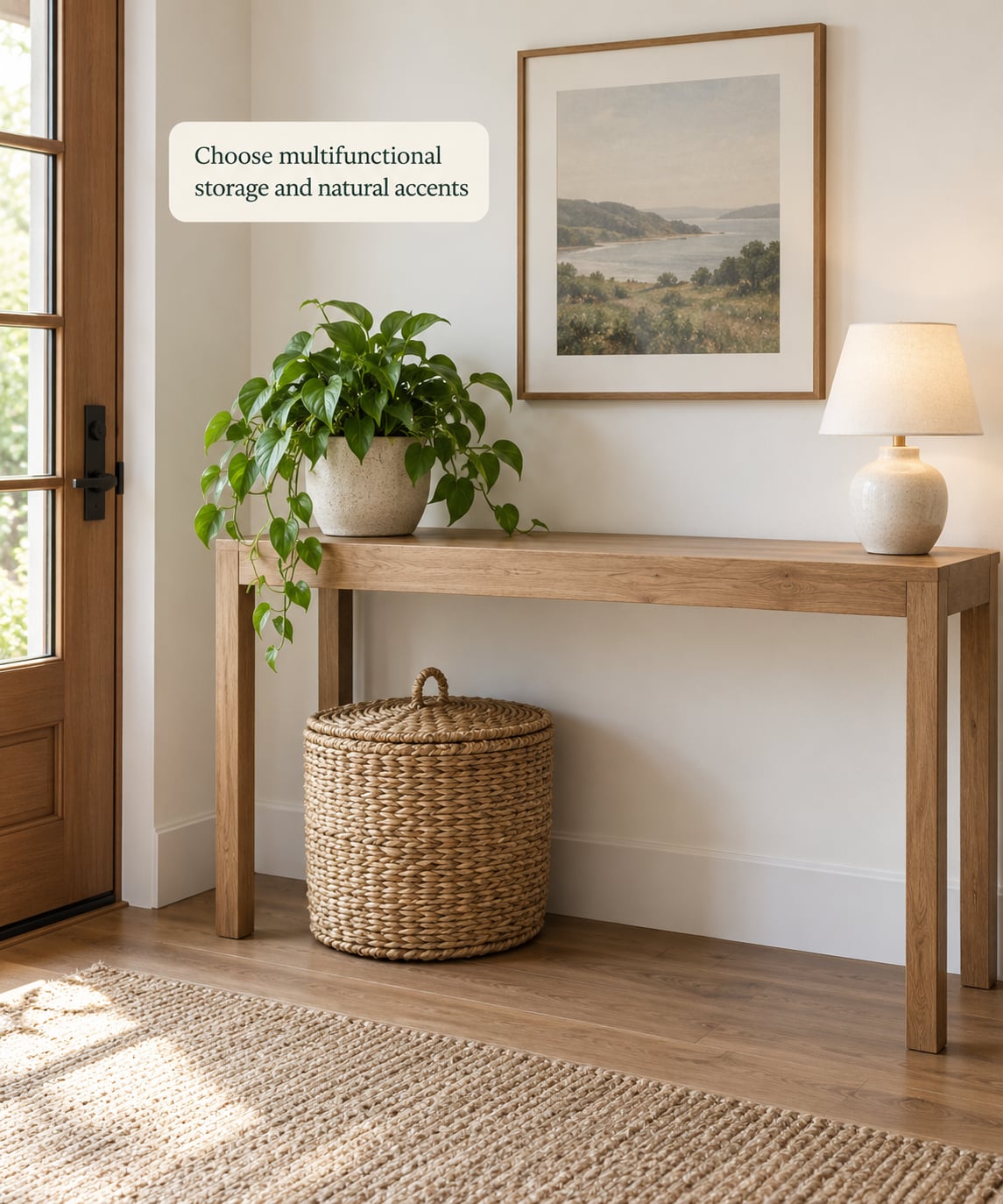
Every basket you add should earn its spot twice, once as texture and once as somewhere for things to go. A lidded woven basket under a side table, a cane chest at the foot of the bed, a bench with lift-up storage in an entryway. When something has a home, it stops being clutter.
Furniture that earns its place counts too. A side table with a lower shelf, a coffee table with a drawer, an ottoman that hides toys or extra throws. In a small room this is the whole strategy: multifunctional pieces absorb the visual load that a separate storage unit would add.
For natural accents, think few and large. One big plant in a plain terracotta or stoneware pot beats five small pots on every surface. A vase of dried stems or a single branch gives you organic shape without another object to move when you dust. Woven baskets, unglazed ceramic, unfinished wood and one or two brass or bronze pieces finish the material story.
The test is simple: cover half the items with a throw sheet and look at what remains. If the room still looks like a room, your storage is doing its job.
Leave breathing room and edit what stays
Stand in the doorway, not next to the furniture, and let your eyes move around the room. Where they stop and rest is your focal point. Where they jump is a problem area, usually a corner holding three unrelated small objects or a shelf with nothing breathing between pieces.
Fix those spots by removing, not rearranging. Take everything off the surface, put back the two biggest or most useful pieces, and stop. Most cluttered shelves and tables can lose half their contents and look better for it. Leave gaps at least the width of your hand between objects, and let at least one wall stay completely empty.
Editing an existing boho room follows the same logic. Pull everything off the shelves, sort into keep, relocate and remove, then put back only what has a real job. If a piece only exists because you liked it at a market, it belongs in a photo, not on a shelf. That is the emotional part nobody warns you about, and it is where most of the progress happens.
Finish with one in, one out as a standing habit, and do a five-minute edit whenever you add something. The rooms that stay calm are not the ones that were styled perfectly once. They are the ones somebody keeps taking things out of.
Common Mistakes
Most boho rooms go wrong in the same seven ways, and each one has a fix you can apply in a few minutes.
- Buying the whole look at once. Fix: add one new piece per month and live with the room before the next one arrives. A room styled over six months almost never looks staged.
- Using every boho cliché at the same time. Macrame, rattan, tassels, kilim, fringe, plants, gallery wall, pendant light. Fix: pick two signatures and let the room be simple everywhere else.
- Mixing more than three color families. Fix: pull the whole room back to your 60/30/10 ratio and reintroduce the accent color in three places only.
- Crowding surfaces. Fix: try the throw-sheet test. Half of what you remove will not be missed, and the rest will look like it was always meant to be there.
- Textiles at the wrong scale. A small rug under a large sofa shrinks the whole room, and a giant pattern on a small cushion reads as noise. Fix: let the front legs of all seating sit on the rug, and keep small-scale prints on small objects.
- Relying on the ceiling light alone. Fix: add at least three warm sources at different heights, 2700K bulbs, one of them a floor lamp behind or beside the seating.
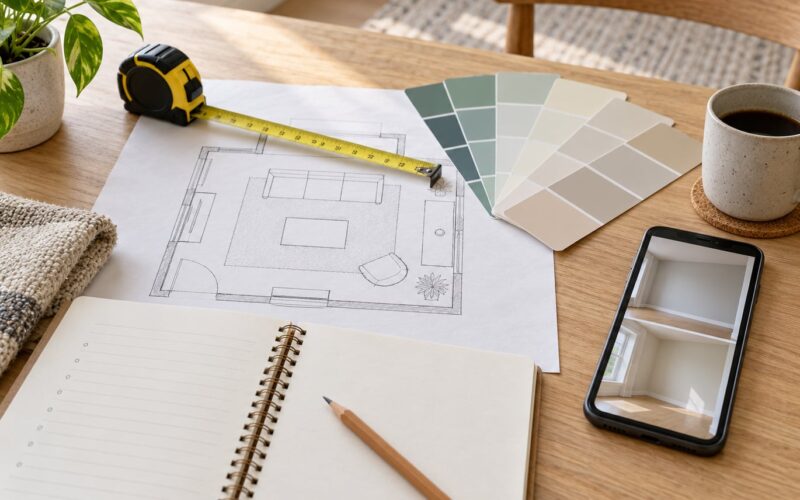
- Buying decor with nowhere to live. Fix: measure first. If an object has no surface, no wall and no shelf, it needs a home before it needs a spot.
A couple of extras that help. Keep one wall and most of one tabletop clear in every room, and skip hanging anything above a low sofa, where your eye reads clutter against a busy pattern.
Frequently Asked Questions
How do I make a boho room feel less cluttered?
Start by removing, not rearranging. Take everything off every surface, sort it into keep, relocate and remove, then put back only the pieces with a real job. Add closed storage like woven baskets or lidded bins so belongings have somewhere to live, repeat two or three textures across the room instead of adding more objects, and keep at least one wall completely empty. A five-minute edit every few weeks keeps it from drifting back.
What colors work best for a clutter-free boho look?
Warm neutrals work best as the base: cream, oat, beige, tan, warm white and soft clay. Add one mid-tone such as rust, ochre, olive or terracotta, then one accent color used in three places only. Hold roughly 60 percent neutral, 30 percent mid-tone and 10 percent accent. Keeping the total to about three color families means the patterned pieces read as intentional rather than busy.
Can I create a boho style using thrifted furniture?
Yes, and it often looks better than a catalog-matched room, because mismatched pieces give you the collected-over-time feel that new furniture struggles to fake. Look for solid wood, cane or rattan, worn leather and real jute or wool rugs rather than synthetic imitations. Refresh what you find: sand and oil raw wood, re-weave or line a basket, and re-dye textiles if a piece fights your palette. Budget most of your spending on lighting bulbs and one hero rug.
How many decorative pillows and blankets are too many?
On a standard three-seat sofa, five cushions is usually the ceiling and three is comfortable. Two cushions plus one folded throw reads calm, three cushions and a draped throw reads layered, and anything past five turns into a pile nobody can sit on. Keep the total consistent across the room so the bedroom, sofa and reading chair feel like the same home. If you are counting pillows rather than choosing them, that is the signal to take two off.
What if my boho room is small?
Small rooms punish quantity, so go vertical and multifunctional instead. Choose one hero rug in a light tone, one patterned element, and tall storage that uses wall or ceiling height rather than floor space. Skip the coffee table in favor of a nesting pair or a pouf you can move. Keep textiles to two or three repeating materials, and let at least one wall stay bare, since blank wall reads as space no matter how narrow the room is.
How do I know when a room has too many accessories?
Stand in the doorway and look rather than walk through. If your eye keeps snagging on the same corner or shelf, that spot is over-filled and needs half its objects gone. A second signal is dust: if nothing has a clear home, or you moved three things to make room for one, the count is past the room’s capacity. Aim for at least a hand’s width of gap between objects and for one deliberately empty surface per room.
Do this first: pick your neutral base and repeat it on the two largest surfaces in the room. Everything after that is layering texture and setting a limit, and once the limits are in place the room stops being a project and starts being a place you want to sit in.