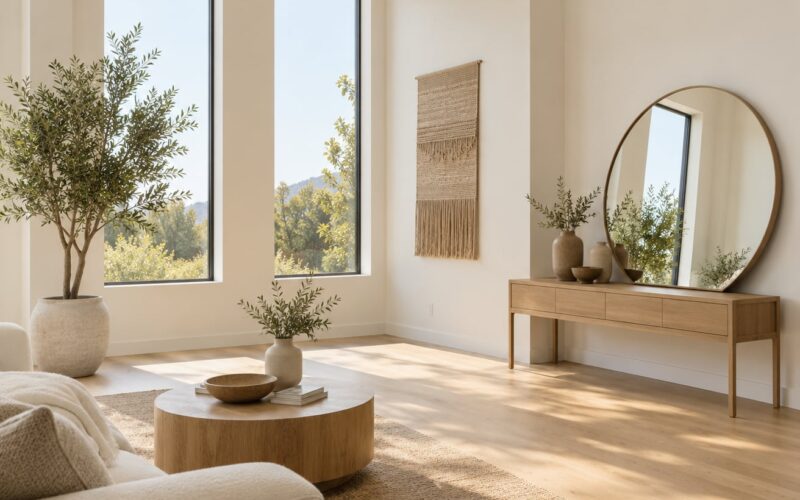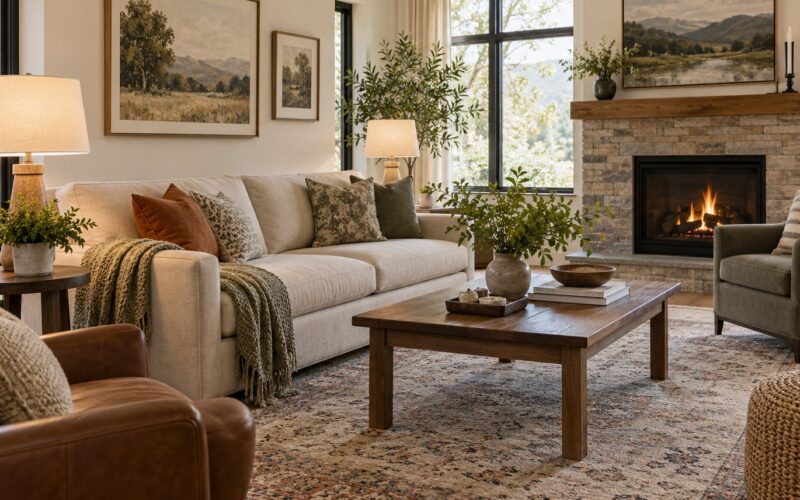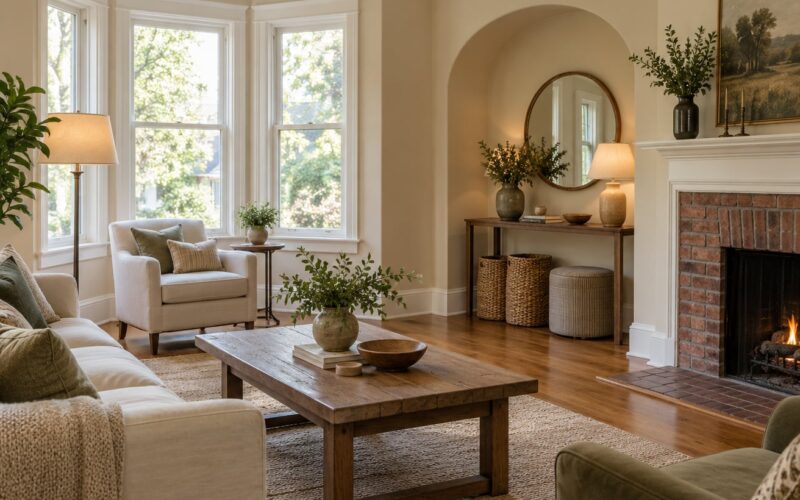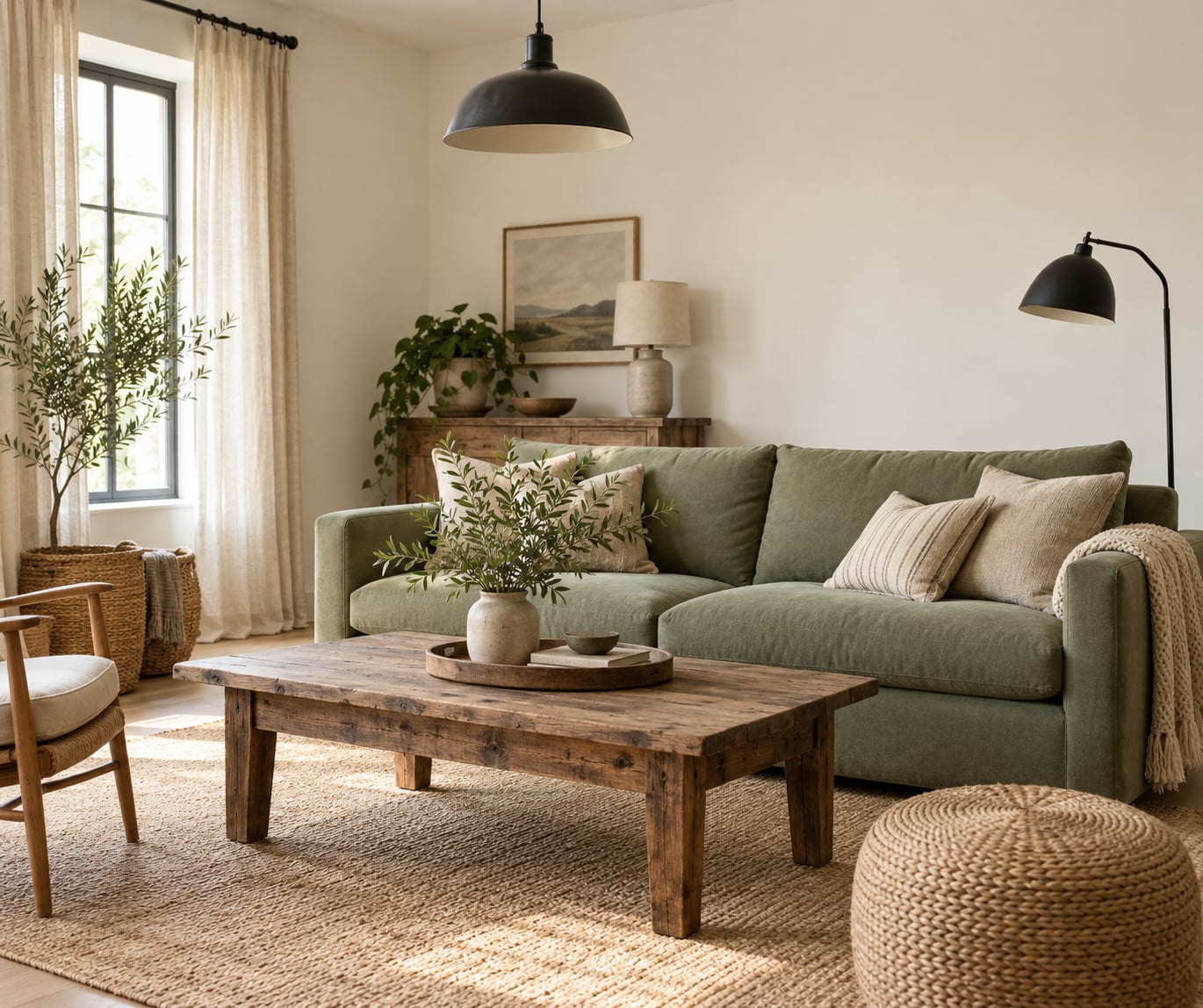
You can absolutely do farmhouse style without shiplap. The style was never really about plank walls — it lives in warm neutral paint, wood and woven textures, checked textiles, matte black or aged bronze hardware, and a relaxed, lived-in arrangement of useful objects. Shiplap is one tool among many, and skipping it costs you nothing that matters. Most of this work is a weekend of painting plus a shopping trip, and none of it requires demolition.
That’s the part I’d tell a friend first. Most of what gets labeled farmhouse style in 2026 can be built on plain drywall. Paint does more of the work than people think, and so do the softer things — curtains, throws, a rug with a worn pattern, a lamp that actually casts warm light.
Table of Contents
- What You Need for How to Do Farmhouse Style Without Shiplap
- Step-by-Step: How to Do Farmhouse Style Without Shiplap
- 1. Build the foundation for how to do farmhouse style without shiplap
- 2. Add natural wood and simple trim
- 3. Layer practical textiles and relaxed patterns
- 4. Choose warm, functional lighting and hardware
- 5. Finish with thrifted accessories and DIY details
- Common Mistakes When Creating a Shiplap-Free Farmhouse Look
- Why a room can still look cheap with the right colors
- How to keep a farmhouse room from looking dated
- Keep the palette warm, not cold
- Stop overcrowding shelves
- Comfort beats theme
- Frequently Asked Questions
- Can a room look farmhouse without shiplap?
- What colors make a room feel farmhouse without textured walls?
- What materials can I use instead of shiplap?
- How can I create a farmhouse look in a rental?
- How do I avoid making a farmhouse room look dated?
- What is the easiest way to decorate a room in farmhouse style on a budget?
- Conclusion
What You Need for How to Do Farmhouse Style Without Shiplap
Nothing on this list is required, and that’s the honest starting point. A full room refresh doesn’t happen in one purchase — it happens over a few months, one surface at a time.
- Warm neutral paint in a matte or eggshell finish. Warm white, soft cream, greige, pale sage or muted blue all work as the base.
- Natural or reclaimed wood — a thrifted table, floating shelves, a wood-framed mirror, a cutting board or a set of crates.
- Warm metals — matte black for the lead fixtures, aged bronze or antique brass as the accent.
- Linen and cotton textiles — curtains, a slipcover, checked or striped pillows, a woven throw.
- Practical lighting — a pendant, a ceramic table lamp, a wall sconce, or a thrifted fixture rewired.
- Simple trim or moulding if you own the walls, and absolutely nothing of the sort if you rent.
- Storage and vessels — woven baskets, ceramic jugs, galvanized containers, wooden crates.
- Thrifted furniture that already has the right bones and just needs a seat cover or a coat of paint.
If you’re starting from scratch, buy the paint and one lamp first. Everything else can wait until you see how the light moves around the room at different times of day.
Step-by-Step: How to Do Farmhouse Style Without Shiplap
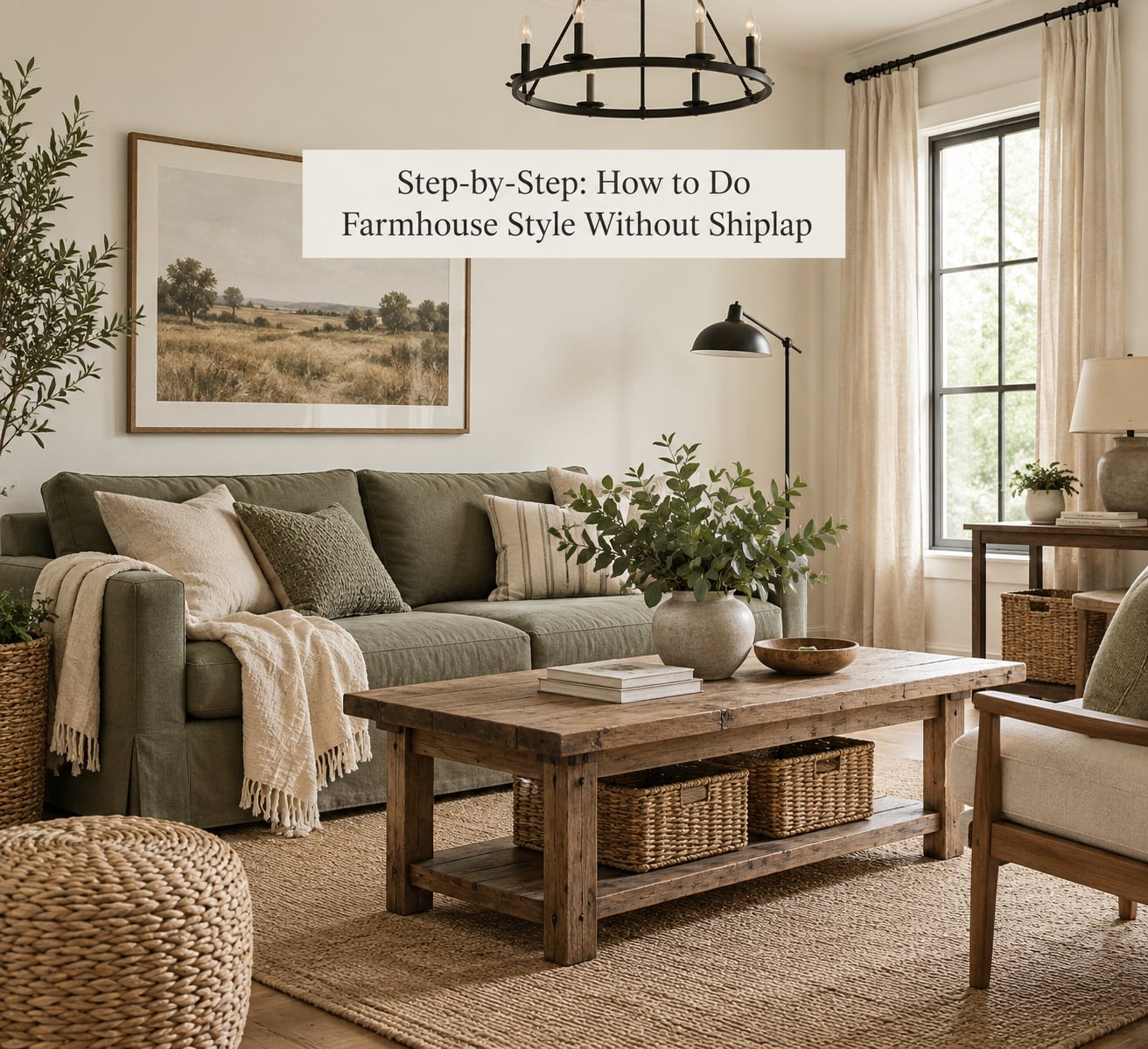
1. Build the foundation for how to do farmhouse style without shiplap
Start with a warm neutral on the walls and you have already removed the need for paneling. The palette runs from warm white and alabaster through greige, then into pale sage, muted blue or a soft clay.
Paint a sample on a piece of scrap drywall first, ideally taped to the wall in three different spots. Look at it in morning light and again at night with lamps on. A color that seems soft in the afternoon can go cold and grey once the sun drops.
Two practical notes. Flat matte paint hides drywall joints and roller marks better than anything glossier, which matters a lot if your walls are builder-grade. And if you want texture without paneling, limewash paint gives you a mottled, hand-brushed finish that reads warm and lived-in — worth testing before you commit.
You know the color worked when the wall stops being the thing you look at and becomes the background the furniture sits against.
2. Add natural wood and simple trim
Wood is doing more work in this style than most people expect. One reclaimed-wood coffee table or a pair of floating shelves in stained oak will do more for the look than a wall covered in planks.
If you own the walls, simple trim does a lot of quiet work. Picture rail moulding around the top of a room, a thicker baseboard, and wider window casings give architectural detail without any textured wall covering. A wood-framed mirror or a thrifted frame above the sofa pulls the same warmth up onto the wall.
In a half bath, tall wainscoting is the practical pick. It applies cleanly and you don’t have to run wall material around plumbing — a real problem when a sink and toilet share one small wall. MDF beadboard is worth avoiding in a bathroom anyway; moisture gets into the edges and it bubbles.
Renting? Skip the trim. Canvas drop cloths hung with clip frames, peel-and-stick panels painted to match your wall, or a large framed print give you the same visual weight and come down with the lease.
3. Layer practical textiles and relaxed patterns
Textiles are where the coziness actually lives, and they’re the cheapest thing to change. Cotton or linen curtains hung high and wide soften a plain wall more than any other single change you can make.
Then build in layers: a checked or striped pillow, a woven throw, a seat cushion in a solid tone, and a rug with a faded or vintage pattern. A slipcovered sofa in washed linen does more farmhouse work than anything else in the room.
The trick is control. Pick two or three patterns, repeat those same patterns on both sides of the room, and keep everything else solid. Three different patterns in three different scales is what makes a room feel busy rather than collected.
You’ll know it’s working when the textiles feel like they’re in the same room as each other — same weight, same palette, slightly rumpled on purpose.
4. Choose warm, functional lighting and hardware
Hardware is where a plain room gains personality. The simplest reliable formula is matte black as the lead finish — light fixtures, cabinet pulls, curtain rods, frames — with aged bronze or antique brass as a secondary accent on two or three pieces.
Mixing metals only looks accidental when there’s no hierarchy. Pick one finish to dominate and let the other exist as a minority voice. If matte black leads, the brass should appear on the lamp beside the sofa and nowhere else in sight.
Light a room in layers rather than with one ceiling fixture. A simple pendant over a table, a ceramic lamp on a sideboard, and a wall sconce in a hallway do more for the mood than a brighter bulb ever will. Warm white bulbs around 2700K make wood grain look like wood instead of plywood.
This is where shiplap’s job gets reassigned. Visible fixtures give you something to look at on the walls and ceiling, which is most of what a plank wall was really doing.
5. Finish with thrifted accessories and DIY details
The last layer is objects, and usefulness is the rule. Woven baskets holding a folded throw, a ceramic vessel with dried stems, galvanized containers by the door for boots, wooden crates stacked as a side table — these read as farmhouse because they do a job.
Vary the heights. Group things in odd numbers, leave empty space between groups rather than spreading items evenly across a surface, and anchor each cluster with something tall behind it.
Then pick your focal pieces. Two or three per room, not a shelf of small signs competing with each other. A framed print, one handmade sign, a stack of old books, a bowl of fruit — that’s plenty. A room with fewer, better objects always looks more expensive than a room with a lot of them.
You’ll feel the shift when you walk in and can name what the room is for. That matters more than any wall texture.
Common Mistakes When Creating a Shiplap-Free Farmhouse Look
Why a room can still look cheap with the right colors
Cheap-looking rooms usually have thin, bright-white elements everywhere: stark white walls, white furniture, white trim, white accessories. Contrast and weight fix it. Let the walls go warm and soft, and let wood, texture and darker objects carry the visual load. A dimmer packed with the wrong cool-white bulb will flatten warm paint too.
How to keep a farmhouse room from looking dated
The catalog look comes from matching sets — identical pillows, matching frames, matching signs — plus a room where nothing has been used. Slipcovers on purpose, a throw left on the arm, a basket with a folded blanket in it. Also mix in one or two pieces that are not farmhouse at all, like a mid-century chair or a good abstract canvas, and the theme loosens up.
Keep the palette warm, not cold
Cool grays and stark whites were tied to shiplap from the start, and pulling them out is most of what updates a room. Warm white, cream, oat, soft sage, terracotta, denim blue. If your wall sample looks blue-gray in daylight, it’s leaning cold.
Stop overcrowding shelves
Open shelving is the easiest place to undo all your careful work. Leave a third of the shelf empty. Fewer objects, more space between them, and one larger piece per section reads intentional; crowding every inch reads cluttered.
Comfort beats theme
If the pillows are too stiff and the chair is too small to sit in, the room isn’t farmhouse — it’s a set. Buy the lamp you’ll read by and the seat you’ll actually use, then decorate around them.
Frequently Asked Questions
Can a room look farmhouse without shiplap?
Yes. Shiplap is one optional texture, not a requirement. Warm neutral paint, natural and reclaimed wood, checked or striped textiles, matte black or aged bronze hardware, slipcovered upholstery and useful objects like baskets and jugs carry the style on their own. Designers generally describe shiplap as a choice that has to suit the architecture. If it does not fit your room, leave it out and the rest of the palette still reads farmhouse.
What colors make a room feel farmhouse without textured walls?
Warm neutrals do the work: warm white, alabaster, soft cream, greige and oat for the walls, with sage, muted blue, clay or terracotta for accents. Add a deeper shade on one wall or in the millwork if you want contrast. Dark colors also disguise uneven drywall better than light ones, which is useful on older surfaces.
What materials can I use instead of shiplap?
Board and batten for vertical lines, beadboard or tongue-and-groove panels, wainscoting in halls and bathrooms, limewash paint for a hand-brushed mottled finish, or a zellige or subway tile backsplash in kitchens. For rentals, peel-and-stick panels, canvas drop cloths in clip frames, or large framed prints add texture with no demolition and nothing to remove later.
How can I create a farmhouse look in a rental?
Skip paint and permanent trim. Start with textiles, a thrifted wood piece, a rug in a faded pattern, warm bulbs and baskets for storage. Add wall interest with peel-and-stick panels painted to match, clip-frame canvas, or a wall of thrifted frames in one finish. Layering texture through removable pieces gets you most of the look with nothing to patch at move-out.
How do I avoid making a farmhouse room look dated?
Skip the matching sets and the mass of small signs. Keep the palette warm instead of cool gray, mix in one or two non-farmhouse pieces, and let the room look used — rumpled throws, a slipcover that fits loosely, a basket with something half-folded in it. If you’re keeping existing shiplap rather than removing it, painting it a deep blue accent wall is a known way to make it look deliberate.
What is the easiest way to decorate a room in farmhouse style on a budget?
Paint the walls warm neutral and swap the light bulbs before buying anything else. Then add textiles, which change a room faster than any single furniture piece: linen curtains, checked pillows, a woven throw, a rug in a faded pattern. Thrifted wood tables and baskets fill out the rest. Start with one room and one visible surface at a time.
Conclusion
The formula is short: warm neutral paint, wood and woven texture, checked textiles, matte black hardware with one warm accent, and a few useful objects doing real jobs. Shiplap was never the point, and leaving it out leaves you with a room that’s cheaper to make, easier to change and doesn’t box in a small space.
Start with one visible surface this week — repaint the wall in a warmer tone, or drag out the thrifted wooden table from the garage and make it the center of the room. Then add textiles, then lighting, then the objects. One surface at a time is how this style actually happens.