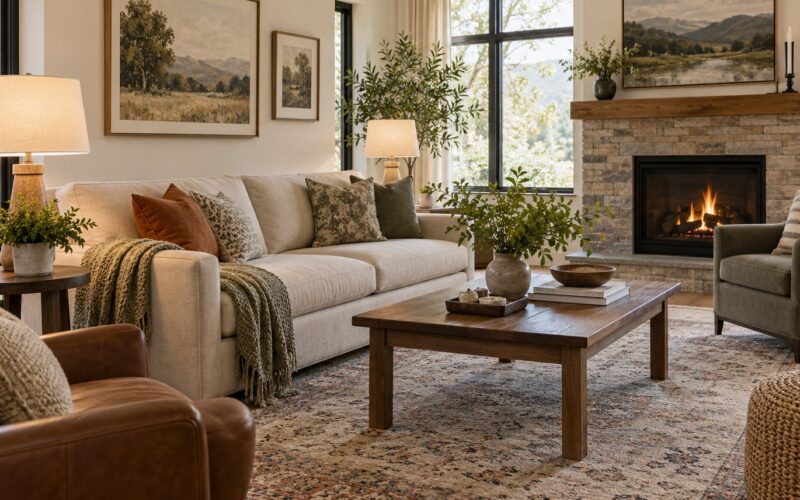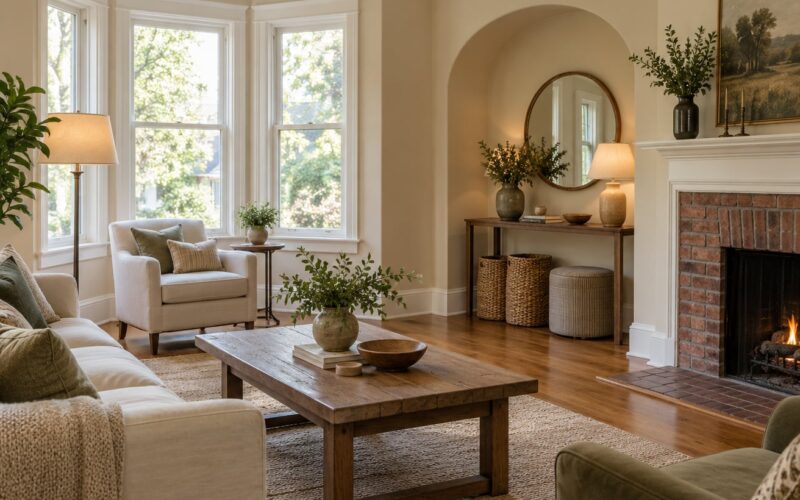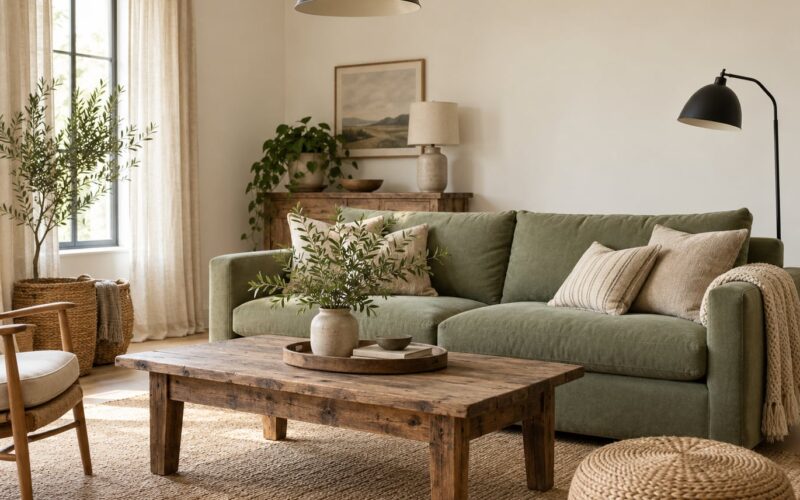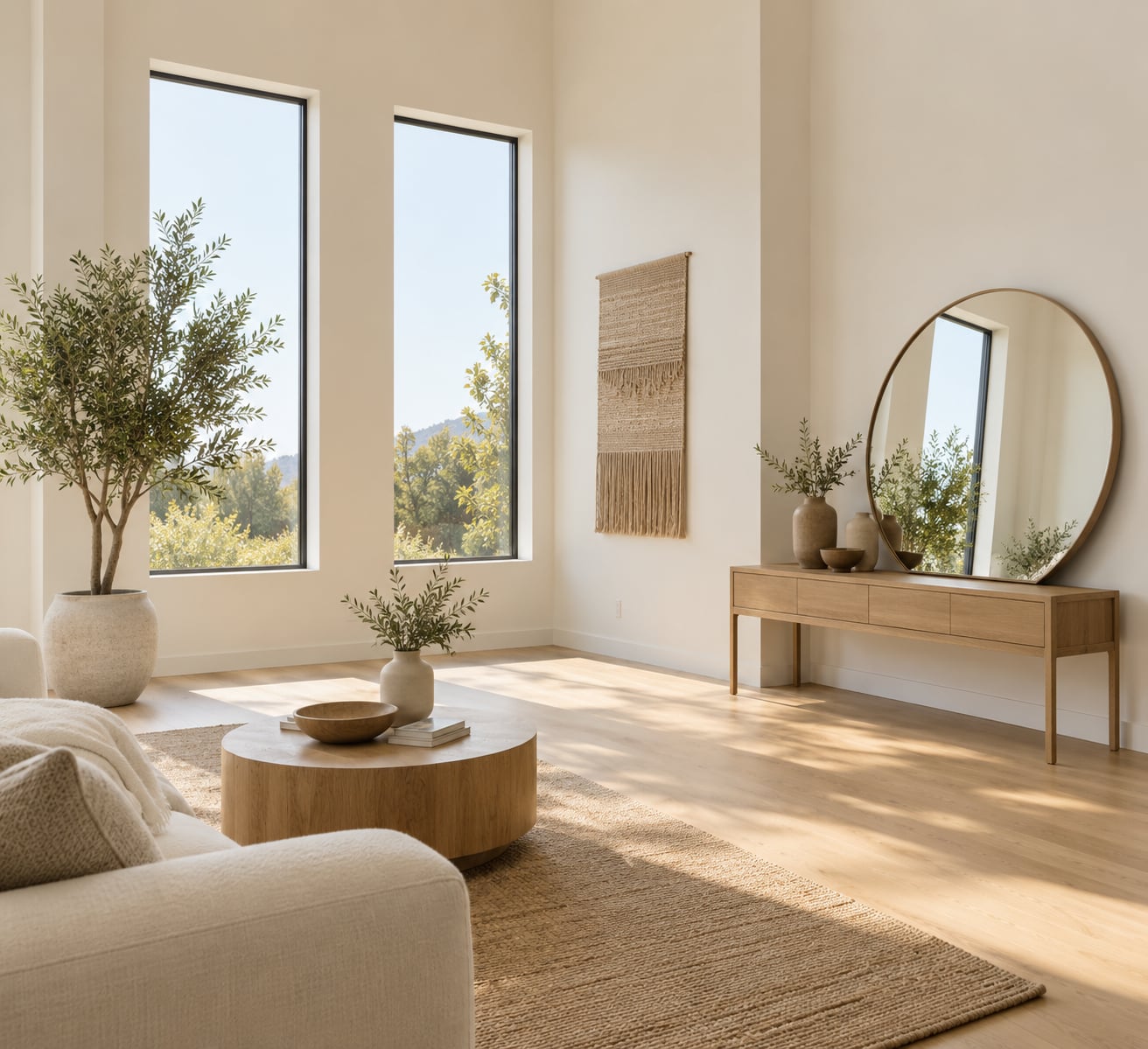
New build walls are blank for a reason: nobody has lived in them yet, so there is nothing to hang and nothing to soften the boxy proportions. The fix is simpler than most people expect. Start by measuring, pick a color direction, place the largest furniture piece, then work outward to the walls, lighting and accessories. Doing it to decorate a new build with blank walls in that order takes one weekend of planning and a few evenings of actual work.
The awkward part is usually psychological. Fresh rooms look worse than they are because there is nothing to give the eye a scale reference. A single piece of furniture at the right size fixes more than any gallery arrangement ever will.
Table of Contents
- What You Need
- Step-by-Step
- 1. Measure the Room and Map the Problem Areas
- 2. Choose a Color and Style Direction
- 3. Anchor the Room with the Right Furniture Layout
- 4. Make the Blank Walls Work
- 5. Layer Lighting and Soft Furnishings
- 6. Add Accessories and Finish the Look
- Common Mistakes
- Frequently Asked Questions
- Can you hang things on the wall in a new build?
- How long should I wait before decorating a new build?
- What is the 3-5-7 rule in decorating?
- Can you put wallpaper up in a new build?
- How can I decorate my empty wall?
- What color makes a house look expensive?
- Conclusion
What You Need
Gather these before you buy anything. Most decorating mistakes in new builds come from buying art for a wall before understanding the wall.
- A tape measure for wall width, height, ceiling height and the distance from windows and doors to any wall you plan to use.
- A notebook and phone photos of each wall, taken standing in the doorway so you see the room the way a visitor does.
- Painter’s tape to mark furniture footprints on the floor before you commit.
- Paint sample swatches, taped to the wall for 24 hours in morning and evening light rather than 20 minutes.
- A wall stud finder, plus the right anchors for whatever wall type you have.
- Floor plan space or a large sheet of paper to sketch the layout at scale.
- A budget you write down, split across paint, furniture, lighting and wall decor, before the first purchase.
Add a level, a pencil and a spare paint roller if you plan any DIY wall treatment. That covers most first-weekend jobs.
Step-by-Step
Work in this order and each step makes the next one faster. Skip to the wall decor and you end up moving frames twice.
1. Measure the Room and Map the Problem Areas
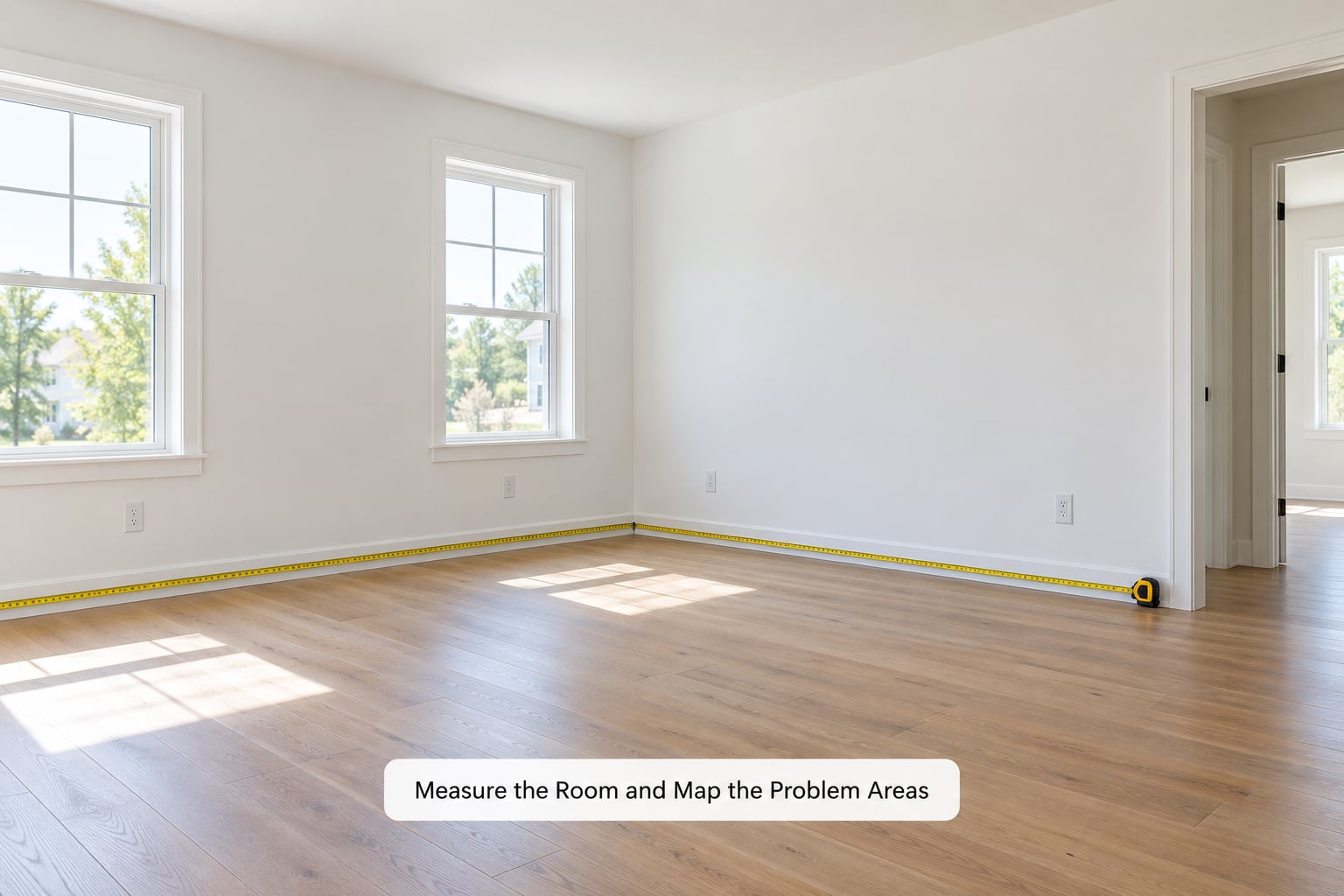
Write down every wall’s width and height, the ceiling height, and where windows, doors, vents and outlets sit. Those builder-grade details matter more than people expect: thermostats and sockets often land at awkward heights, and your layout has to work around them rather than pretend they are not there.
Then map the traffic. Walk from the front door to the kitchen and note every path that has to stay clear, usually 90 cm wide. In an open-plan new build, blank walls are often the ones you walk past rather than walk into, which changes what kind of treatment suits them.
Sketch the floor plan at scale and mark the longest wall. That is almost always your best candidate for a statement treatment. You will know the step worked when you can draw furniture on the plan without it colliding with a doorway or a path.
2. Choose a Color and Style Direction
Limit yourself to three colors plus your wood tone, and decide where each one goes before you paint anything. Builder white is not a style, so the first job is picking a direction you can hold to: soft and warm, clean and minimal, layered and collected, or bold and graphic.
Paint the whole room one color rather than an accent wall when the room feels small or cold. A single deeper tone on all four walls, in a muted version of the same hue, makes a new build read as intentional. Save the contrasting color for one wall or one architectural detail.
Test samples on at least two walls. A color that looks warm at midday can read flat and cold under evening bulbs, and new builds often have fewer windows than older homes to bounce light around.
3. Anchor the Room with the Right Furniture Layout
Place the largest piece first. A sofa that is too small for the wall is the single most common reason a new-build living room still looks unfinished after everything else is done.
Leave 75 to 90 cm between the sofa and the coffee table, and about 45 cm between the sofa and whatever is behind it. Pull the seating away from the walls unless the room is genuinely small, then define the space with a rug rather than by pushing everything inward.
Create one focal point and let the rest of the room support it. That focal point can be the fireplace, the longest wall, a view, or a piece of furniture. If your blank wall is not the focal wall, it needs quieter treatment than the one that is.
4. Make the Blank Walls Work
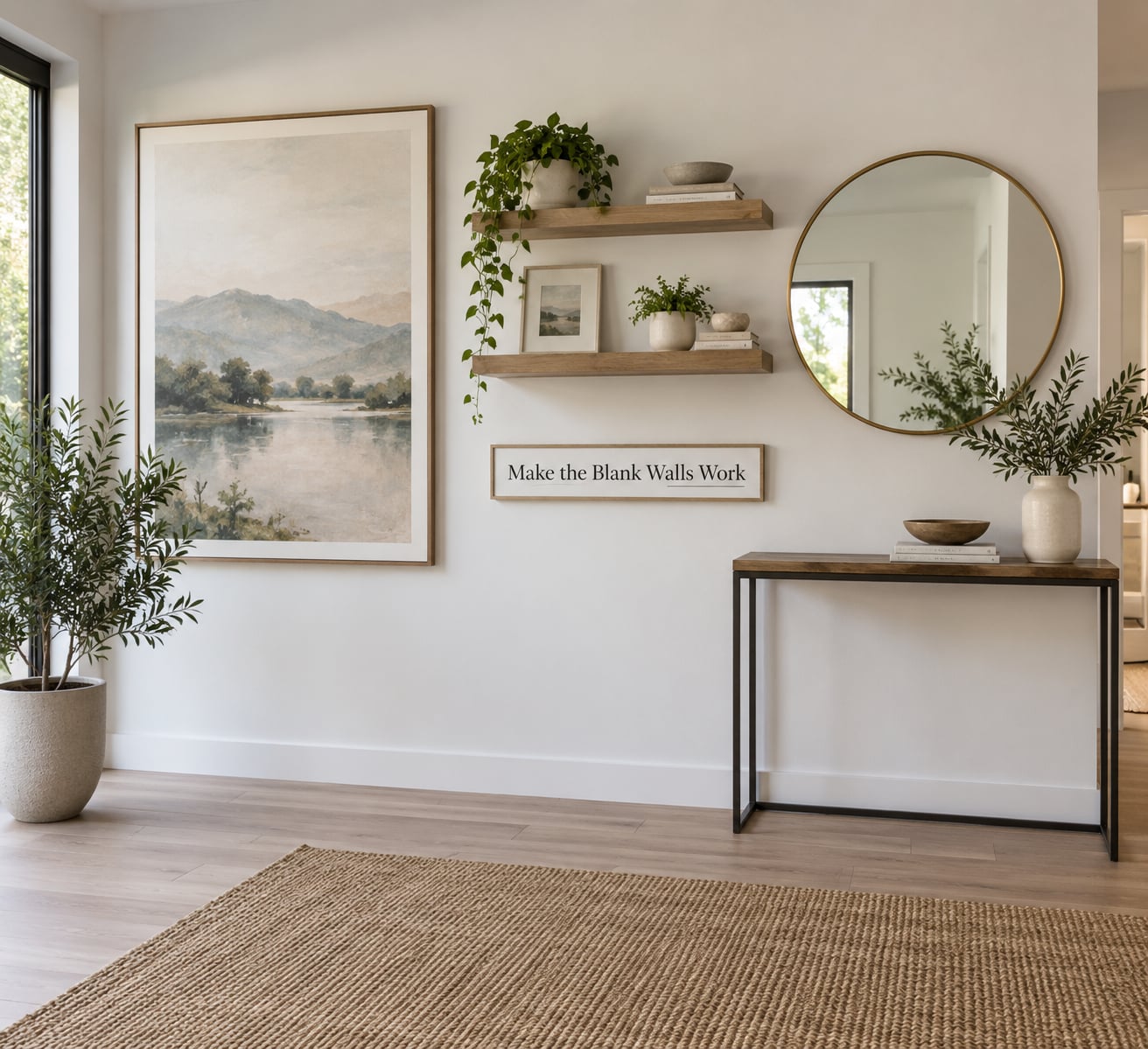
For a new build specifically, how you fix things to the wall depends on what the wall is made of and how recently it was finished. Fresh plaster is still curing for months, and adhesive strips widely reported on decorating forums to let go on new plaster. On bare drywall, use the anchor rated for the weight; standard plastic anchors are rated for around 9 kg and heavy mirrors need a stud or a toggle.
Check your build’s warranty documents before drilling. Many builders cover structural elements and require notification before penetrations, and a few want picture hooks installed for you during the walkthrough. Photographs of the walls before you decorate also help at resale.
Once you know your fixings are safe, these are the wall options, roughly cheapest to most involved:
- Paint and color blocking for the least effort. A painted arch, a half-height band, or a color that continues from the floor to the ceiling.
- Oversized art, hung so the bottom edge sits 15 to 20 cm above the furniture beneath it. Most people hang art too high and too small.
- Wallpaper or peel-and-stick on one feature wall. Fresh plaster needs to be fully dry first, and seams show on imperfect new-build corners, so start in a corner you will not look at daily.
- Floating shelves in twos or threes with staggered heights, carrying a mix of leaning frames, ceramics and one plant per shelf.
- A mirror leaning against the wall or hung high, which doubles the light from the windows a new build often lacks.
- Textile hangings, such as a quilt, woven hanging or canvas, which add warmth and soften hard corners without any hardware beyond a rod.
- Architectural detail, including picture-frame molding, timber slats, beadboard or half-height paneling, which permanently changes the room’s proportions.
- Built-in shelving or a banquette for the biggest blank walls, when the room earns the commitment.
- A no-drill floor arrangement: leaning mirrors, stacked books, a ladder with a draped throw, or plants in varying heights along the baseboard.
- A gallery wall, built by laying frames on the floor first and tracing the arrangement before anything touches the wall.
The 3-5-7 rule from interior styling is useful here: group three small objects, five medium ones, or seven larger items rather than evenly spaced pairs. Odd groupings read as deliberate, and they scale to any wall. If you like a wall to look built rather than styled, a single oversized piece or a run of molding beats a cluster every time.
5. Layer Lighting and Soft Furnishings
New builds ship with one ceiling fixture, and one light source is why the walls look flat. Three layers fix it: overhead for general light, task lighting where you work or read, and accent light aimed at the wall you just decorated.
Wall sconces or picture lights either side of a statement piece do the most work here, because they wash the wall with light and give it depth at the same time. Floor lamps tucked into corners add height without touching the wall. Aim each light source at something worth looking at.
On the soft side, hang curtains from a rod mounted 8 to 10 cm outside the window frame and run it past the edge of the glass. It makes the window look wider and taller, which is the cheapest fix for a wall that feels squat. Rugs, throws and cushions in two or three textures do more for a cold room than another wall hanging.
6. Add Accessories and Finish the Look
Now, and only now, add the small things. Group them in odd numbers, vary the heights, and repeat one or two colors from the palette so the room holds together.
Give every item a job: something on the console, something at eye level, something low near the floor. Keep surfaces half empty. Leaving space on a shelf is what makes a wall look considered rather than filled.
Finish with a decluttering pass. Put everything you did not place back in the box, walk the room from the doorway, and take one more photo. Compare it to the first one you took. If the room reads as a room rather than a set of walls waiting for furniture, the decorating is done.
Common Mistakes
Buying wall art before furniture. The art was chosen for a blank rectangle, so it fights the room once the sofa arrives. Fix: buy the big pieces first, hang last.
Treating every wall as a focal wall. If four walls all compete, none of them wins. Fix: pick one focal wall and give the others calm, low-contrast treatment.
Furniture at the wrong scale. A small sofa on a 4 metre wall is the most common new-build problem. Fix: measure the wall, then shop for something within 20 cm of two-thirds of its width.
Ignoring the lighting. A decorated wall lit only from the ceiling centre looks washed out and flat. Fix: add at least one lamp that points at the wall.
Matching everything. Identical frames, cushions and baskets make a room look like a showroom. Fix: keep the color story tight and let shapes, sizes and materials vary.
Fixing things to uncured walls. Drilling early can crack fresh plaster, and adhesive strips are widely reported to fail on it. Fix: check the build’s warranty terms, use proper anchors, and hang anything heavy only once the walls have cured.
Hanging everything at eye level in a straight line. Fix: vary heights, use odd groupings, and remember art usually sits lower than people’s instinct tells them.
Frequently Asked Questions
Can you hang things on the wall in a new build?
Yes, in most cases, but check your build’s warranty documents first because some builders want picture hooks fitted during the walkthrough or require notice before penetrations. On fresh plaster, adhesive strips often let go, so use anchors rated for the weight and fix into a stud where possible. Standard drywall anchors hold roughly 9 kg, while a large mirror needs a stud or a toggle. Take photos of the bare walls first.
How long should I wait before decorating a new build?
Many owners wait six to twelve months before installing heavy or permanent wall decor, largely because fresh plaster keeps curing and minor settling happens in the first couple of years. You do not need to wait to move in or to use no-drill pieces such as leaning mirrors, plants and floor-level arrangements. Painters generally advise waiting several months before wallpapering a new plaster surface so the paper has a dry, stable base.
What is the 3-5-7 rule in decorating?
The 3-5-7 rule is a styling guideline for grouping objects in odd numbers: three small items, five medium items, or seven larger items on a surface or wall. Designers use it because odd groupings read as intentionally composed, while evenly spaced pairs can look accidental. It also scales to any wall size, since a bigger group or bigger objects fill a larger surface without crowding.
Can you put wallpaper up in a new build?
Yes, once the walls are properly dry, and removable peel-and-stick is the safer starting point in a rental or a first home. Full wallpaper needs a very even surface, and new-build corners are often slightly less flat than existing rooms, so seams show more readily. If you only want the effect on one wall, a painted arch or color block gives a similar result with less commitment.
How can I decorate my empty wall?
Start with scale, not small objects. Choose one large piece such as oversized art, a leaning mirror, a run of shelving or a textile hanging, then add two or three smaller items at different heights around it. Keep colors to a limited palette of about three, group objects in odd numbers, and remember art usually hangs lower than people expect, roughly 15 to 20 cm above the furniture beneath it.
What color makes a house look expensive?
Muted, deeper tones tend to read as more considered than bright white, because they hold light differently and make trim and furniture stand out. Warm off-whites, soft greys, muted greens and dusty blue work well in new builds, which are often north-facing and cooler than older homes. Painting all four walls the same tone makes the room feel intentional; save a contrasting color for one feature wall.
Conclusion
Decorating a new build with blank walls is mostly a sequence problem, not a creativity problem. Measure the room and note where the outlets, vents and doors already are, choose a three-color palette, and buy the largest furniture piece that fits the longest wall before you look at anything for the wall itself. Once the room is measured, painted, furnished and lit, the wall decor takes about an hour.
Start this weekend with the tape measure and a walk from the front door to the kitchen.