Here is the short version of how to protect patio furniture in winter: clean it, let it dry completely, treat the surfaces for the material they are made of, then cover it with a breathable outdoor cover or store it indoors. Do all four before the first hard frost and most sets come through a season intact.
Skip the drying step and you are storing mold. Use a plastic tarp straight onto the cushions and you get a damp greenhouse on your patio by February. The prep itself takes an afternoon for a typical seven-piece set; the checking after storms takes five minutes.
This guide covers wood, teak, PE wicker, aluminum, steel, plastic, glass-top and upholstered pieces, plus the awkward extras that always get forgotten: umbrellas, fire pit covers, and the small side table nobody remembers owning.
Table of Contents
- What You Need
- Step-by-Step: How to Protect Patio Furniture in Winter
- Clean and Dry the Furniture First
- Choose the Right Cover for Each Material
- How to Cover Tables, Chairs, and Small Pieces Correctly
- Store Cushions and Removable Parts Indoors
- Check and Maintain the Protection During Winter
- Common Mistakes
- Frequently Asked Questions
- Should you cover patio furniture in the winter?
- Is it a good idea to use a tarp to cover patio furniture?
- What can you spray on outdoor furniture to protect it?
- Should you cover teak furniture in the winter?
- Is it okay to leave wicker furniture outside in winter?
- Should you store patio furniture upside down in winter?
- Conclusion
What You Need
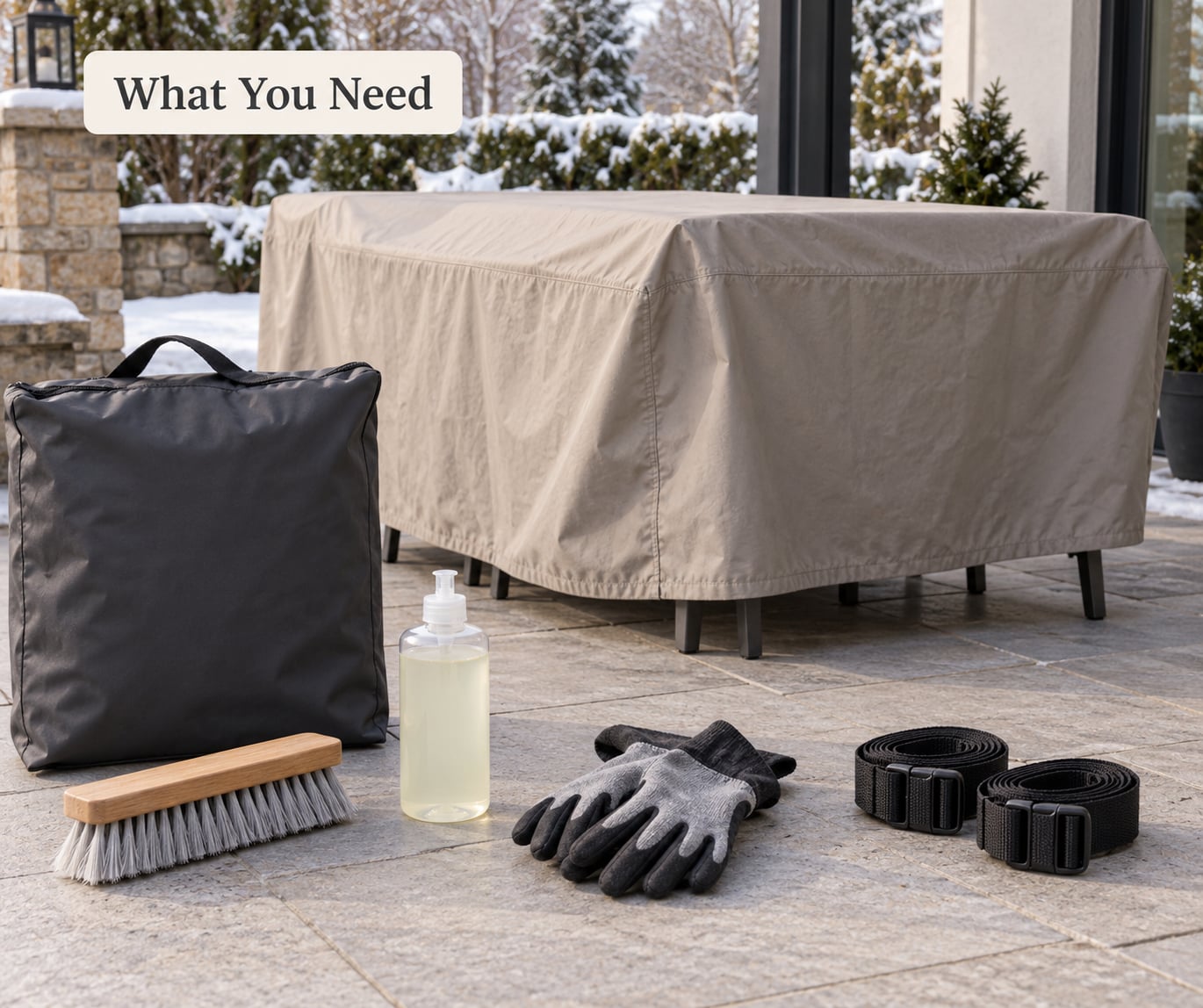
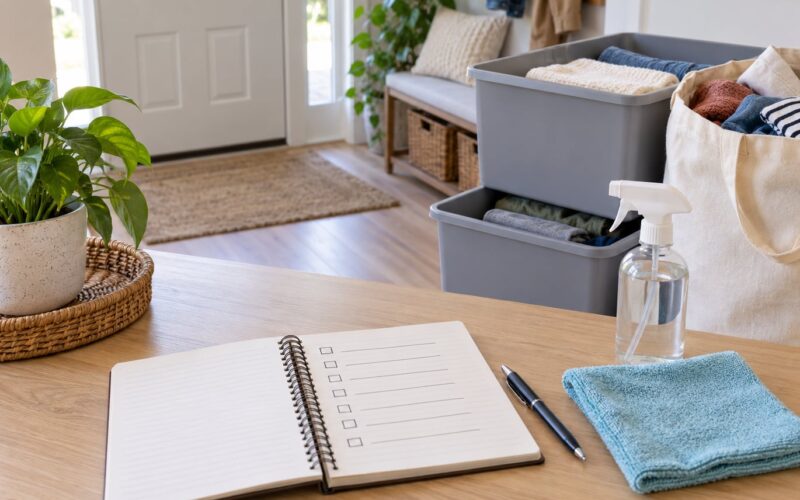
Gather supplies before you start so you are not hauling wet cushions across the yard looking for a towel. Most households already own most of this list.
- A stiff brush or plastic-bristle deck brush for slats, weave, and the underside of seats
- Mild dish soap, a bucket, and a garden hose for washing
- Soft microfiber cloths and an absorbent towel for drying
- A water-repellent spray or exterior sealer matched to the material: penetrating oil for teak and hardwood, marine varnish or exterior polyurethane for painted wood, and a UV protectant for plastic and resin
- A breathable, waterproof cover per piece, sized to the actual dimensions of your furniture
- Ratchet straps, bungee cords, or two-by-fours and a few bricks to weight cover hems
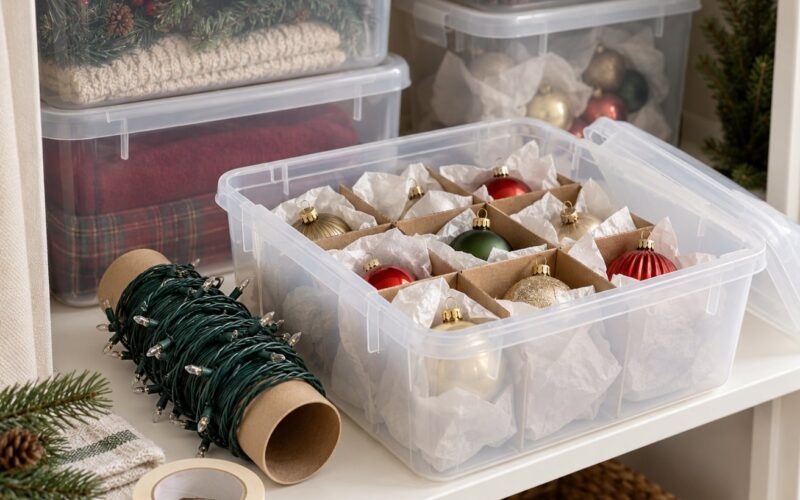
- A lidded storage bin or breathable furniture bags for cushions and pillows
- Painter’s tape and a marker to label pieces before storage
- Work gloves and a pair of glasses
Check the manufacturer’s care instructions before applying any sealer or spray. Some powder-coated frames and composite slats have finish warranties that void if you use an oil or solvent product on them, and that is a bad trade for a nicer surface in October.
Step-by-Step: How to Protect Patio Furniture in Winter
Clean and Dry the Furniture First
Winter dirt is the enemy here. A fine layer of pollen, dust, and organic debris holds moisture against the surface and keeps it damp long after the rain stops, which is exactly how mildew starts.
Work top to bottom. Sweep or vacuum under cushions and between slats, brush the weave of wicker furniture with a soft brush, and wash frames with mild dish soap diluted in warm water. A pressure washer is too aggressive for cushions, wicker, and powder-coated finishes, so use the hose at low pressure instead.
Then let everything dry completely. Put the pieces in the sun for a few hours if you can, and touch-test the underside of slats and the joints before you cover anything. If a surface feels cool or damp, it is not ready. A dry surface is the single most important part of this whole job.
Choose the Right Cover for Each Material
Breathable does not mean leaky. A good outdoor cover blocks rain and UV while letting trapped vapor escape through the fabric weave or vent holes, and that ventilation is the whole point.
- Wood and teak: a breathable waterproof cover with a vented top, or a fitted cover that leaves the underside slightly open
- PE wicker and all-weather rattan: a fitted cover that follows the shape of the piece, with a gap at the bottom for airflow
- Aluminum and steel: a vented cover, and a quick wipe of the frame before covering to keep salt and grime from eating the finish
- Plastic and poly resin: a cover with UV-resistant fabric, since winter sun still fades and embrittles resin
- Glass, tile, and stone tabletops: a cover that supports its own weight so water does not sit in a bowl shape across the surface
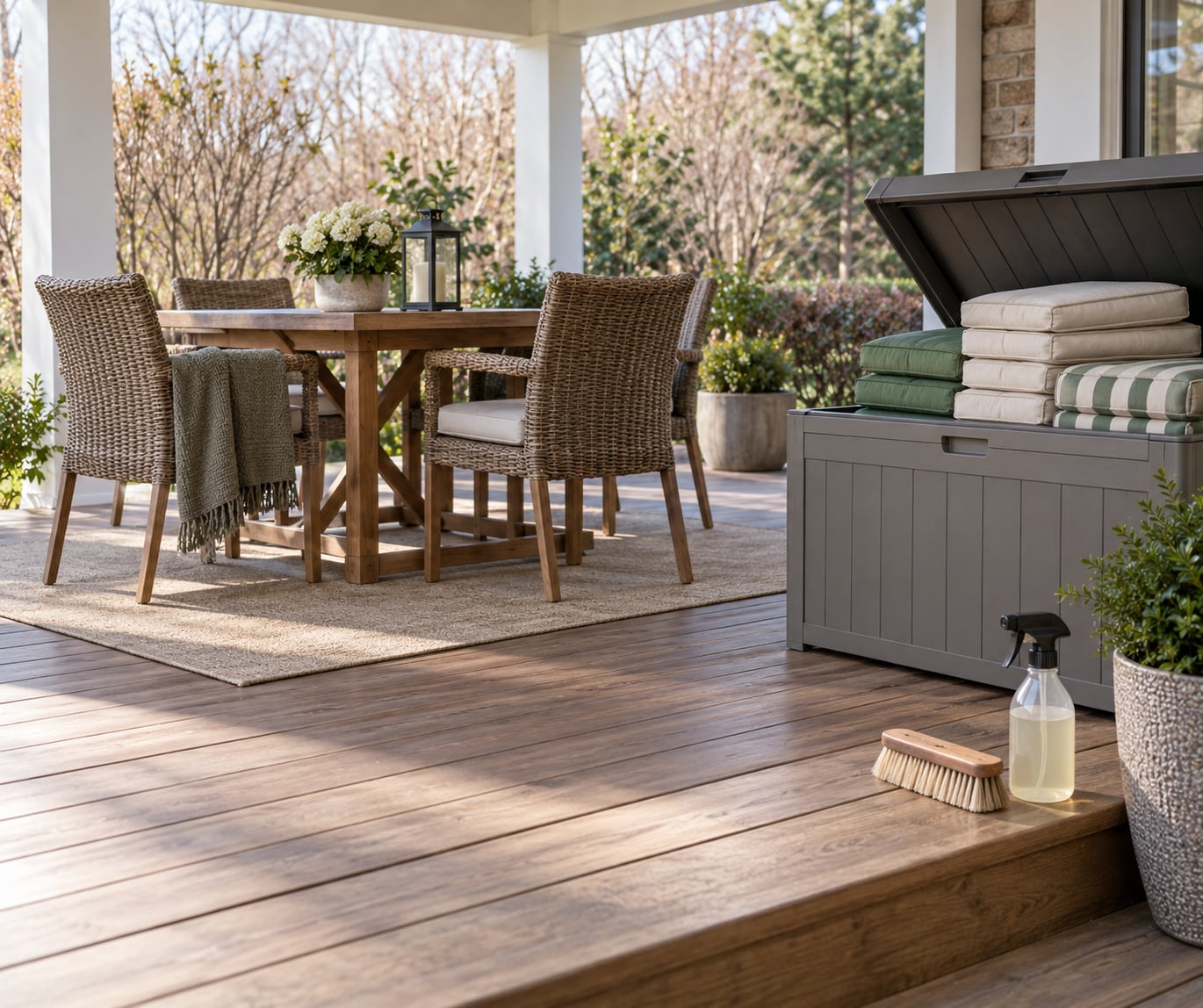
- Cushions and pillows: breathable bags indoors, or a water-resistant cushion cover outdoors as a second layer
If you want one number, make sure every cover has a vent hole or grommet near the top. That single feature separates covers that protect furniture from plastic sheets that ruin it.
How to Cover Tables, Chairs, and Small Pieces Correctly
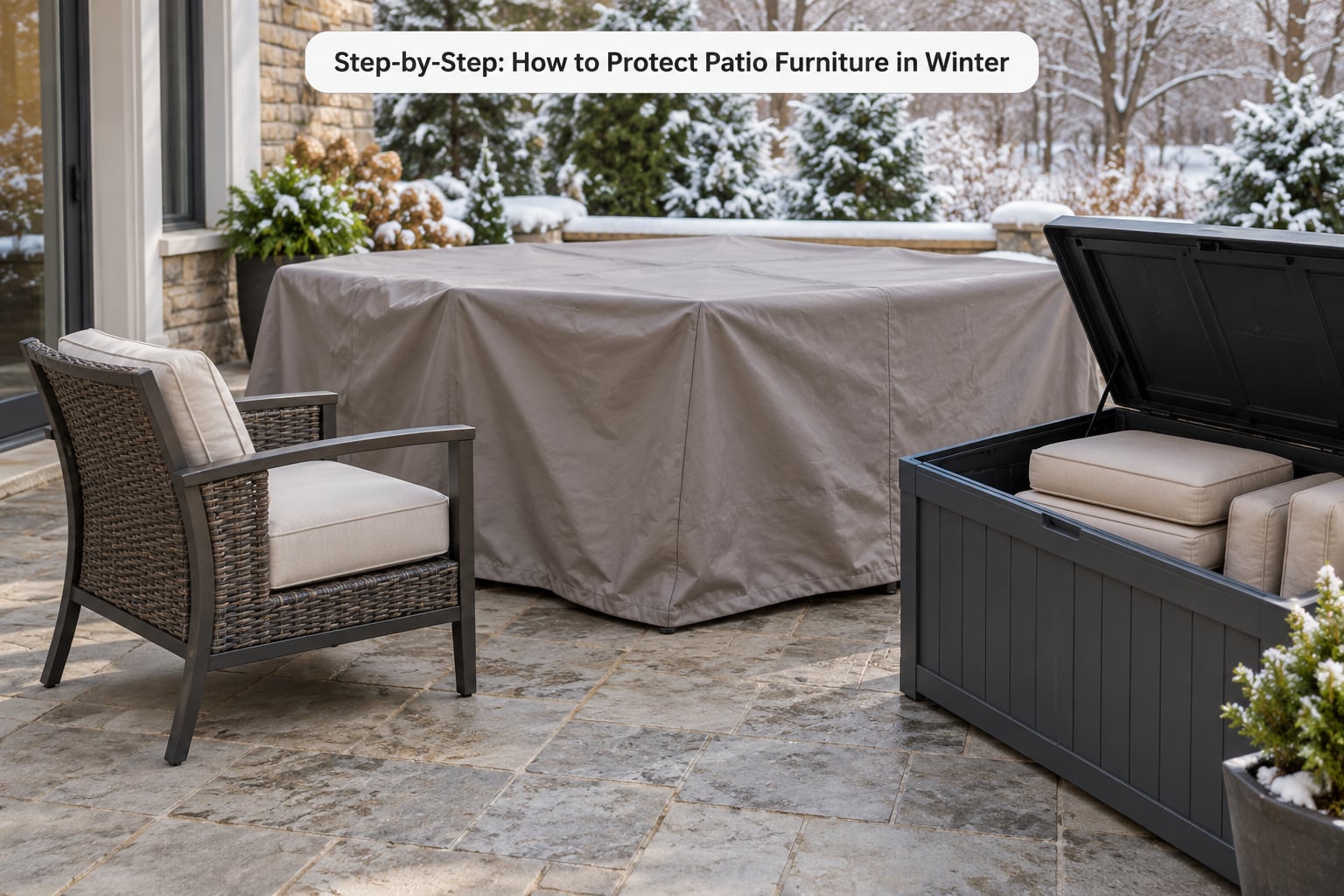
Grouping furniture tight under one large cover saves work and creates a warmer micro-climate, but only after everything is bone dry. If your pieces do not fit under one cover comfortably, cover them separately. Forcing a cover over a set it was not sized for crushes cushions and leaves gaps that fill with wind.
Pull the cover down so the hem hangs past the legs rather than cinching tight against the frame. Tight elastic hems rub against finishes and leave the fabric cutting in under load. Secure it with one strap per side or weight the hem with two-by-fours or a few bricks, then leave a small gap under the lowest rail so meltwater drains instead of pooling.
Treat corners and tabletops as the priority spots. A torn corner on a fitted chair cover lets rain straight onto the seat frame, and a sagging cover across a glass top collects a sheet of ice that can crack it. If the wind is the concern rather than the weather, stake the low corners or strap the cover to the table frame itself, not to a railing.
Store Cushions and Removable Parts Indoors
Cushions are the part most likely to ruin. Foam and batting do not dry out in a cool, damp garage all winter, so bring them in and store them somewhere dry and ventilated rather than sealed in a damp bag.
Stand them on edge in a labeled bin, or slip them into breathable furniture bags if you want airflow. Homeowners who have dealt with mice and spiders nesting inside stored cushions report that a few dryer sheets tucked in with the fabric do more good than almost anything else you can add. Seal the bin, but leave a gap so trapped moisture has somewhere to go.
Umbrellas and their stands, gas grill accessories, and removable tabletop pieces belong in the same category. Collapse and dry an umbrella, loosen the crank, and store it upright indoors. Skip the round base when you can, since a stored base is an easy place for water to sit all season.
Whatever you bring inside, never turn a table upside down and balance it on a chair seat to save space. Water pools in the frame, the weight stresses the joints, and the finish on the surface is left resting on fabric. Upright or on its side with something supporting the legs is better than inverted.
Check and Maintain the Protection During Winter
Winter protection fails quietly. A strap slides loose, a hem lifts, water gets under a cover and freezes, and none of it happens where you can see it.
Walk out after every storm with a ten-minute routine. Clear snow off the top of covers rather than letting a load build into a sagging sheet that presses down on fabric seats, sling backs, and umbrella canopies. If water pooled under a cover and froze, lift the cover, dry the surface, and put it back.
Every month or two, check one thing per material: soft spots or dark speckles on wood for early rot, rust bloom at screw heads on steel frames, cracked or flattening strands in the wicker weave, and any cushion that still smells musty. Tighten loose hardware while the set is out, since a wobbly frame is usually a stripped screw and not a broken leg.
If your region gets freeze-thaw cycles rather than steady cold, check more often. Water that enters a crack and freezes expands it, so the damage accumulates in cycles rather than in one cold snap.
Common Mistakes
Nearly all winter furniture damage traces back to one of these, and every one has a simple fix.
Covering furniture that is still damp. The cover seals the moisture in, and it comes out as mildew. Fix: dry every surface for a full day before the cover goes on, and re-check after a few sunless days.
Using a plastic tarp directly on the furniture. Plastic does not breathe, so condensation forms on the underside and sits on the surface. Homeowners on home improvement forums call this the most common way to ruin a set. Fix: use a breathable cover as the layer that touches furniture, and treat a tarp only as a top layer over an existing cover.
Leaving snow and ice to build on top. The load stretches fabric seats and sling backs and can collapse a canopy. Fix: brush it off after a storm rather than letting it consolidate.
Storing damp cushions in a sealed bin. They come out mustier than they went in. Fix: dry them for a full day indoors first, store them upright, and do not vacuum them in.
Storing pieces upside down. Water pools in the frame and the joints carry weight they were not designed for. Fix: keep pieces upright or on their side with support.
Parking furniture where meltwater collects. A low spot by the foundation means a puddle against the base all season. Fix: move the set to higher, better-drained ground, ideally on pavers or blocks rather than on bare soil.
Leaving pests a way in. Mice and spiders nest under cushions and inside covers, and one small opening is all it takes. Fix: seal storage bins, plug table and umbrella drain holes with silicone plugs, and check under cushions once a month.
Doing nothing at all. Outdoor-rated furniture is built for weather, not for ten wet months with no attention. A quick visual check costs nothing, and it is the cheapest protection available.
Frequently Asked Questions
Should you cover patio furniture in the winter?
Yes, if the furniture stays outside all winter. Outdoor furniture is built to handle weather, but not months of standing moisture, snow load, and trapped condensation with no attention. A breathable, vented cover keeps rain and UV off while letting vapor escape. If you have indoor space, storing it is better than covering it, but covering beats leaving it bare.
Is it a good idea to use a tarp to cover patio furniture?
Not on its own. A plastic tarp traps every bit of moisture that gets under it, and condensation forms on the surface of the furniture, which is how mold and mildew start. Tarp-on-top-of-a-breathable-cover is the common homeowner compromise and works reasonably well. The layer that touches the furniture needs to be vented fabric, not plastic.
What can you spray on outdoor furniture to protect it?
Match the product to the material. Penetrating teak oil or hardwood sealer for natural wood, exterior polyurethane or marine varnish for painted wood, a UV protectant for plastic and poly resin, and a water-repellent spray for aluminum and steel frames. Always read the manufacturer care instructions first, because some powder-coated finishes are voided by oil or solvent products.
Should you cover teak furniture in the winter?
Teak handles winter well, but a cover still helps. Teak is dense and naturally weather-resistant, yet the surface can pick up moisture, bird residue, and grime that darkens the grain over time. A vented cover with an air gap underneath keeps snow and ice off and slows staining. Apply a teak oil before the furniture goes dormant if it looks dry.
Is it okay to leave wicker furniture outside in winter?
Yes, if it is all-weather wicker or PE rattan, which is designed for outdoor use and will not crack from cold the way natural rattan does. Cover it anyway, because winter sun fades the weave and snow load flattens strands. Clean it with a soft brush and mild soapy water, dry it fully, and check the weave for broken strands in the spring.
Should you store patio furniture upside down in winter?
No. Storing a table or chair upside down lets water pool in the frame and legs, puts weight on joints that were not built for it, and rests the finish against fabric all season. Store pieces upright, or on their side with something supporting the legs so nothing carries the weight of another piece. If space is the problem, remove the cushions and stack frames carefully on their sides.
Conclusion
Start with the material in front of you. Identify it, clean the piece, and give it a full day to dry in open air before anything touches it. Then choose a breathable cover with vents and weight the hem, and bring cushions, pillows, and anything fabric indoors where you can keep them dry.
That is the whole job: clean, dry, cover, store. After that it is maintenance rather than preparation. Clear snow off covers after storms, check that hems and straps are still holding, dry any water that creeps underneath, and take the covers off in the spring when you wash the set down again for the season. Updated for 2026.