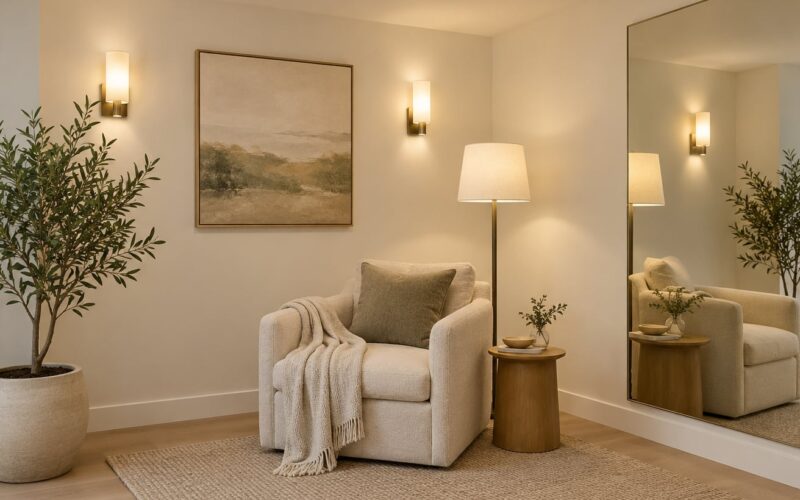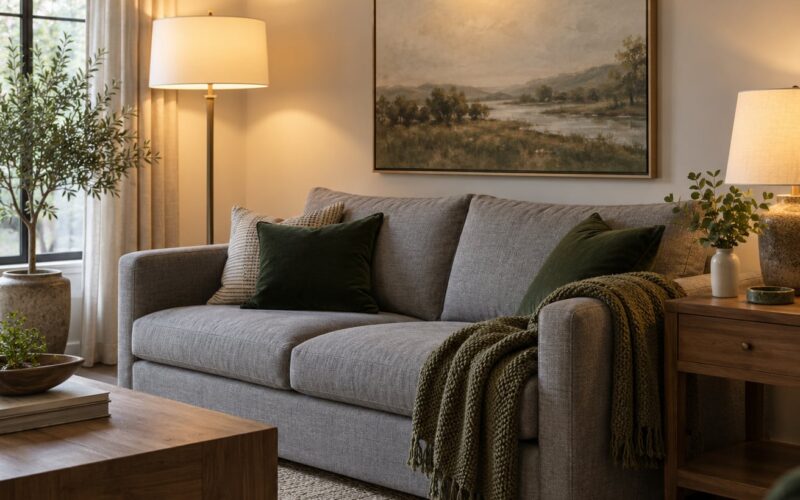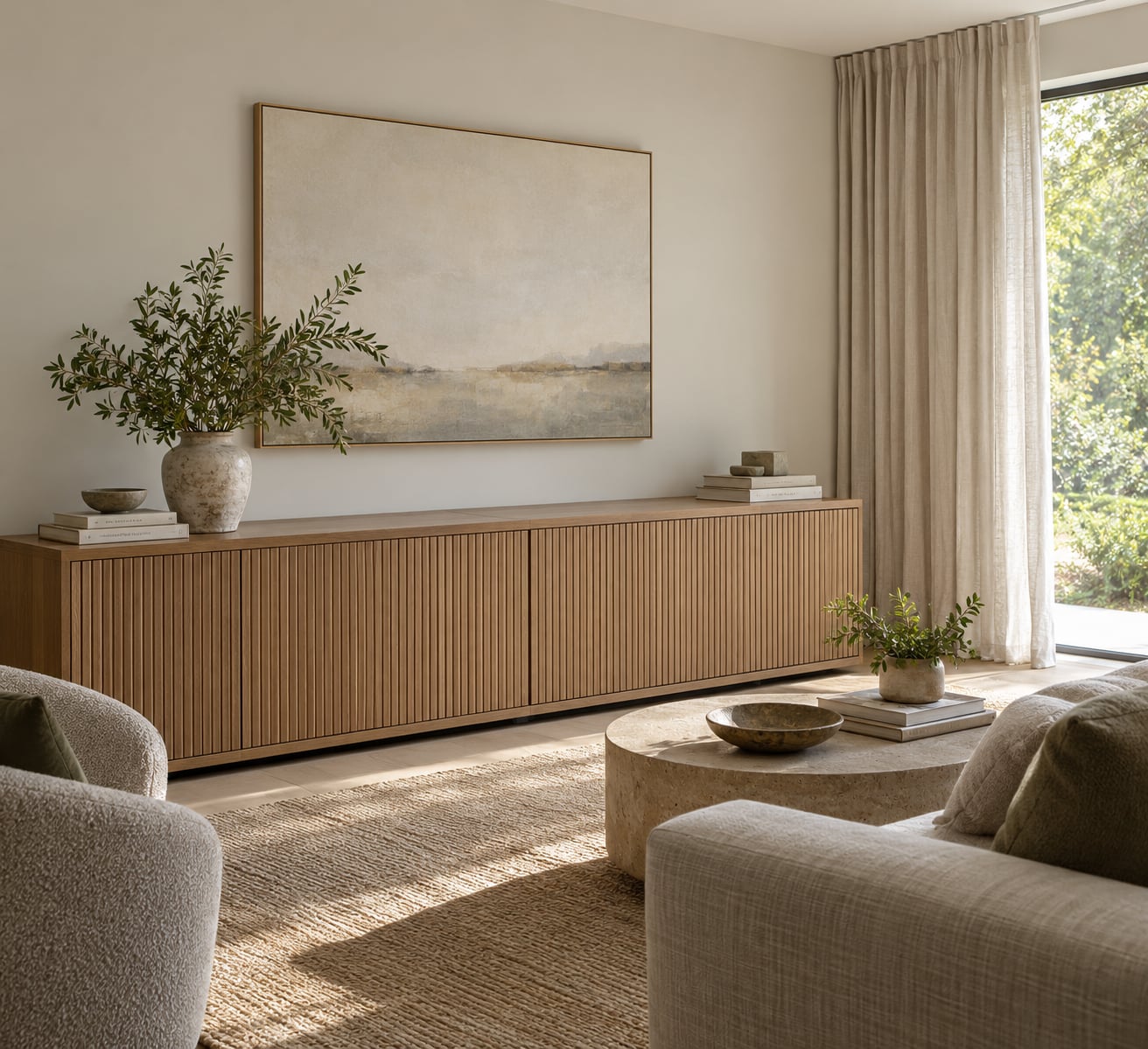
To hide a TV in plain sight, you either put a physical cover in front of it, build it into the wall so only the screen shows, or make the screen itself look like something else when it’s off. A doored media console is the least invasive option, a track-mounted sliding panel scales to any size, and a painted wall panel is the most permanent. Start by measuring the set and watching it from your sofa.
That black rectangle has a way of taking over a room even when it’s switched off. The good news is that almost every concealment trick here costs less than you’d guess, works in a rental, and can be undone in an afternoon if you hate it. What follows is the order I’d work through if it were my own living room.
Table of Contents
- What You Need
- Step-by-Step: How to Hide a TV in Plain Sight
- 1. Measure the TV and Choose the Right Location
- 2. Hide the TV Inside a Cabinet or Media Console
- 3. Cover the TV with Sliding Barn Doors or Curtains
- 4. Build a Decorative Wall Panel Around the TV
- 5. Hang a Fabric Panel or Printed Wall Hanging
- 6. Disguise the TV as Part of a Bookshelf or Wall Unit
- 7. Choose a Folding Screen or Room Divider
- Common Mistakes
- Quick Tips and Safety Checks
- Frequently Asked Questions
- What is the easiest way to hide a TV in plain sight?
- Can I hide a TV without drilling into the wall?
- How do I keep a TV hidden but still accessible for watching?
- Should I build a cabinet around my TV or buy a TV lift cabinet?
- How do I hide electrical cords when concealing a TV?
- Will a curtain or screen over my TV cause heat problems?
- Conclusion
What You Need
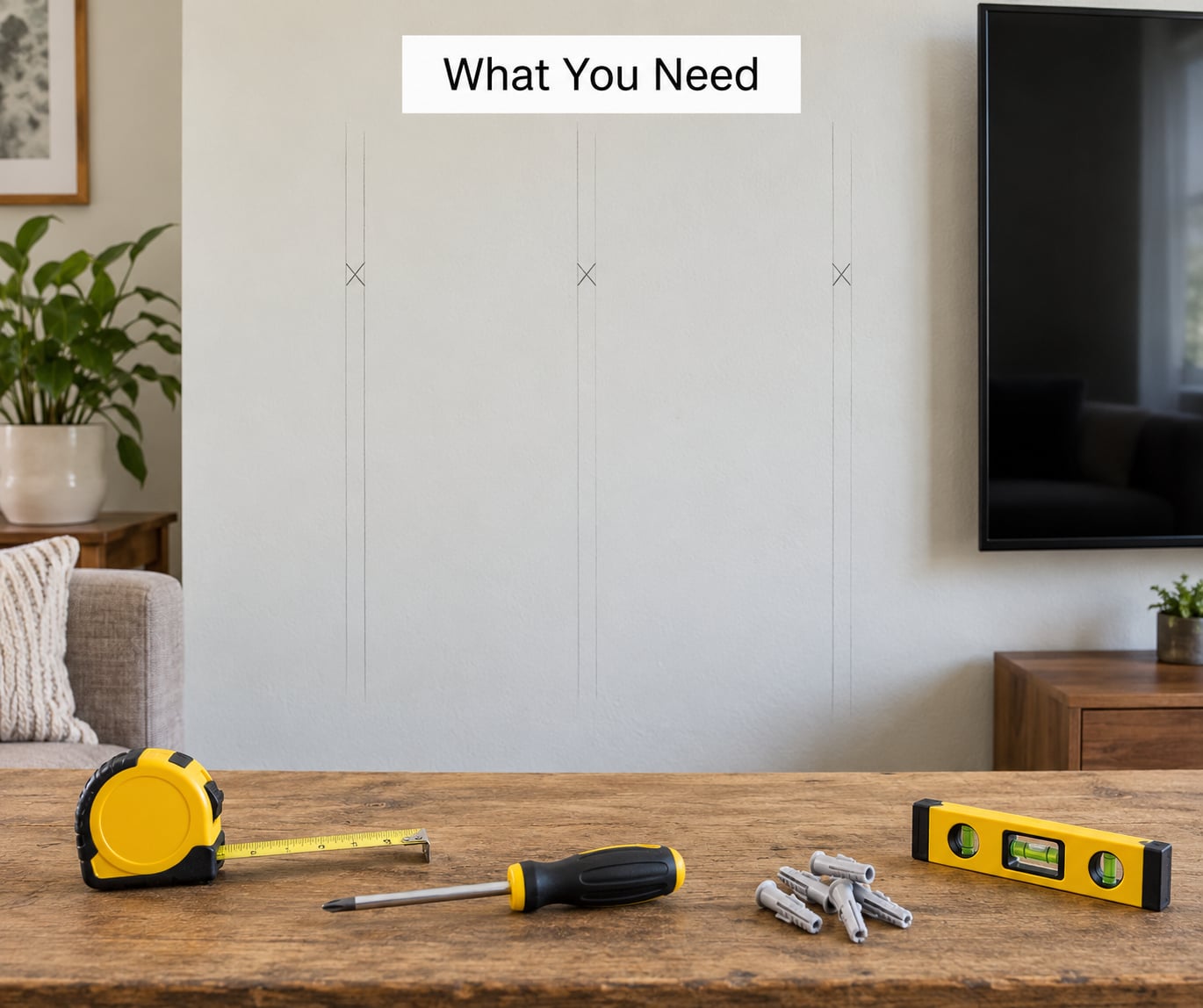
The list depends entirely on which method you pick, so treat this as a full spread rather than a shopping list for one project. A tape measure and a pencil get you through every option.
- Measuring: tape measure, pencil, painter’s tape for marking the screen outline on the wall.
- Mounting: stud finder, drill, level, appropriate wall anchors, and the hardware that came with your TV mount.
- Cords: flexible conduit or a raceway channel, cable ties, and a surge protector that fits where the TV will end up.
- Sliding panels: a track kit rated for the weight of your doors, roller wheels, and a stop.
- Wall panels: trim or moulding, plywood backing if you’re cutting into studs, drywall, mesh tape and joint compound if you want a flush look.
- Fabric options: blackout curtain or a stiff linen panel, a tension rod or a ceiling track, and removable hooks or clips.
Add a face mask and eye protection if you are cutting drywall, and never work above a ladder with the TV unpowered and unplugged nearby.
Step-by-Step: How to Hide a TV in Plain Sight
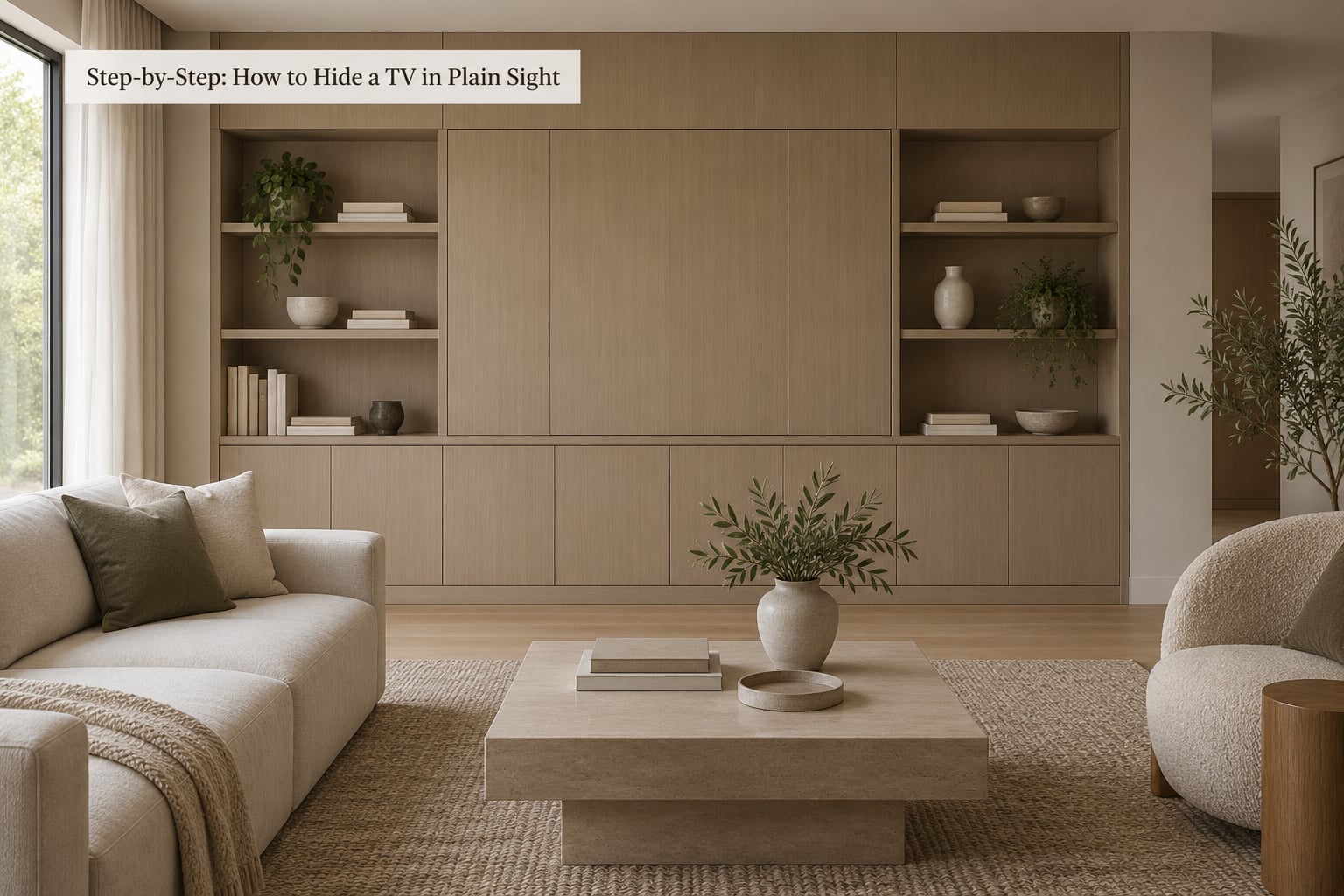
1. Measure the TV and Choose the Right Location
Measure the screen across, not the whole set including the stand, then add one to three inches of clearance per side. That gap is what stops a fitted cabinet or sliding door from touching the bezel.
Tape the outline of the TV onto the wall and sit on the sofa for a full minute before committing. Check where the glare lands, because a sun-facing room rules out glossy or dark matte panels that catch light.
Two more things decide the location. Make sure there’s a socket within reach of where the screen will sit, and confirm the ventilation gap your TV’s manual asks for. Most sets want clearance at the back and vents kept clear at the top; a fully enclosed cabinet has to breathe.
You can tell the location works when you can walk past it at a glance and not register it as a screen.
2. Hide the TV Inside a Cabinet or Media Console
This is the method I’d try first because it involves the least building. Buy or build a cabinet whose internal opening is the TV’s width plus two inches, with the depth of the set plus four inches of cable room behind it.
Doors, drawers, or a slatted reed front all work. Slats are the compromise when you still want light on the screen from the sofa, but they only work from certain angles and look less tidy from the side.
Route cords through the back panel with a grommet, keep the surge protector inside the cabinet rather than on the floor, and check the fit with the doors open before you close them for good. Styling tells the rest: a few books, one vase, nothing symmetrical-looking.
3. Cover the TV with Sliding Barn Doors or Curtains
A sliding barn door on a ceiling track is the most popular recommendation I see from people who’ve actually done it, because it scales to any screen size and touches nothing on the wall beyond two or three mounting points.
Size the track so the doors overlap the screen fully when closed, and mount the track into studs wherever you can. Weight matters: check the kit’s rating against the combined weight of both doors, and if you are covering a large screen, use two sliding sections rather than one heavy leaf.
Curtains work too. A floor-to-ceiling blackout curtain on a ceiling track hides a wall-mounted TV completely and softens the sound of the room, while a tension rod handles a bedroom without any drilling at all.
4. Build a Decorative Wall Panel Around the TV
This is the method that makes the screen look like it belongs there rather than being covered up. Frame a flush-mounted TV with trim or full panels so the black rectangle is bordered by wall colour on all four sides.
Build the frame to overlap the bezel by an inch or two on each side so no shadow gap shows when the screen is off. Ply the back, screw into studs, and if you want the flush look, tape and skim the joints with joint compound, sand, then paint the whole panel in the wall colour.
Finish two shades lighter than the wall if your room is dark, because a pure-on-colour panel can read as a stain instead of a wall. Sample the paint on a square of scrap drywall first.
5. Hang a Fabric Panel or Printed Wall Hanging
The simplest version of hiding a TV in plain sight is fabric with no hardware. A stiff linen or blackout panel hanging from a ceiling track on adhesive-rated hooks covers a wall-mounted set and comes down in minutes, which is the answer in a rental.
Stretch the fabric slightly so it lies flat, because ripples catch light and give the game away. A tension rod and two panels work for a freestanding set on a console, and a folding screen (covered below) does the same job with structure rather than cloth.
Printed wall hangings are another version of the same trick. They only work if the material is heavy enough to hang straight.
6. Disguise the TV as Part of a Bookshelf or Wall Unit
A shelving unit with a tall central bay sized to your screen is the best trick because it keeps a working display in the room. Build the bay to the TV’s width plus one inch per side and one extra inch top and bottom.
Run the cables inside the uprights, or through a conduit in the back, so nothing shows at the shelf ends. Style it like a real bookcase with uneven stacks, a few objects at different heights, and two or three shelves you actually use.
If the unit has lower doors, you get concealment as a bonus: doors shut and the screen disappears entirely, doors open and it works like a normal bookcase.
7. Choose a Folding Screen or Room Divider
A three-panel folding screen is a freestanding answer for rooms with no wall space, awkward angles, or a bedroom where you don’t want anything drilled. Place it so it blocks the sightline from the bed or the desk, not so it blocks the screen from the sofa when you’re watching.
Walk to the main seat and check the sightline every time you reposition it, because a screen that works from one chair can fail from another. Weigh the base if you have kids or a busy doorway nearby, and drape the cables behind the panels with clips so nothing crosses a walkway.
A doorless bathroom or hallway is a better use for a screen than a living room, where it tends to collect dust and read as furniture you’re hiding furniture behind.
Common Mistakes
Quick Tips and Safety Checks
Blocking ventilation. The most common mistake. A fully closed cabinet with no airflow can shorten a TV’s life, and some manufacturers void the warranty if vents are obstructed. Follow the clearance figures in your own manual rather than a general rule of thumb.
Leaving gaps and glare. A curtain that stops an inch short of the frame or a panel mounted flat against a sun-facing wall gives the game away instantly. Overlap generously and check the closed position from every seat.
Unstable panels and tall objects. Sliding doors on an undersized track, or a screen nobody anchored, will eventually come down. Anchor tall or heavy pieces and keep them clear of where people walk.
Cords crossing walkways. Run cables along the baseboard or inside conduit, never across an open floor, and keep the power strip inside furniture rather than behind it where it can’t be reached.
Drilling blind. Find studs first. In a rental, check your lease before you make holes, and remember that patching a mount hole takes time and paint that rarely matches perfectly.
Making it more conspicuous than the TV. A badly fitted drape or a mismatched panel draws more attention than the screen did. If a method doesn’t look intentional after two attempts, take it down.
Two finishing tips that pay off: keep the remote somewhere you’ll remember, like a small tray or the arm of the sofa, and add dimmable ambient lighting behind the panel so the screen doesn’t read as the brightest thing in the room when it is on.
Frequently Asked Questions
What is the easiest way to hide a TV in plain sight?
A doored media console is usually the easiest fix. You slide the TV inside, run the cords through the back, and close two doors. No wall damage, no tools beyond a screwdriver, and you can move the whole thing later. If your set is already wall-mounted, a curtain on a ceiling track is the next easiest and reverses in an afternoon.
Can I hide a TV without drilling into the wall?
Yes. Tension-rod curtains, freestanding cabinets with doors, folding screens, and fabric panels hung on adhesive-rated hooks all work without a single hole. A ceiling track still needs a few mounting points, but on a plaster ceiling or with carefully placed adhesive hooks you can keep the walls untouched, which matters a lot in a rental.
How do I keep a TV hidden but still accessible for watching?
Use a method that opens rather than one that stays covered. Sliding barn doors move aside in a second and hold their position on the track, and a bookcase bay with lower doors gives you the screen off during the day and available in one movement at night. Remote-friendly openings keep you from rearranging furniture every time.
Should I build a cabinet around my TV or buy a TV lift cabinet?
Build a cabinet if you want permanent furniture that matches the room and can hide cords and boxes as well as the screen. Buy a lift cabinet if the room needs to change function often, since the screen rises and disappears on a remote. Check the lift’s weight rating against your set and confirm the cabinet has ventilation behind and above.
How do I hide electrical cords when concealing a TV?
Run the cords inside the wall through a low-voltage conduit before you close the cavity, or use surface raceway if the wall is already built. Keep the surge protector inside the cabinet with slack for service, cut the power strip’s unused cord short, and label both ends so you can pull it out later without guessing. Never run a cord across an open floor.
Will a curtain or screen over my TV cause heat problems?
Only if it traps heat with nowhere to go. A fabric cover adds almost nothing to the temperature the set generates, but it can block vents or trap rising heat in a closed cabinet. Follow the clearance numbers in your TV’s manual, leave the back gap open, and check the back of the set after an hour of use before adding any extra covering.
Conclusion
Start with the measurement, not the shopping. Tape the screen outline on the wall, sit on the sofa, and see whether the problem is the screen, the cords, or both.
Then pick the least invasive method that solves it: a doored console if you want something that moves with you, a curtain or sliding panel if you’re renting, a framed wall panel if you’re staying put and want it to look built. Add cord management before you close anything up, because that is the part nobody notices until it’s missing.