To decorate a small front porch, work in a fixed order: measure the space, deep-clean and repair what you can see, paint the door and floor, upgrade the lighting, then add a few scale-appropriate pieces. On a porch under about six feet deep, four things do most of the work — a layered mat, one compact seating piece, better light, and two or three planters grouped by the door.
A compact entry is a weekend project for most people, though the finish work takes patience. The porch is also the cheapest outdoor room you own to improve, and guests read it in about three seconds. If you want to know how to decorate a small front porch without a shopping cart full of extras, the order of operations matters far more than the budget.
One more thing before you start. If you rent, skip ahead to the renter notes in each step. Everything below can be done reversibly.
Table of Contents
- What You Need to Decorate a Small Front Porch
- Measuring tools
- Cleaning and repair supplies
- Paint
- Furniture and textiles
- Light and greenery
- Optional extras
- Step-by-Step: How to Decorate a Small Front Porch
- 1. Measure Your Porch and Set a Budget
- 2. Choose a Cohesive Color and Style
- 3. Make the Floor and Walls Look Finished
- 4. Add Seating Without Blocking the Entry
- 5. Add Plants, Lighting, and Practical Details
- If You Don’t Want Plants or Wreaths
- 6. Finish with a Cozy, Inviting Touch
- Common Mistakes
- Frequently Asked Questions
- What is the best furniture for a very small front porch?
- How can I decorate a small front porch as a renter?
- What plants work on a small porch with little sunlight?
- What colors make a small front porch look bigger and more inviting?
- Can I use indoor furniture and decorations on my porch?
- How do I make a small front porch feel welcoming at night?
- Conclusion
What You Need to Decorate a Small Front Porch
You do not need a full set of tools. You need a tape measure, a cleaning tool, a paint system, and a short list of outdoor-rated pieces that fit your measurements.
Measuring tools
A 25-foot tape measure, a notepad and pencil, and a phone camera pointed straight at the porch from the street. Those three things tell you more than any decor blog will. Write down depth, width, ceiling height, and the width of the door before you look at a single cushion.
Cleaning and repair supplies
A stiff broom or a rental pressure washer, exterior wood filler, sandpaper, exterior primer, and a stain or paint rated for outdoor horizontal surfaces. Deck boards, step treads, and lattice are what homeowners in DIY forums complain about most, because those aged wood surfaces are the first thing you see.
Paint
Exterior paint for the door and trim, plus porch and floor paint for concrete or masonry. Concrete needs its own primer, and the floor paint must be rated for foot traffic and standing moisture. Follow the manufacturer’s instructions on surface prep, drying, and ventilation — porch floors trap moisture and paint will peel if you skip the prep.
Furniture and textiles
One or two compact pieces in outdoor-rated or UV-resistant fabric, one layered mat combination, and a cushion or two. Anything that will sit outside needs outdoor fabric, not a throw pillow from the couch.
Light and greenery
A weather-rated light fixture, a flameless LED candle, and planters matched to your light exposure. Both light and greenery are optional in the sense that a porch can look finished without them, but lighting is the one upgrade that changes the look at night more than anything else you can buy.
Optional extras
Solar path lights, no-hole hooks for vinyl siding, a storage bench, and a wall grid. Skip all of these until the first five are done.
Step-by-Step: How to Decorate a Small Front Porch
1. Measure Your Porch and Set a Budget
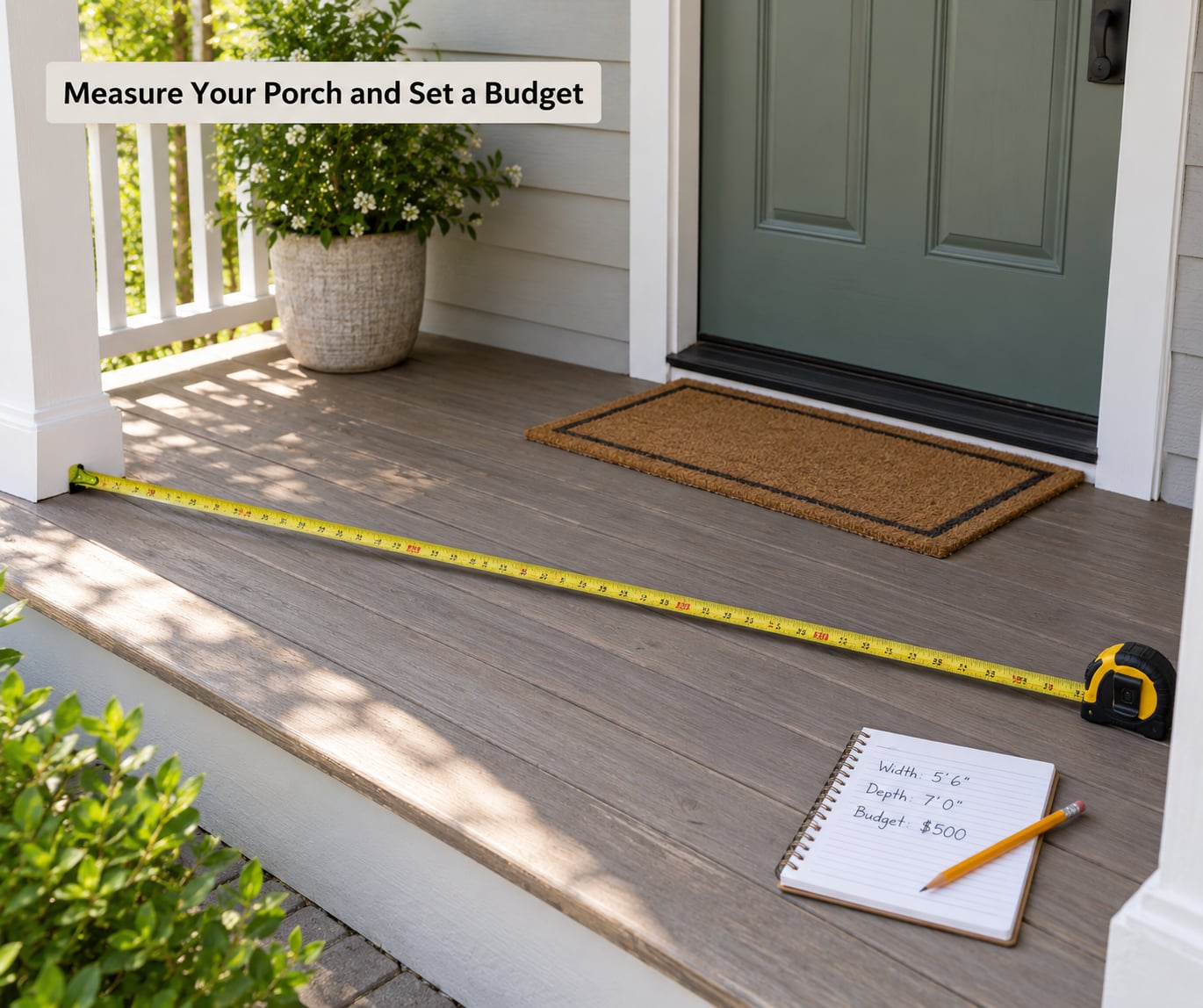
Measure floor depth and width, ceiling height, the door width, and how far the door swings. Then note where the sun lands and for how long, because that decides your plant list later.
Write your numbers down and keep them in your phone. Most decorating regrets that people describe online trace back to buying furniture before measuring — the piece looked right in the store and turned out to swallow the porch.
A few clearances make the difference on a narrow porch:
| Space | Minimum to keep clear | Why it matters |
|---|---|---|
| Walkway path to the door | 18 inches | Anything narrower feels like a squeeze when you carry something |
| Door swing and landing zone | 36 inches | The door has to open fully without hitting furniture |
| Bistro table footprint | 24 to 30 inches round | The usual smallest table that still seats two |
| Side table next to a chair | 12 to 15 inches | Room for a drink without blocking the path |
| Front step depth | Standard tread plus overhang | Add planters beside the steps, never on the tread itself |
Now set a total budget and split it into phases: clean and repair first, then paint, then light, then decor. Prioritizing the fixes that change safety and appearance keeps you from buying a cushion for a porch that is still flaking.
How to tell it worked: you can walk from the sidewalk to the door holding a full bin of groceries without turning sideways.
2. Choose a Cohesive Color and Style
Pick two or three colors and repeat them. A cheap porch that looks expensive is almost never the one with the most items — it is the one where the door color, the mat, and one accessory clearly belong to each other.
Here are four combinations that hold up well:
- Modern farmhouse: a black or deep navy door, white trim, a natural coir mat, and galvanized metal planters. Metal hardware keeps it from feeling homemade.
- Cottage: a soft pastel door, a striped outdoor rug, and a mix of ceramic pots in two close shades of the same color. Add one worn-looking wooden chair.
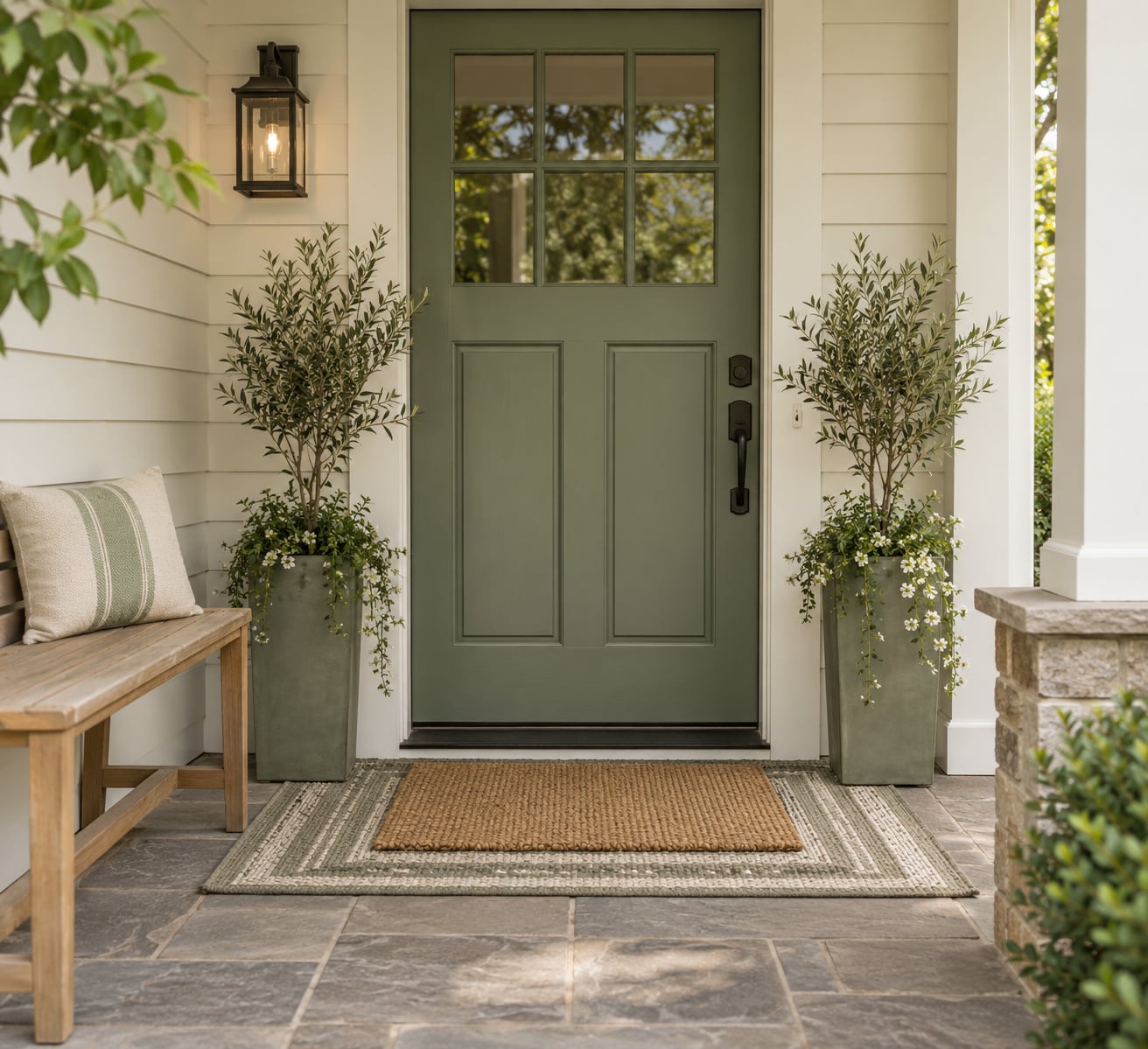
- Traditional: a deep green or burgundy door with matching hardware, a lantern-style fixture, and a flatwoven rug in a muted pattern.
- Colorful eclectic: a bright door, then restrain everything else. One saturated color plus two neutrals is a rule that keeps a tiny porch from turning into a craft fair.
Matte black hardware and lantern fixtures have been the easy look for several seasons and still hold up in 2026. The test: point at any object on the porch and see whether one of your colors shows up somewhere else.
How to tell it worked: someone can describe your porch’s color scheme in three words or fewer.
3. Make the Floor and Walls Look Finished
This is where small porches usually gain the most. Power washing the floor is free and homeowners regularly report it as the moment they realized how much usable space they actually had.
For the floor, work in order: sweep, fill cracks, sand rough spots, roll on concrete primer where needed, then two coats of porch and floor paint. Work in sections small enough that you can keep a wet edge. Good ventilation matters, and follow the manufacturer’s drying times before anyone walks on it.
For aged wood — deck boards, treads, lattice — decide between three options: sand and stain for the natural look, solid-color exterior paint for a uniform one, or replace only the worst boards if the rot goes deep.
For vertical surfaces, you have three renter-friendly options in ascending order of commitment: peel-and-stick panels rated for outdoor use on smooth walls, no-hole hooks on vinyl siding, and a small grille or wall shelf mounted into studs.
Do not put a rug on a damp porch floor without checking for trapped moisture underneath. Outdoor rugs need a rubber or vinyl backing, and the floor beneath should be dry.
How to tell it worked: the floor color reads as one clean plane from the curb, with no patchy spots showing through.
4. Add Seating Without Blocking the Entry
A small front porch usually has room for exactly one seating choice, sometimes two. Choose based on width, not on how the piece looks in your living room.
- Narrow porch under six feet deep: a slim bench against the railing or a single accent chair plus a 12-inch side table.
- Wider covered porch: a 24 to 30 inch bistro table with two folding chairs, or two chairs angled toward each other rather than lined up.
- No room at all: skip seating. A porch with no furniture and clean surfaces looks better than one with furniture jammed against the door.
Outdoor-safe materials matter. Look for UV-resistant fabric, powder-coated or teak frames, and rust-resistant hardware. Thrift-store wicker can work well if you refresh it — spray-painting dated wicker is described constantly in budget DIY communities as the best impact per dollar on a porch like this.
If you inherit large planters you do not want, do not force them into the layout. Plant something low and trailing in them, repurpose one as a side table, or take them to a buy-nothing group before you commit to a layout built around them.
How to tell it worked: you can still see the full width of the door and the path from the street.
5. Add Plants, Lighting, and Practical Details
Group plants in odd numbers and mix heights — three slim planters of different heights read better than two fat ones, and they take up less floor area. Match plants to your light before you buy anything.
| Porch light | What usually thrives | Notes |
|---|---|---|
| Full sun, six hours or more | Geraniums, lantana, rosemary, thyme, most herbs | Small pots dry fast in direct sun; check twice a week in summer |
| Part shade, three to six hours | Begonias, fuchsias, ferns, hostas, most potted shrubs | The safest choice for a porch with a roof and some glare |
| Full shade, under three hours | Ferns, ivy, moss, peace lily, calathea | Color comes from foliage, so add a bright pot for contrast |
For lighting, three tiers do most of the work. Replace the builder-grade fixture if yours is rusted or has a yellowed plastic lens. Add a flameless LED candle inside a glass lantern for a warm glow. Then line the steps or the path with solar lights, which cost nothing to run.
Do the small practical details next: a coir mat inside a 2×3 or 3×5 outdoor rug, a lantern or two, hooks by the door for a leash or keys, and a slim bench with storage if you have the wall space.
For a porch with steps, treat the treads as their own project. Paint the risers a contrasting color, keep the treads one plain tone so they read clearly, and add planters or a small seasonal arrangement beside the steps rather than on them. Non-slip paint or a strip on the tread matters more than decoration in wet weather.
How to tell it worked: at dusk you can see the door, the path, and the step edges without turning on a porch light.
If You Don’t Want Plants or Wreaths
This is the most common objection in home decorating forums, and it deserves a real answer. A porch can carry a whole palette without greenery or a wreath on the door.
- Layered outdoor rugs in two sizes, with the upper mat offset at an angle
- A lantern pair in different sizes on the floor or a wall shelf
- A piece of salvaged wood, an old sign, or a framed thrifted print hung beside the door
- Faux garland or a grapevine wreath you can rehang through the year
- A wall-mounted shelf or small grid holding three or four objects, not a dozen
- Drainage-free self-watering planters filled with ornamental grasses or a single sculptural stem
Power wash, paint, a new door color, and better light carry the whole space. A porch with none of those reads as unfinished no matter what you hang.
6. Finish with a Cozy, Inviting Touch
Stand at the curb in daylight and at dusk and look at the porch the way a visitor would. You are checking balance and sightline, not perfection.
Then adjust: move the tallest planter to the far side of the door, take down the third small wall item, replace anything that looks tired, and swap your seasonal pieces. Cushions in a second color tie the seating to the door, and one warm light source is usually enough.
Photograph the result before and after from the same spot. It takes a minute, and it is the fastest way to see the change you have stopped noticing.
How to tell it worked: the porch looks intentional from the sidewalk, and nothing on it looks like it was placed without a reason.
Common Mistakes
- Buying furniture before measuring. Measure first, then shop. This is the single most common regret people report.
- Filling the porch instead of editing it. Cut one item. Two, if the porch is under six feet deep.
- Using indoor fabric and furniture. Cushions, throws, and seating rated for indoors fade, mildew, and collapse outdoors. Buy outdoor-rated or UV-resistant.
- Ignoring light and weather. A south-facing porch bakes pots and fades fabrics. Check exposure before you buy plants or textiles.
- Painting without prep. Cleaning, filling, priming, and drying in the manufacturer’s recommended order is what keeps floor paint from peeling by next summer.
- Mismatched accessories. Two or three colors repeated beats a dozen colors used once each.
- Blocking the entry. Keep the path and door zone clear. Clearance beats decoration on any porch with a narrow approach.
Two final checks. Walk out to the sidewalk: if you cannot see the door clearly, you have too much on the porch. Then look at it after dark, because lighting changes what the space reads as more than color does.
Leave electrical work, masonry drilling, and ladder work to a licensed pro. If you are renting, check your lease and any historic-district or HOA rules before painting, drilling, or hanging anything permanent.
Frequently Asked Questions
What is the best furniture for a very small front porch?
A slim bench, a single accent chair with a 12-inch side table, or a 24 to 30 inch bistro set is the usual answer. Keep at least 18 inches of walkway clear and 36 inches at the door so the door opens fully. Choose one piece, not a set, and look for outdoor-rated or UV-resistant fabric and rust-resistant hardware so it lasts a season outdoors.
How can I decorate a small front porch as a renter?
Stick to reversible changes: peel-and-stick panels rated for outdoor use on smooth walls, no-hole hooks on vinyl siding, command strips for lanterns, a layered outdoor rug, and planters you set on the floor rather than mounting. Paint is the line most leases draw, so put your budget into fabric, light, and paint-in decor instead. Check your lease and any HOA or historic-district rules first.
What plants work on a small porch with little sunlight?
Under about three hours of direct sun, focus on foliage plants: ferns, ivy, hostas, peace lily, and calathea. Most flowering annuals need six hours and will struggle in deep shade. Put a bright or patterned pot in the mix, since the color has to come from the leaves, and water when the top inch of soil is dry because shaded porches stay damp longer.
What colors make a small front porch look bigger and more inviting?
Light, warm colors reflect light into a shallow space, so white, cream, soft gray, and pale blue make a narrow porch feel wider and brighter. Keep the palette to two or three colors and repeat them so the eye reads one calm scheme. One deeper accent, usually on the door, gives the entry a focal point without adding any floor footprint.
Can I use indoor furniture and decorations on my porch?
Only for anything the weather never touches, and even then sparingly. Indoor cushions, throws, and paper decor fade, mildew, warp, and get ruined by damp within a season. Look for outdoor-rated fabric with UV resistance, powder-coated or teak frames, and décor rated for outdoor use. If you must bring something indoors out, bring it in when the weather turns.
How do I make a small front porch feel welcoming at night?
Layer three levels of light: replace a yellowed builder fixture, set a flameless LED candle in a glass lantern, and line the steps or path with solar lights. Warm light around 2700K makes an entry look softer and safer than a single bright bulb. Keep the door and step edges lit so visitors can find the path without turning on a porch light.
Conclusion
Decorating a small front porch is a sequence, not a shopping list: measure, clean and repair, paint, light, then style with a few correctly scaled pieces. Start by measuring the porch and noting its light exposure, choose two or three colors, and make one visible improvement such as a painted floor or a cleaned-and-refinished deck. Accessories come last, and fewer of them look better.