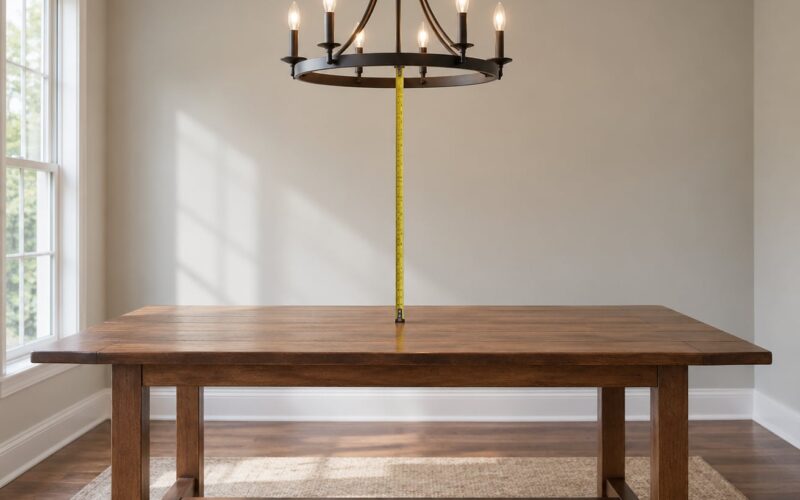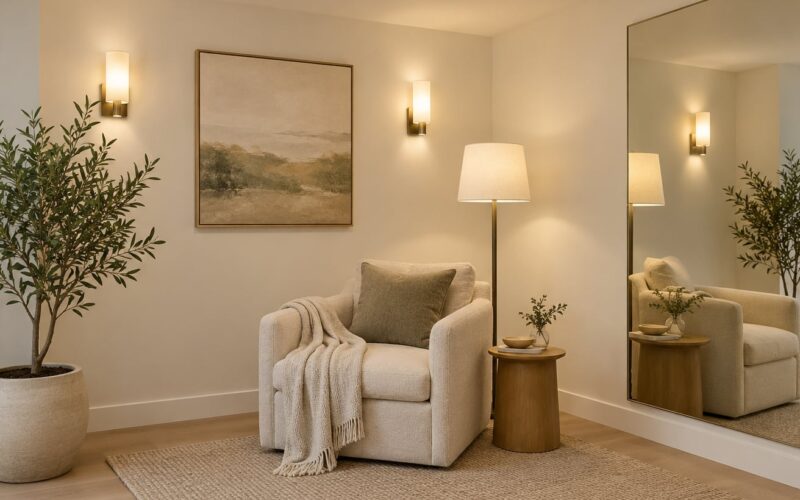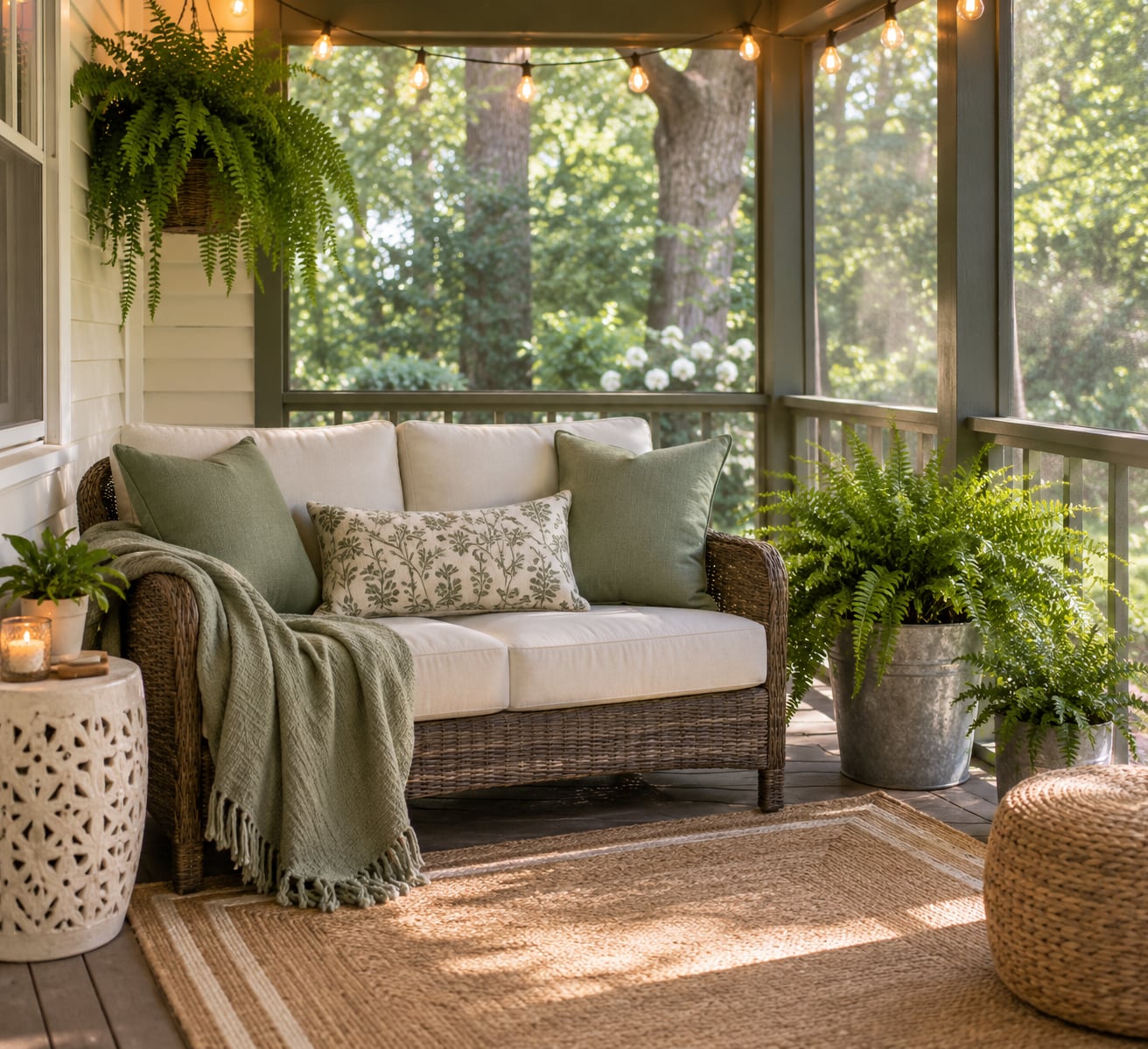
To decorate a screened porch, treat it as an outdoor room rather than a storage closet: start with furniture that can handle humidity and sun, anchor it with an outdoor-rated rug, layer three levels of light, then add textiles, plants, and storage so the space still works in bad weather. Most of it can be done over a weekend for the cost of a few thrifted finds.
The four must-haves for a screened-in porch are simple: seating that is outdoor-rated or easily refreshed, a rug large enough to sit under the front legs of every chair, layered lighting with at least one warm bulb, and storage that keeps shoes and toys off the floor. Get those right and the rest is styling.
The screen porches people end up loving most are the ones that feel like a room, not a pile of patio leftovers. The difference is usually planning, not spending.
Table of Contents
- What You Need Before You Decorate
- Step-by-Step: How to Decorate a Screened Porch
- 1. Assess and Prepare the Screened Porch
- 2. Create a Functional Layout
- 3. Choose Porch-Friendly Furniture
- 4. Add Color and Outdoor Textiles
- 5. Layer Lighting and Everyday Function
- 6. Finish with Plants, Storage, and Personal Details
- Common Mistakes That Ruin a Screened Porch
- Frequently Asked Questions
- How do you decorate a screened porch that gets hot and humid?
- What furniture is best for a screened porch?
- How can I decorate a screened porch without making permanent changes?
- Can I use indoor rugs and curtains on a screened porch?
- What lighting is safe to use on a screened porch?
- What plants work best on a screened porch?
- Conclusion
What You Need Before You Decorate
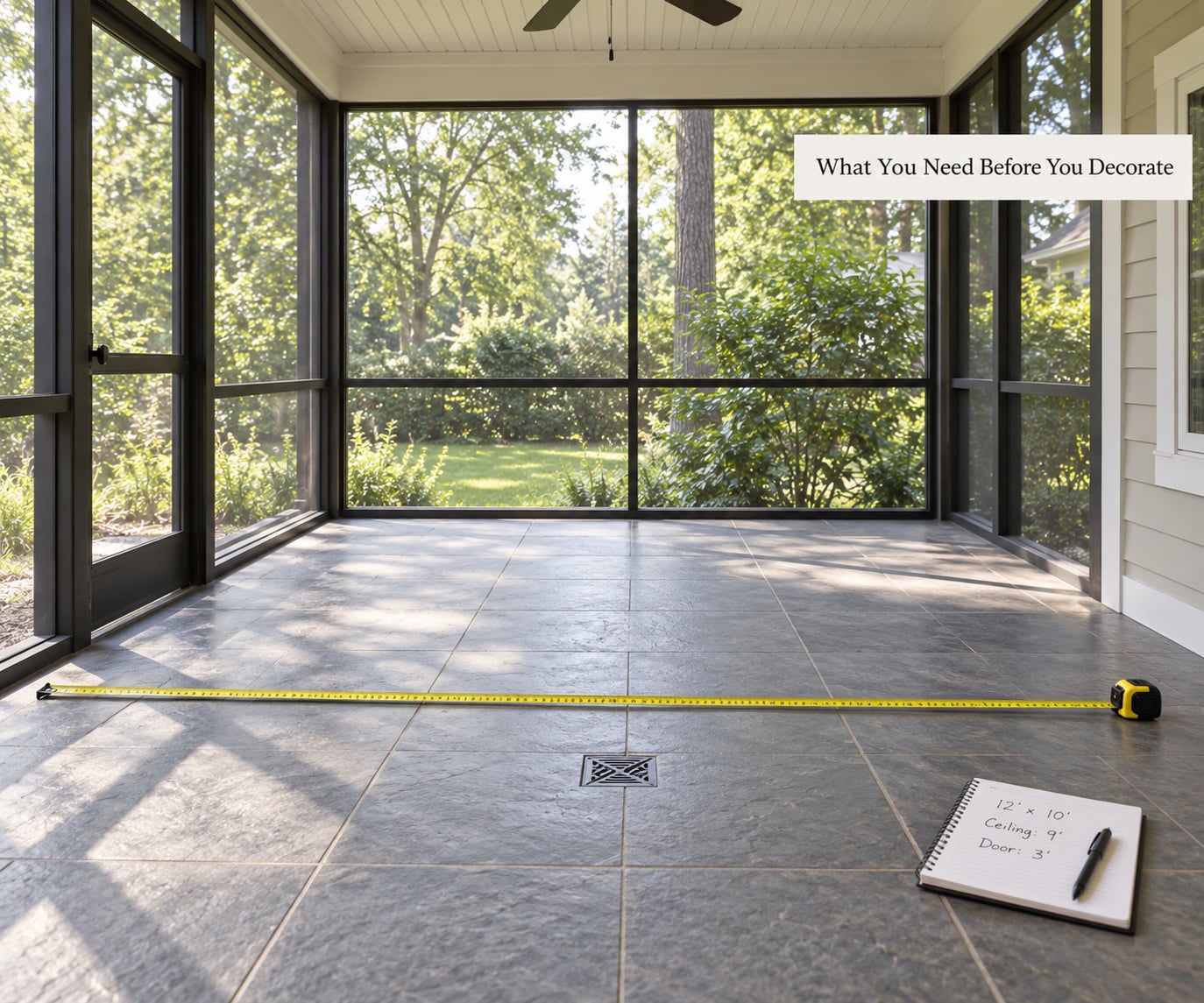
Gather these before you buy anything, and most decorating decisions get easier.
- Measuring tools: a tape measure, a notepad, and a phone camera for the room’s awkward corners.
- Cleaning supplies: a stiff broom, a deck brush, exterior-rated cleaner, and a power washer if the floor is concrete or weathered wood.
- Outdoor-rated materials: fabric labeled for outdoor use, plastic or powder-coated hardware, and galvanized containers.
- Lighting basics: warm LED bulbs, battery lanterns, outdoor-rated string lights with coated cords, and a ceiling fan if the ceiling allows one.
- Hanging hardware: vinyl siding hooks or removable adhesive hangers for renters, and a spare screen repair kit for pet or branch damage.
- Optional extras: a thrifted chair, galvanized buckets for toys, plant pots with drainage, and a small storage bench.
Measure the porch before you measure anything else. Most furniture mistakes on small porches are sizing mistakes, and you cannot unbuy a sofa that blocks the door.
Step-by-Step: How to Decorate a Screened Porch
1. Assess and Prepare the Screened Porch
Write down the length, width, and ceiling height, then note where the doors swing and where the screen panels meet the frame. Check for tears in the mesh, soft floorboards, standing water after rain, and which direction the light comes from. A west-facing porch gets brutal afternoon sun and needs different fabric and shade plans than a north-facing one.
Clean before you plan. Sweep the deck, wash the screens with a soft brush and mild soapy water, and pressure wash the floor if it is concrete. If the screen has a torn corner, a patch kit fixes it in ten minutes and prevents a cat-sized entry hole later.
Then decide what is temporary and what is permanent. Rugs, cushions, plants, and hanging baskets come out in winter. Paint, flooring, and wiring do not.
2. Create a Functional Layout
Work out what you actually do on the porch before you arrange anything. Most people use it for coffee in the morning, reading in the afternoon, and conversation in the evening. That suggests one seating cluster with clear walking space around it, not four chairs pushed against the walls.
Leave a path at least as wide as the door opening between the entry and the far end of the porch. On a 10 by 12 foot porch, a small loveseat or two scaled-down chairs plus one table is the honest answer; anything larger makes the room feel blocked. Irregular vintage furniture often fits odd dimensions better than a matching new set.
If you entertain, keep a small bistro table near the door so you can pull it out without rearranging. If you read, put a chair where the light lands in the afternoon and add a side table within arm’s reach.
3. Choose Porch-Friendly Furniture
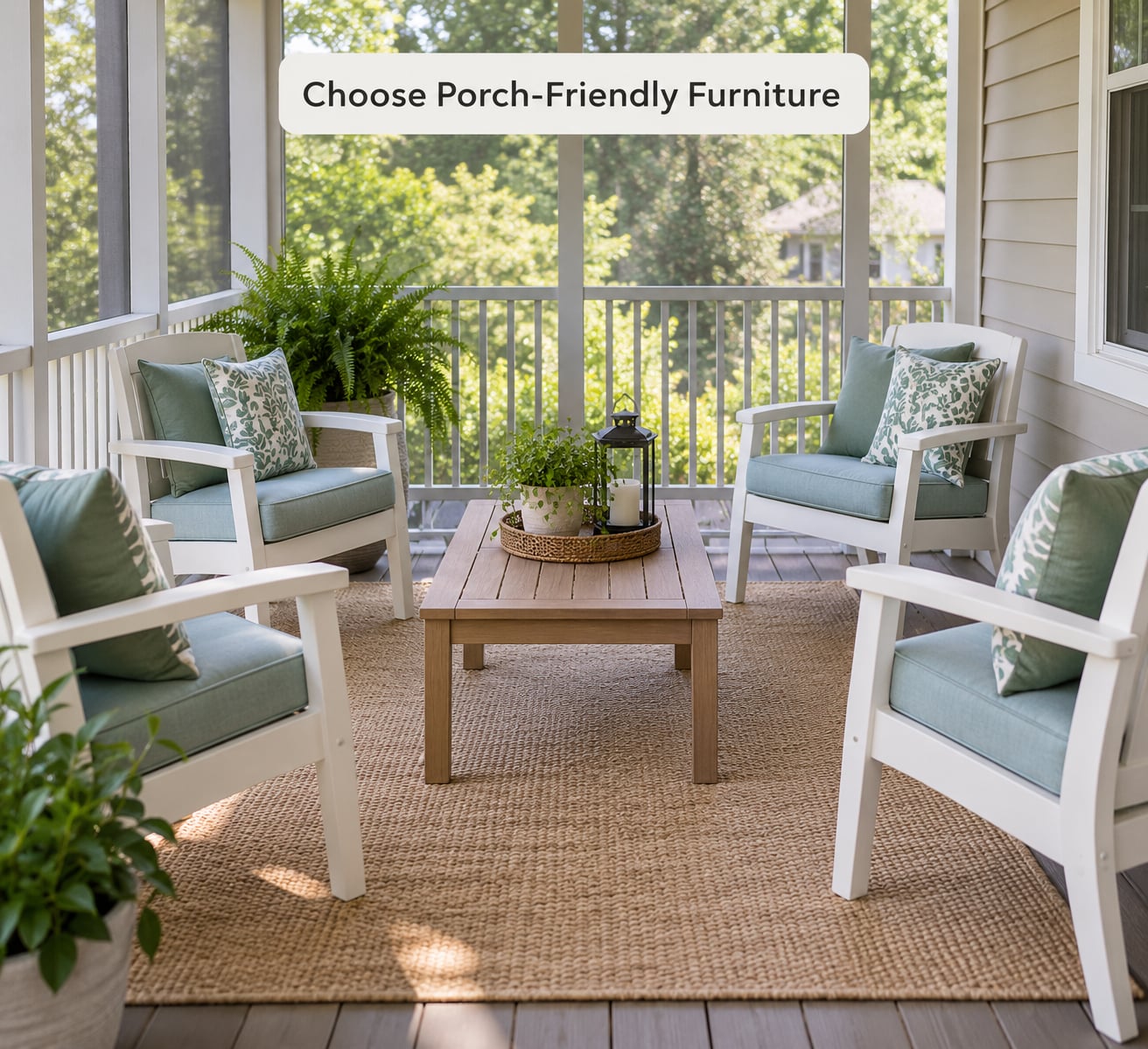
Pick furniture for humidity, sunlight, and the occasional sideways rain. Vinyl, resin, powder-coated aluminum, teak, and pressure-treated wood all hold up. Anything labeled for indoor use only will fade and warp within a season, no matter how good it looked in the store.
Thrifted pieces are worth the gamble when the frame is solid. Paint bare wood with exterior paint and use spray paint on metal, then swap in new outdoor-rated cushions. Skip upholstered indoor sofas entirely; they mildew within a year in humid climates and smell permanently damp.
One good focal piece beats five small ones. A single loveseat with two cushions reads as intentional, while a rack of mismatched folding chairs reads as leftover.
4. Add Color and Outdoor Textiles
Build a palette from three colors and repeat them. A neutral base, one mid-tone, and one accent repeated in a pillow, a planter, and a rug detail looks coordinated without matching.
Rugs need to be outdoor-rated and sized so the front legs of every seat sit on them. A rug floating in the middle of a seating area is the most common decorating error on screened porches. Skip the trip hazard, and skip anything thick that holds water.
Curtains work well and help with low sun. Use outdoor-rated panels hung from a tension rod or mounted on removable hooks so screens still come free. Keep them tied back and away from the screens so wind does not billow them into the mesh.
Thrift store pillows and blankets can be refreshed cheaply by washing them and slipping them into outdoor-rated covers, which keeps the pattern and drops the cost.
5. Layer Lighting and Everyday Function
Build light in three layers. Ambient light comes from a ceiling fixture or fan light, task light from a reading lamp on a side table, and accent light from lanterns, string lights, or candles in glass holders. Warm bulbs in the 2700K range change the whole feel of the space after dark, and string lights along the top of the screen frame are the cheapest big win available.
Keep cords out of walkways with outdoor-rated cord covers, and never run an extension cord under a rug or through a door gap. Do not daisy-chain cords to get more reach.
Any new wiring, new circuits, or hardwired fixtures belong to a licensed electrician. Renters should stick to plug-in lanterns, solar lights, and battery candles, which need nothing but a shelf.
6. Finish with Plants, Storage, and Personal Details
Plants soften hard screen lines cheaply, but check light levels honestly before buying. A shaded north porch suits ferns, pothos, and calathea. Bright screened porches handle herbs, ferns, and small flowering plants in pots with drainage. Many owners use faux greenery instead because real plants mean dragging pots in and out with every temperature swing.
If kids or pets use the space, check plant toxicity first and hang anything questionable out of reach. Galvanized buckets or lidded bins keep toys, gardening gloves, and shoes contained and give you the storage every porch needs.
Finish with removable hooks for wreaths, a tray for drinks, a stack of paperbacks in a waterproof basket, and a piece of outdoor-rated wall art. On vinyl siding, use siding hooks or hanging straps rather than nails so you are not patching holes later.
Common Mistakes That Ruin a Screened Porch
- Buying furniture that is too large. The fix: measure the seating area, not the whole porch, and subtract the walkway space before shopping. Scale down instead.
- Leaving the grill on the porch. Moving a grill off a small screened porch is often the single biggest upgrade owners make. Heat, grease, and smoke do not belong in an enclosed room.
- Using indoor-only fabrics. Cotton, chenille, and velvet pillows fade and mildew fast. Outdoor-rated acrylic or solution-dyed fabrics last.
- Hanging a rug that is too small. Every front leg should rest on it. Bigger rugs visually enlarge a small porch anyway.
- Ignoring west-facing sun. Add roll-down shades or curtains and fade-proof cushions, or accept that furniture placed in direct sun needs replacing more often.
- Letting pets reach the screen. Clawing at chipmunks tears mesh in a season. Fit a low guard or screen protector along the bottom panel and repair tears early with a patch kit.
- Overloading outdoor outlets. String lights plus heaters plus a sound system on one outlet is a fire risk. Keep each fixture on its own connection and never exceed the outlet’s rating.
- Blocking the screen panels. You will lose access for cleaning and repairs, and airflow drops. Keep panels free so the porch breathes.
- Making permanent changes in a rental. Adhesive hangers, tension rods, and freestanding planters only. Document the condition before move-in too.
- Letting clutter accumulate. Shoes, toys, and yard gear swallow a small porch fast. One lidded bin solves most of it.
Two more that catch people: installing a ceiling fan without checking the joist spacing and the electrical rating for the fixture, and leaving outdoor artwork or wicker in full sun year after year.
Frequently Asked Questions
How do you decorate a screened porch that gets hot and humid?
Start with materials that shrug off moisture: vinyl or resin seating, outdoor-rated fabrics, and a rug you can hose off. Skip cotton, velvet, and untreated wicker, which mildew fast. Keep plants in pots with drainage trays rather than standing water, and space furniture so air moves between pieces. Roll-down shades or outdoor curtains cut the heat gain, and a ceiling fan makes the space usable on still days.
What furniture is best for a screened porch?
Vinyl, resin, powder-coated aluminum, teak, and pressure-treated wood all tolerate humidity and sunlight. Choose pieces sized to leave a clear path between the door and the far wall, and pick one focal seat rather than several small ones. Untreated indoor wood, upholstered furniture, and bare steel will rust, warp, or fade within a season outdoors.
How can I decorate a screened porch without making permanent changes?
Use adhesive hangers and vinyl siding hooks instead of screws, tension rods for curtains, and a washable outdoor rug rather than anything glued down. Battery lanterns, solar lights, freestanding planters, and fabric throws need no wiring at all. Photograph the porch before you start and take everything down at move-out so the original surfaces are untouched.
Can I use indoor rugs and curtains on a screened porch?
You can get away with it for a season or two, but indoor fabrics fade, wick moisture, and hold mildew in a screened space. Choose rugs and curtains labeled outdoor-rated or solution-dyed instead, which resist UV and mildew. If you already own indoor pieces, wash them well and slip cushions into outdoor covers to extend their life cheaply.
What lighting is safe to use on a screened porch?
Use fixtures and bulbs rated for damp or wet locations, sealed outdoor string lights with coated cords, and battery-operated lanterns that need no wiring. Keep cords out of doorways and off rugs with outdoor-rated cord covers, and never daisy-chain extension cords. New wiring or hardwired fixtures should be handled by a licensed electrician.
What plants work best on a screened porch?
Shaded porches suit ferns, pothos, calathea, and other shade-tolerant tropicals. Brighter screened spaces handle herbs, small flowering plants, and most container annuals. Always use pots with drainage, and empty saucers after watering. If children or pets share the porch, check toxicity before buying and hang anything questionable out of reach.
Conclusion
Start with three things: measure the porch, sketch a layout that keeps a walkway clear, and choose one durable focal seat you like the look of. Everything after that gets easier.
Add the rug and textiles next, then layer lighting so the porch works after sunset, and finish with plants and a storage bin. Follow that order and you will know how to decorate a screened porch without buying furniture that fades by August or crowding a space you wanted to actually use.