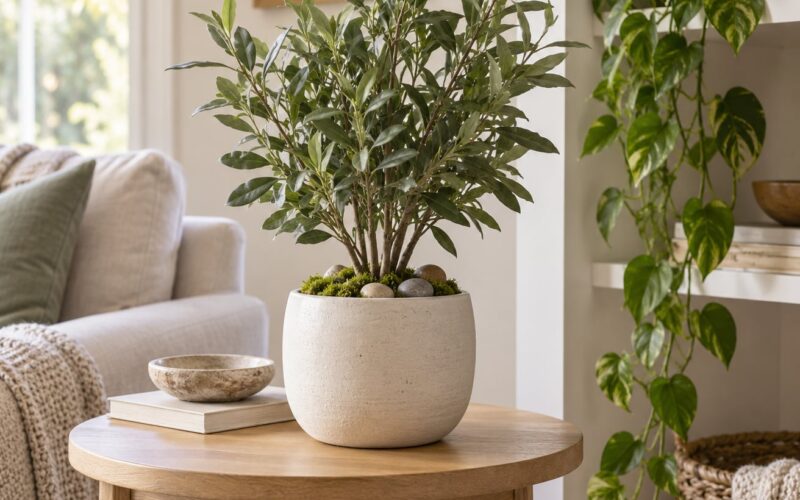
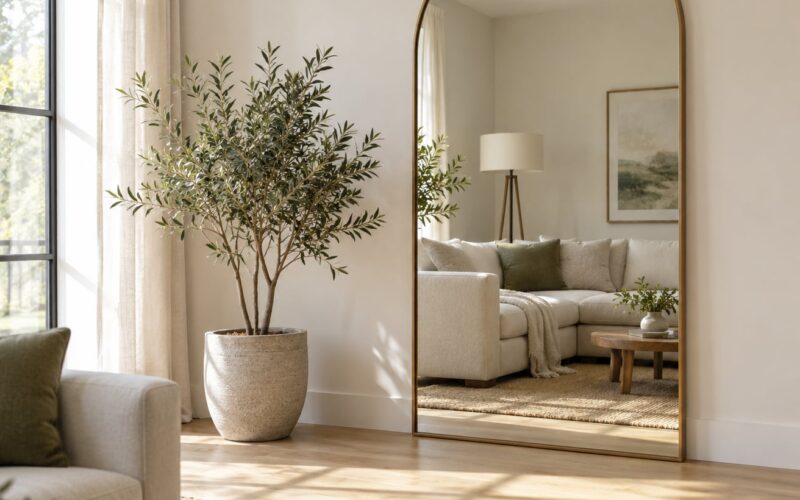
Most apartments have at least one spot with soft, indirect light, and a dozen houseplants hold up there without fuss. Snake plant, ZZ plant, pothos, peace lily, spider plant, Chinese evergreen, cast iron plant and parlor palm make up the core of this list, and every entry below comes with the light it actually needs, how often to water it, and where to put it.
If you have already killed a few plants in a dim room, the problem was rarely the plant. It was a light-and-watering mismatch: a sun-loving plant in a dark corner, or a plant in a dim room that was watered on a schedule borrowed from a bright one. Soil in a dark room stays wet far longer, so most indoor plant deaths there are overwatering, not neglect.
A note before we start: no plant lives on nothing. Every plant below grows, at some rate, using light. The ones on this list are the ones that will hold their shape, keep new leaves, and look intentional after a year in your apartment, rather than merely hanging on. Everything else needs a lamp.
Table of Contents
- Best Low Light Houseplants for a Dark Apartment at a Glance
- 1. Snake Plant for a Dark Apartment
- 2. ZZ Plant for Low-Light Rooms
- 3. Pothos for a Dim Apartment
- 4. Peace Lily for a Dark Apartment
- 5. Spider Plant for a Low-Light Space
- 6. Chinese Evergreen for Apartment Living
- 7. Heartleaf Philodendron for a Dark Corner
- 8. Cast Iron Plant for a Low-Light Apartment
- 9. Rubber Plant for a Dim Room
- 10. Fern for a Low-Light Apartment
- 11. Parlor Palm for a Dark Apartment
- 12. Aglaonema for a Low-Light Home
- How to Choose the Best Low Light Houseplants
- How to measure your light before choosing the best low light houseplants for a dark apartment
- Where to Place Low Light Houseplants in an Apartment
- Low Light Houseplant Care and Common Problems
- Frequently Asked Questions
- What indoor plants grow well in very low light?
- Can plants survive in a bathroom with no light?
- What plants can live without sunlight in an office?
- Are low light houseplants safe for cats and dogs?
- How often should you water low light houseplants?
- Why are my low light plants turning yellow?
- Conclusion
Best Low Light Houseplants for a Dark Apartment at a Glance
| Plant | Light level | Water rule | Pet safe | Best apartment spot | Care level |
|---|---|---|---|---|---|
| Snake plant | Low to bright indirect | Let soil dry out fully | Toxic to cats and dogs | Bedroom corner, hallway | Very easy |
| ZZ plant | Low to medium indirect | Dry out fully, then soak | Toxic to cats and dogs | Office, dark hallway | Very easy |
| Pothos | Low to medium indirect | Water when top inch is dry | Toxic to cats and dogs | Shelf, hanging planter | Easy |
| Peace lily | Low to medium indirect | Keep lightly moist, not soggy | Toxic to cats and dogs | Bathroom, bedside table | Moderate |
| Spider plant | Low to bright indirect | Water when top inch is dry | Non-toxic | Hanging basket, stand | Easy |
| Chinese evergreen | Low to medium indirect | Evenly moist in summer | Toxic to cats and dogs | Living room corner | Easy |
| Heartleaf philodendron | Low to medium indirect | Let top 2 inches dry | Toxic to cats and dogs | Bookshelf, dresser | Easy |
| Cast iron plant | Very low to low indirect | Water sparingly | Non-toxic | Dim hallway, north room | Easy |
| Rubber plant | Medium to bright indirect | Let top 2 inches dry | Toxic to cats and dogs | Brightest corner you have | Moderate |
| Boston fern | Low to medium indirect | Keep consistently moist | Non-toxic | Bathroom, humid hallway | Moderate |
| Parlor palm | Low to medium indirect | Never let it dry out completely | Non-toxic | Living room, dining nook | Moderate |
| Aglaonema | Low to medium indirect | Let top inch dry | Toxic to cats and dogs | Desk, dim bedroom | Easy |
Read the light column twice before you shop. Rubber plant and Boston fern want more than this list’s baseline, and cast iron plant will take less, so matching the plant to the room rather than the room to the plant is the whole game.
1. Snake Plant for a Dark Apartment
Snake plant (Dracaena trifasciata, formerly Sansevieria) is the plant people hand first-time owners, and for good reason. It handles anything from a dim hallway to a sunlit room, stores water in its thick upright leaves, and shrugs off a missed watering for weeks.
Water it only when the soil is dry all the way down, and less often in winter. Laurentii has the yellow-edged leaves most people picture; Moonshine is the pale silvery variety that looks striking on a dark shelf. Keep it away from pets, as it is toxic if chewed.
2. ZZ Plant for Low-Light Rooms
The ZZ plant (Zamioculcas zamiifolia) grows from underground rhizomes that hold onto water, which is why it survives a forgotten corner and an office with a lamp always on. Glossy dark leaves catch whatever light there is and reflect some of it back, so it reads well in a genuinely dim room.
Growth is slow, and that is normal rather than a symptom. Let the pot dry out completely between waterings, or you will get root rot. Planters without drainage holes are the main way this one gets killed.
3. Pothos for a Dim Apartment
Pothos (Epipremnum aureum) is the plant people end up with three of. It trails from a shelf, trails from a hook, and keeps producing vines in conditions that would end a fussy plant.
Two things to know. Variegated varieties like Marble Queen lose their white patterning in dim conditions and can end up plain green, so pick a solid green form for the darkest room and keep the colorful ones near the window. Water when the top inch is dry, and hang it high enough that curious cats cannot reach a trailing vine.
4. Peace Lily for a Dark Apartment
Peace lily (Spathiphyllum) is the most rewarding choice here if you want flowers. It tolerates low to medium indirect light and throws up white blooms for weeks at a time, even in a north-facing room.
It is fussier about water than the others on this list, and it tells you clearly when it is unhappy: the leaves droop dramatically within a day of being dry and perk back up an hour after you water. That is a useful trait in a low-maintenance plant, but it does mean you cannot ignore it for a month. It is mildly toxic to cats and dogs, and its calcium oxalate crystals can irritate mouths.
5. Spider Plant for a Low-Light Space
Spider plant (Chlorophytum comosum) is arching, fast for a low-light plant, and one of the few on this list that is non-toxic, which makes it the default for homes with cats or a dog. It sends out baby plantlets on long stems once it is established.
Water when the top inch of soil is dry and give it a decent pot, because a cramped root ball dries out fast even in a cool room. Its reputation as an air cleaner is mostly overstated, but the arching shape is genuinely good in a hanging basket or on a plant stand where nothing else fits.
6. Chinese Evergreen for Apartment Living
Chinese evergreen is the general name gardeners use for Aglaonema, a plant with broad leaves and often silver or red patterning that holds up in medium indirect light and tolerates a room that is not quite as bright as the label suggests.
It likes even moisture during active growth, so it is a better fit for someone who actually remembers to water than for someone going for a two-week vacation. Watch for yellowing lower leaves, which usually means the soil stays wet too long between drinks.
7. Heartleaf Philodendron for a Dark Corner
Heartleaf philodendron (Philodendron hederaceum) stays compact and trails instead of sprawling, which makes it a good fit for a bookshelf or a dresser in a dark corner where a floor plant would be in the way.
Let the top couple of inches dry, use a pot with holes, and keep it away from cold window glass and air-conditioning drafts, which hit it harder in autumn than most people expect. Like pothos, it is toxic if chewed, so it goes on a high shelf if you have pets.
8. Cast Iron Plant for a Low-Light Apartment
The cast iron plant (Aspidistra elatior) is the most genuinely low-light-tolerant plant in this list. It grew up on forest floors under dense canopy, so a dim hallway is closer to home for it than a windowsill.
Those big dark leaves look expensive in a room with little light. Water it sparingly and let it dry out, keep it away from drafts, and expect growth to slow to almost nothing in midwinter. It is also non-toxic, which makes it the calm choice for a family home.
9. Rubber Plant for a Dim Room
The rubber plant (Ficus elastica) is the honest outlier on this list. It tolerates medium to low indirect light and will survive there, but its burgundy or variegated coloring fades and growth slows noticeably without bright filtered light.
Treat it as the plant for your brightest dim corner, not the darkest one. Move it a few feet back from the window in summer and closer in winter. People often list rubber tree alongside genuinely dark-room plants, and that advice is what leads to a bare pot by spring.
10. Fern for a Low-Light Apartment
Boston fern (Nephrolepis exaltata) brings a frilly, soft texture that contrasts nicely with the glossy leaves of ZZ and snake plant. It handles low to medium indirect light, and it is non-toxic.
It is the pick when your problem is dryness as much as darkness, since heated winter apartments are often both dim and dry. Ferns want consistently moist soil, and misting leaves does nothing for that, so water the soil properly and raise the humidity around the plant instead.
11. Parlor Palm for a Dark Apartment
Parlor palm (Chamaedorea elegans) gives you height, with a slender trunk and fronds that reach up rather than out, which is exactly what an empty corner needs. It takes low to medium indirect light and is non-toxic to pets.
It wants moderate humidity and soil that never dries out completely, so it suits someone with a regular watering habit. Below that line it develops brown tips quickly, and those tips do not grow back, so choose carefully if your apartment is both dark and bone dry.
12. Aglaonema for a Low-Light Home
Colorful aglaonema varieties, with red, pink, silver and deep green patterning, can handle lower light than most variegated houseplants and keep their color longer than people expect.
Bright indirect light is still what makes the leaves look their best, so treat a colorful aglaonema as a plant you will be happy to move toward the window in spring. Water when the top inch of soil dries, and it is toxic to cats and dogs if chewed.
How to Choose the Best Low Light Houseplants
How to measure your light before choosing the best low light houseplants for a dark apartment
Start with the book test. Sit where you plan to put a plant and read a paperback at midday without a lamp. Comfortable reading means medium indirect light, which suits almost everything on this list. Squinting and leaning forward means low light, which narrows your choices to snake plant, ZZ, cast iron plant, spider plant and pothos.
Distance is the second test. Light drops sharply a few feet from glass, so a spot more than about 6 feet from any window is genuinely dim even in a south-facing unit. Third, check the window direction: a north-facing window gives steady, soft light with no hot spots, a south-facing one delivers far more light than most people notice unless blinds are closed, and east and west windows are strong in the morning and late afternoon.
Low light is not no light. Rooms with no window at all need a grow light before any of these plants will do more than hang on, and heavily curtained rooms sit closer to that category than most buyers assume.
The hardest version of this is a basement or lower-floor unit, where winter and overcast daylight is weak enough that even succulents and pothos placed right at the window struggle to last. If that describes your apartment, a grow light is not an optional upgrade, it is the difference between plants and a slow sequence of replacements.
Match the plant to your habits last. If you travel regularly or forget watering for stretches, stay with snake plant, ZZ and cast iron plant. If you enjoy a weekly routine, peace lily, fern and parlor palm are the more rewarding picks.
Where to Place Low Light Houseplants in an Apartment
North-facing bedroom: put the tallest low-light plant in the corner closest to the window and group smaller ones on the sill or a shelf beneath it. An even spread of foliage across a dark wall reads better than one lonely pot.
Windowless bathroom: humidity is good news, since most of these plants like it, but there is no light source at all unless there is a frosted window or an exhaust fan with a light. Snake plant, ZZ and cast iron plant handle a bathroom on a lamp; a fern needs the lamp too.
Hallway: cast iron plant and ZZ are the two that genuinely do not mind a hall with no window, as long as a lamp comes on. Spider plant in a hanging basket fills the empty stretch above a console table without taking floor space.
Living room corner: scale up. A parlor palm or a mature snake plant in a taller planter anchors a corner that a small pot never will. Vary heights rather than repeating the same plant, since three identical pots read as an afterthought.
Seasonally, shift everything closer to the window between autumn and early spring, and back in spring when the light gets stronger and direct sun can scorch leaves. If a plant has to be moved to survive the winter, a grow light on a timer for 10 to 12 hours a day is a reasonable one-time fix for a room that gets no daylight at all.
Low Light Houseplant Care and Common Problems
Overwatering is the number one killer of plants in dim rooms, and the mechanism is straightforward. Low light means slow growth, slow evaporation, and soil that stays wet for weeks. Roots sitting in wet soil suffocate, turn brown and mushy, and the leaves yellow, droop and drop.
Prevention is drainage. Use a pot with a hole in the bottom, a mix that includes perlite or bark so it does not compact, and a saucer you empty after watering. Water thoroughly, let it run out, then wait until the soil is dry to the depth you planned to check before watering again.
Signs of too little light look different: long, thin, stretched stems with small leaves spaced far apart, and pale or washed-out color. Variegated plants lose their patterning first. Fixes are more light rather than more water, so move the plant closer to the window or add a grow light rather than watering more.
Low humidity is a separate problem from low light. Radiators and forced air in winter dry the air sharply, which shows up as crisp brown leaf edges on ferns, peace lilies and palms. Group plants together, leave a little water in a pebble tray, or move them out of the direct path of heating vents.
Feed lightly and only while a plant is actively growing in spring and summer. A dim room produces little growth, so fertilizing year-round gives you salt build-up and leaf tip burn instead of new leaves. Wipe broad leaves every few weeks, since dust on a leaf in a dark apartment cuts into an already tiny light budget.
Frequently Asked Questions
What indoor plants grow well in very low light?
Snake plant, ZZ plant, cast iron plant and spider plant are the four that do well in very low light, including rooms lit mainly by a lamp. They hold their shape and keep producing new leaves where sun-loving plants stretch and fade. ZZ and snake plant are the most forgiving if you also travel or forget to water.
Can plants survive in a bathroom with no light?
Only with help. In a room with no window and no daylight, plants survive on an electric lamp or grow light rather than on ambient light. Bathroom humidity helps, and snake plant, ZZ and cast iron plant are the most tolerant of the lot. Without a light source at all, a plant in a windowless bathroom is living off stored energy and will decline within a few months.
What plants can live without sunlight in an office?
An office with no window needs a grow light, typically set on a timer for 10 to 12 hours a day. Once that light exists, ZZ plant, snake plant, pothos and peace lily all do well in a typical office corner, and ZZ in particular is a common choice near air conditioning vents. Without artificial light, nothing truly lives long term, no matter how tolerant the species is.
Are low light houseplants safe for cats and dogs?
Non-toxic options on this list are spider plant, cast iron plant, Boston fern and parlor palm. Snake plant, ZZ, pothos, peace lily, philodendron, rubber plant, Chinese evergreen and aglaonema all cause mouth irritation, drooling or vomiting if chewed. If you have a cat that treats shelving as a gym, build the list around the four safe plants and put anything toxic up high or out of reach.
How often should you water low light houseplants?
Less often than plants in bright rooms, and only based on dry soil rather than the calendar. Snake plant and ZZ should dry out completely between waterings. Pothos, spider plant and philodendron want the top inch or two dry. Ferns and parlor palms should never dry out entirely. In winter, cut every schedule back, since growth slows and wet soil lingers much longer.
Why are my low light plants turning yellow?
Yellow lower leaves almost always mean too much water, not too little. In a dim room the soil stays wet for weeks, the roots suffocate and the leaves yellow and drop from the bottom up. Check for mushy brown roots and a pot with no drainage hole. If the soil is dry and leaves are yellow instead, check for cold drafts and very dry air from radiators.
Conclusion
Pick one plant for the darkest spot in your apartment, and choose from the top of the table based on how that room really feels at midday. Use a pot that drains, let the soil dry between waterings, and watch the spot for a week before you buy anything else. Add a second plant once the first has made a new leaf.