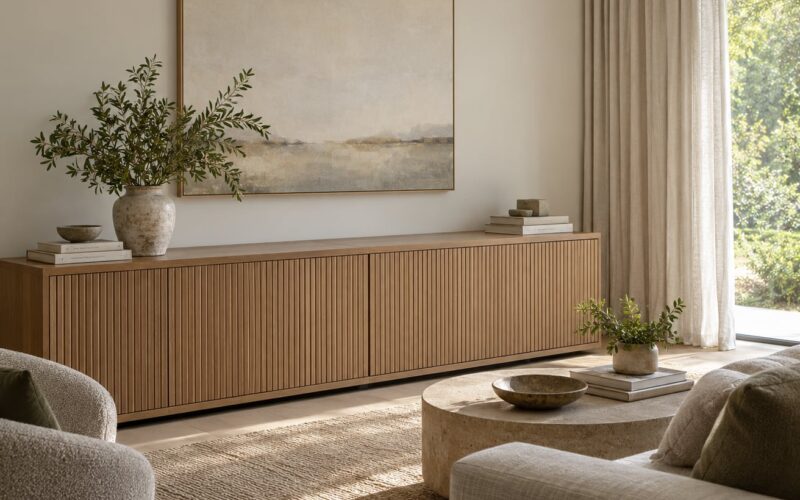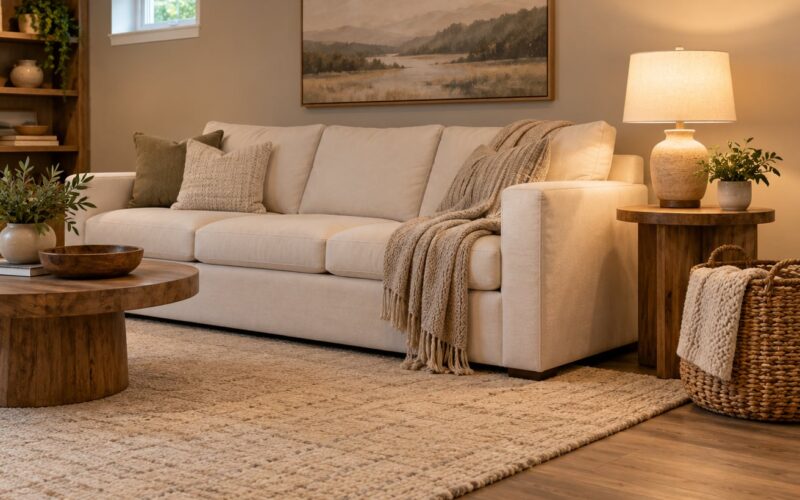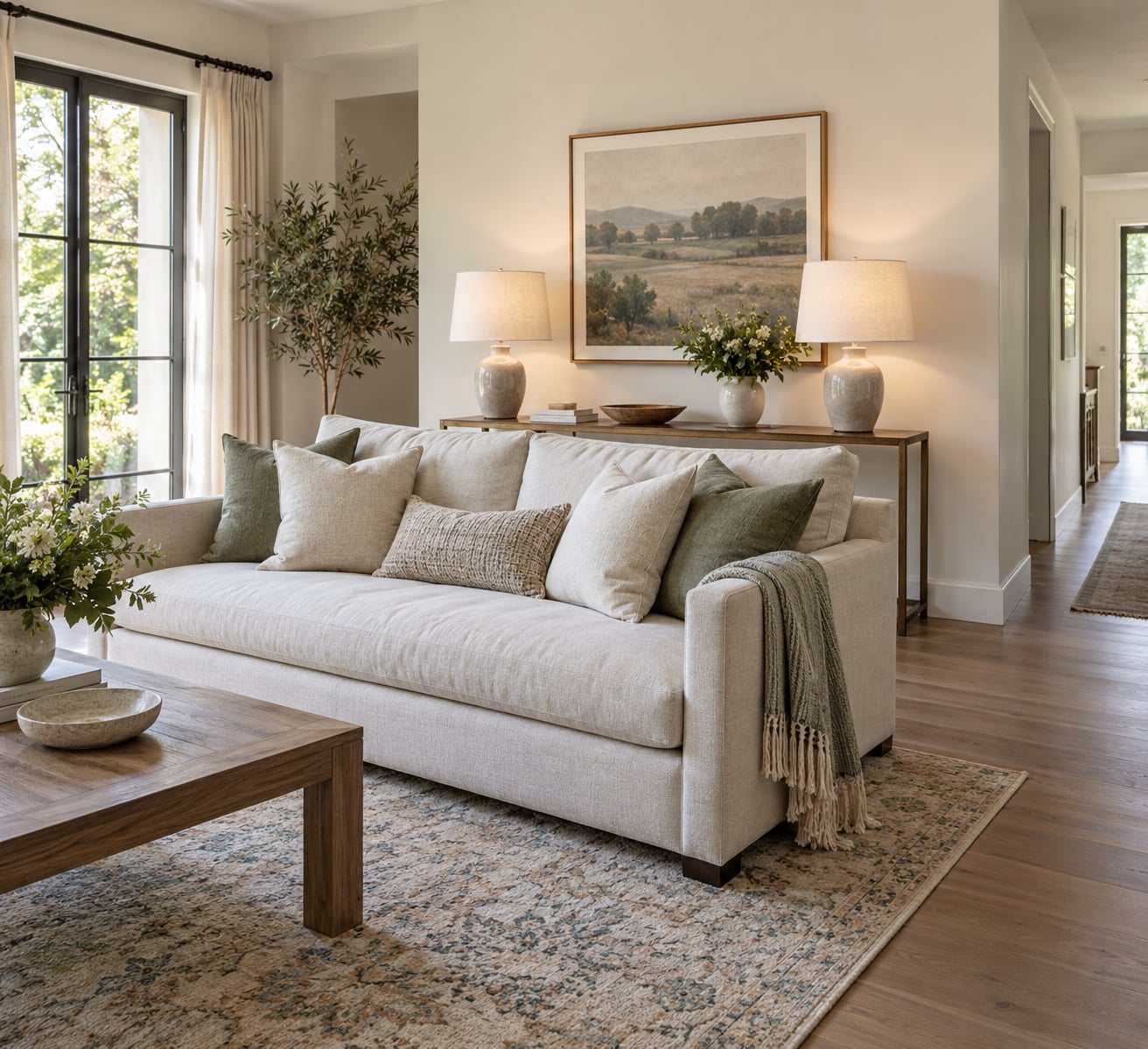
Floating furniture means pulling your sofa, chairs, and cabinets several inches into the room so nothing lines the walls like a border. It opens up the floor plan, keeps walkways clear, and gives you a bare wall to hang art on. And learning how to float furniture away from the walls is mostly a matter of spacing and restraint rather than heavy moving. The whole job takes an afternoon, costs nothing, and no outlet gets relocated.
I have rearranged the same two rooms a dozen times with tape on the floor, and the honest truth is that most people stop six inches short of what actually works. They pull the sofa, look at it, get nervous about the empty wall, and push it back. This guide is the way I avoid that loop: measure first, tape the footprint, then decide.
Table of Contents
- What You Need
- Step-by-Step
- 1. Decide Which Furniture Should Float
- 2. Measure the Room and Mark the Layout
- 3. Test the Placement With Painter’s Tape
- 4. Move and Style the Furniture
- 5. Check the Room From the Doorway
- How Far to Pull Furniture Off the Wall
- Common Mistakes
- Frequently Asked Questions
- How far should furniture be from the wall?
- Can I float a sofa if there is an outlet behind it?
- Does floating furniture work in a small room?
- What furniture looks best away from the wall?
- How do I hide cords when floating furniture?
- Will moving furniture away from the wall make a room look better?
- Conclusion
What You Need
The tool list is short, and everything on it costs little or nothing.
- A tape measure. You need the wall width, the depth of the room, and the door and window locations before anything moves.
- Painter’s tape. This is the single most useful tool in the job. Tape the footprint on the floor and you can walk around a layout that costs nothing to undo.
- A level or a small piece of cardboard. Check that the floor behind the piece is flat, especially in older apartments.
- Your phone camera. Take one photo from the doorway before you touch anything. You cannot remember a layout, but you can look at it.
- Furniture sliders or felt pads. Carpet or sliding a heavy sectional across hardwood will mark the floor without them.
- Cleaning supplies. Moving a piece reveals dust, dead paint lines, and a wall color you may not have expected.
- An anti-tip bracket, if the piece is tall or top-heavy. A bookcase or dresser that floats should still be strapped to the wall.
Step-by-Step
Work in this order and you will not have to drag a sectional back across the floor twice.
1. Decide Which Furniture Should Float
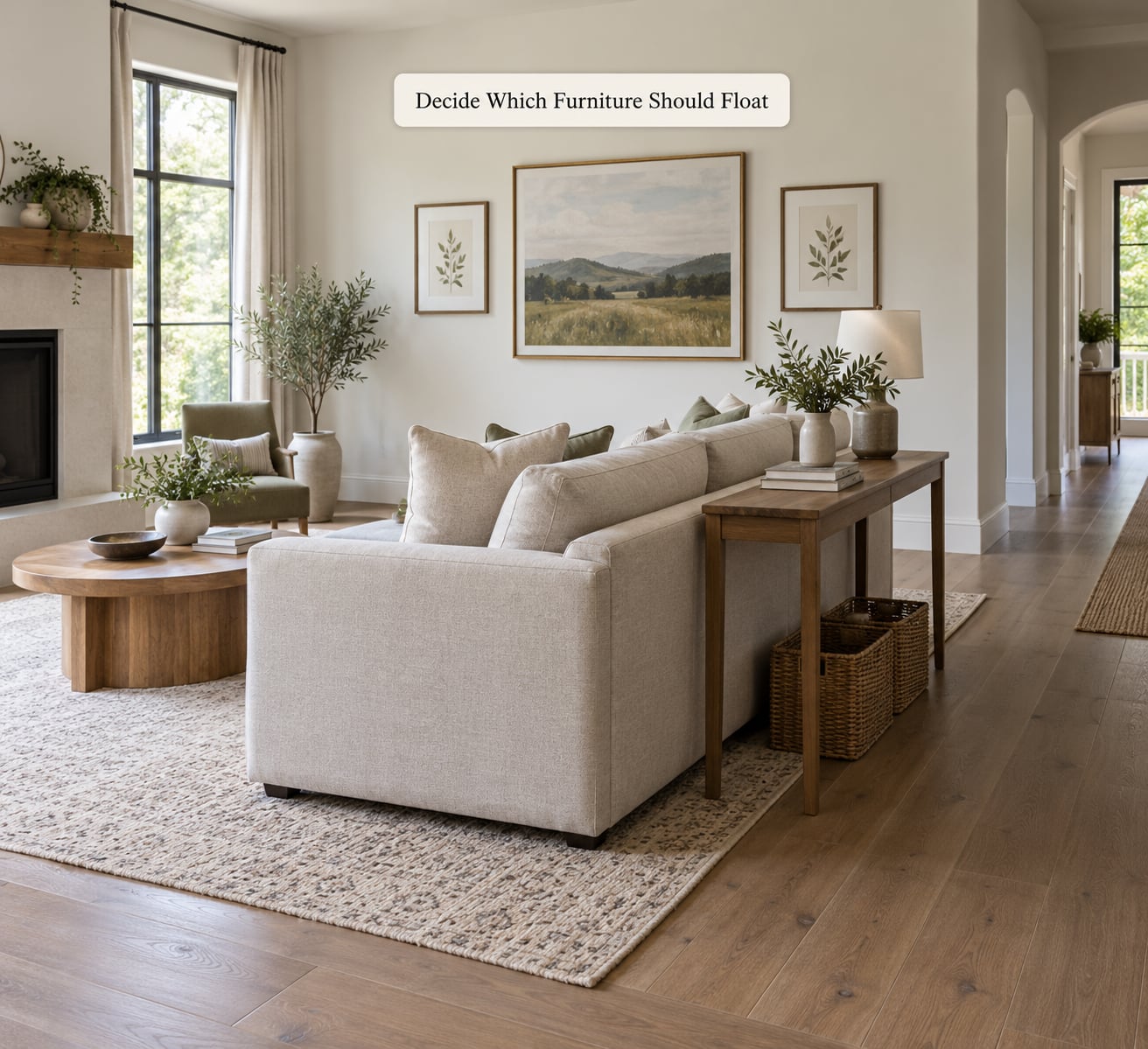
Float sofas, loveseats, accent chairs, ottomans, and console tables. They sit in the middle of the room, so the extra air around them improves sightlines and conversation.
Leave medium-height pieces against the walls. Media units, sideboards, dressers, and bookcases usually need the wall behind them for stability, cable access, and a clean, unbroken line. A tall bookcase floated in the middle of a room reads as an island, not a feature.
In an open floor plan, floating one long sofa with a console behind it is often enough to split living from dining. In a small room, float one piece and keep the rest on the perimeter. Pull one thing, look at it from the doorway, and only then decide whether the room wants more.
2. Measure the Room and Mark the Layout
Write down four numbers before you move anything: the width of the wall the piece is leaving, the depth of the room, the swing of each door in the area, and the distance from the wall to the nearest outlet or vent.
Those clearances decide how to float furniture away from the walls in your specific room. Here is the cheat sheet I use.
| Distance | What it is for |
|---|---|
| 6 to 8 inches | A modest pull on a sofa or chair. Looks intentional, keeps the wall shadow from looking like a mistake. |
| 12 inches | Enough clearance for a slim console or a pair of narrow tables behind a sofa. |
| 18 to 24 inches | Minimum walkway behind a seated person. Below this, people squeeze past. |
| 30 to 36 inches | Conversation distance between facing seats. Below 30, people talk over each other. |
| 36 inches | Space behind a pulled-out dining chair so it can be pushed back without hitting a wall. |
| 16 to 18 inches | Standard coffee table gap from the sofa edge. Widening it makes the center feel crowded. |
Check outlets, vents, and radiators at this stage. If a vent sits behind the sofa, you have two options: float the sofa in a different position, or leave it and float something else. Radiators need airflow, so keep the clearance in the manufacturer’s instructions rather than pushing furniture tight against them.
3. Test the Placement With Painter’s Tape
Tape is the cheapest way to test how to float furniture away from the walls before anything heavy moves. Outline the piece on the floor where you think it should go, including the gap behind it, and mark the door swing on the tape so you can see whether the door will hit anything.
Now walk the path people actually take, from the entry to the kitchen to the bathroom. If your path narrows below 18 inches anywhere, the tape is wrong. Slide it and walk again.
Give the tape at least a day if you can. Most mistakes I have made came from a layout that looked fine while I was standing next to it and wrong from the doorway.
4. Move and Style the Furniture
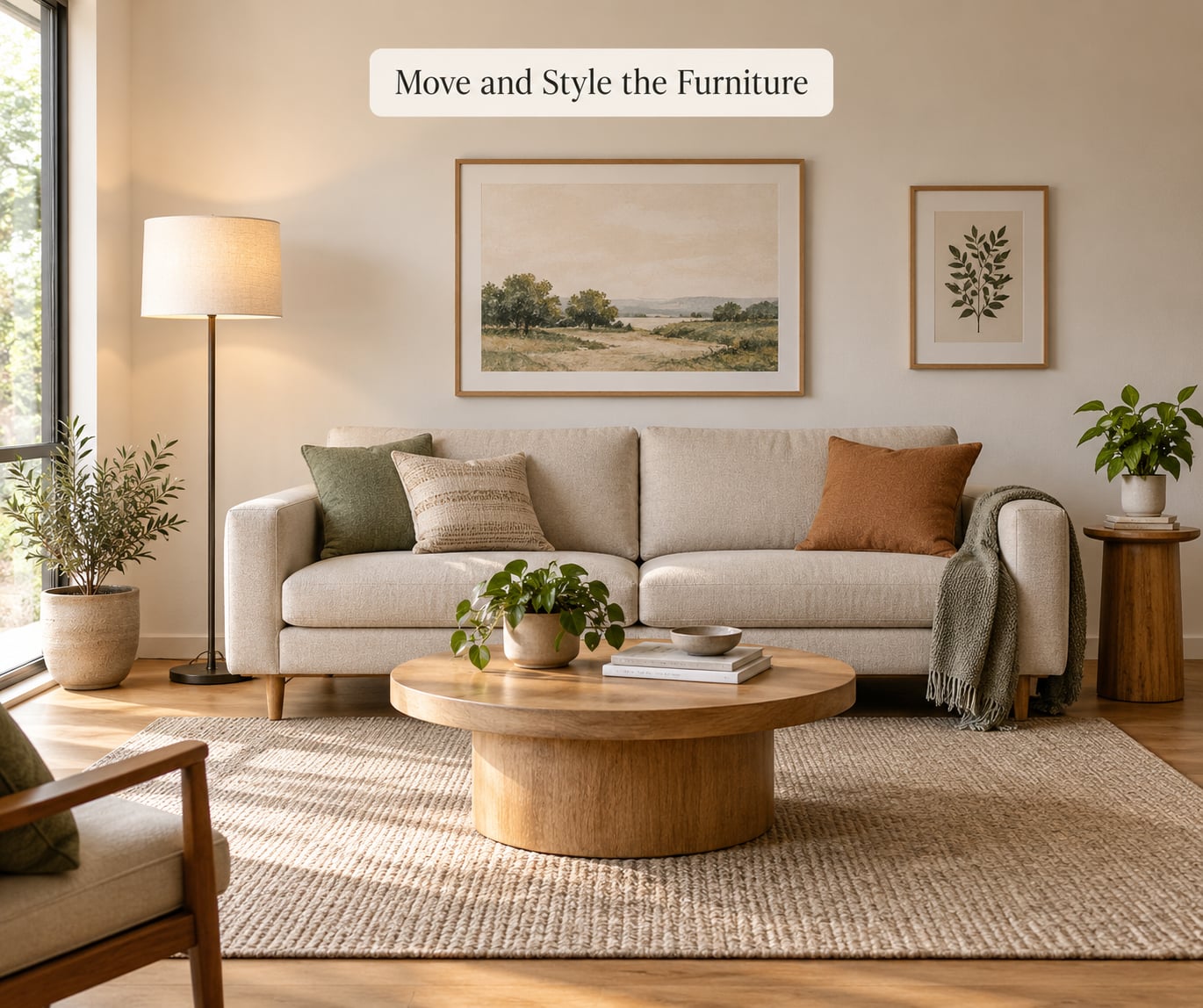
Move the piece to the taped line, sliding rather than dragging. Then fill the bare wall so the gap reads as a decision instead of an oversight. A low console with a pair of table lamps behind the sofa is the most reliable fix and does the most work.
Other options that work: one large piece of art hung with its bottom edge six to eight inches above the sofa back, a tall mirror leaning against the wall, a slim bookcase, a floor lamp in the corner of the gap, or a plant tall enough to break the horizontal line. Pick one. Two competing things behind a sofa look temporary.
Then re-center the rug. Once the sofa comes forward, the front legs may no longer sit on it, and the rug will look undersized. Pull the rug forward so the front legs of the sofa and the front legs of the chairs land on it, or accept a smaller rug as a deliberate layer rather than a stretched mistake.
5. Check the Room From the Doorway
Stand where guests first stop. This is the only view that matters, and it is the view almost no one checks while rearranging.
Look for four things: an obvious focal point, even visual weight left and right, walkways that do not pinch, and sightlines that reach the back of the room rather than stopping at the sofa back. If one side of the room looks heavy, move the accent chair rather than the sofa. Small adjustments to the light pieces fix imbalance faster than moving heavy ones.
How Far to Pull Furniture Off the Wall
Most first attempts go too far, so start small. Pull the sofa 6 to 8 inches and live with it for a day before committing to a bigger move. If it looks intentional, go to 12 inches and add a console behind it. Anything beyond 18 inches starts to be a room divider, which only works in an open plan with a clear purpose behind it.
Chair placement is the exception. An accent chair pulled off the wall and angled toward the sofa is what makes a conversation nook feel intentional rather than accidental. The same chair left square to the wall just looks misplaced.
Common Mistakes
Floating everything. Pulling every piece off every wall is the most common failure, and the result is furniture that looks randomly placed. Fix: float the sofa and one other piece, then leave the rest on the walls.
Blocking a door or an outlet. A piece that overhangs a doorway fights the eye every time you walk past it, and an unreachable outlet means an extension cord across the floor. Fix: tape the door swing and mark every outlet before you commit.
Leaving an awkward gap with nothing in it. This is the reason most people give up on floating. Fix: a low console plus a lamp, or a single large art piece. One deliberate object beats a naked strip of wall.
Ignoring the focal point. If your fireplace, window, or main art is on a wall you just emptied, the room can lose its center. Fix: reorient the seating to face the focal point before you move anything else.
Picking the wrong size for the new position. A small sofa floated in a large room looks lost, and a deep sectional pulled forward eats the walkway. Fix: check the footprint against the room before moving, and rule out pieces that need more than 24 inches of clearance behind them.
Forgetting the rug. A rug that was sized for wall-hugging furniture will look small once everything floats. Fix: recenter it on the front legs, and if it still reads small, leave it and treat it as a deliberate second layer under the coffee table rather than stretching it.
One last styling tip: after the move, add a second light source. A floor lamp in the corner behind the sofa, or a pair of table lamps on the console, softens the gap and makes the layout look like a room somebody lives in rather than a room that was rearranged last night.
Frequently Asked Questions
How far should furniture be from the wall?
Most sofas and chairs work best pulled 6 to 12 inches off the wall. That gap is enough to make the piece look deliberate and to free up wall space for art, without costing you walkway room. Leave 18 to 24 inches behind any piece people walk past, and 30 to 36 inches between facing seats so conversation stays easy.
Can I float a sofa if there is an outlet behind it?
Yes, and it is a solvable problem rather than a reason to give up. Slide the sofa far enough forward that the outlet stays reachable, or pull it sideways so the outlet falls beside the sofa instead of behind it. If you need a cord to cross a walkway, add a floor cord cover or run the cable along the baseboard. Never bury a connection you cannot reach.
Does floating furniture work in a small room?
In a small room it often helps more than in a large one, because perimeter wall space is the scarcest thing you have. Pull a sofa forward 6 to 8 inches and the room reads as more open. The limit is the walkway: if the path behind the sofa drops under 18 inches, float a smaller piece or angle a chair instead of pulling everything forward.
What furniture looks best away from the wall?
Sofas, loveseats, accent chairs, ottomans, and low console tables. These are the pieces people sit at and move around, so a gap behind them improves sightlines and makes conversation easier. Keep media units, dressers, sideboards, and tall bookcases on the wall, where they need stability, cable access, and a clean line.
How do I hide cords when floating furniture?
Run cables along the baseboard rather than straight out from the piece, and use a floor cord cover wherever a cord crosses a walkway. A wall-hung television on a mounted panel keeps cables out of sight entirely. For a media unit on an outlet, an outlet tap lets you use a single wall plate instead of a strip crowding the floor.
Will moving furniture away from the wall make a room look better?
Usually yes, and the effect comes from flow rather than from the gap itself. Wall-hugging furniture leaves the center of the room empty and forces guests to turn and lean to talk. Floating pieces opens the floor plan and lets seating face each other. The exception is a room so tight that pulling pieces forward pinches the walkway or blocks a door.
Conclusion
Start with one piece, not the whole room. Measure your wall, the room depth, and the door swings, then tape a single footprint on the floor 6 inches off the wall and look at it from the doorway. If it reads well, pull the sofa, add one object behind it, and recenter the rug. If it does not, your tape cost you nothing and the sofa never left the wall.