How to brighten a basement with no windows comes down to three jobs: layer your lighting instead of relying on one ceiling bulb, replace light-absorbing surfaces with reflective ones, and add visual tricks that make the room read as bigger. None of it requires cutting a window. Most people finish the lighting and paint on a weekend and the layout changes over a few evenings.
That matters because a basement with no daylight usually gets treated as storage and then avoided. Fix the light first, because paint colors and mirror placement both depend on how much light you are working with.
Table of Contents
- What You Need
- Step-by-Step: How to Brighten a Basement With No Windows
- 1. Map the Room and Find the Light Sources
- 2. Layer Lighting Instead of Relying on One Fixture
- 3. Choose Light Colors for the Ceiling and Walls
- 4. Add Mirrors and Reflective Surfaces
- 5. Use Light Furnishings and Open Storage
- 6. Define Zones with Color and Texture
- 7. Add Greenery and Personal Details
- 8. Brighten It Without a Hammer
- Common Mistakes
- Frequently Asked Questions
- What is the best way to brighten a basement with no windows?
- What color should I paint a basement with no natural light?
- Can I make a basement feel brighter without installing new lighting?
- How do I choose a mirror for a windowless basement?
- What plants grow well in a basement with little or no sunlight?
- Can I brighten a basement in a rental without making permanent changes?
What You Need
Nothing here is specialized. Gather what you have, then fill the gaps.
- Lighting: a tape measure, a ladder, and the bulbs or fixtures you already own so you can see what is being wasted. Add 3000K LED bulbs for living spaces, 4000K for work areas, and dimmable bulbs if your switches support a dimmer.
- Paint: at least three sample pots or peel-and-stick swatches in warm off-white, pale grey, soft beige, and a muted blue. Buy a sample size before a full gallon, always.
- Mirror: one large mirror, ideally wider than your sofa or dresser, plus a stud finder and the right hanging hardware for your wall type.
- Reflective surfaces: glass vases, glossy ceramic, a polished metal tray, or a metal-framed picture. Anything with a sheen returns light to the room.
- Measuring and layout: painter’s tape for marking light layout on the floor, and a phone photo from each corner so you can compare before and after.
- Storage: baskets, clear containers, or a labeled bin system if your current storage is a pile of boxes on the floor.
One decision to settle early: whether you can paint and drill. If you rent, start with the renter-friendly moves in step 8 and use only removable options.
Step-by-Step: How to Brighten a Basement With No Windows
1. Map the Room and Find the Light Sources
Stand in each corner with your phone and take a photo. What you are looking for is where the light stops, which is usually the perimeter and any wall with nothing on it.
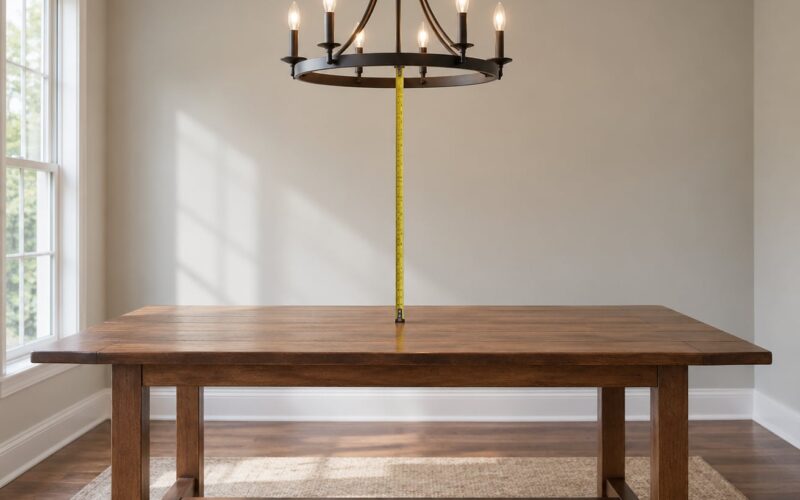
Measure the ceiling height. Under seven feet, a pendant or a drum light drops into the room and makes it feel smaller. Note where the existing outlets and fixtures sit, and mark them with tape on the floor so you can plan positions without drilling yet.
For new wiring, a new circuit, or a fixture swap that involves the ceiling box, hire a licensed electrician. Swapping a bulb, plugging in a floor lamp, and hanging a plug-in sconce are the safe DIY list.
2. Layer Lighting Instead of Relying on One Fixture
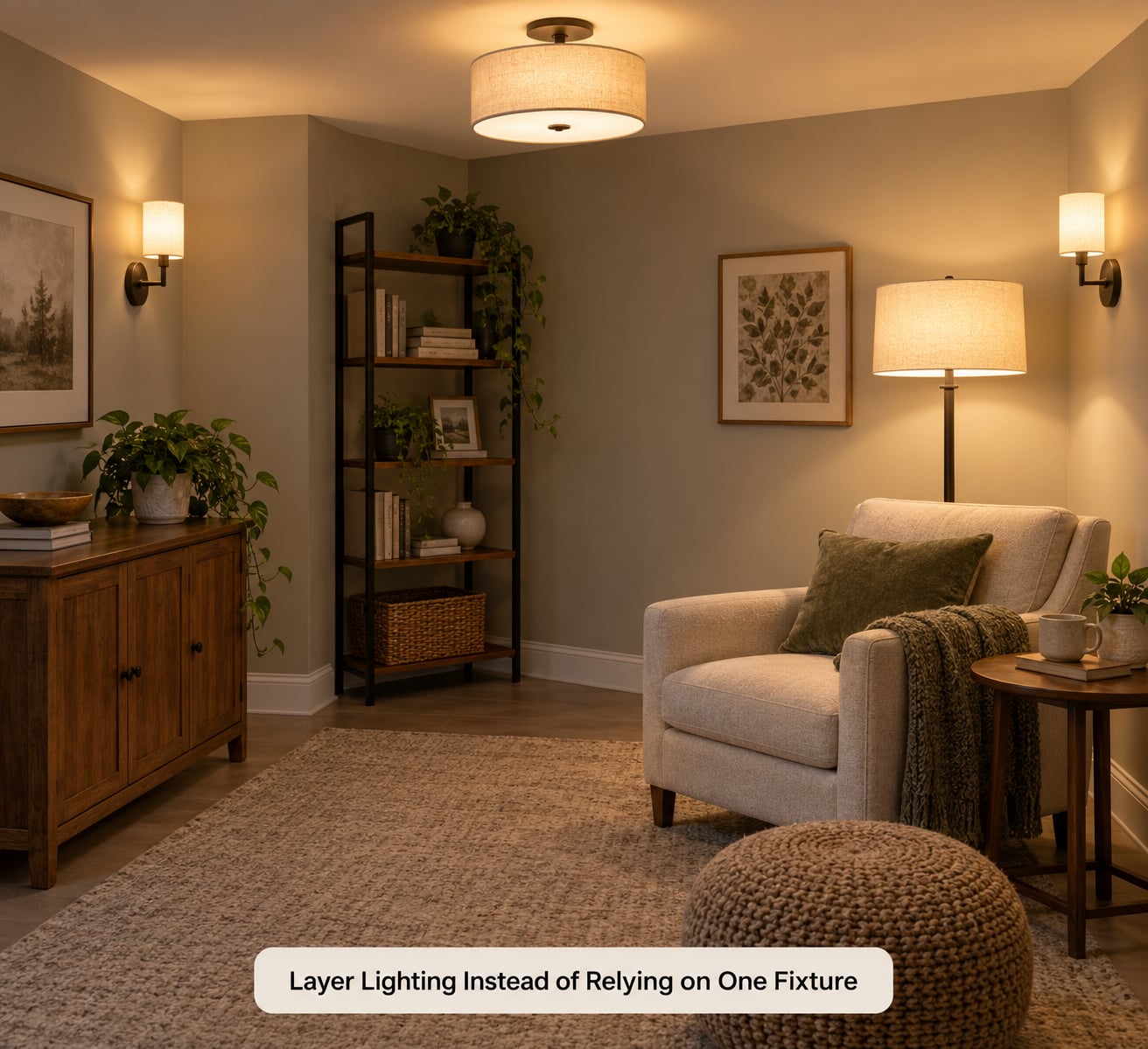
A single overhead bulb creates hot spots under it and shadows everywhere else. Three layers fix that: ambient light for the whole room, task light where you work, and accent light aimed at a wall or object.
Ambient means the ceiling fixture, ideally a flush-mount or shallow drum with a white or pale glass shade so it spreads light outward. Task light is a floor lamp beside a chair, a desk lamp, or a strip light under a shelf. Accent light is a wall sconce or a strip tucked behind furniture that washes the ceiling.
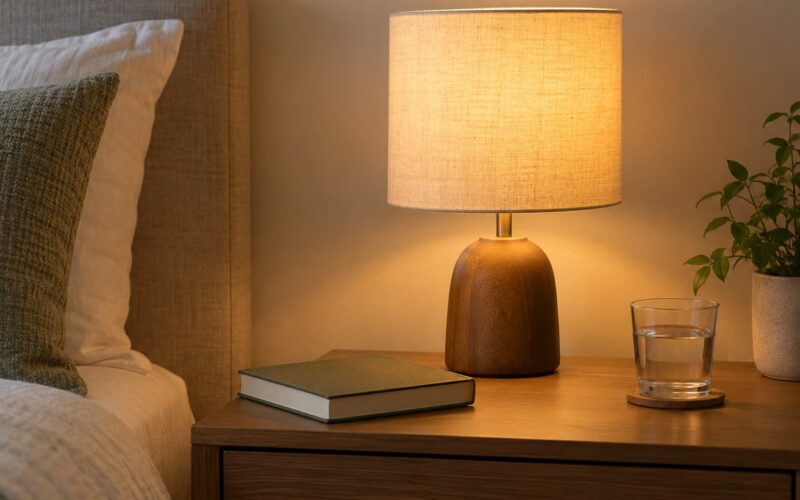
Bulb color matters as much as quantity. Kelvin is simply how warm or cool the light looks.
| Kelvin | How it looks | Best basement use |
|---|---|---|
| 2700K | Warm, candle-like amber | Bedrooms and lounges where you want soft light |
| 3000K | Warm white, like incandescent | Family rooms and most basements |
| 4000K | Neutral white | Laundry rooms, storage areas, walkways |
| 5000K | Cool daylight blue | Home offices and craft rooms during the day |
Mixed temperatures are what make a basement look grubby. People buy cool bulbs for the ceiling and warm bulbs for the lamp, and the room never settles into one color.
If you work from that room all day, a light therapy panel on the desk does more for mood than another ceiling fixture, and a backlit scenic panel on the wall works the same way for the whole room.
You can judge this step from the doorway: the ceiling should read as a surface, not a dark gap, and no corner should look like a black hole. An LED ceiling panel is a cheap stand-in for a skylight if the budget is tight.
3. Choose Light Colors for the Ceiling and Walls
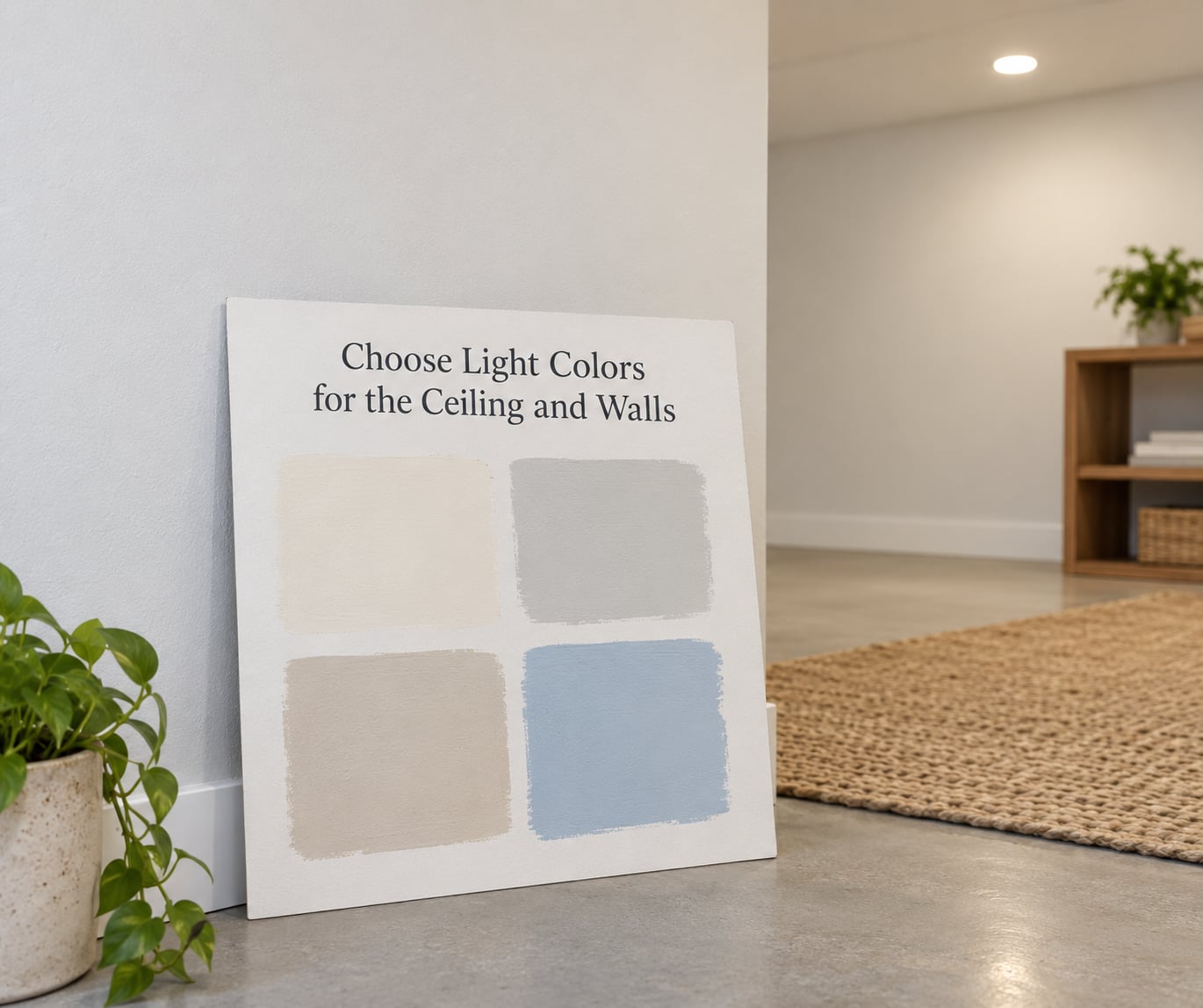
Warm off-white, cream, pale warm grey, or a soft muted blue will all lift a room with no natural light. Paint the ceiling the same pale color as the walls, or one step lighter, so the two planes read as one.
Skip pure white. With zero daylight to reveal it, stark white shows every scuff, patch, and dust mark and reads grey or dingy rather than clean. A warm-toned white such as Behr Coconut Twist is a reasonable place to start, with pale greys and soft beiges close behind.
For sheen, move up from flat. Eggshell is the safe pick and satin reflects noticeably more light off the wall. Skip gloss unless the wall is in a damp spot, since high sheen shows every wall imperfection.
Test before you commit. Paint your three sample colors on a wall section and leave them for two full days, then look at them with your lights on at the hour you use the room most. A color that looks bright at noon can look yellow at eight in the evening with bulbs at 2700K.
4. Add Mirrors and Reflective Surfaces
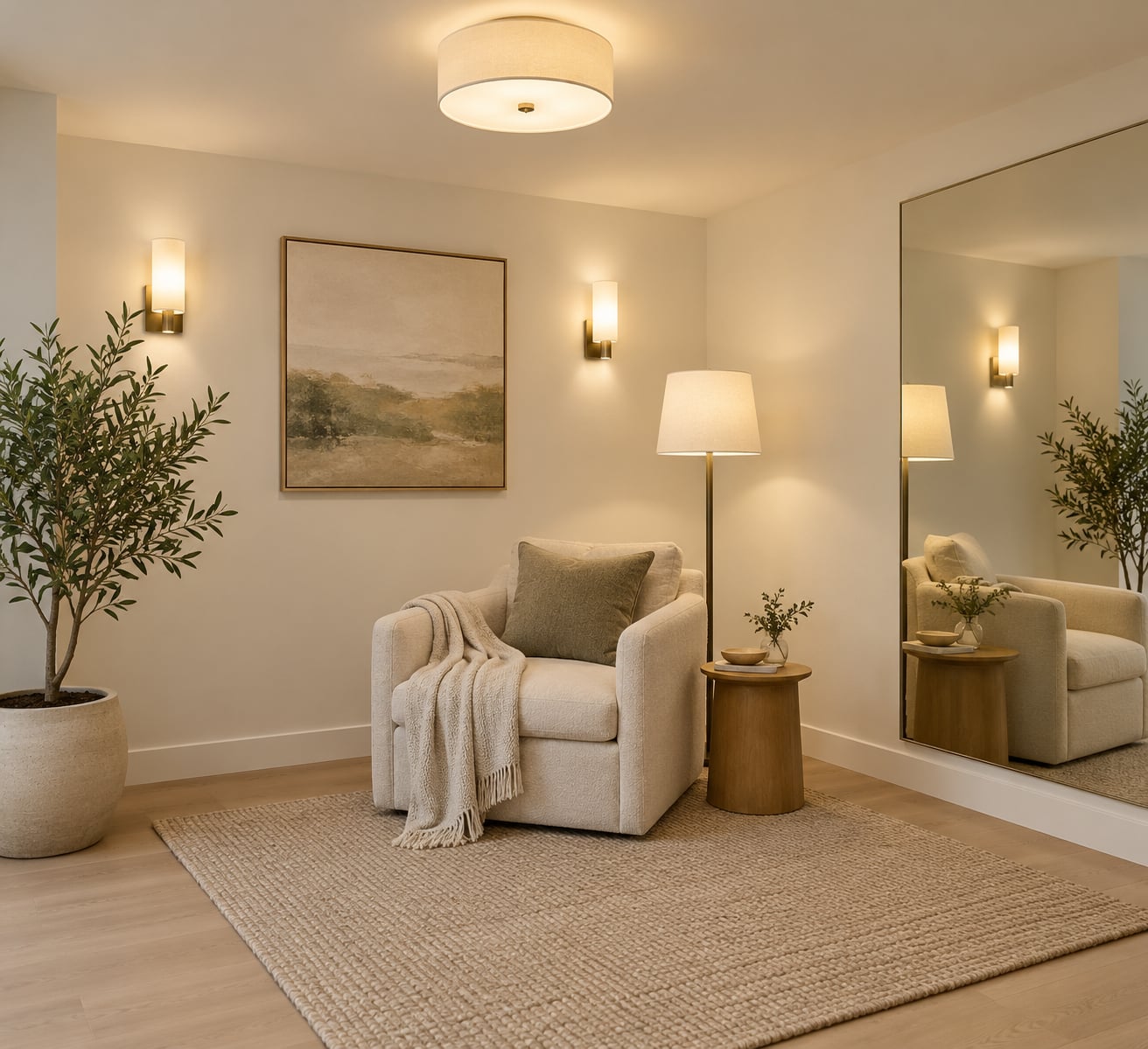
One large mirror does more than five small ones. Hang it directly opposite your brightest fixture, or on the longest wall so it catches the ceiling light across the room.
Before you commit, prop the mirror against the wall and check it at different times of day. Hanging first and checking later is the classic mistake, because the mirror ends up facing a blank corner.
To hang it safely, find the studs, use a French cleat rated for the mirror’s weight, and have a second person help. If you are renting or the wall is textured concrete, adhesive hooks rated for the weight will hold a light mirror but nothing heavy.
Beyond the mirror, put sheen where the eye lands. Glass, glossy ceramic, a polished metal tray, or a mirror-backed table all throw light back into the room. A mirrored closet door works well in a finished basement because it doubles the reflected surface without taking up floor space.
5. Use Light Furnishings and Open Storage
Furniture is the biggest light-absorbing mass in most basements. A dark sectional in a low-ceilinged room reads as a wall. Swap for lighter upholstery, or cover what you own with pale or neutral textiles rather than replacing it.
Rugs matter more than people expect. Choose one that fits fully under the front legs of your seating, in a light or pale pattern. A rug too small for the furniture makes the floor look cluttered rather than bright.
Open shelving with matching baskets keeps boxes off the floor and shows the wall behind. Clear containers make a storage wall look intentional. If you need closed storage, paint cabinet doors the same warm off-white as the walls so they disappear into the surface.
Push tall furniture to the perimeter and keep the middle of the floor open. That single change makes a small basement read as wider, because the eye travels across empty floor rather than stopping at furniture.
6. Define Zones with Color and Texture
A finished basement usually does two or three jobs. When one room is a reading corner, a desk, and a laundry area, the space feels cluttered even when it is tidy.
Separate the zones with something soft. A large area rug under the desk zone, a curtain hung from a ceiling track as a divider, or a couple of open baskets marking the laundry end will each do it without construction.
Give each zone one accent color and repeat it elsewhere so the room still feels like one space. Textiles carry color cheaply: a throw, a set of cushions, and a fabric shade on a lamp will do more than repainting a wall.
Wall art helps too, and placement matters more than the piece. One large piece above a sofa or desk, hung so its bottom edge sits six to eight inches above the furniture, fills wall space that would otherwise look bare and dark.
7. Add Greenery and Personal Details
Plants soften a hard basement and add color where you are not spending money on paint. With no windows, choose varieties that handle low light: pothos, snake plant, ZZ plant, peace lily, and spider plant all hold up in a room lit only by bulbs.
Go bigger on fewer plants. Three large pots on the floor read better than a dozen small ones on every surface, and floor-level greenery does not eat into the light path.
Finish with a few personal pieces and then stop. Crowding the walls with small frames is the fastest way to make a low-ceilinged room feel smaller. Two or three items with breathing room around them look intentional.
8. Brighten It Without a Hammer
You can make real progress without painting, drilling, or touching a fixture.
- Plug-in or clip-on wall sconces that mount with adhesive or a bracket over the top of the baseboard.
- LED light strips along the baseboard or behind a shelf to wash the wall and ceiling.
- A large leaning mirror, which needs no holes at all.
- Light-colored throw covers, rug, and curtain panels on a tension rod.
- Removable wallpaper panels or peel-and-stick samples for a single accent wall.
- Bulb swaps, which are the one free move in the whole list.
If you rent a below-grade apartment with no exterior glass, skip paint entirely and lead with bulbs, a mirror, and light textiles. If you own the space, do lighting first and paint second.
Common Mistakes
Using only cool white bulbs. A 5000K bulb everywhere makes a basement look like a hospital corridor. Use 3000K for living spaces and reserve 4000K to 5000K for the desk or laundry area.
Painting everything stark white. Without daylight, pure white reads dingy and shows every patch. A warm off-white or soft cream does more.
Hanging one oversized mirror opposite a blank wall. A mirror only works when it has something to reflect. Aim it at a lit wall, a doorway, or a windowless exterior wall carrying a bright paint color.
Forgetting the ceiling. A dark ceiling is what makes a room feel like a basement. Paint it the same pale color as the walls, or add a wall-washing light strip aimed up at it.
Choosing bulky furniture for a low ceiling. Low-profile seating and open shelving keep sightlines clear. Anything tall and dark eats the room.
Leaving storage on the floor. Boxes stacked in a corner create a dark mass. Move everything up onto shelves, into baskets, or into clear containers.
Hanging art too high or too small. Wall art floating above furniture leaves a gap that shows the wall color at its least flattering. Lower it, or go larger.
Frequently Asked Questions
What is the best way to brighten a basement with no windows?
Layer your lighting first, because everything else depends on it. Add a flush-mount ceiling fixture for ambient light, a floor or desk lamp for task light, and a wall sconce or LED strip for accent. Then paint the walls and ceiling a warm off-white in eggshell or satin, and hang one large mirror opposite the brightest light source. Decluttering dark furniture and stacked boxes off the floor finishes the effect.
What color should I paint a basement with no natural light?
A warm off-white, cream, pale warm grey, or soft muted blue all work. Avoid pure stark white, which without daylight tends to look grey and dingy and shows every scuff and patch. Paint the ceiling the same color as the walls or one step lighter so the two planes read as one. Always sample three colors on a wall section and view them under your actual bulbs before buying full gallons.
Can I make a basement feel brighter without installing new lighting?
Yes, and you can get most of the way there. Swapping to 3000K LED bulbs fixes a yellow cast for very little. Then add plug-in or clip-on wall sconces, a floor lamp in the darkest corner, and an LED strip along the baseboard to wash the wall and ceiling. Paint in a warm off-white with satin sheen, add a large leaning mirror opposite the brightest wall, and clear dark furniture off the floor. Hire a licensed electrician for any new wiring.
How do I choose a mirror for a windowless basement?
Go bigger than feels normal and choose a simple, frameless or thin-framed piece in a light finish. Placement matters more than the frame: hang it opposite or perpendicular to your brightest light source so it reflects light rather than a blank corner. Prop it against the wall and check the reflection at a few times of day before drilling. Use a stud finder and hardware rated for the weight, or lean the mirror if you rent.
What plants grow well in a basement with little or no sunlight?
Pothos, snake plant, ZZ plant, peace lily, and spider plant all tolerate rooms lit only by bulbs. Choose three larger pots rather than many small ones, since floor-level greenery keeps sightlines clear and reads as intentional. Water less than you would upstairs, because a cool basement stays damp and overwatering is the usual reason these plants fail. Rotate the pots a quarter turn every few weeks so growth stays even.
Can I brighten a basement in a rental without making permanent changes?
Yes. Start with the free moves: swap in 3000K LED bulbs and clear dark furniture off the floor. Then use adhesive or clip-on wall sconces, LED light strips along the baseboard, a large leaning mirror that needs no holes, and light-colored throws and rugs to lift what you already own. A tension-rod curtain panel divides a work zone from a sleeping zone, and peel-and-stick panels handle a single accent wall. Never run new wiring without your landlord and a licensed electrician.
That is the whole of how to brighten a basement with no windows: light first, then color, then layout, in that order. Start tonight by swapping your bulbs to 3000K, pulling the dark furniture off the perimeter, and propping a mirror against the longest wall to see what it does. Those three changes cost nothing and tell you whether the rest of the plan is worth doing.