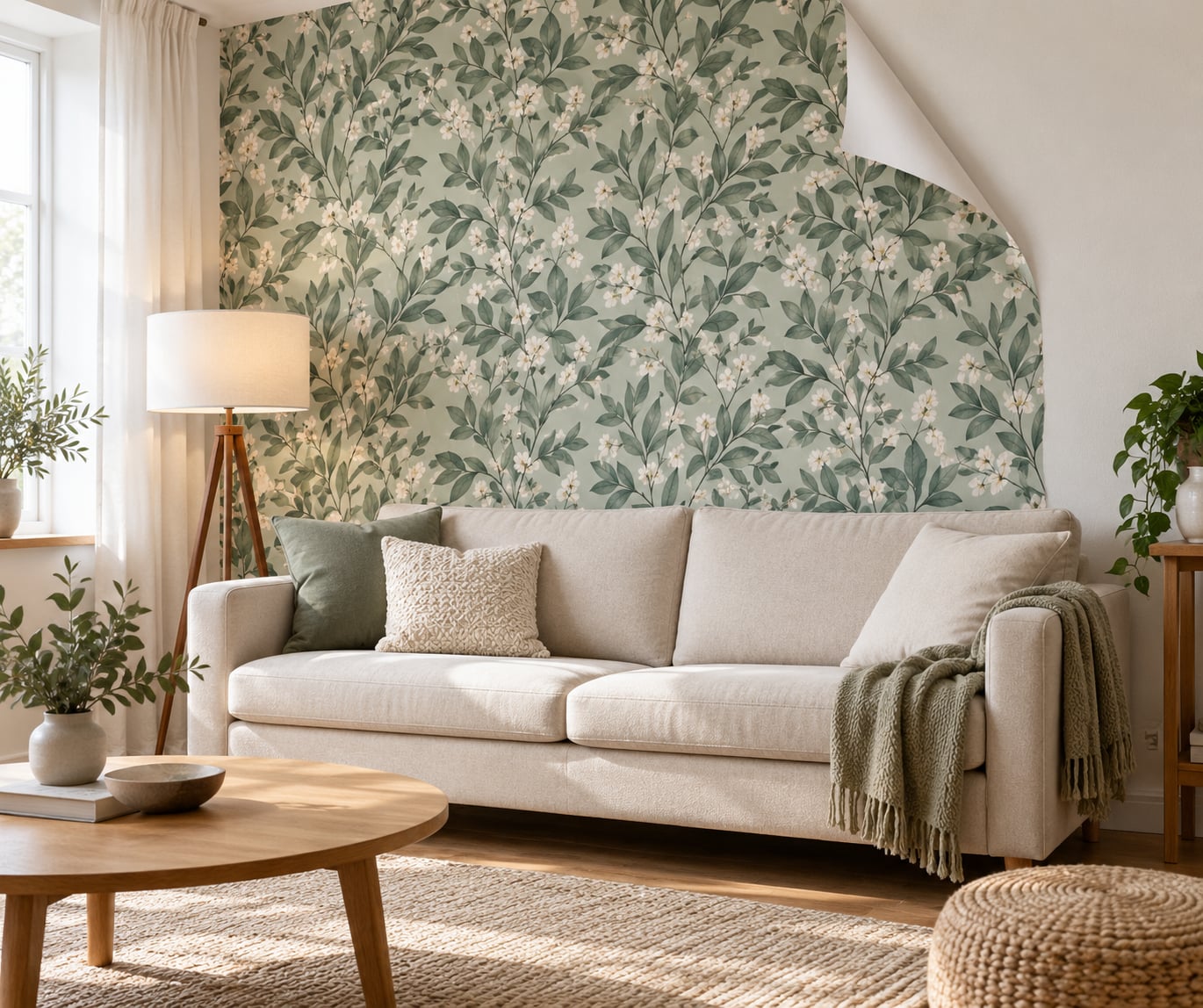
Short answer: yes, most peel and stick wallpaper is renter friendly, because it comes off in an afternoon and does not touch the paint underneath. The catch is the wall itself. Peel and stick wallpaper behaves predictably on smooth, cured, glossy or eggshell paint and badly on textured drywall, matte paint, or a wall that was just rolled on. So the real question is not whether the material is renter friendly, but whether your walls are.
I have watched a whole accent wall come down in about forty minutes, and I have also picked adhesive gunk out of a corner that had been there for two years. Same product, different wall. That difference is what this guide is about.
Table of Contents
- What Does Renter-Friendly Wallpaper Mean?
- The four traits that matter
- Is Peel and Stick Wallpaper Renter Friendly?
- Where it works well
- Where it goes wrong
- What Types of Peel and Stick Wallpaper Are Best for Renters?
- How to choose a peel and stick wallpaper that removes cleanly
- Will It Damage Walls or Leave Adhesive Behind?
- Can You Use Peel and Stick Wallpaper in a Bathroom or Kitchen?
- How Do You Install and Remove It Without Stress?
- Tools and prep
- Installing
- Removing
- What Should Renters Check Before Decorating?
- Frequently Asked Questions
- Do I need landlord permission to use peel and stick wallpaper?
- Can peel and stick wallpaper be used in a bathroom?
- Does removable wallpaper leave residue on painted walls?
- How long does peel and stick wallpaper take to remove?
- Can renters use peel and stick wallpaper on textured walls?
- What is the best removable wallpaper for a rental home?
- Conclusion
What Does Renter-Friendly Wallpaper Mean?
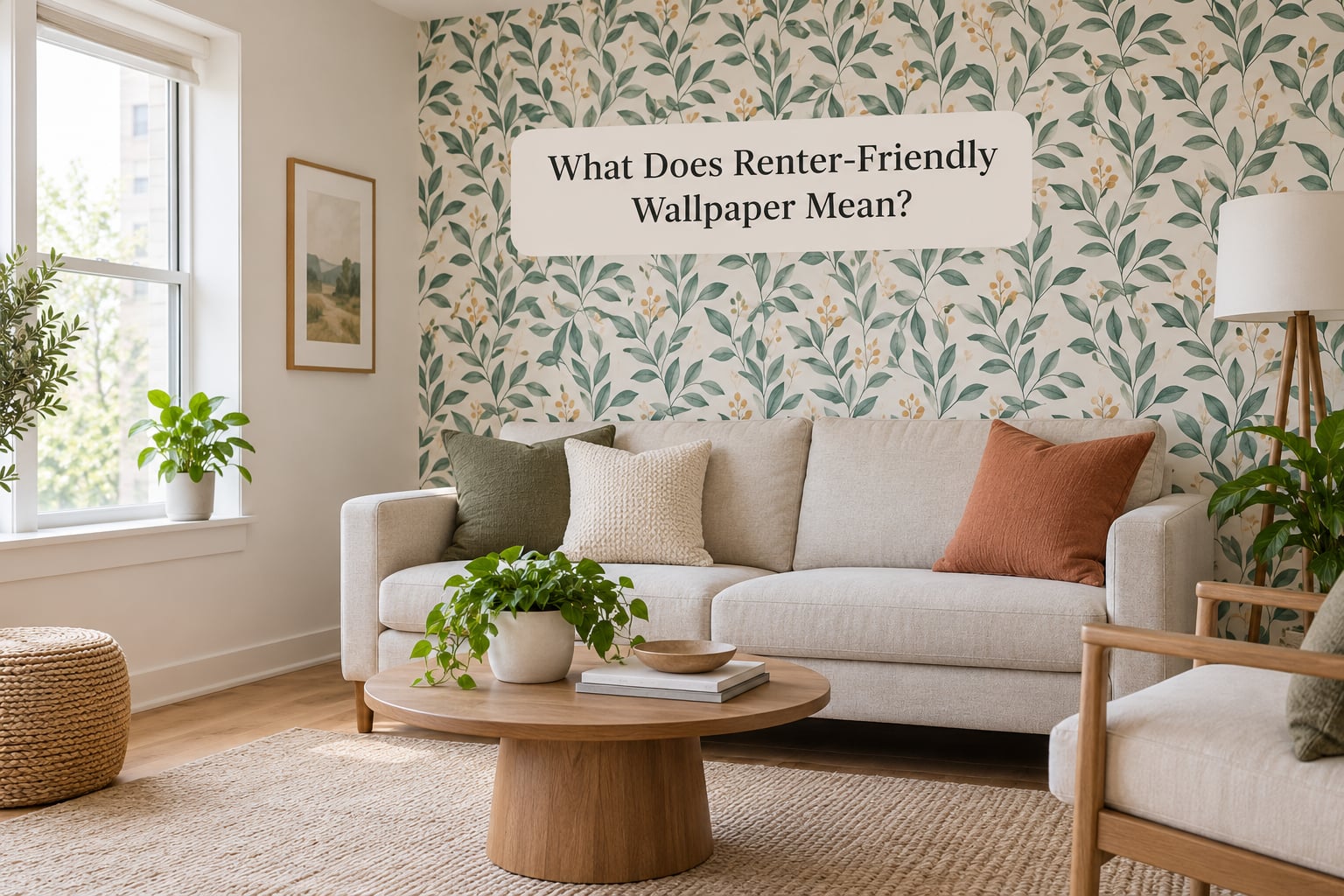
Renter friendly wallpaper is not a marketing category so much as a checklist. If a product clears all four items, it belongs on a rental wall.
The four traits that matter
- Removes without residue. The adhesive releases and the paint stays exactly where it was.
- Does not require permanent change. No paint, no screws into drywall, no removal that means patching.
- Costs less than fixing a mistake. A rental deposit fight costs far more than a few panels of wallpaper.
- Fits the lease. Your landlord and building rules allow it, or you have written permission.
Traditional wallpaper fails the first two. Painted accent walls fail all four, which is why the self-adhesive category grew so fast in rental buildings.
One renter in r/AskWomen described using removable wallpaper in a bland rental kitchen and being happy with how it held up through the tenancy. That is the ordinary case: a surface nobody looks at directly, in a room that needed some texture.
Is Peel and Stick Wallpaper Renter Friendly?
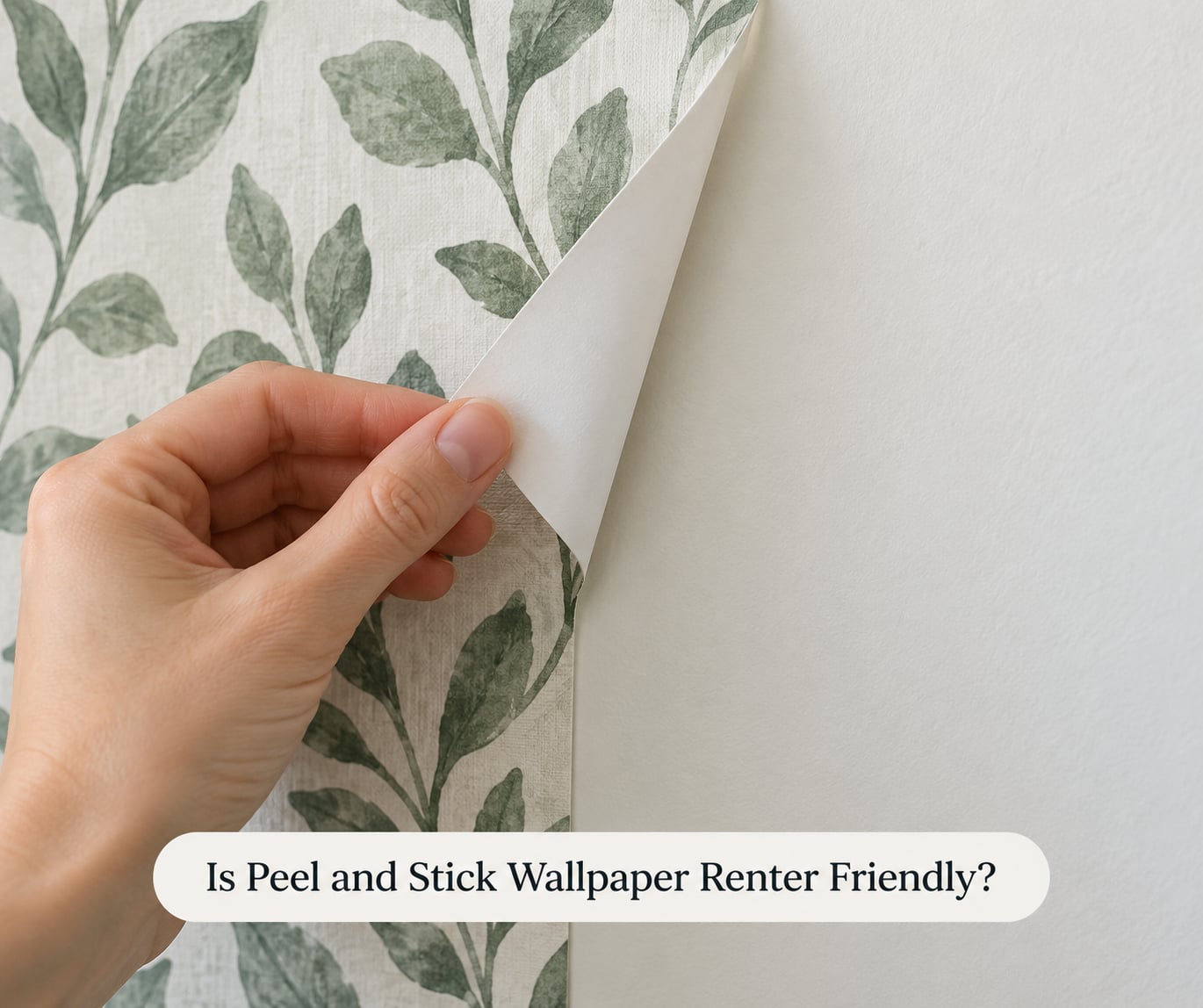
Peel and stick wallpaper is generally renter friendly, with three real conditions: a smooth wall, paint that has cured, and a slow removal. Miss any one of those and you risk pulling paint with the sheet, which is exactly the situation landlords complain about.
Where it works well
- Smooth painted drywall in eggshell, satin or semi-gloss finish.
- One accent wall rather than four walls of full coverage.
- Areas away from direct sun, steam and high heat.
- Panels installed cleanly and peeled off slowly.
- Applications on furniture, cabinet doors and shelf backs, where there is no paint at all.
Where it goes wrong
- Matte or flat paint. The weakest paint bond holds the weakest adhesive layer, so paint comes off with the sheet.
- Textured drywall. Orange peel, knockdown and popcorn texture create air pockets that never bond, and edges lift into every ridge.
- Fresh paint. Paint needs roughly 30 days to cure. Peel and stick applied before then pulls the fresh layer.
- Hot rooms. Heat and steam raise the bond between adhesive and paint, so removal takes a coating with it.
- Hurry-up removal. Yanking a panel downward is the single most common way renters lose deposit money.
A landlord on r/HomeImprovement put it plainly: they have had tenants install it and take it down years later with no problem at all. The same person has had to strip installations that came up with paint.
What Types of Peel and Stick Wallpaper Are Best for Renters?
Material type predicts removal behaviour more reliably than the brand on the box. Thin temporary vinyl is the usual rental default because it lifts easily, but it is also the thinnest and hardest to reposition once it grabs.
| Material | Removal ease | Durability | Best rental use |
|---|---|---|---|
| Temporary adhesive vinyl | Very easy | Low to moderate | Accent walls, entryways, closets |
| Peel-and-stick fabric / canvas | Easy | Moderate to high | Feature walls behind sofas and headboards |
| Washi-style paper | Easy, holds paint well | Low | Nurseries, playrooms, temporary looks |
| Thick commercial panels | Moderate, residue possible | High | Half-walls, cabinet doors, furniture |
How to choose a peel and stick wallpaper that removes cleanly
Look for wording on the listing that says removable or renter friendly, and check whether the brand describes a residue-free pull. Thin non-vinyl paper and washi-backed products are usually the gentlest on paint. Heavier vinyl with a permanent adhesive is a different category entirely and belongs in a house you own.
Two more filters matter. A washable surface is worth having if you have kids or pets, and a thicker material hides wall colour showing through translucent stock. Order a sample first when you can, since an 8 by 10 sheet tells you more in a week than any description does.
Will It Damage Walls or Leave Adhesive Behind?
Residue is not the same as damage. Adhesive left on the wall is a cleaning job. Paint taken with the sheet is a money job, because a property manager can charge a contractor to strip and repaint.
| Wall condition | Risk | What to do |
|---|---|---|
| Smooth wall, eggshell or satin paint, cured 30 days or more | Low | Install after a 48-hour test spot |
| Semi-gloss paint on a smooth wall | Low | Install as normal, peel slowly |
| Matte or flat paint | High | Use panels on furniture instead, or skip it |
| Orange peel or knockdown texture | High | Do not sheet the whole wall; use panels |
| Popcorn or heavy stucco texture | Very high | Avoid wall application |
| Painted within the last 30 days | High | Wait for full cure |
| Wall already covered in wallpaper | Very high | Do not apply over it |
| Sunbaked or humid room | Moderate to high | Use a heat-rated panel or skip |
The 48-hour test is simple. Stick a sample in a corner behind a piece of furniture, press it down firmly, and leave it two days. Then lift one corner slowly and look at the back of the sheet. If paint comes with it, you have your answer before you cover a whole wall.
For residue that does remain, warm a hairdryer over the spot for a few seconds and peel again, then rub the area with a cloth and a little rubbing alcohol on a soft pad. Test the alcohol in a hidden spot first, because it can take a matte finish with it.
Plaster and existing wallpaper are different stories. Old wallpaper underneath means a second layer of adhesive coming off later, and historic plaster can be softer than the drywall paint above it. Both deserve a test patch.
Can You Use Peel and Stick Wallpaper in a Bathroom or Kitchen?
You can, but call it renter friendly rather than waterproof. Bathrooms work best when the product is sold as splash resistant and the room has real ventilation.
Steam and heat are the issue, not splashes. A shower saturates the wall behind the panel and a humid room softens the paint underneath, which means the adhesive is bonded to a weakened surface. In a laundry room that gets sun through a window, that is how even gloss paint gets pulled.
For a kitchen, avoid the direct splash zone behind the stove and the sink. A backsplash run above the counter, or a panel behind a shelf, handles humidity better.
Cleaning matters more here than anywhere else. Wipe with a damp cloth and mild soap, keep the edges dry, and check the seams every few months. Edges are where moisture gets in and where lifting starts.
Several property managers report paying a contractor to remove and repaint after renters installed wallpaper without approval, particularly in kitchens and bathrooms where heat built up.
How Do You Install and Remove It Without Stress?
Tools and prep
You need a tape measure, a level, a pencil, a smoothing tool or squeegee, a sharp utility knife with fresh blades, and a clean lint-free cloth. Panel widths vary, so measure the wall twice and add a little extra for trimming.
Wash the wall with warm water and a mild cleaner, then dry it fully. Fill nail holes and scrape off any bumps, because every defect prints through the pattern.
Installing
- Mark a level first line across the wall with tape.
- Lift a corner of the liner and press the panel just under the line.
- Work across in short passes, smoothing outward from the centre.
- Overlap the next panel slightly and match the pattern before pressing down.
- Trim at the ceiling, baseboard and corners with a fresh blade.
Panels are usually more forgiving than rolls because a drop match is built in. Overlap by roughly an inch and cut through both layers so the seam reads as one surface.
Removing
- Score the edge lightly with a utility knife where a corner has lifted.
- Warm the section with a hairdryer for ten or fifteen seconds.
- Peel back at a low angle, roughly parallel to the wall, not straight down.
- Move along in small sections rather than pulling one long sheet.
- Rub off any remaining adhesive while you work.
Panels usually come down faster than rolls because each sheet is small. Two people on a long wall beat one person fighting a long strip.
What Should Renters Check Before Decorating?
Read your lease for clauses about alterations, painting, adhesives and damage. A no alterations clause usually targets permanent change: paint, holes, fixtures and structural work. Removable coverings sit in a grey area that depends on the property manager.
Then ask in writing. A short email gives you proof later, and it signals that you plan to restore the wall. Something like this works:
Hi, I would like to hang removable peel and stick wallpaper on the living room accent wall. It is a self-adhesive product that peels off without residue and does not involve paint, nails or fixtures. I will photograph the wall before and after, and I will remove it and clean the surface before move-out. Please let me know if that is okay, or if there is a form I should sign. Thanks!
Landlord objections usually come down to installation quality and cleanup, not the material. Crooked panels and bubbles are what property managers see when they strip a unit, so a level line and a proper smoothing pass matter more than the brand you bought.
Document the wall before you start. Photograph every wall you touch, including corners and the area behind furniture, and keep the images with your move-in inspection photos. That record is the difference between a conversation and a lost deposit.
Two more checks before you order: how much you need, and whether the pattern lines up across panels. Print-on-demand sellers can vary slightly between orders, so ordering everything at once saves an argument at the seam.
Frequently Asked Questions
Do I need landlord permission to use peel and stick wallpaper?
Ask first, and ask in writing. Most leases with a no alterations clause target permanent change like paint, holes and fixtures, but the interpretation belongs to your property manager. A short email that names the room, the product type, your plan to remove it and your plan to photograph the wall usually gets a yes. Keep the reply, because that message is your proof if a deposit comes up at move-out.
Can peel and stick wallpaper be used in a bathroom?
Yes, if the product is sold as splash resistant and the room is properly ventilated. The real risk is steam and heat rather than splashes, since humidity softens paint and raises the bond between adhesive and paint. Keep panels away from the direct splash zone, wipe the surface regularly, and check the edges every few months, because lifting almost always starts at a seam.
Does removable wallpaper leave residue on painted walls?
On smooth eggshell, satin or semi-gloss paint that has cured for at least 30 days, most removable products lift with little or no residue. Residue is common on matte paint, textured drywall and in hot or humid rooms. If a small patch remains, warm it with a hairdryer for a few seconds, peel again slowly, then rub the spot with a cloth and a little rubbing alcohol tested in a hidden area first.
How long does peel and stick wallpaper take to remove?
A single accent wall of panels usually takes 30 to 60 minutes when you peel slowly at a low angle. Long rolls take longer because a torn start becomes a long strip. Add time for residue cleanup, and budget more in a bathroom or anywhere the wall is warm. If removal feels like it is fighting you, stop, warm the section and start again at a corner rather than pulling harder.
Can renters use peel and stick wallpaper on textured walls?
Not across a whole textured wall. Orange peel, knockdown and popcorn surfaces leave air pockets that never bond, so panels lift at every ridge and edges curl within weeks. Painters point to the same problem from the other side. Instead, use peel and stick on smooth surfaces you own, such as cabinet doors, shelf backs, stair risers or plain furniture panels, and leave the textured wall as it is.
What is the best removable wallpaper for a rental home?
Look for a product labelled removable or renter friendly, made from non-vinyl paper, washi-style backing or a low-tack adhesive, with a stated residue-free removal. Thin temporary vinyl removes easiest but tears and is hard to reposition, while thicker fabric or canvas panels last longer and hide wall colour better. Order a sample and run a 48-hour test on a hidden spot of the actual wall before you commit to a full wall.
Conclusion
Peel and stick wallpaper is one of the few decorating moves a renter can genuinely reverse, so yes, it is renter friendly with the right wall and the right technique. Read your lease and get an email reply before you start, pick a product labelled removable for smooth cured paint, and run a 48-hour test in a hidden spot.
Photograph every wall before the first panel goes up. Do the same walls, remove slowly at a low angle, and the deposit conversation at move-out never happens.